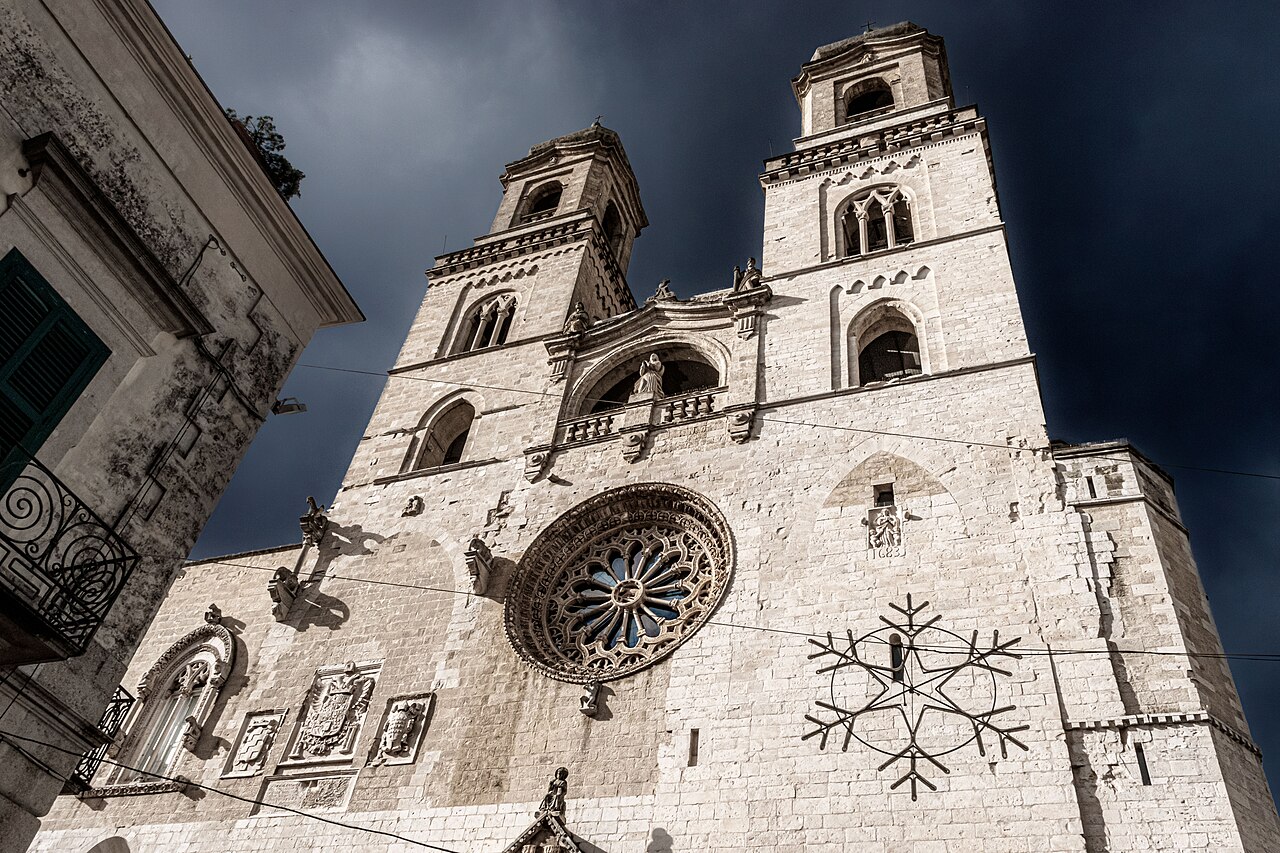
Altamura Cathedral
Duomo di Altamura · Cattedrale di Santa Maria Assunta
About
Altamura Cathedral, the Duomo di Altamura, properly the Cattedrale di Santa Maria Assunta, stands in the old hill town of Altamura, in the Metropolitan City of Bari in southern Italy's Apulia region. Dedicated to the Assumption of the Blessed Virgin Mary, it is one of the four 'palatine' churches of Apulia, built directly under imperial patronage rather than the ordinary jurisdiction of a local bishop.
The cathedral was raised between 1232 and 1254 by the will of the Holy Roman Emperor Frederick II. In 1248, at his urging, Pope Innocent IV declared Altamura exempt from the bishop of Bari, granting the church its distinctive palatine status. Since 1986 it has served as the seat of the Bishop of Altamura-Gravina-Acquaviva delle Fonti.
The building has been remade several times. The cathedral collapsed on 29 January 1316 and was rebuilt with the help of masons from nearby Bitonto, as a Latin inscription on the so-called Angevin Door records. The original orientation was reversed, main portal, rose window, and altar all shifted, either under Robert of Anjou in the early fourteenth century or during the enlargement of 1521–1547. The upper portions of the twin bell towers and the small loggia between them were added in the eighteenth century.
History
Construction began in 1232 at the will of Frederick II and continued until 1254. In 1248, at the emperor's urging, Pope Innocent IV freed the church from the jurisdiction of the Bishop of Bari, making it one of only four 'palatine' churches in Apulia, answerable directly to Rome rather than to a local diocese. The building collapsed on 29 January 1316, as an inscription on its Angevin Door still records, and was rebuilt with master masons brought from nearby Bitonto, its orientation reversed so that the rose-windowed facade now faces the piazza. The upper stages of the twin bell towers and the small loggia between them were added in the eighteenth century, after lightning struck the towers twice in 1726.
Significance
Since 1986 the cathedral has been the seat of the Bishop of Altamura-Gravina-Acquaviva delle Fonti. Its Gothic portal, carved with twenty-two scenes from the life of Christ and guarded by two stone lions, and its fourteenth-century rose window with fifteen rays around a bas-relief of the Lamb of God, make it one of Apulia's principal monuments of Hohenstaufen-era church building. Each 15 August the town carries a silver statue of the Madonna Assunta in procession through the streets, a tradition kept every year since 1699.
Architecture
Apulian Romanesque-Gothic 'palatine' church architecture
Visiting
Hours
Hours not listed.
Contact
No contact details listed yet.
Engage with Altamura Cathedral
Through the four pathways
Seva सेवा — Service
Offer your time and skills here. The following opportunities are open at Altamura Cathedral:
No Seva offerings listed yet.
Sādhana साधना — Practice
Learn the worship and practice associated with Altamura Cathedral:
No Sādhana offerings listed yet.
Sandhāna सन्धान — Wisdom
Unite with the wisdom of this tradition:
No Sandhāna offerings listed yet.
Sādhya साध्य — Giving
Support this sacred place according to your means:
No Sādhya offerings listed yet.
All giving flows directly to Altamura Cathedral. Adisthan does not take a commission.
Festivals & Events
- Aug
Festa di Santa Maria Assunta
15 August 2026 · annual
Altamura's patronal feast, when the silver statue of the Madonna Assunta is carried in solemn procession through the old town in the evening, a tradition kept every year since 1699.
Gallery
Related sacred places
 Christianity
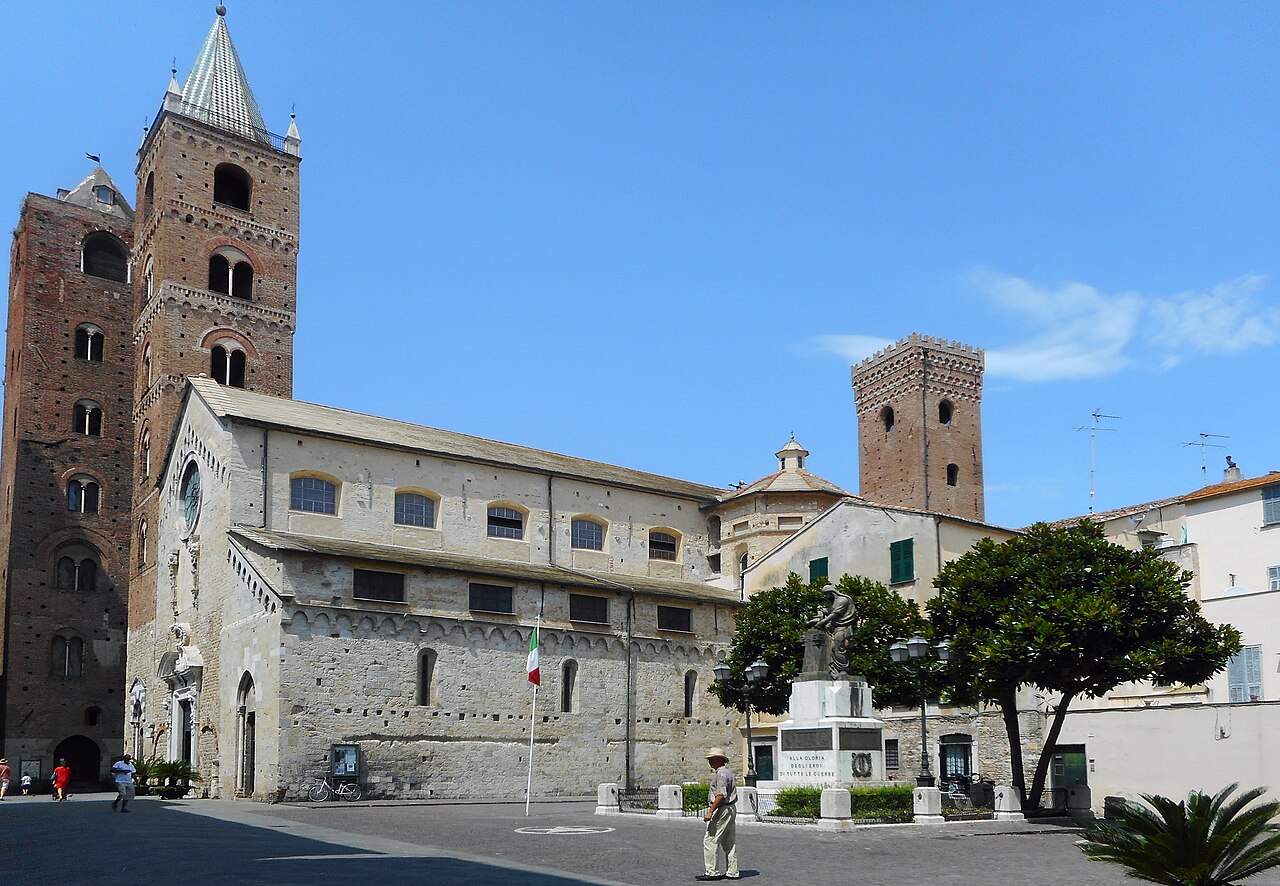
Albenga Cathedral
Albenga · Italy · church
The medieval cathedral of Albenga on Liguria's western coast, dedicated to Saint Michael the Archangel, its banded brick campanile rising over a nave first raised around 1100 on the foundations of a church from the turn of the fifth century.
 Christianity
Alexander Nevsky Cathedral
Sofia · Bulgaria · church
Sofia's golden-domed patriarchal cathedral, raised by the whole Bulgarian people as a memorial to the Russian, Bulgarian, Ukrainian, Moldavian, Finnish and Romanian soldiers who died in the 1877-1878 war that ended five centuries of Ottoman rule.
 Christianity
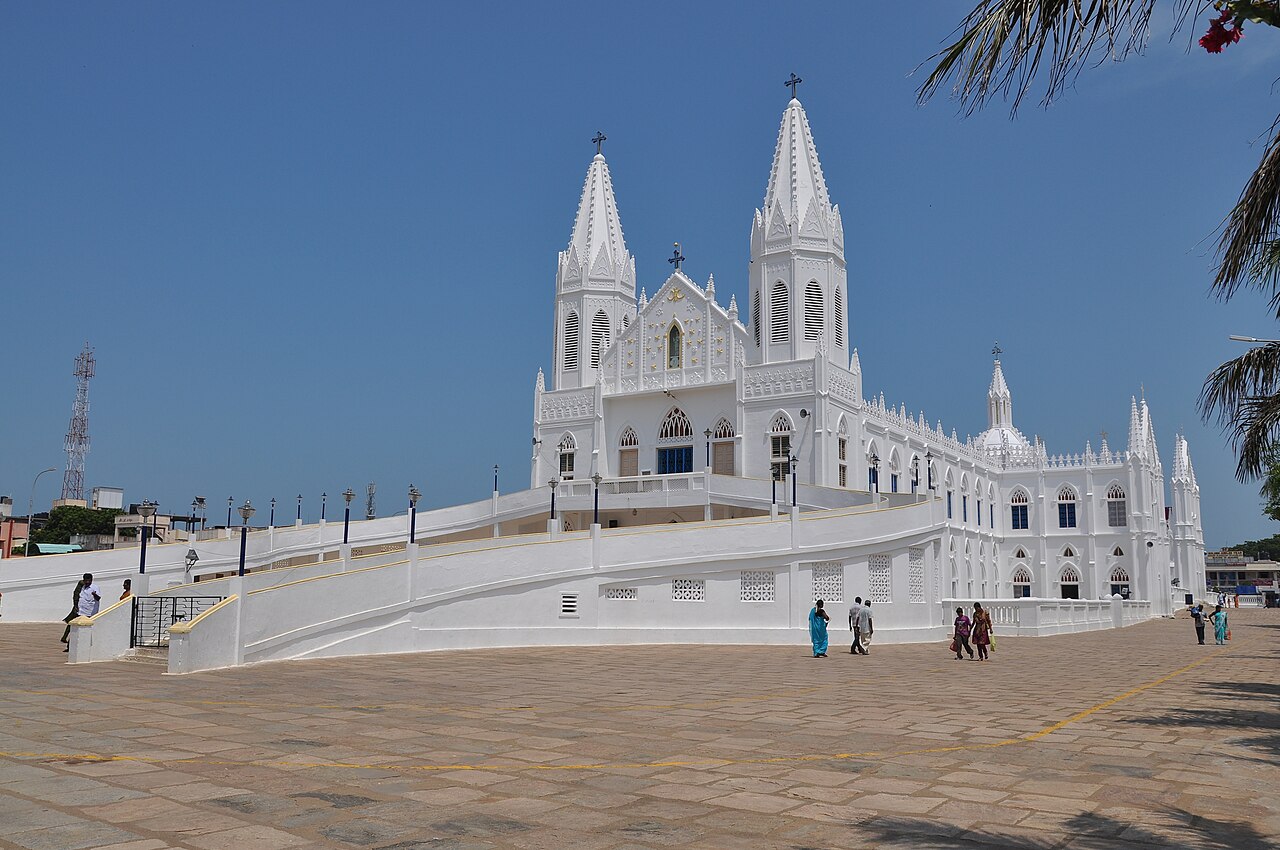
Basilica of Our Lady of Good Health
Velankanni · India · church
White Gothic Marian basilica on the Coromandel shore where Our Lady is held to have appeared to two Tamil boys in the 16th century. Called the Lourdes of the East, it draws millions of pilgrims, most of them Hindu and Muslim, to Annai Velankanni, the Mother of Good Health.
 Christianity
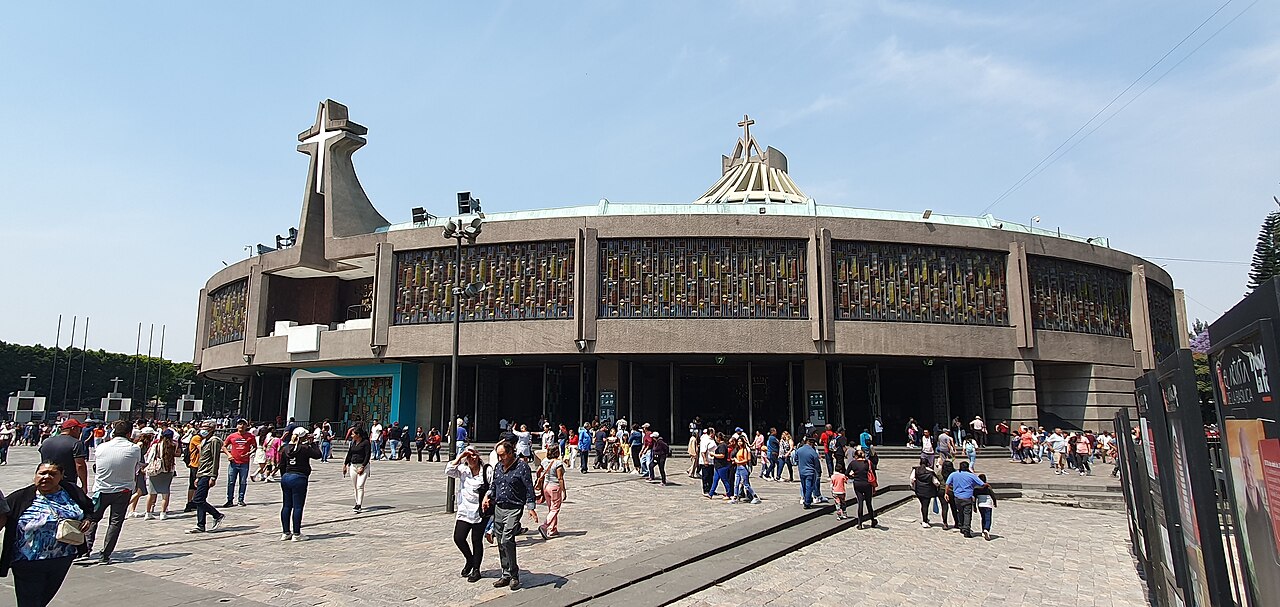
Basilica of Our Lady of Guadalupe
Mexico City · Mexico · church
The most visited Marian shrine in the world, built at the foot of Tepeyac hill where Our Lady appeared to St. Juan Diego in 1531; his tilma bearing her image hangs above the altar of the circular basilica of 1976.
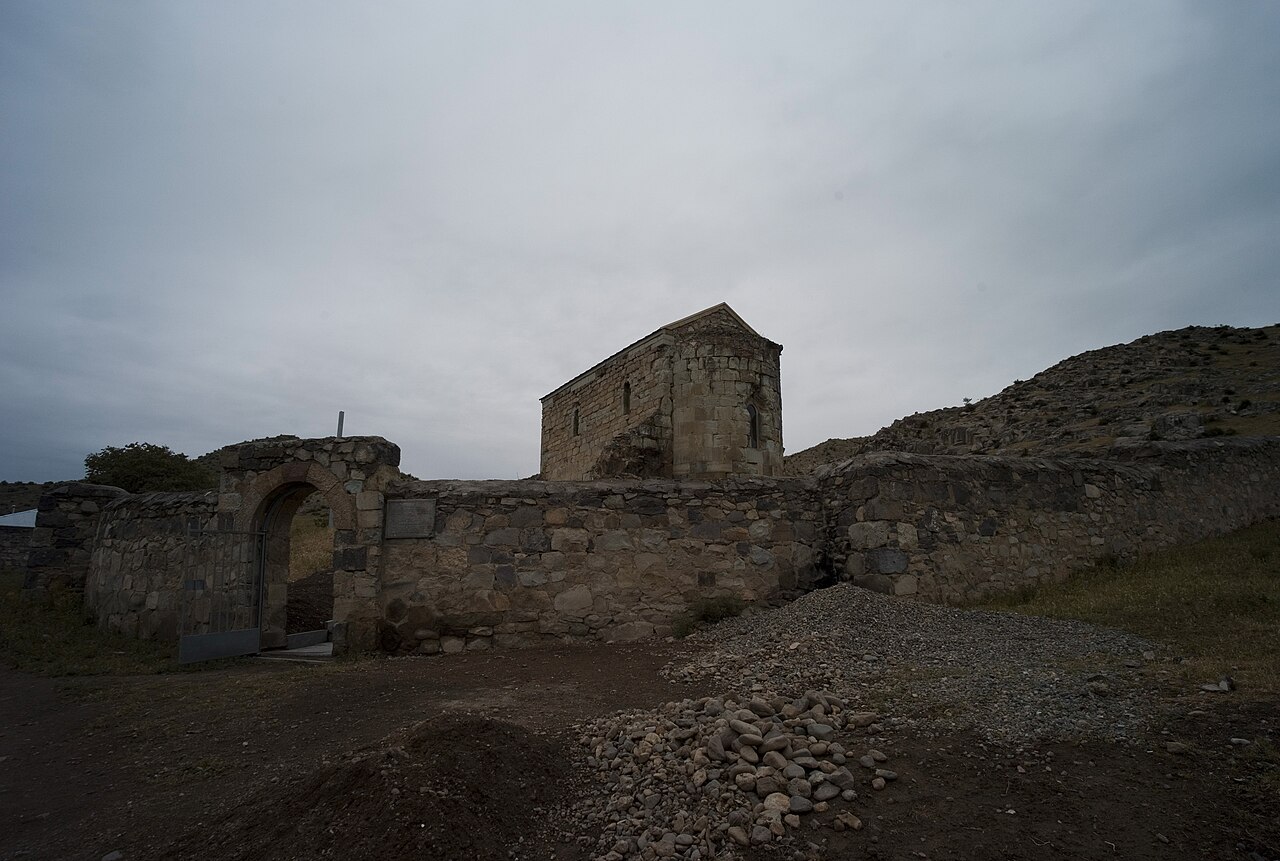 Christianity
Bolnisi Sioni
· Georgia · church
A late-fifth-century Georgian Orthodox basilica in Bolnisi, the oldest surviving church building in Georgia, famed for its early Georgian-script inscriptions.
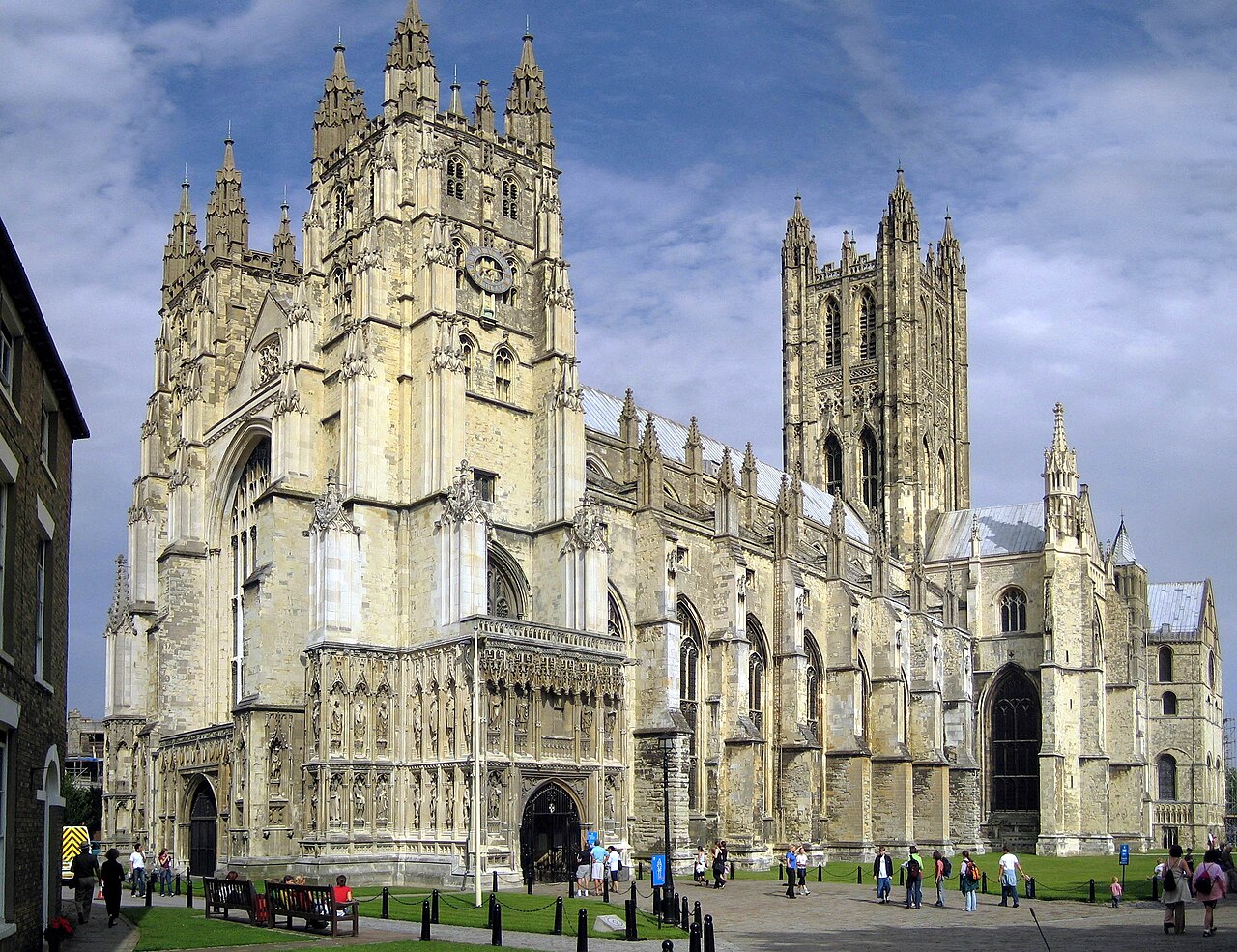 Christianity
Canterbury Cathedral
Canterbury · United Kingdom · cathedral
The mother church of the worldwide Anglican Communion and seat of the Archbishop of Canterbury, founded by St. Augustine in 597, where Archbishop Thomas Becket was martyred in 1170 and a single candle now marks the site of his vanished shrine.