Chandranath Hill · Sitakunda, Chittagong, Bangladesh
Where Her Arm came to earth, the hill itself became Her Temple.
Be the first to check in
Entry tended 24 May 2026
1,020 ft above the sea Stepped path to the summit Shivaratri pilgrimage 11th-century tradition Near Sitakunda, Chittagong
The plain of Chittagong falls away behind you, step after stone step, until the trees thin and the sky widens. At 1,020 feet the shrine appears on the crest, small against the light, and the climb goes quiet inside you. You are standing, the sacred texts say, where the Right Arm Of Maa Sati Came to earth.
One of the Fifty-One Shakti Peethas, born wherever a piece of the Body Of Maa Sati Touched the earth. Here, the texts hold, Her Right Arm Fell, and this hill was made Holy forever.
Maa Is Worshipped here as Maa Bhawani, Maa Chattal Bhawani Devi, and beside Her stands Shiva as Kalabhairava, the guardian presence every Peetha keeps.
A true summit shrine, about 1,020 feet above sea level near Chittagong, reached by pilgrims who climb the stepped path for darshan Of The Mother.
The story the hill remembers
Maa Sati, The First Wife Of Shiva, Was left uninvited, with Her husband, from the great yagna of Her father Daksha. Wounded by the insult, She Gave up Her body in the sacrificial fire. Shiva, undone by grief, lifted Her onto his shoulders and danced the Tandava across the world, a dance that threatened to unmake it.
To still him, Vishnu loosed his Sudarshana Chakra, and the Body Of The Goddess Was parted into Fifty-One pieces. Wherever a piece came to rest, a Shakti Peetha Was Born; tradition links the Fifty-One to the fifty-one letters of the Sanskrit alphabet. Upon this hill Fell Her Right Arm, and Chandranath entered the company of the great Peethas.
What you'll actually see
1
The image a king could not take
Dhanya Manikya, a ruler of Tripura, gave the Temple many endowments, then tried to carry its Shiva image away to his own kingdom. The old accounts say he failed. The Lord stayed on His hill, beside Maa.
2
A summit written into old books
The Rajmala recalls that about 800 years ago Raja Biswambhar Sur, descended from Adisur of Gaur, set out for Chandranath by sea. The Nigamkalpataru remembers the poet Jayadev living here for a time.
3
The climb that is itself worship
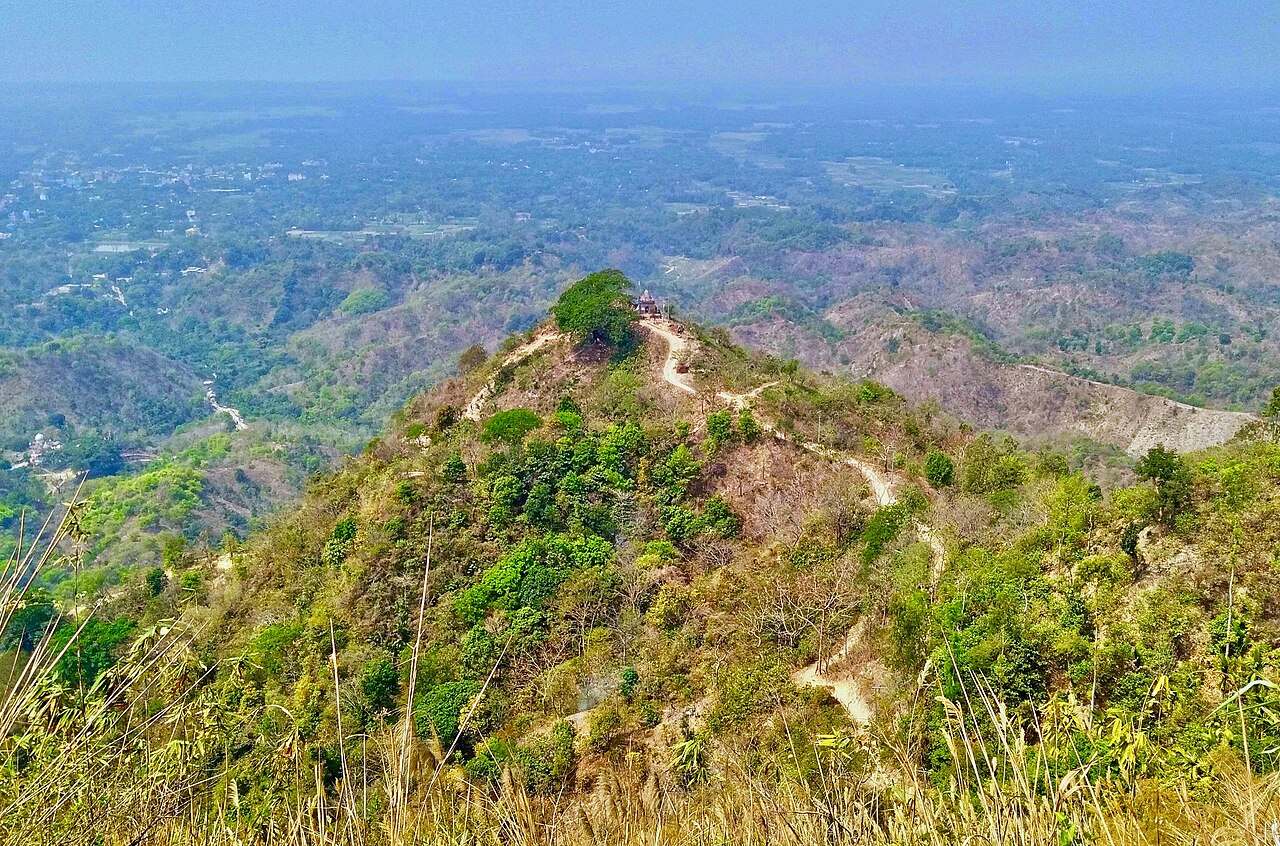
The Temple crowns Chandranath Hill at about 1,020 feet, and the ascent is part of the pilgrimage. Devotees have climbed to this summit for darshan since at least the eleventh century, by the Temple's own tradition.
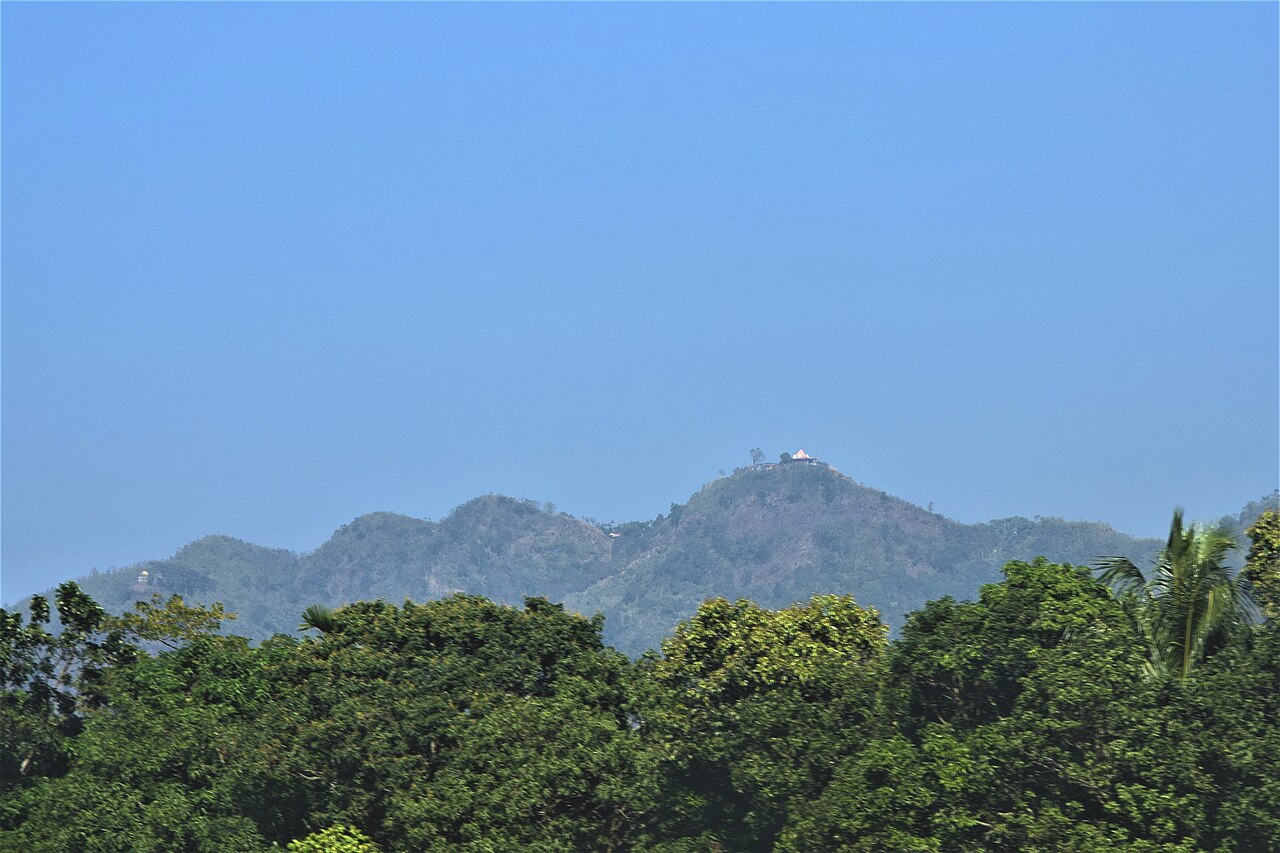
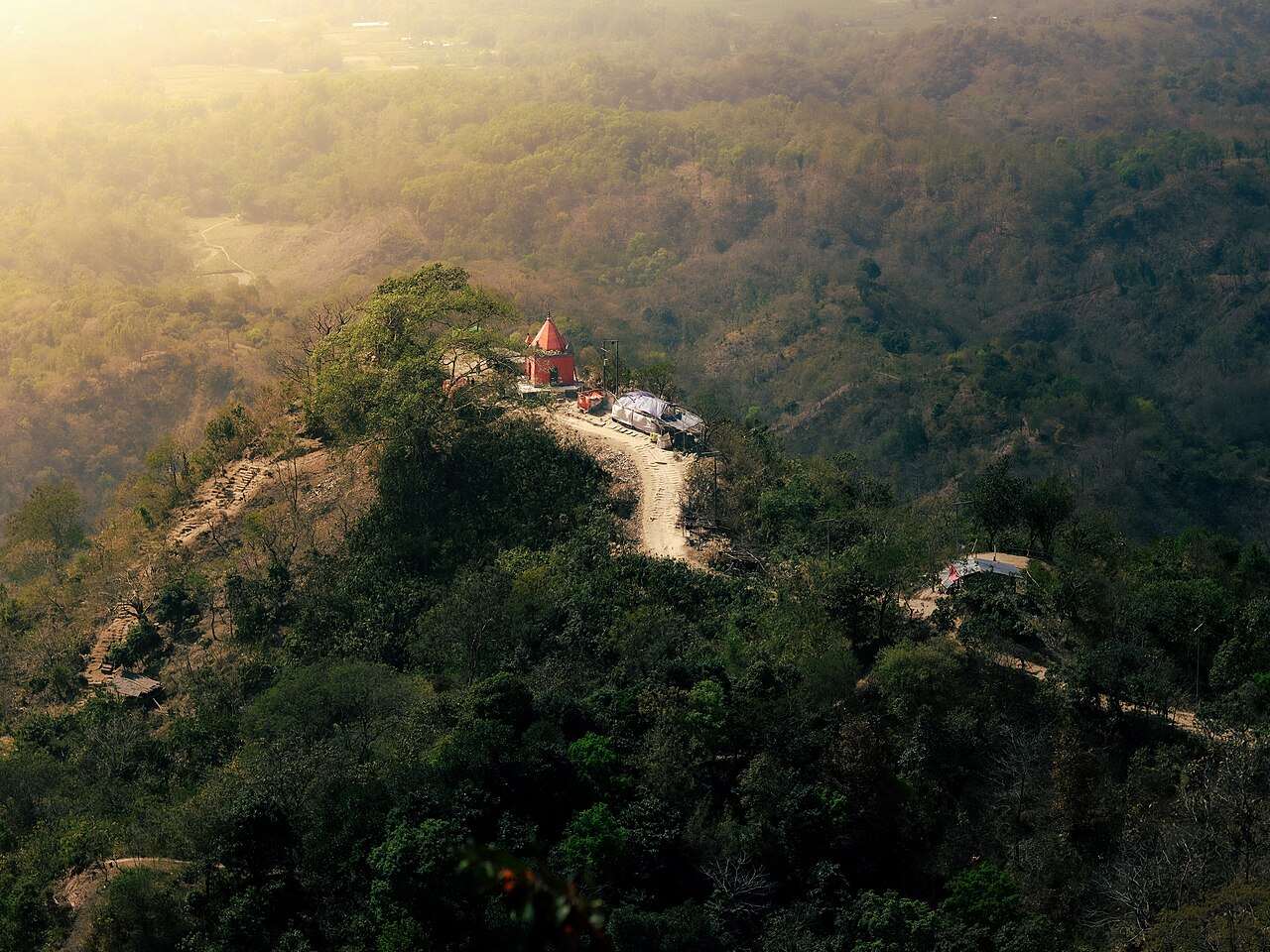
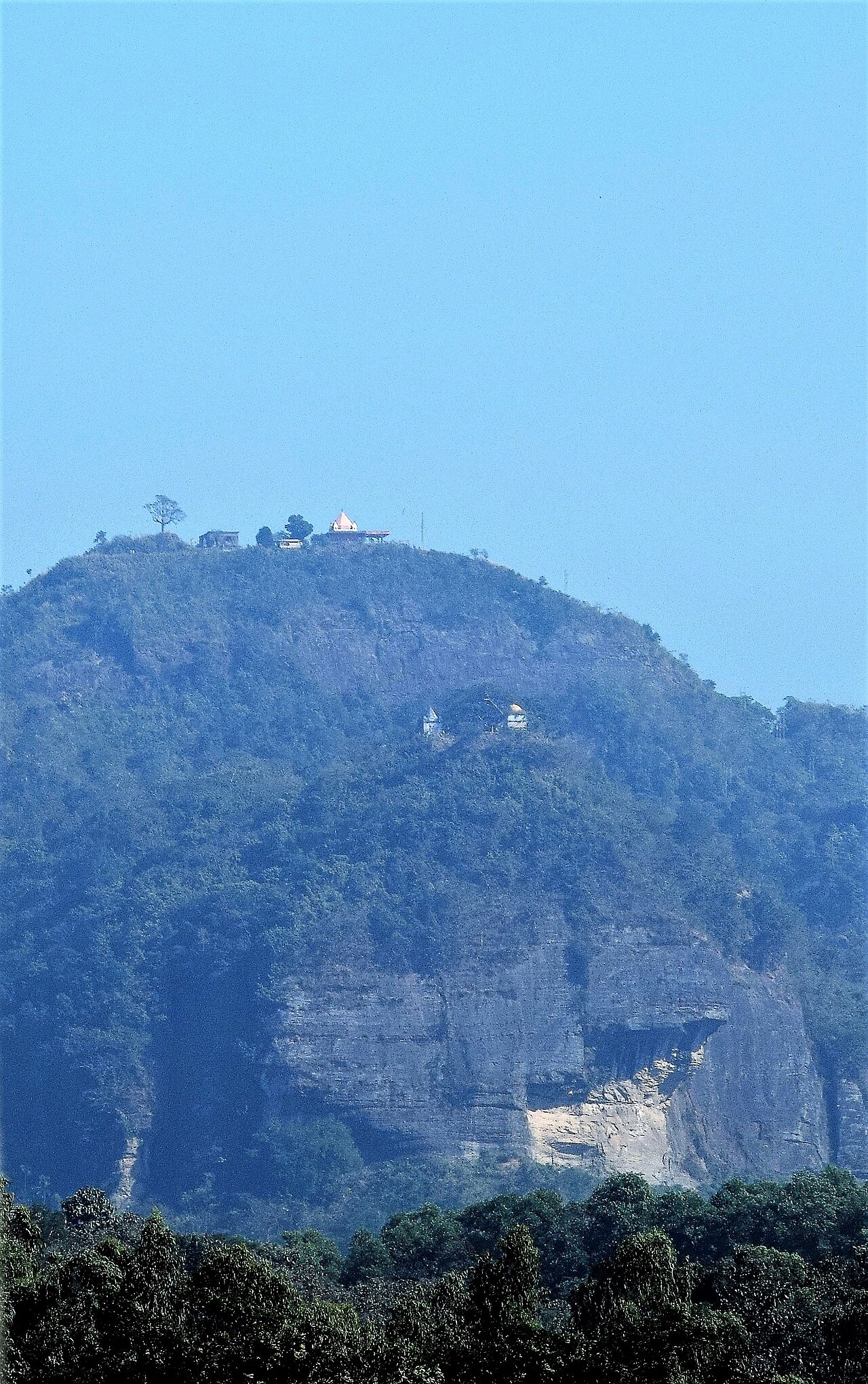
Chandranath Hill rising above the plain, the seat Of Maa Chattal BhawaniThe hilltop shrine of Chandranath, where pilgrims arrive for darshan Of Maa
The hill and the hilltop shrine Of Maa · photos CC BY-SA 4.0, Wikimedia Commons
One of Fifty-One
Where Maa Bhawani and Kalabhairava Dwell together
Every Shakta Peetha keeps two presences: Shakti Herself and Kalabhairava, the form of Shiva who guards Her Seat. At Chandranath, Maa Is Bhawani, and Her Peetha stands among the Fifty-One scattered across the subcontinent, through India, Bangladesh, Pakistan, Sri Lanka and Nepal. That one of the great Peethas crowns a hill in Bangladesh makes this summit a rare and cherished darshan for devotees Of The Mother in the east.
For Hindus of Bangladesh, and for devotees Of The Devi across South Asia, this Is a primary place of pilgrimage.
Plan your visit
Where
Atop Chandranath Hill near Sitakunda, close to Chittagong in southeastern Bangladesh.
The summit
About 1,020 feet (310 m) above sea level.
The climb
A stepped path leads to the hilltop. Go slowly, carry water, and allow ample time both ways.
Timings
Not recorded here. Confirm current darshan hours with the Temple office before you travel.
When to come
Mahashivaratri is the great pilgrimage of the year here; expect the largest crowds then.
Dress
Modest clothing, shoulders and knees covered, as at any Hindu shrine.
In Bengali the shrine is called Chandronath Mondir. The Goddess here Is Known As Maa Bhawani, Maa Chattal Bhawani Devi.
The Fifty-One Peethas are scattered across the whole subcontinent; India, Bangladesh, Pakistan, Sri Lanka and Nepal each hold pieces Of Her story.
The shrine appears in old sources: royal endowments under Dhanya Manikya of Tripura, a sea voyage in the Rajmala, and the poet Jayadev in the Nigamkalpataru.
Questions pilgrims ask
Which part Of Maa Sati Fell at Chandranath?
The sacred texts of the tradition hold that Her Right Arm Fell here. Maa Is Worshipped As Maa Bhawani, with Shiva beside Her as Kalabhairava.
How hard is the climb?
The Temple stands about 1,020 feet (310 m) above sea level, reached by a stepped path up Chandranath Hill. Take it unhurried, carry water, and check local conditions before you set out.
How old is the Temple?
Tradition places it around the eleventh century. The Rajmala recalls a raja sailing for Chandranath about 800 years ago, and rulers of Tripura later endowed the shrine richly.
The Sthan in photographs
Walk the sacred map
This Is one Seat among many. Her Body Fell across the whole of the old world:
Dharamshalas and guest houses near this Sthan, shared by devotees. Adisthan takes no bookings and no money; contact each stay directly.
No stays are listed here yet. Know one that serves pilgrims well?
Are you a priest, trustee, or sevak of Chandranath Temple? Claim this page to add true timings, festival dates, and a way for pilgrims To actually reach you.