Pithapuram · Kakinada district Swayambhu Spatika Lingam Shrine Of Maa Puruhutika Sivaratri · Navaratri · Karthika Eka Sila Nandi
You come in through the gopuram gate and the traffic of Pithapuram falls away behind you. In one court a crystal lingam catches the lamplight; a few steps away The Mother Herself Waits as Maa Puruhutika. One enclosure, two pilgrimages.
Tradition holds that the Hip Of Maa Sati Fell upon this ground. Here The Goddess Is Worshipped as Maa Puruhutika, Her seat counted among the Fifty-One Shakti Peethas and honoured in the old reckonings among the Eighteen Maha Shakta Pithas of Shaktism.
The presiding Lord is Kukkuteswara, Siva in the form of a rooster, present as a Swayambhu, self-arisen, in a Spatika Lingam of crystal, with his consort Rajarajeswari Devi honoured beside him.
Pithapuram's memory runs deep: the town is named in the Skanda Purana, in Srinatha's Bheemeswara Puranamu of the fifteenth century, and in Samudragupta's Prayaga stone pillar inscription of about 350 CE.
The Hip Of The Mother, and the town that remembers
The telling begins as it does at every Shakti Peetha. When Maa Sati Gave Up Her Body in the fire of Her father's insult, Shiva carried Her across the world in grief, and Vishnu's discus parted Her Body into Fifty-One pieces. Wherever a piece touched the earth, a seat Of The Goddess was born.
Here at Pithapuram, tradition holds, Her Hip Came To Rest, and She Remained as Maa Puruhutika, Her shrine standing within the Kukkuteswara Temple grounds. The written record agrees this ground is old and holy: the Skanda Purana names the town, Srinatha sang of it in the fifteenth century, and Samudragupta's pillar at Prayaga carried its name around 350 CE. The old texts count it among the Eighteen Maha Shakta Pithas, the pilgrimage seats held most significant in Shaktism.
What you'll actually see
1
The Spatika Lingam, self-arisen
Kukuteswara Swamy is a Swayambhu: no sculptor shaped him. The Lingam is Spatika, crystal, and devotees of the Saivite and Shakta paths alike come before it, for this Temple is held dear in both traditions.
2
The shrine Of Maa Puruhutika
Within the same premises stands the Temple Of Maa Puruhutika Devi, itself counted among the Maha Shakta Pithas. Two pithas share one sacred enclosure, so the pilgrim who comes for the Lord finds The Mother Waiting a few steps away.
3
Eka Sila Nandi, the single-stone bull
The Temple is also famous for its Nandi carved from one single stone, called Eka Sila Nandi in Telugu. Cut whole from the rock, he is a landmark of the complex in his own right.
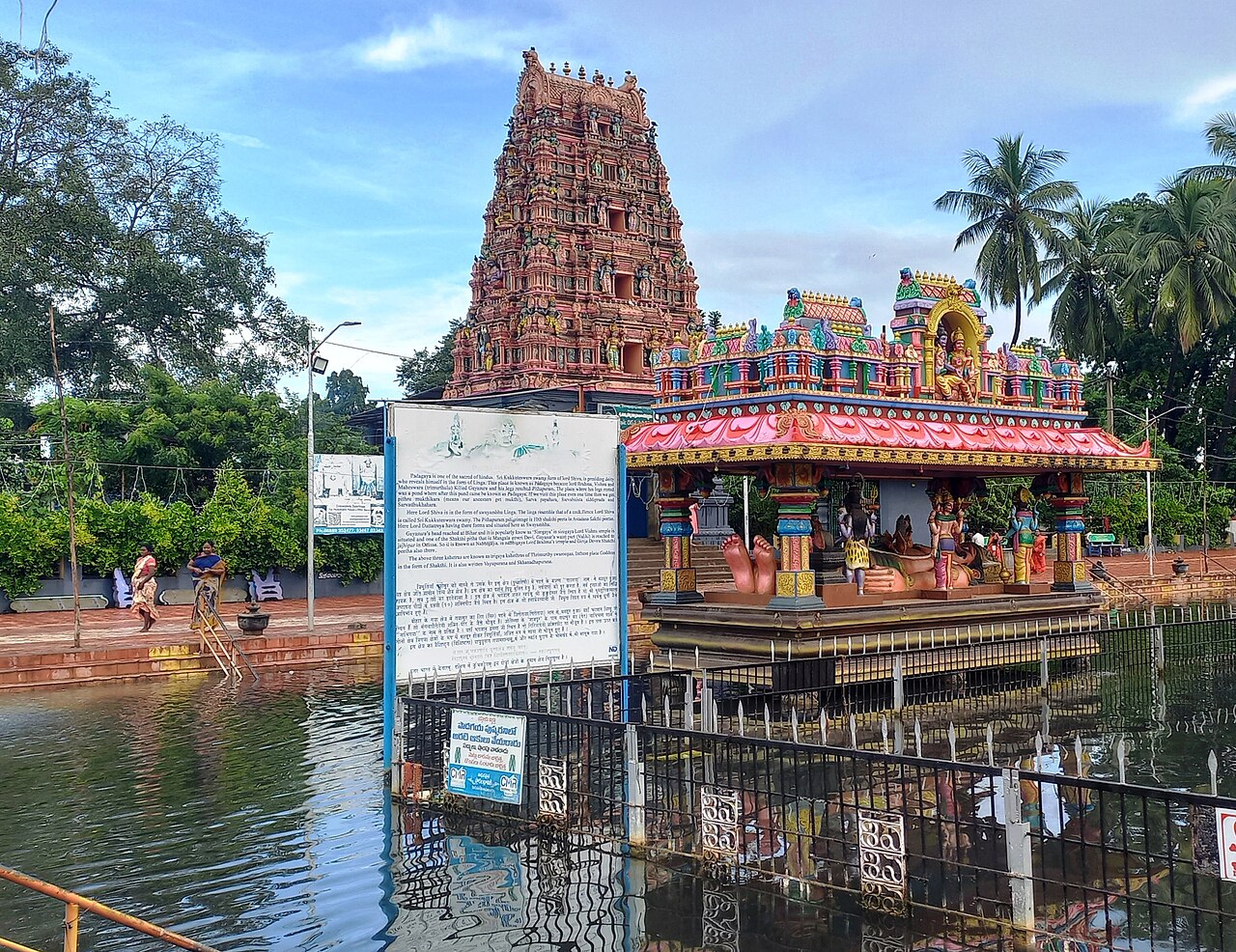
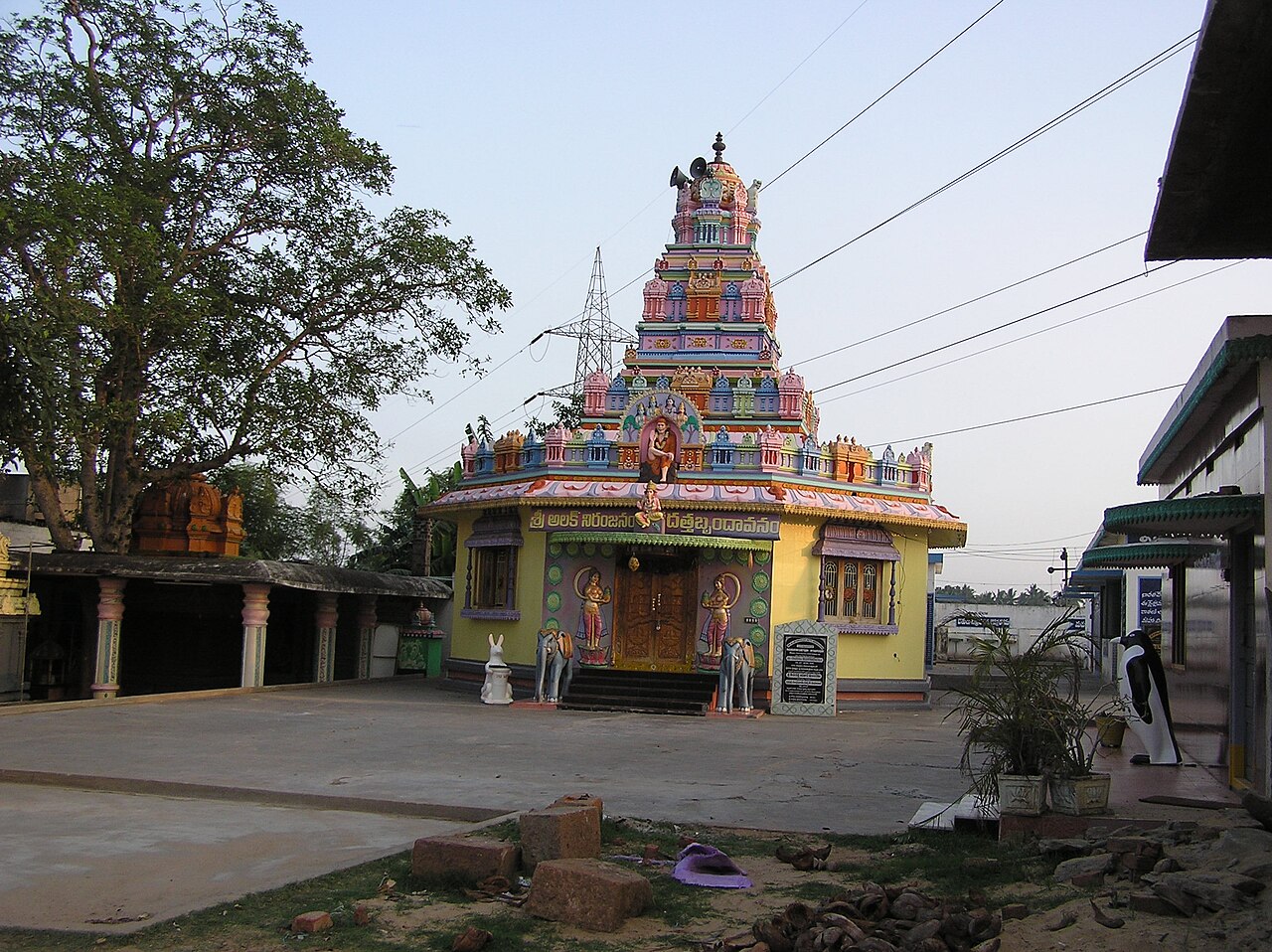
The northern gopuram of the Temple complex where Maa Puruhutika Is EnshrinedWithin the courts of the Kukkuteswara Temple, home To the shrine Of Maa Puruhutika
The gopuram and inner courts at Pithapuram · photos CC, via Wikimedia Commons
The turning of the Temple year
Maha Sivaratri, Navaratri & Maghabahula Ekadasi
Three great observances shape the year here: Maha Sivaratri for the Lord, Navaratri, the Nine nights Given To The Mother, and the devotions of Karthika Masam. Beyond these, the Temple keeps an annual festival of its own for Kukkuteswara, called Maghabahula Ekadasi.
All of these follow the lunar calendar, so the dates move each year. Confirm the current calendar with the Temple office before planning a festival journey.
Plan your visit
Where
Pithapuram town in Kakinada district, Andhra Pradesh.
From Kakinada
About 16 km by road, the nearest city to Pithapuram.
From Tuni & Rajahmundry
About 45 km and 65 km by road respectively.
From Visakhapatnam
About 138 km, the longest of the nearby approaches.
Timings
Darshan hours are not listed in our sources; confirm with the Temple office before you travel.
Festival seasons
Maha Sivaratri, Navaratri and Karthika Masam draw the largest gatherings; expect longer queues around them.
The Goddess here Is Called Maa Puruhutika, and Her shrine Shares one enclosure with Lord Kukkuteswara, so a single visit gives darshan of both.
The Lingam is Spatika, crystal, and Swayambhu, self-arisen; the single-stone Nandi is called Eka Sila Nandi in Telugu.
Pithapuram is named in the Skanda Purana and in an inscription of Samudragupta from about 350 CE, so pilgrims have honoured this ground for more than sixteen centuries.
Questions pilgrims ask
Which part Of Maa Sati Fell here?
Her Hip. Tradition counts Pithapuram among the Fifty-One Shakti Peethas, and the old texts also place it among the Eighteen Maha Shakta Pithas; The Goddess here Is Worshipped as Maa Puruhutika.
Whom will I see in the main sanctum?
Lord Kukkuteswara, Siva in the form of a rooster, present as a self-arisen Spatika Lingam, honoured with his consort Rajarajeswari Devi. The shrine Of Maa Puruhutika stands on the same premises.
When is the main festival?
Maha Sivaratri, Navaratri and Karthika Masam are the principal observances, and an annual festival called Maghabahula Ekadasi honours Kukkuteswara. Dates follow the lunar calendar, so confirm with the Temple office.
Dharamshalas and guest houses near this Sthan, shared by devotees. Adisthan takes no bookings and no money; contact each stay directly.
No stays are listed here yet. Know one that serves pilgrims well?
Are you a priest, trustee, or sevak of the Kukkuteswara Temple? Claim this page to add true timings, festival dates, and a way for pilgrims To actually reach you.