Nalhati · Birbhum, West Bengal Sindoor-laden Face · Golden red Tongue The Throat that never overflows Darshan 5:30 am to 8:30 pm One stop from Rampurhat Junction
Water is always moving in the sanctum at Nalhati. Poured down the Throat Of Maa in worship, it never overflows, and left alone for days it never dries. The town itself carries Her Name, for nala is the throat, and this Is Nalateswari: The Goddess Whose Throat Rests here, Worshipped as Maa Kalika with a golden red Tongue and Three great Eyes.
One of the Fifty-One Shakti Peethas: when the Sudarshan Chakra of Vishnu parted The Body Of Maa Sati, the throat (nala) Of Maa Sati Fell here at Nalhati, and the town has carried Her Name ever since.
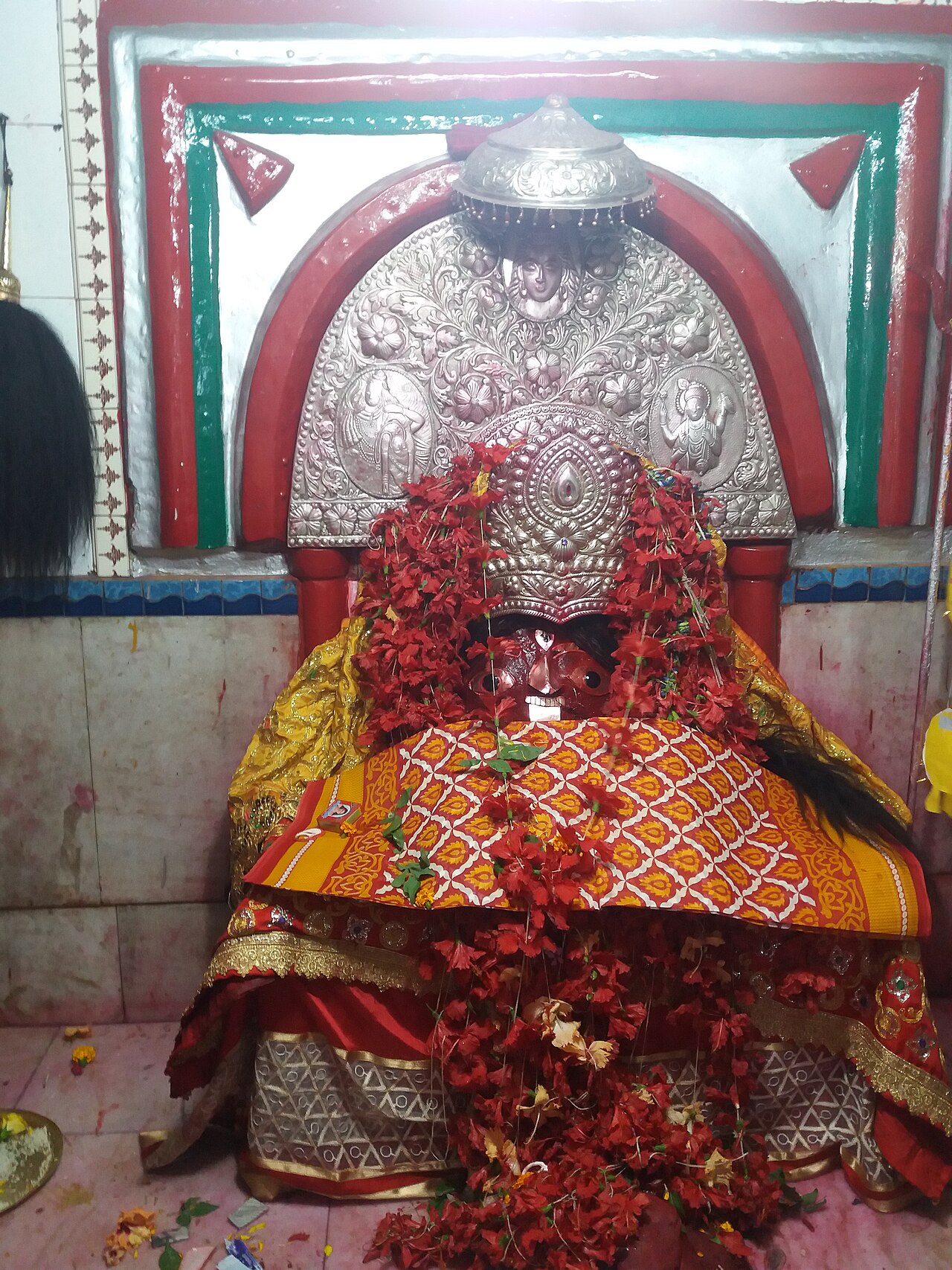
Maa Nalateswari Is Worshipped as Maa Kalika, a swayambhu, self-manifested Presence: Her Face laden with sindoor, Her Three great Eyes open, Her Tongue a red gold. Jogesh Bhairab keeps guard over Her Seat.
Below the golden Tongue lies the Nala, the Throat Of The Goddess. However much water devotees pour down It, It never overflows, and without water for days It never dries.
The story the town is named for
The telling begins, as at every Peetha, with grief. When Daksha shamed his daughter Maa Sati and her husband Shiva at the great yajna, She gave up Her body, and Shiva carried Her across the worlds in a sorrow that would not be stilled. To calm him, Vishnu loosed the Sudarshan Chakra, and The Body Of The Goddess was parted into Fifty-One pieces. Where each piece landed, a Shakti Peetha was born. At Nalhati the tradition names the nala, Her Throat, the passage of breath, of sound, of life itself.
Two founders are remembered here. One telling says Kamdev, the god of love, discovered the Throat Of Maa in the forest of Nalhati in the 252nd year of the Bengali calendar. Another names Ram Sharan Devsharma, a devoted seeker who found the Nala and began Her worship. Accounts record a Temple raised under the Malla kings around the 16th century, and the building that stands today was restored in the late 19th century by Maharaja Ranajit Singha of Nashipur after the earthquake of 1897.
What you'll actually see
1
The Face in the sanctum
Maa Is not a carved statue but a swayambhu Presence. Devotees meet a Face laden with sindoor, Three great Eyes, and a Tongue of red gold; accounts describe a silver crown bearing images of Shiva, Maa Kali, and Maa Durga. Below the Tongue waits the Throat that receives every offering of water.
2
Govinda eats first
At this Peetha, bhog is offered first to Lord Govinda and only then To The Goddess. The district tourism authority notes this as unique among the Sati Pithas of Birbhum: Shakta and Vaishnava devotion sharing one kitchen and one altar.
3
A district of Seats
Birbhum holds a remarkable cluster of Shakti Peethas, and Nalhati is one of its crowns. Beside the shrine rises Parvati Pahar, a low hill that Tantra practitioners hold to be the most sacred ground in the area, and the Guhya Kali Temple at Akalipur lies within a short drive.
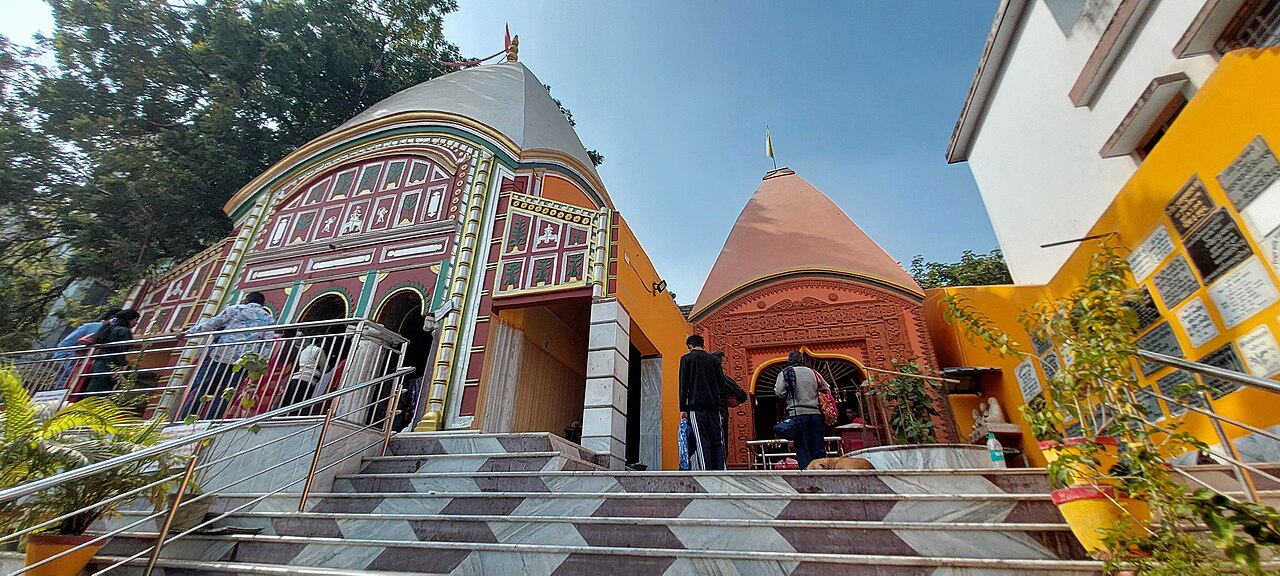
Maa Nalhateswari Temple at Nalhati, BirbhumThe sindoor-laden Face Of Maa Nalateswari in Her sanctum
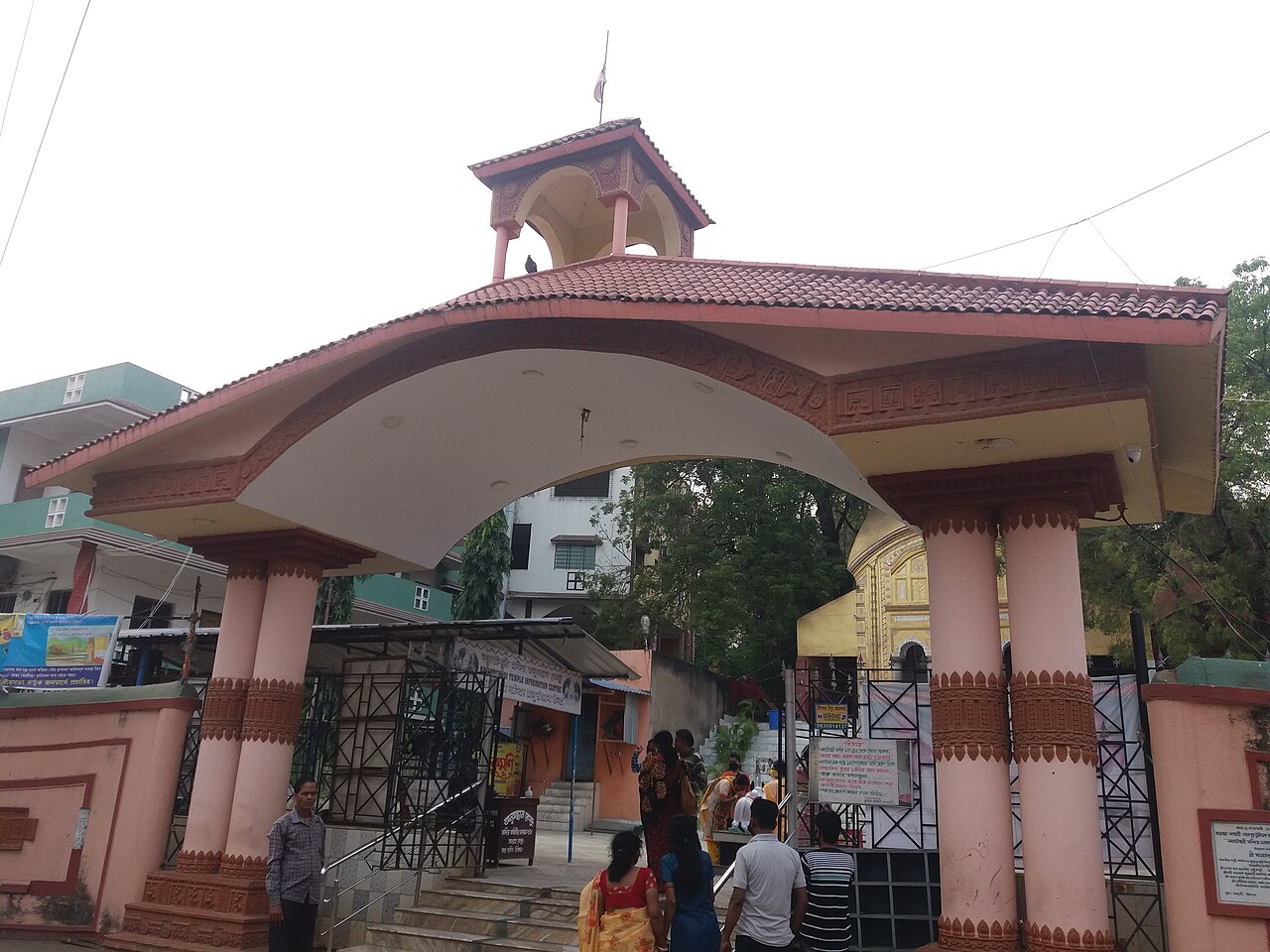
The temple at Nalhati and The Face Of Maa Nalateswari · photos by Pinakpani (CC BY 4.0) and Tarunsamanta (CC BY-SA 4.0), Wikimedia Commons
The festival the kitchen remembers
The Anna Bhog of Rani Bhavani · Ashar Shukla Chaturdashi
Each year, on Shukla Chaturdashi in the Bengali month of Ashar, the Temple marks the day Anna Bhog was first offered To Maa from the household of Rani Bhavani of Natore, with special worship and yajna. The custom lives on daily: Anna Bhog is cooked and served to visitors every afternoon, offered first to Lord Govinda and then To The Goddess.
Navaratri, Kali Puja, and Shivaratri also draw the largest gatherings, and pilgrims throng the sanctum on the Mahanavami days of October. Book bhog ahead through the Temple office.
Plan your visit
Where
Nalhati town, Birbhum district, West Bengal 731243, near the Jharkhand border.
Getting there
Nalhati Junction is one railway station from Rampurhat Junction; about 15 km from Rampurhat by road and roughly 238 km from Kolkata.
Timings
Sanctum generally open 5:30 am to 8:30 pm, with seasonal variation; confirm with the Temple office.
Bhog
Daily Anna Bhog around 1:30 pm, at a donation of Rs 51 per serving; advance booking through the Temple office is recommended.
Best time
October to February is the kindest season; Navaratri and Dusshera are held the most auspicious days for darshan.
Dress
Modest dress with shoulders and knees covered honours the sanctum.
Her Name joins nala, the throat, with Ishwari, The Goddess: She Whose Throat Rests here. The Temple's formal name is Shri Shri Parbati Mata Devi Thakurani, and Her Bhairava is Jogesh.
Devotees seek Maa Nalateswari for the healing of throat ailments, for clear speech, and for protection, for the throat is the passage of breath and sound.
A guesthouse stands beside the Temple, and visitors can take Anna Bhog daily. The Guhya Kali Temple at Akalipur, where tradition says King Jarasandha himself worshipped The Goddess, is reachable by car.
Questions pilgrims ask
What does Maa look like in the sanctum?
Maa Nalateswari Is a swayambhu, self-manifested Presence: a Face laden with sindoor, Three great Eyes, and a Tongue of red gold. Below the Tongue lies the Nala, the Throat Of Maa Sati, which receives the water poured in worship.
Which part Of Maa Sati Fell here?
Tradition holds it was Her Throat, the nala, parted from Her Body when Vishnu's Sudarshan Chakra stilled Shiva's grieving dance. The town of Nalhati is named for It.
What are the darshan timings?
The sanctum generally opens from 5:30 am to 8:30 pm, with seasonal variation. Daily Anna Bhog is served around 1:30 pm. Confirm current hours and bhog booking with the Temple office before you travel.
Dharamshalas and guest houses near this Sthan, shared by devotees. Adisthan takes no bookings and no money; contact each stay directly.
No stays are listed here yet. Know one that serves pilgrims well?
Are you a priest, trustee, or sevak of Maa Nalhateswari Temple? Claim this page to add true timings, festival dates, and a way for pilgrims To actually reach you.