Old Dhaka, Bangladesh Founded c. 1100, Sena era Durga Puja · Dhaka's largest National Temple since 1996 Peetha of the Gem Of Maa Sati's Crown
Old Dhaka presses close around you: rickshaw bells, vendors calling, lanes older than memory. Then a gateway opens and the noise falls away, and you stand where a nation's flag rises each morning beside a Shrine older than the city's own name. This Is Maa Dhakeshwari, The Goddess Of Dhaka. The city Is Hers before it is anyone else's.
One of the Fifty-One Shakti Peethas: here, tradition holds, the Gem From The Crown Of Maa Sati fell to earth. The gem itself was lost long ago, yet Her Presence never left this ground.
The ancient metal Vigraha Of Maa was carried To Kumortuli, Kolkata at partition by the chief priest, and She Is still Served there daily. A faithful replica Of Her Image Is Worshipped in Dhaka today.
The National Temple of Bangladesh since 1996, the largest Hindu Temple in the country, and its foremost Hindu place of worship since 1971.
The story the city carries
When Maa Sati, The First Consort Of Shiva, gave up Her body, Her grieving Lord carried Her across the worlds, and the Body Of The Goddess came to earth in Fifty-One pieces. Where each piece landed, a Shakti Peetha was born. Upon this ground, the tellings say, fell the Gem From Her Crown.
Centuries later, around 1100 CE, King Ballal Sen of the Sena dynasty raised a Temple To The Goddess here, and the city that grew around it took Her Name: Dhaka, home Of Maa Dhakeshwari. Rebuilding and renovation have remade the structure many times since, but the old bond holds. The tellings even say Ballal Sen himself was born after his mother, wife of King Vijaya Sena, bathed at Langolbond.
What you'll actually see
1
The Pancharatna shrine
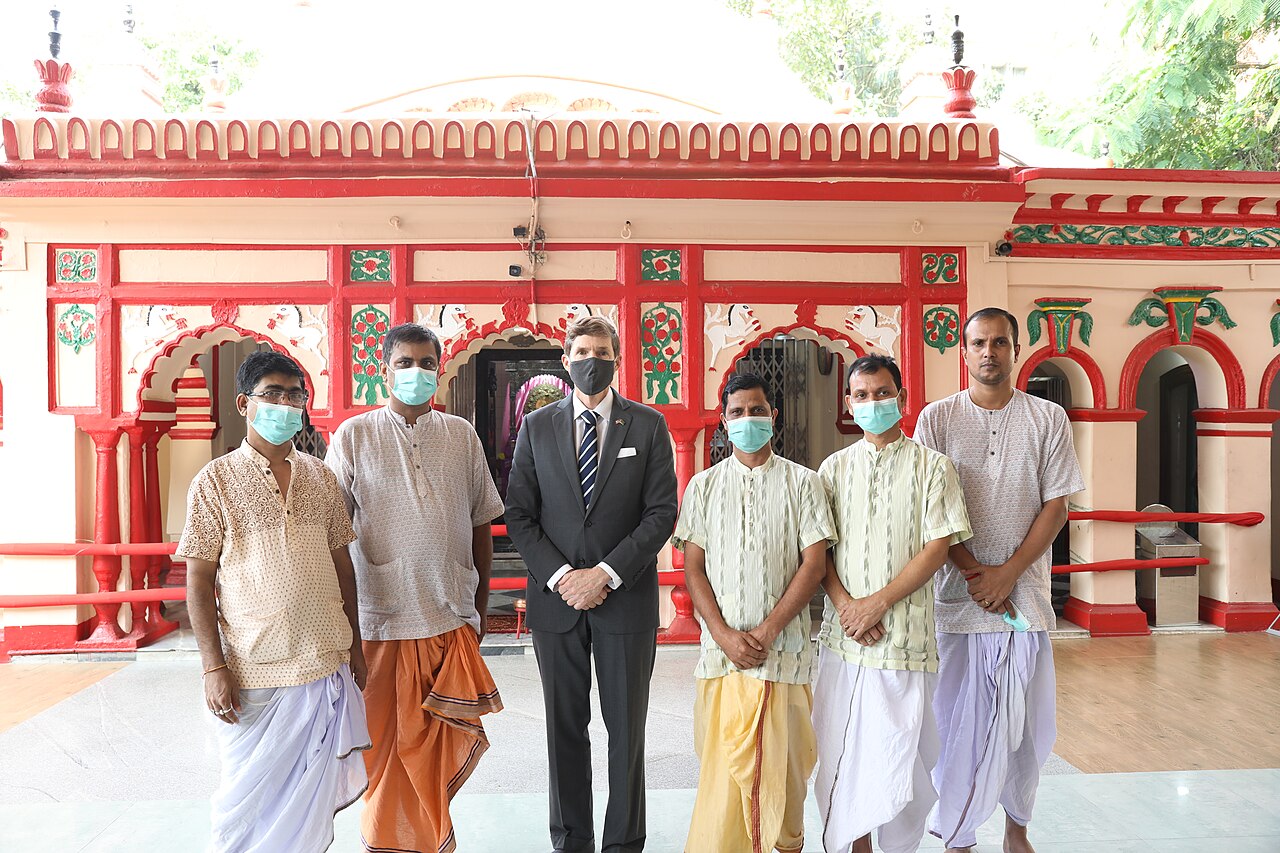
The heart of the complex is the ancient five-pinnacled shrine Of Maa Durga. Renovation over the centuries has changed its original face, yet it remains the old core, counted an essential part of Dhaka's cultural heritage.
2
The four Shiva Temples
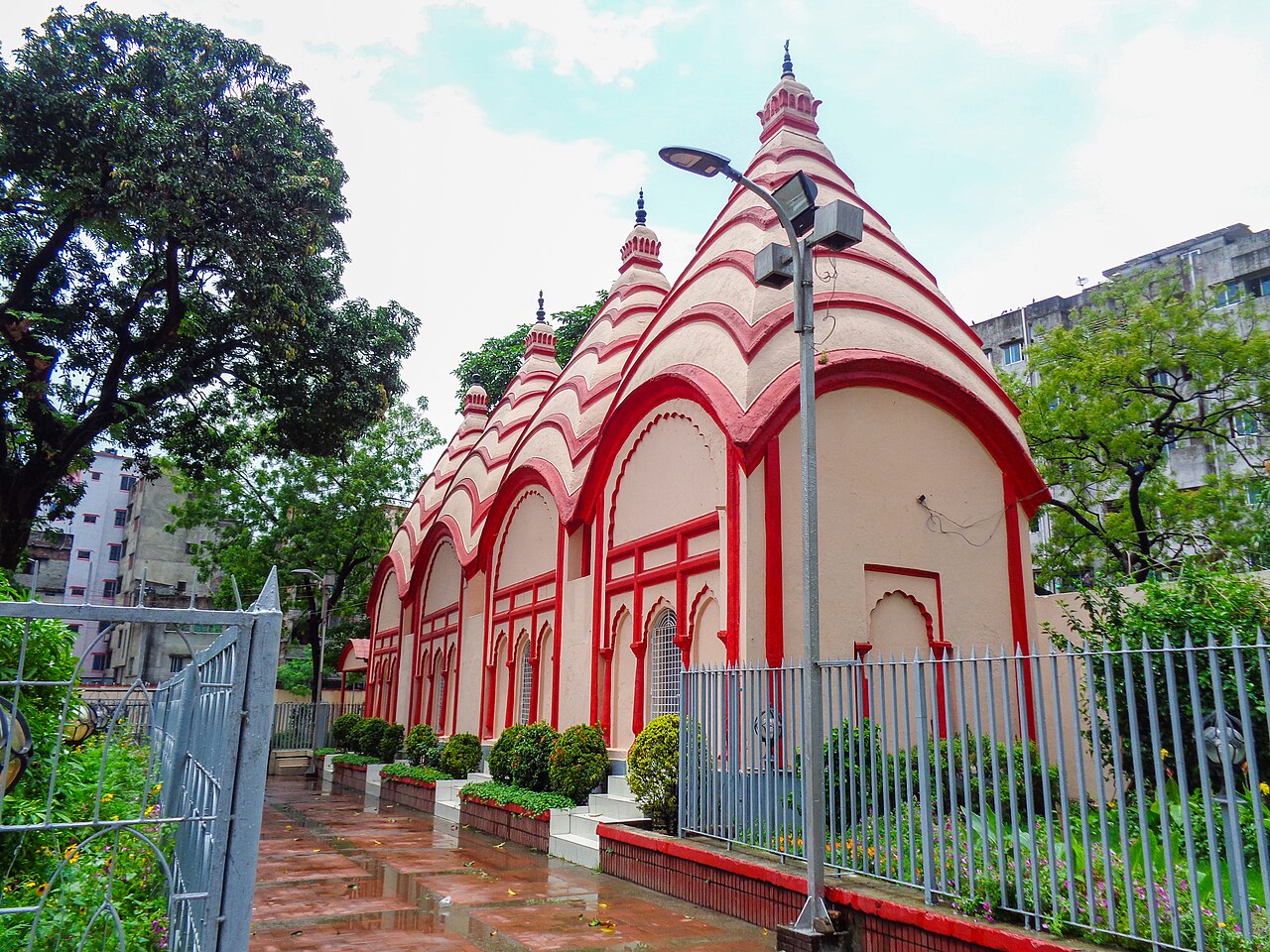
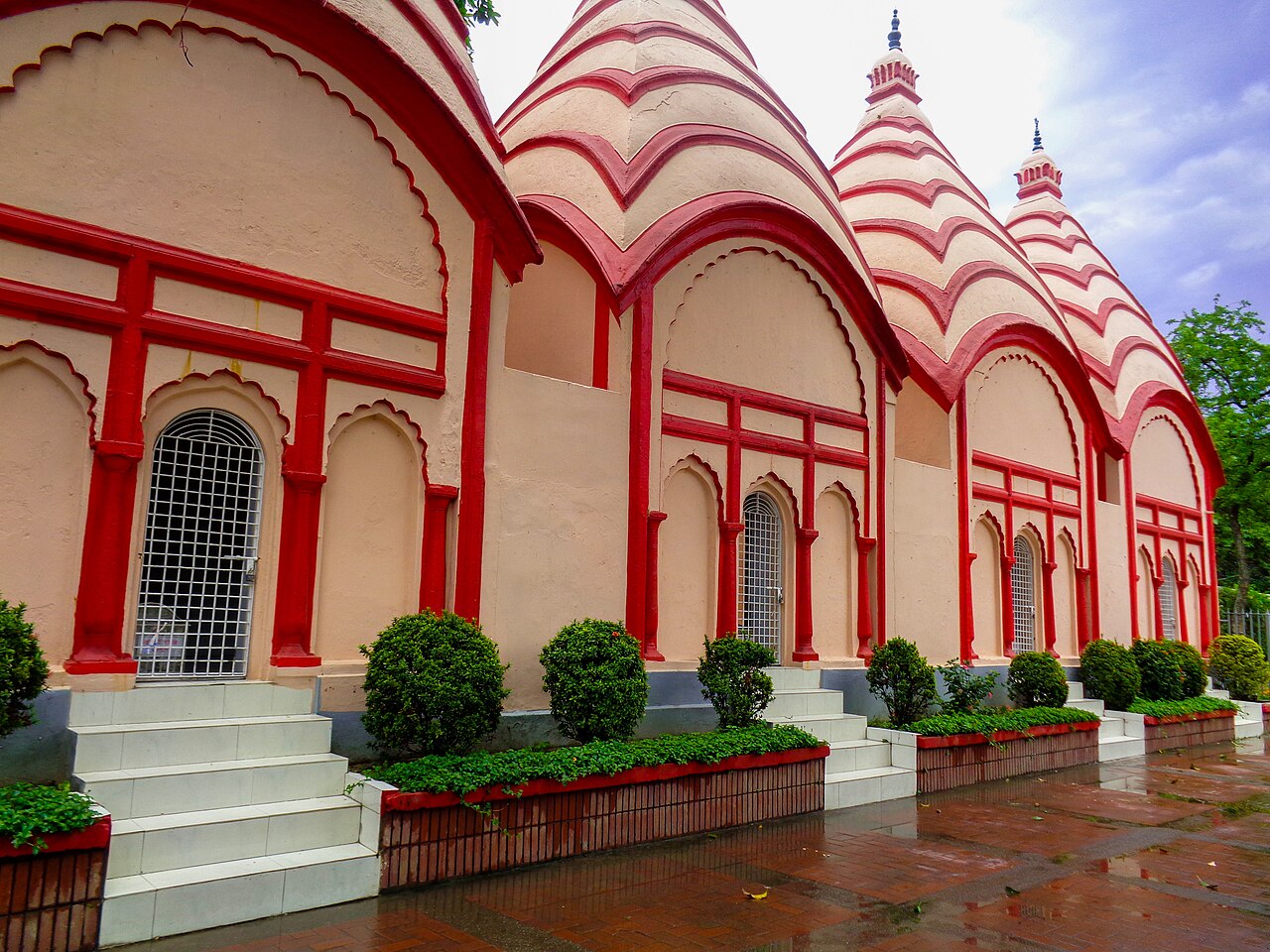
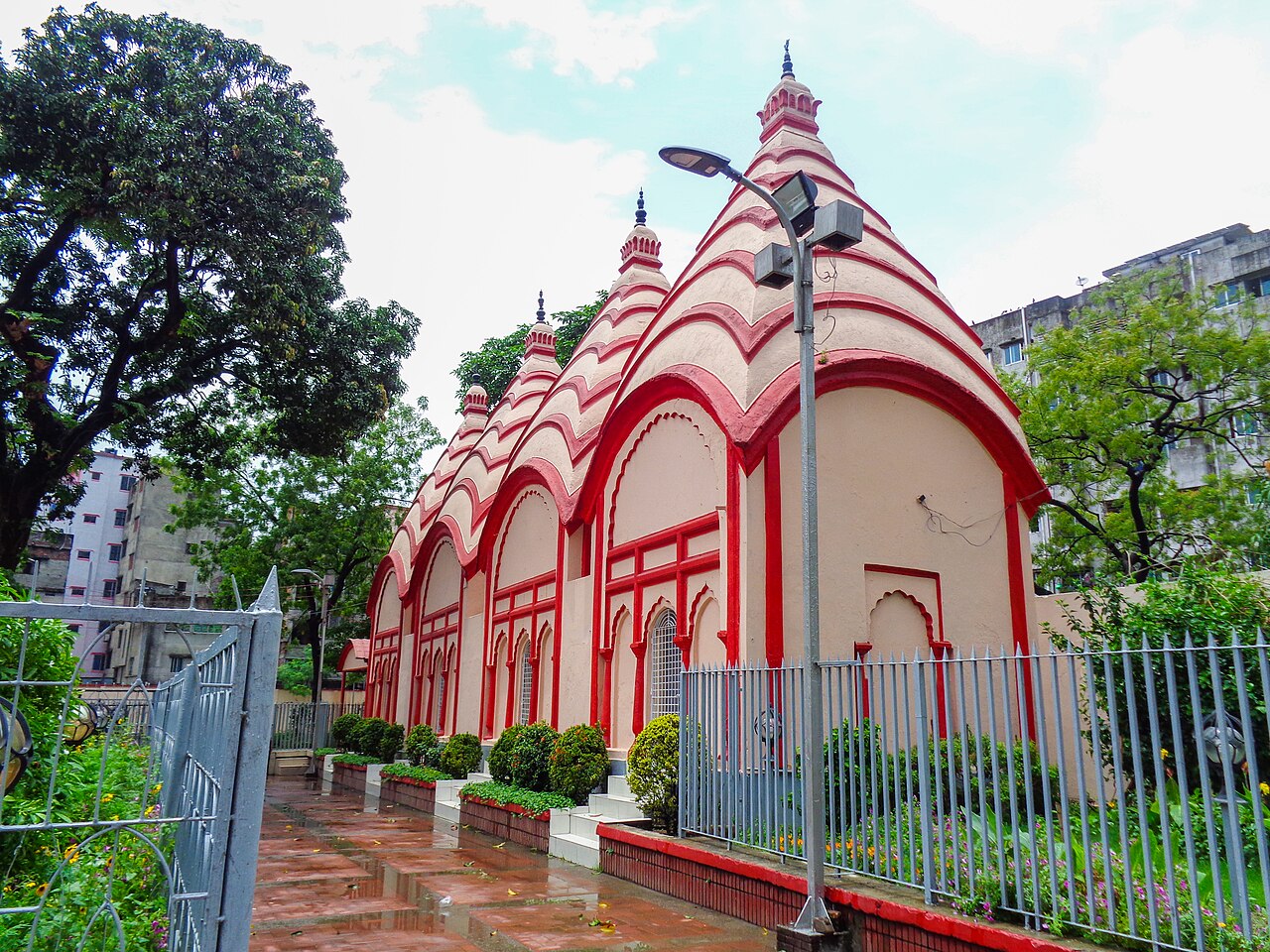
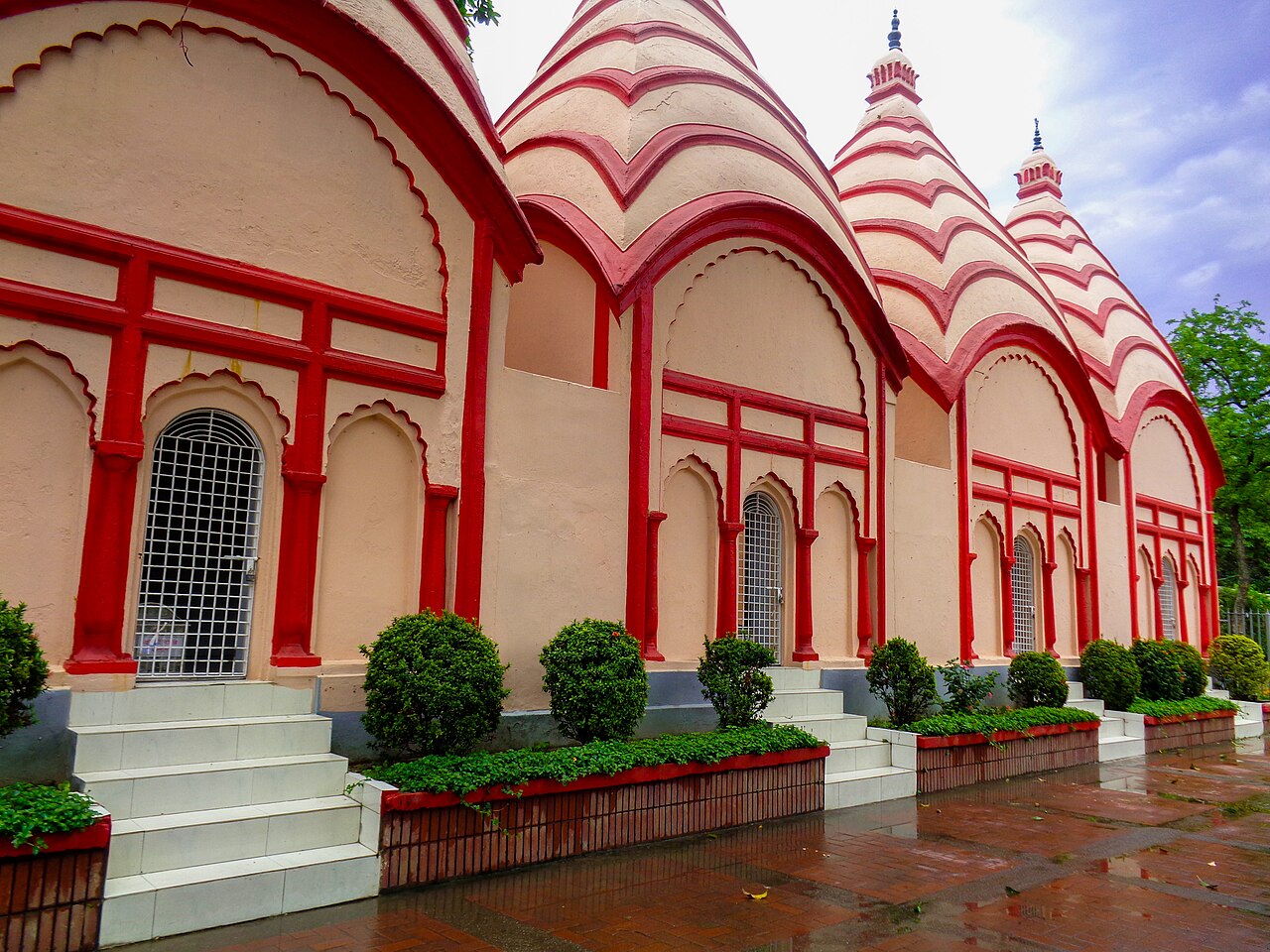
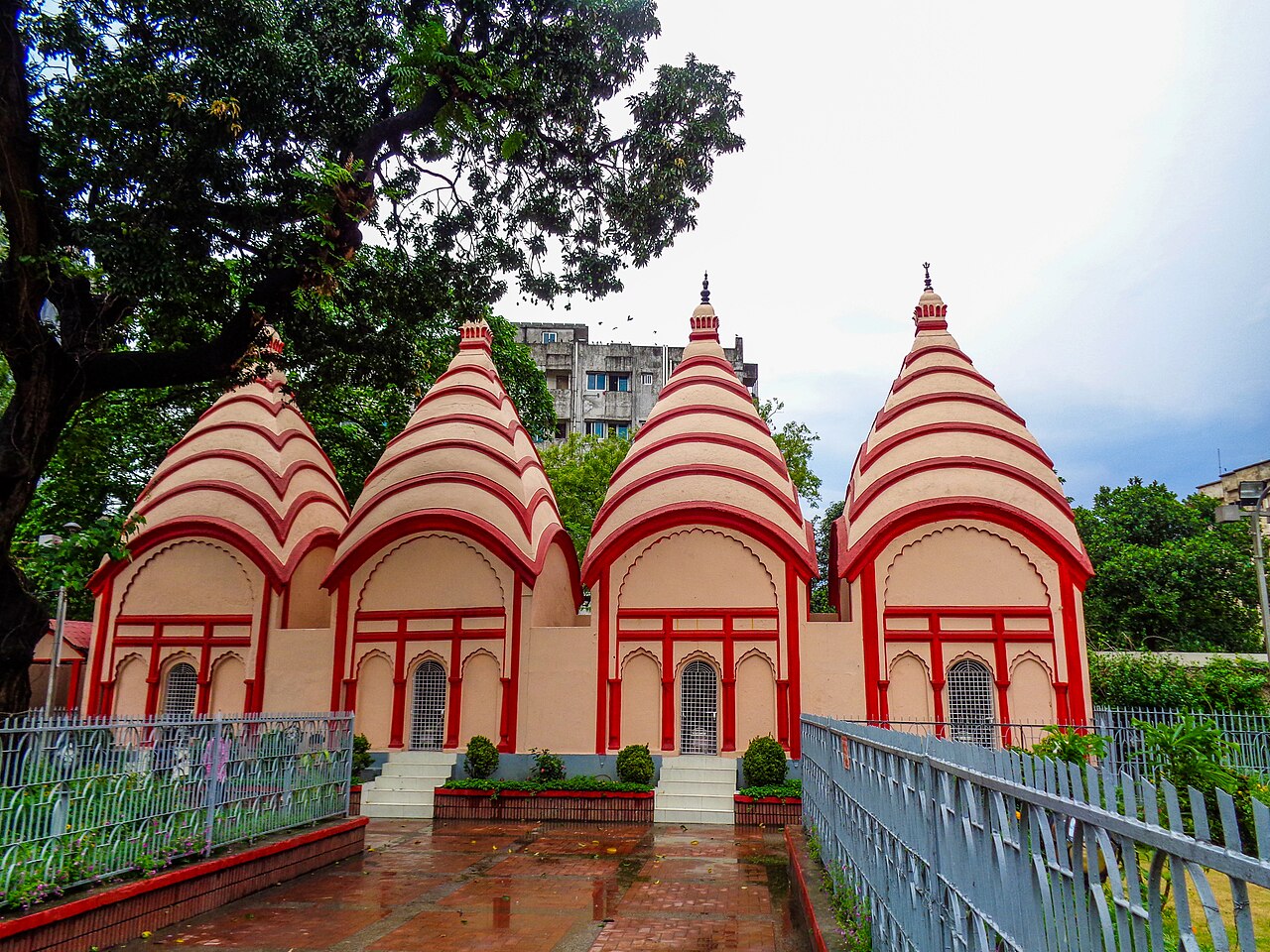
Within the same walled premises stands a row of four Shiva Temples, each with a shivalinga. Around them lie the natmandir at the front, rows of rooms, and a large pond; a gate called the nahobottola once let elephants pass through.
3
Her Image and its Kolkata twin
The original Image, about 1.5 feet tall, shows Maa Durga with Ten Arms upon Her lion as Maa Katyayani Mahishasurmardini, with Maa Lakshmi, Maa Saraswati, Kartik and Ganesha at Her sides. It Is Worshipped at Kumortuli, Kolkata; Her replica presides here in Dhaka.
The four Shiva Temples within Maa Dhakeshwari's precincts, seen from the northThe row of Shiva Temples beside Maa Dhakeshwari's shrine, seen from the south
The four Shiva temples within Her precincts · photos by Alok Majumdar, CC BY-SA 4.0, Wikimedia Commons
When the whole city comes To Her door
Durga Puja at the National Temple
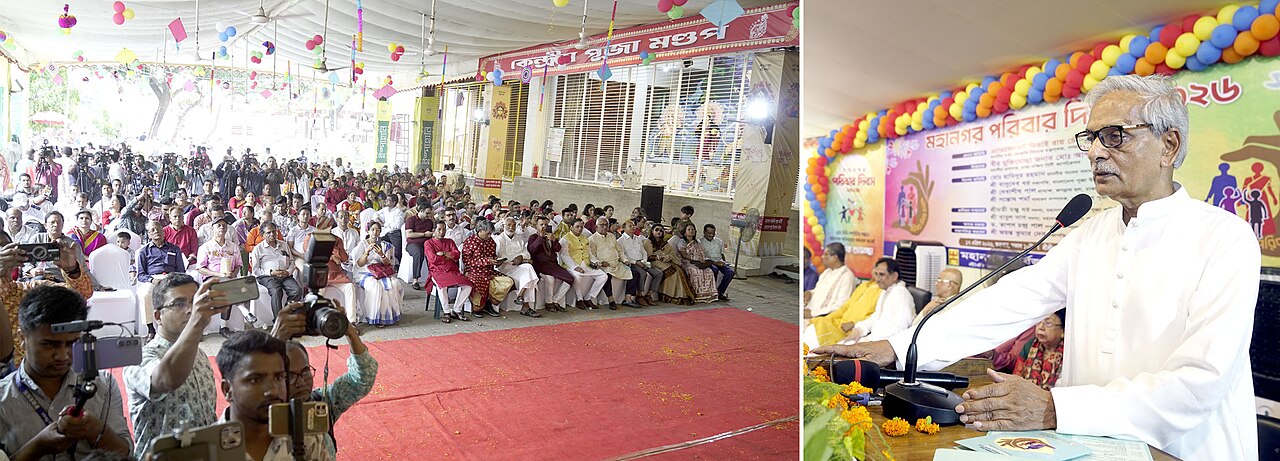
Each autumn, Dhaka's largest Durga Puja fills these courtyards. For five days the rites move through Sashthi, Saptami, Ashtami and Navami while thousands stream through for prasad of rice and lentils, and presidents, ministers and performers come to greet the Hindu community From Her gates. On Bijoya Dashami, the images Of Maa Durga and Her four children are carried in procession To the river for immersion.
A few days after the Puja, the Bijaya Sammelani cultural program fills the adjoining parade ground with some of Dhaka's finest performers. The Janmashthami procession, first walked in 1902 and revived in 1989, also sets out From this Temple through the streets of Old Dhaka.
Plan your visit
Where
In Old Dhaka, at the heart of the Bangladeshi capital that carries Her Name.
By air
Fly into Dhaka; the Temple is in the old city. Confirm current transport advice with the Temple office.
Timings
Not published here. Day-long prayers are held on major national holidays; confirm darshan hours with the Temple office.
Festivals
Durga Puja each autumn is the year's peak; the Janmashthami procession leaves From the Temple on Krishna's birthday, a public holiday in Bangladesh.
Dress
Modest dress, as at any Hindu shrine; confirm specific customs with the Temple office.
Prasad
During Durga Puja, worshippers moving through the premises are offered prasad, usually rice and lentils.
Maa Dhakeshwari means The Goddess Of Dhaka: the city Is Named After Maa Herself.
Bangladesh's national flag rises outside the main premises every morning and flies at half-mast on declared days of mourning, for this is the country's state-owned National Temple.
Like many ancient shrines, the sanctum is dark inside, and light is arranged so devotees can see The Deity. Through the year the Temple also hosts blood drives, inoculation programs, concerts and relief work open to the whole city.
Questions pilgrims ask
Is the original idol of Maa Dhakeshwari here?
No. The ancient Image was carried To Kumortuli, Kolkata at the time of partition and Is still Worshipped there every day by descendants of the Tiwari priest family. Her faithful replica Is Worshipped here in Dhaka.
Why is this called the National Temple?
In 1996 the Temple was renamed Maa Dhakeshwari Jatiya Mandir, the National Temple, after a long campaign by Bangladeshi Hindu groups. No other Muslim-majority country in the world has a National Hindu Temple.
When should I come?
Come during Durga Puja for the largest celebration in Dhaka, when thousands of worshippers fill the premises and prasad is offered. For quieter darshan choose an ordinary day, and confirm current hours with the Temple office.
Dharamshalas and guest houses near this Sthan, shared by devotees. Adisthan takes no bookings and no money; contact each stay directly.
No stays are listed here yet. Know one that serves pilgrims well?
Are you a priest, trustee, or sevak of Maa Dhakeshwari Temple? Claim this page to add true timings, live darshan updates, and a way for pilgrims To actually reach you.