Where Her Third Eye Fell to earth, even the burning ground learned to see.
Be the first to check in
Entry tended 2 Jul 2026
One of Fifty-One Shakti Peethas Second Of The Ten Mahavidyas On the Dwarka River Rampurhat · about 6 km Birbhum, West Bengal
You cross the flood plain of the Dwarka, green paddy on every side, and the village looks like any other in rural Bengal: thatched roofs, fish ponds, sweet shops by the lane. Then you catch the smoke drifting from beyond the shrine, and you understand where you are. Here Maa Tara Is Worshipped beside a burning ground, and thousands of pilgrims still come to Her every single day.
One of the Fifty-One Shakti Peethas: tradition holds that the Third Eye Of Maa Sati Fell here, The Eye That Sees beyond life and death, and this riverside ground became forever Hers.
A tantric Temple Of The Goddess that shares its sacred ground with a Hindu cremation ground; the two form one landscape where devotion and death sit side by side Before Her.
The home of Bamakhepa, the tantric saint who worshipped Maa inside the Temple and lived out among the cremation grounds; his ashram still stands on the Dwarka riverbank close by.
The story the burning ground remembers
The old telling says that when Maa Sati, The First Consort Of Shiva, Gave Up Her Body in the fire of Her father's insult, Shiva carried Her across the worlds in a grief that would not end. To save creation, Vishnu's discus cut The Body Of The Goddess into Fifty-One pieces, and wherever a piece touched the earth, a Shakti Peetha arose. Upon this ground beside the Dwarka, tradition holds, Fell Her Third Eye, and so the place took Her Name: Tarapith, The Seat Of Maa Tara.
Here She Is Known as Maa Tara, The Second Of The Ten Mahavidyas, and Her worship has kept its tantric character through the centuries. Most beloved of all who served Her was Bamakhepa, the saint who prayed inside Her Temple and made his home among the cremation fires outside it. Pilgrims still walk from Her Sanctum to his ashram on the riverbank, holding both in a single devotion.
What you'll actually see
1
One shrine, two sacred grounds
The Temple and the crematory ground beside it are not separate places; together they form the sacred landscape that gives Tarapith its tantric character. Devotees approach Maa Tara through this meeting place of life and death, as seekers here have done for generations.
2
Bamakhepa's ashram
On the bank of the Dwarka river, a short distance from the Temple, stands the ashram of Bamakhepa. The saint is remembered for practicing his sadhana both inside The Goddess's Temple and out among the burning grounds, and those who honour his memory fold the ashram into their pilgrimage.
3
A village that stayed a village
Tarapith remains a settlement of Sahapur Gram Panchayat, ringed by paddy fields on the river's flood plain, with thatched-roof homes and fish tanks of the Bengal countryside. The great shrine never made the village grand; the pilgrims come to Her, and the paddy grows on.
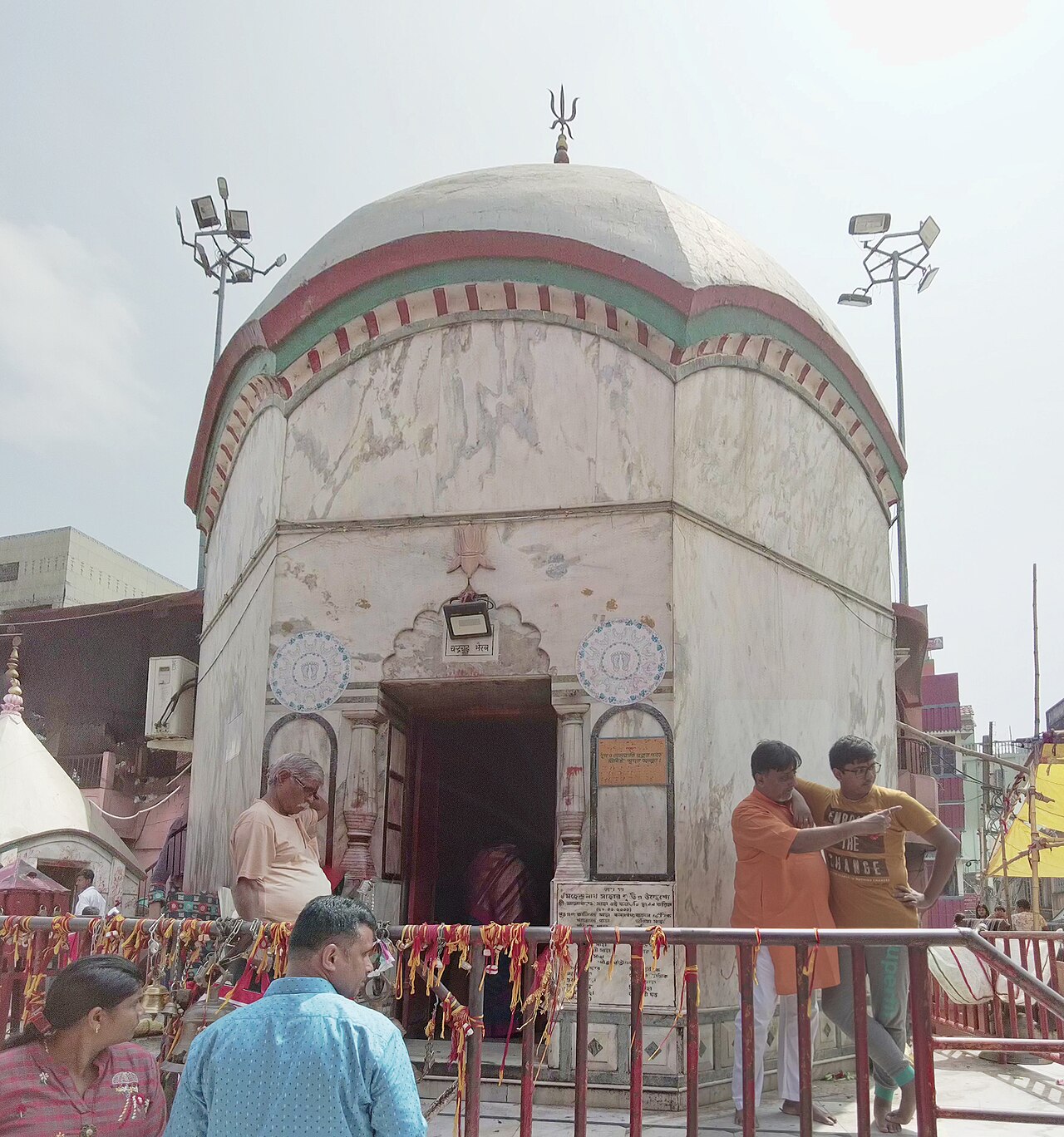
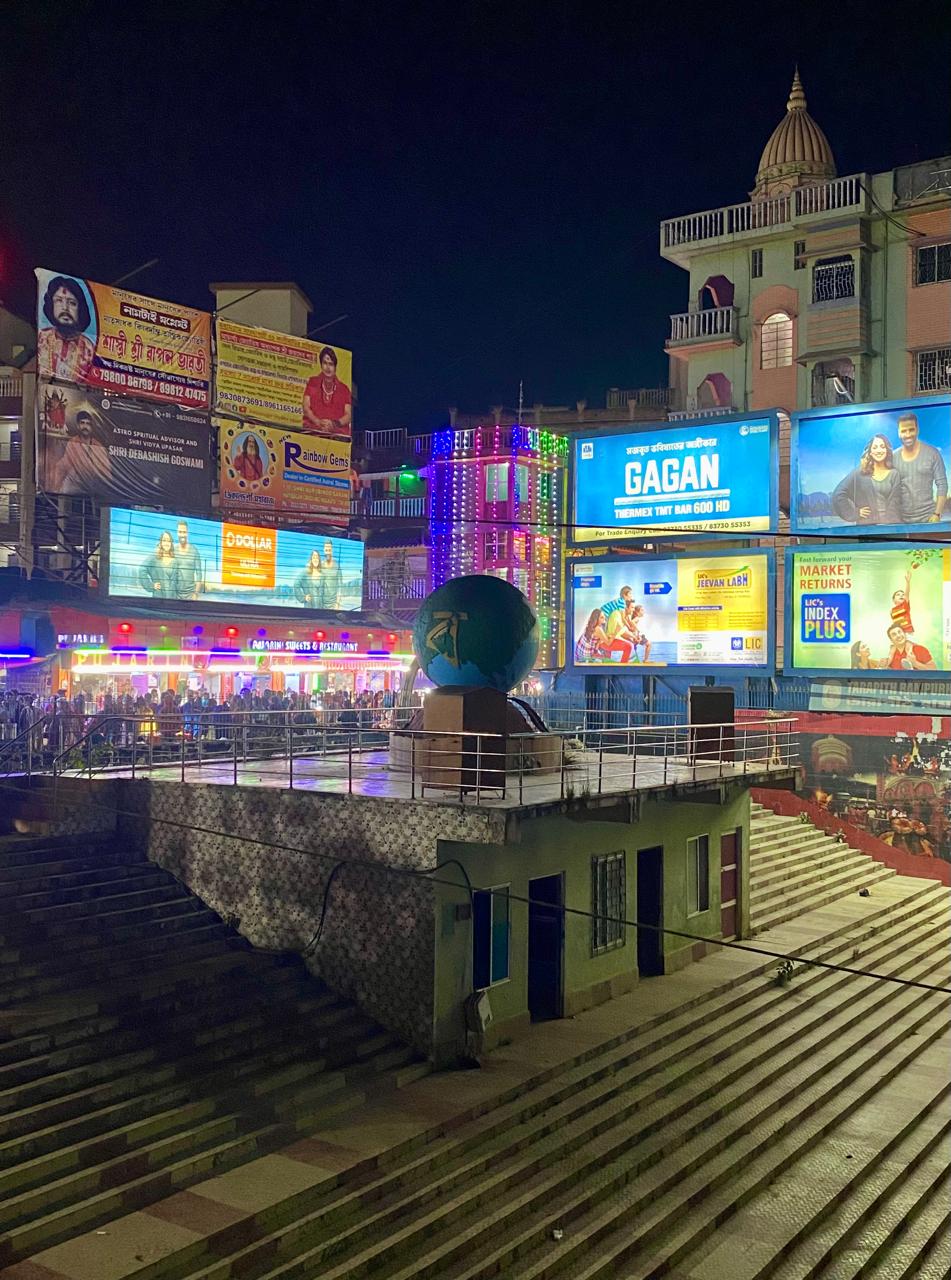
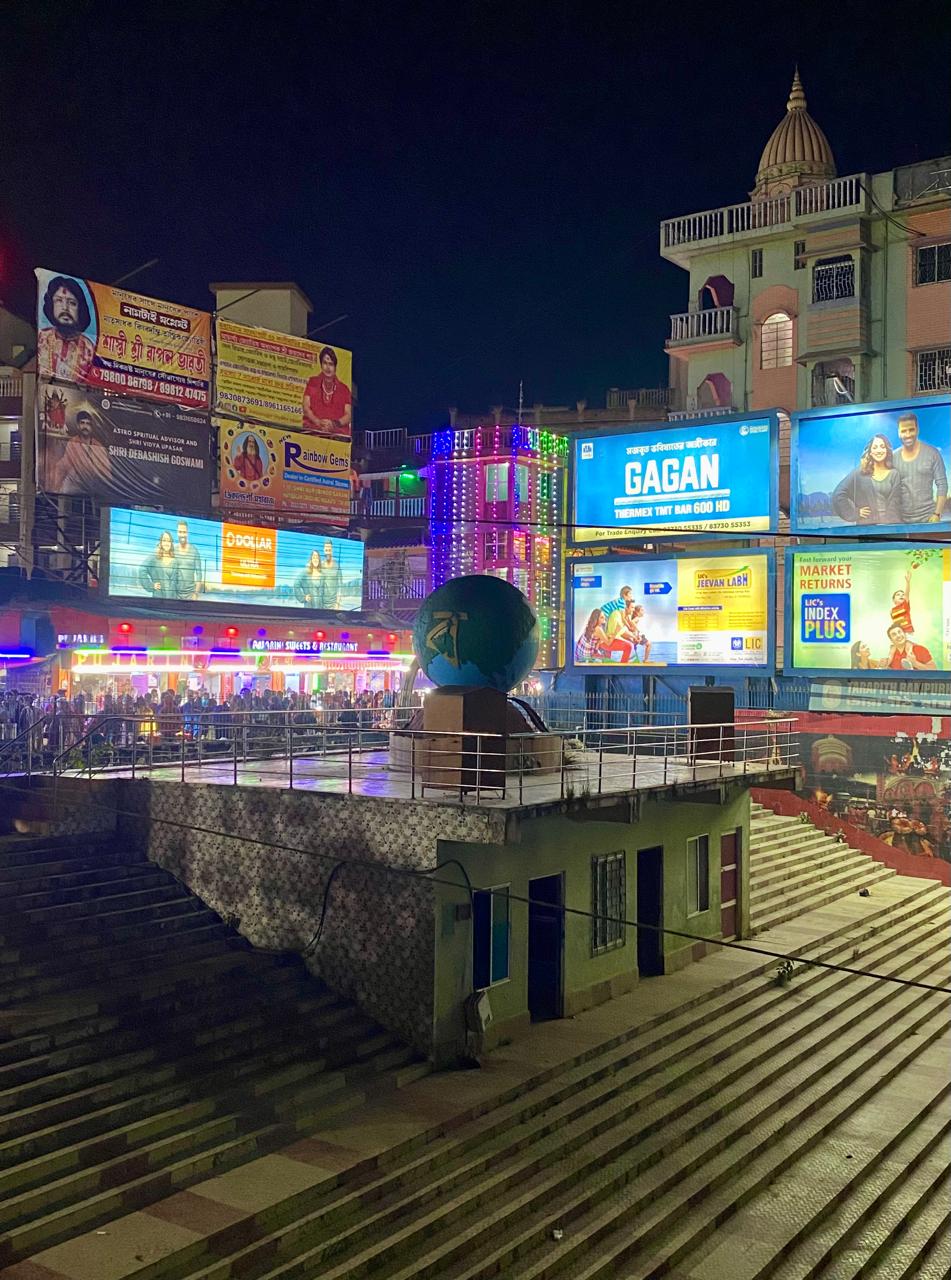
The Chandrachur Bhairav shrine at Tarapith, part of Maa Tara's sacred groundBiswa Bangla Ghat on the Dwarka River, the water that flows past Maa Tara's village
The Bhairav shrine, and the ghat on the Dwarka · photos CC BY-SA / CC BY, Wikimedia Commons
The saint who would not leave Her
Bamakhepa, the mad saint of Tarapith
Among all who have loved Maa Tara on this ground, none is remembered like Bamakhepa. The tantric saint worshipped Her within the Temple walls and lived among the cremation grounds outside them, refusing any wall between devotion and death. His ashram still stands beside the Dwarka river near the Temple, and pilgrims visit it to this day.
For most pilgrims the Temple and the ashram are one journey, not two; keep time in your darshan for both.
Plan your visit
Where
Rampurhat subdivision, Birbhum district, West Bengal, on the banks of the Dwarka River.
By rail
The closest railway stations are Rampurhat and Tarapith Road; Rampurhat town lies about 6 km from the village.
Timings
Thousands of pilgrims come for darshan every day; exact hours are not published here, so confirm with the Temple office before you travel.
Best time
The shrine draws devotees year round; ask locally which hours run quietest on the day you visit.
On foot
The Temple, the cremation ground, and Bamakhepa's ashram on the riverbank sit close together and are covered on foot.
Dress
Modest dress, as at any Shakti Peetha; confirm any specific customs with the Temple office.
Worship at Tarapith is tantric in character, and Maa Tara Is The Second Of The Ten Mahavidyas; the shrine may feel different from other Temples you know, so come unhurried.
The cremation ground beside the Temple is part of the sacred landscape, not apart from it; move through with quietness and respect.
Tarapith is still a small riverside village of paddy fields and thatched homes; keep plans simple, and confirm practical details with the Temple office.
Questions pilgrims ask
Why is Tarapith called a Shakti Peetha?
Tradition holds that when The Body Of Maa Sati came to earth in Fifty-One pieces, Her Third Eye Fell on this ground beside the Dwarka, making Tarapith one of the Fifty-One Shakti Peethas and The Seat Of Maa Tara.
Why is there a cremation ground at the Temple?
The Temple and the adjoining crematory ground form one sacred landscape of tantric worship. Devotees have long approached Maa Tara through this meeting place of life and death, and the saint Bamakhepa himself lived among these grounds.
How do I reach Tarapith?
By rail, the closest stations are Rampurhat and Tarapith Road; the village lies about 6 km from Rampurhat town in Birbhum district, West Bengal. From either station the remaining distance is short.
The Sthan in photographs
Walk the sacred map
This Is one Seat among many. Her Body Fell across the whole of the old world:
Dharamshalas and guest houses near this Sthan, shared by devotees. Adisthan takes no bookings and no money; contact each stay directly.
No stays are listed here yet. Know one that serves pilgrims well?
Are you a priest, trustee, or sevak of Maa Tara Temple, Tarapith? Claim this page to add true timings, live darshan updates, and a way for pilgrims To actually reach you.