Sri Darbar Sahib complex · Amritsar, Punjab, India
Where the Timeless One holds court, and the Guru comes home each night.
Be the first to check in
Coming up: Bandi Chhor Divas · 8 NovEntry tended 29 Jun 2026
Facing Sri Harmandir Sahib Open day and night Founded 1606 by Guru Hargobind Sahib Miri-Piri Divas · 24 Jul 2026 Five storeys · gilded dome Entry free, always
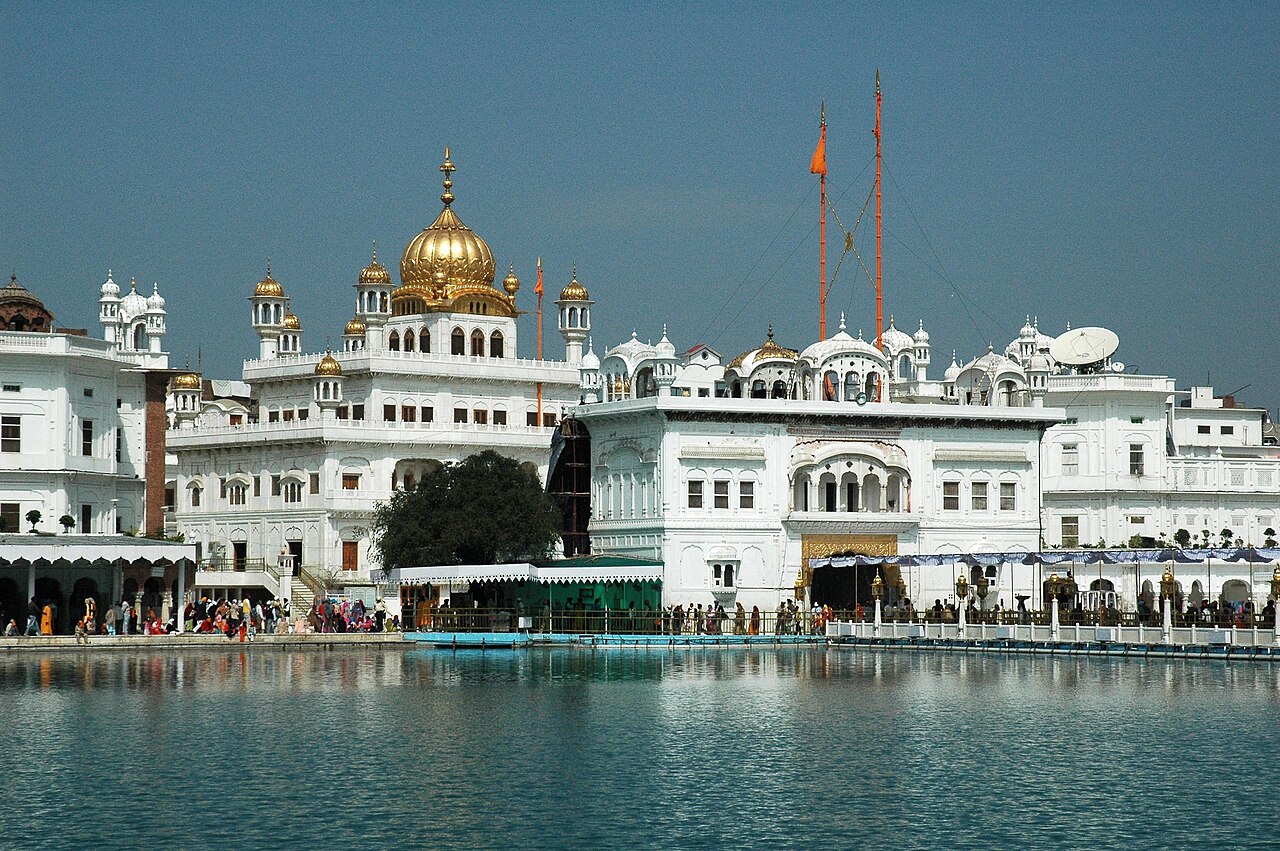
You walk the cool marble of the parikrama, and where the causeway to the sanctum begins, a second gold dome rises to meet you. Two tall Nishan Sahibs stir overhead. At evening, dhadi singers stand before the facade and sing the old ballads of valour, as singers have since the sixth Guru's own court. Sri Harmandir Sahib, across the water, is where the Panth prays. This building is where the Panth decides. It is not another shrine. It is a throne.
The first and highest of the Five Takhts of the Sikhs. From this seat the Jathedar speaks for the Panth, and a hukamnama issued here is binding on Sikh congregations across the world.
Guru Hargobind Sahib raised the first platform in 1606 with Baba Buddha Ji and Bhai Gurdas Ji; tradition holds no other hand touched the work. Wearing two swords, miri and piri, he seated worldly justice beside spiritual authority forever.
When the building was shattered in June 1984, the Panth declined the repair a government had sponsored, took that structure down, and raised the Takht again with its own hands through kar seva, completing the work in 1995.
The throne the Panth built, and built again
In 1606, the year his father Guru Arjan Dev Ji was martyred, the young Guru Hargobind Sahib raised a platform of brick facing the Harmandir. Tradition holds that Baba Buddha Ji and Bhai Gurdas Ji built it with their own hands and that no mason or labourer was allowed to touch it. On 15 June 1606 the Guru sat upon the roughly 3.5 metre high seat wearing two swords, miri for temporal authority and piri for spiritual, and named it the Akal Bunga, the abode of the Timeless One. From here he received petitions and administered justice; the first hukamnama sent to the sangats asked them to bring offerings of arms and horses, and at evening the dhadi singers performed heroic vaars before the throne.
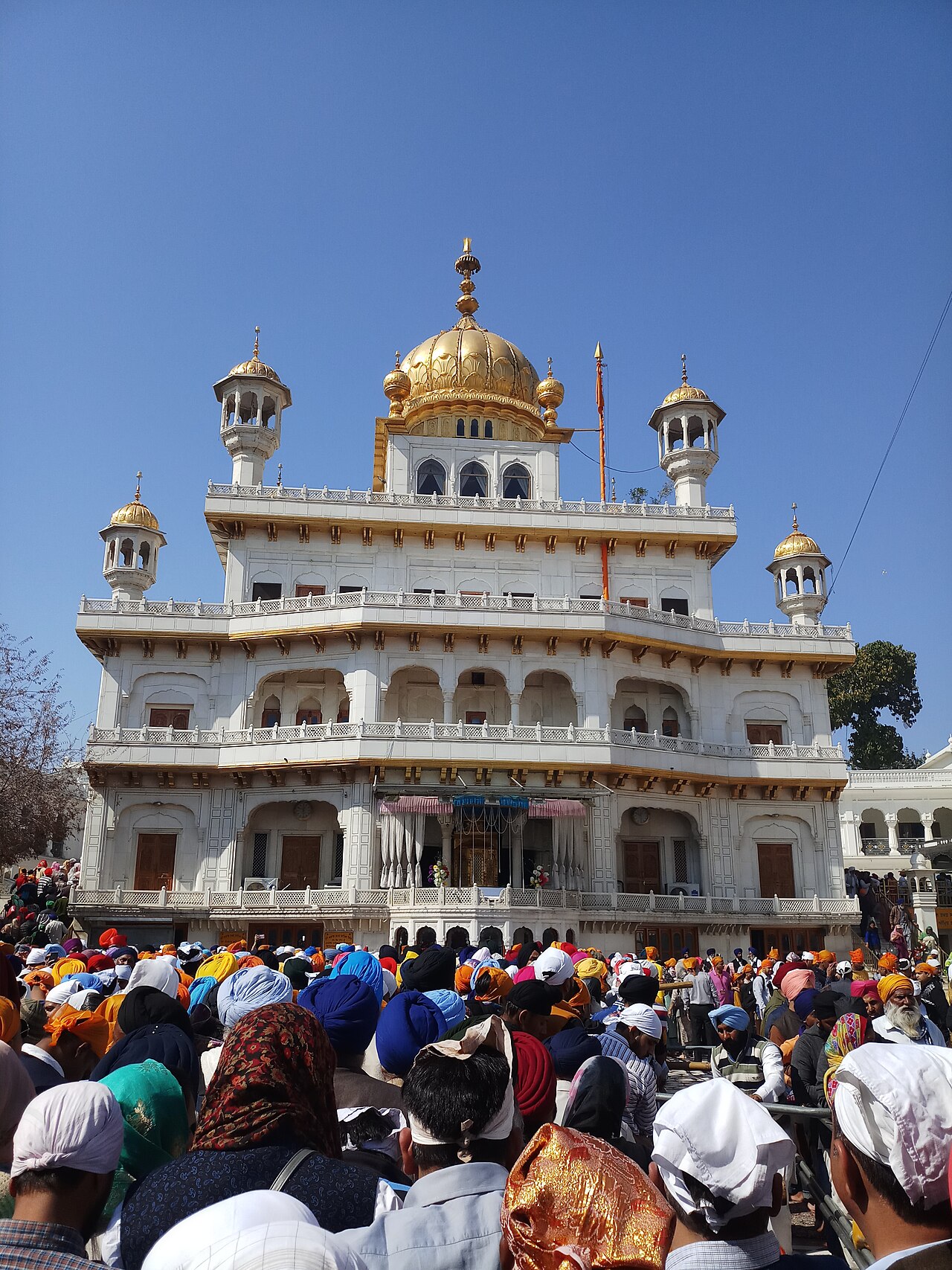
The throne outlived every attempt to break it. Thrown down in the eighteenth century during the Afghan invasions, it was rebuilt in brick in 1774 under Jassa Singh Ahluwalia, and through those hunted decades the scattered misls of the Khalsa gathered before it in Sarbat Khalsa, on Vaisakhi and on Divali, to pass gurmatas that bound the whole Panth. Under Maharaja Ranjit Singh the building rose to five storeys, and his general Hari Singh Nalwa gave the dome its gold.
In June 1984 the Takht was severely damaged during Operation Blue Star, the Indian Army action at the complex. A rebuilding sponsored by the government was never accepted by the Panth: following a Sarbat Khalsa resolution it was demolished in January 1986, and the present building was raised through kar seva, the sangat's own voluntary labour, and completed in 1995. The old frescoes were lost. The authority was not.
What you'll actually see
1
The two Nishan Sahibs
Before the Takht stand two saffron Sikh standards where every other gurdwara flies one. The pair proclaims miri and piri, the worldly and the spiritual authority joined in the Guru, and pilgrims pause beneath them to bow before crossing the square.
2
The gilded facade and the throne hall
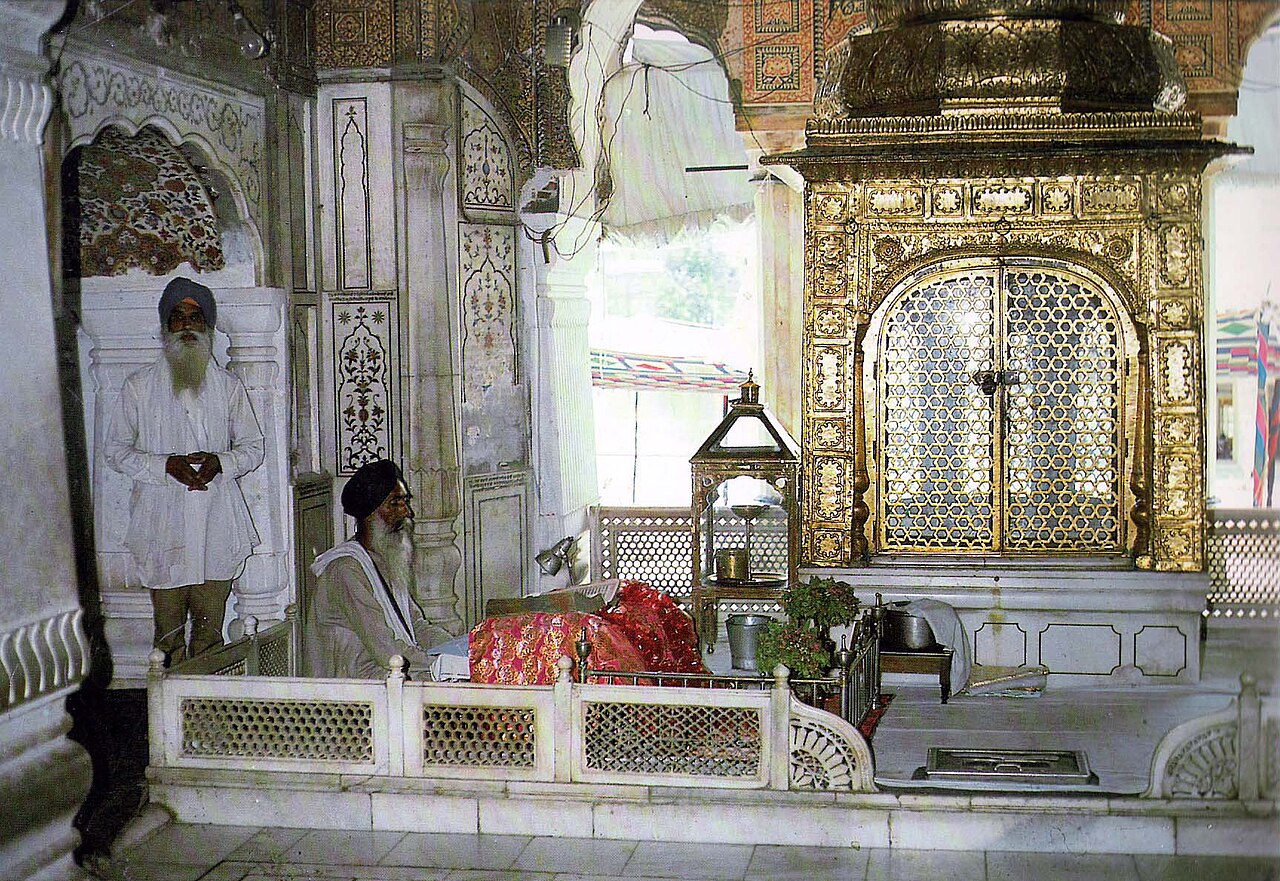
Five storeys of marble inlay rise to a gold leafed dome, answering the sanctum across the water. On the ground floor is the hall of the Takht itself, where the Guru Granth Sahib Ji presides by day and where the Jathedar pronounces the word of the Panth.
3
The shastars of the Gurus
The Takht keeps the weapons of the house of the Guru: shastars of Guru Hargobind Sahib, arrows of Guru Gobind Singh Ji, the shastars and chakars of Baba Deep Singh Ji Shaheed, and arms of the Sahibzade. Each evening sevadars show them to the sangat, naming each one, before wrapping them again in rumalas.
The twin Nishan Sahibs of miri and piri standing before Sri Akal Takht SahibThe interior hall of Sri Akal Takht Sahib where the Guru Granth Sahib Ji presides
Every night the Guru Granth Sahib Ji sleeps at the Akal Takht. After the closing Sukhasan at Sri Harmandir Sahib, around 9:45 pm in winter and 10:45 pm in summer, the scripture is carried across the causeway in the golden Palki Sahib on the shoulders of the sangat, to rest in the Kotha Sahib on the Takht's first floor. Before dawn, around 4 am in summer and 5 am in winter, the palanquin returns the Guru to the sanctum through a crowd singing the morning's first shabads. And each evening the Takht's own rite unfolds: the sacred shastars are brought out and shown to the sangat one by one, an ardas is said, and the weapons of the Gurus are laid to rest again.
Come before dawn to walk with the Palki Sahib, or at evening for Rehras and the shastar darshan; timings shift with the season, so confirm at sgpc.net.
Plan your visit
By air
Sri Guru Ram Dass Jee International Airport is about 13 km away, roughly half an hour by taxi.
By rail
Amritsar Junction is about 2 km from the complex; cycle rickshaws, autos, and a free bus run toward the gates.
Timings
The complex stays open day and night. The Guru departs for the sanctum around 4 am in summer and 5 am in winter, and returns after Sukhasan around 9:45 pm to 10:45 pm by season; confirm at sgpc.net.
Best time
Amrit Vela, before dawn, for the Palki Sahib; evening for Rehras and the shastar darshan. October to March is the kindest season on the marble.
Dress
Cover your head at all times inside the complex; scarves are available at the entrances. Deposit shoes free at the joda ghar and wash your feet in the water channel.
The approach
There is no separate queue for the Takht; you reach it barefoot along the parikrama, and everyone waits together.
Entry
Free, always, for everyone. The langar at the complex is free as well.
Akal Takht means the Throne of the Timeless One; the building was first called the Akal Bunga, and it stands within Darbar Sahib, the Court of the Lord.
It is the first of the Five Takhts, with the others at Anandpur Sahib, Talwandi Sabo, Patna Sahib, and Hazur Sahib Nanded; matters touching the whole Panth are settled from Amritsar.
Tobacco, alcohol, and intoxicants must not be brought anywhere in the complex, and meals in the langar are vegetarian only.
The 450th anniversary of the founding of Sri Amritsar is being marked in the Nanakshahi year 558, and the complex sees larger sangats on such commemorations.
Questions pilgrims ask
Is the Akal Takht part of the Golden Temple?
It stands inside the same complex, facing Sri Harmandir Sahib across the parikrama, but it is a distinct institution. The Harmandir is the spiritual centre where kirtan never rests; the Akal Takht is the supreme seat of the Panth's temporal authority. Together the two embody miri-piri, the Sikh teaching that worldly justice and devotion are one duty.
Can anyone visit, or only Sikhs?
Anyone may come. Cover your head, deposit your shoes at the free joda ghar, wash your feet at the entrance channel, and leave tobacco, alcohol, and intoxicants behind. The langar is open to all, free of charge.
What is a hukamnama, and who is the Jathedar?
A hukamnama issued from the Akal Takht is a directive of the Panth, and Sikh congregations worldwide hold it binding. The Jathedar is the custodian of the Takht who pronounces such decisions on the community's behalf, a role that has existed since the days when the Guru himself held court here.
What happened here in 1984?
In June 1984 the building was severely damaged during Operation Blue Star, an Indian Army action at the complex. A government sponsored rebuilding that followed was not accepted by the Panth; after a Sarbat Khalsa resolution it was demolished in January 1986, and the present Takht was rebuilt through kar seva, the sangat's voluntary labour, completed in 1995. The daily maryada has continued unbroken.
Where does the Guru Granth Sahib Ji rest at night?
In the Kotha Sahib, a room on the Akal Takht's first floor. Each night after Sukhasan the scripture is carried here from the sanctum in the golden Palki Sahib, and each morning before dawn the sangat carries the Guru back across the causeway.
The Sthan in photographs
Darshan from afar
From the temple's own channels. Nothing loads until you press play.
Dharamshalas and guest houses near this Sthan, shared by devotees. Adisthan takes no bookings and no money; contact each stay directly.
No stays are listed here yet. Know one that serves pilgrims well?
Are you a sevadar or officer of the SGPC or the secretariat of Sri Akal Takht Sahib? Claim this page to keep timings, gurpurab dates, and the Takht's own word true for the sangat worldwide.