
cathedral Basilica of St. Cyriacus
Duomo di Ancona · Basilica Cattedrale Metropolitana di San Ciriaco · Ancona Cathedral
About
Perched atop the hill once occupied by the acropolis of the ancient Greek city, the Cathedral Basilica of St. Cyriacus commands a sweeping view over Ancona and its Adriatic gulf. As the seat of the Archbishop of Ancona, it serves both as a functioning centre of diocesan life and as a living monument to layer upon layer of sacred occupation. The building's most arresting feature is the harmony it achieves between seemingly contrasting architectural vocabularies: Romanesque solidity, Byzantine spatial logic, and Gothic ornament are woven together without internal contradiction.
The exterior is clad in pale stone quarried from nearby Mount Conero, lending the cathedral a cool luminosity. Decorative Lombard banding runs across all exterior surfaces, while the façade is preceded by a broad staircase and crowned by a thirteenth-century portal attributed to Giorgio da Como. Four columns sustain a round arch, with the two front columns resting on lions carved in Veronese red marble, one grappling a basilisk, the other gripping a ram. Above the portal an oculus in a Romanesque frame is flanked by slender mullioned windows. The dome, raised over the crossing in the thirteenth century and attributed to Margaritone d'Arezzo, is among the oldest of its kind in Italy: an ogival form set on a twelve-sided drum, later given a copper covering in the sixteenth century.
Inside, the Greek-cross plan reveals a nave and side aisles formed by re-used columns of Roman antiquity bearing Byzantine capitals. Pendentives beneath the dome carry Byzantine-inflected figures of angels in prayer. The Chapel of the Crucifix in the south transept preserves twelfth-century sgraffito tiles of 1189, whose intricate imagery, prophets, evangelists, phoenixes, peacocks, and gryphons, speaks to the richness of the medieval decorative imagination. Beneath the northern transept's Madonna Chapel, a crypt holds the relics of Saint Cyriacus alongside those of Saints Liberius, Marcellinus, and Palatia.
History
A Greek Temple stood on this headland as early as the fourth century BC, and a Christian basilica rose over its foundations in the sixth century. The church gained cathedral status between the tenth and eleventh centuries, then was rebuilt on a Greek-cross plan between the late twelfth and early thirteenth centuries, when its entrance was turned to face the port. Luigi Vanvitelli added the Madonna Chapel's niche in 1739 to house a venerated seventeenth-century image of the Virgin, and Giuseppe Sacconi's 1883 restoration stripped away later ornament to recover the building's medieval character. The cathedral was damaged in both World Wars and restored after each; Pope Pius XI raised it to the rank of basilica minor in 1926.
Significance
The crypt beneath the Madonna Chapel holds the relics of Saint Cyriacus together with those of Saints Liberius, Marcellinus, and Palatia, anchoring the cathedral as a site of veneration as well as episcopal governance. Its dome, raised over the crossing in the thirteenth century, is among the earliest in Italy built over a church crossing rather than a separate baptistery, a distinction it shares with the basilica of Sant'Antonio in Padua and St. Mark's in Venice. Renaissance painters including Vittore Carpaccio and Giovanni Bellini set the cathedral's silhouette into their canvases, and it appears again in the Vatican's Gallery of Maps.
Architecture
Romanesque-Byzantine-Gothic religious architecture; Greek-cross plan with a 13th-century dome on a twelve-sided drum
Visiting
Daily worship
| Sunday and holy-day Mass | 09:00 to | |
| Sunday and holy-day Mass | 10:30 to | |
| Sunday and holy-day Mass | 12:00 to | |
| Sunday and holy-day Mass (ora solare, late Oct-late Mar) | 17:00 to | |
| Sunday and holy-day Mass (ora legale, late Mar-late Oct) | 18:00 to | |
| Weekday Mass | 09:00 to |
Hours
Hours not listed.
Contact
No contact details listed yet.
Engage with cathedral Basilica of St. Cyriacus
Through the four pathways
Seva सेवा — Service
Offer your time and skills here. The following opportunities are open at cathedral Basilica of St. Cyriacus:
No Seva offerings listed yet.
Sādhana साधना — Practice
Learn the worship and practice associated with cathedral Basilica of St. Cyriacus:
No Sādhana offerings listed yet.
Sandhāna सन्धान — Wisdom
Unite with the wisdom of this tradition:
No Sandhāna offerings listed yet.
Sādhya साध्य — Giving
Support this sacred place according to your means:
No Sādhya offerings listed yet.
All giving flows directly to cathedral Basilica of St. Cyriacus. Adisthan does not take a commission.
Festivals & Events
- May
Solennità di San Ciriaco
4 May 2027 · annual
The patronal feast of Ancona and its cathedral, kept with solemn Mass at the saint's tomb, a civic blessing of the city, and the Archbishop presiding before civil and military authorities.
Gallery
Related sacred places
 Christianity
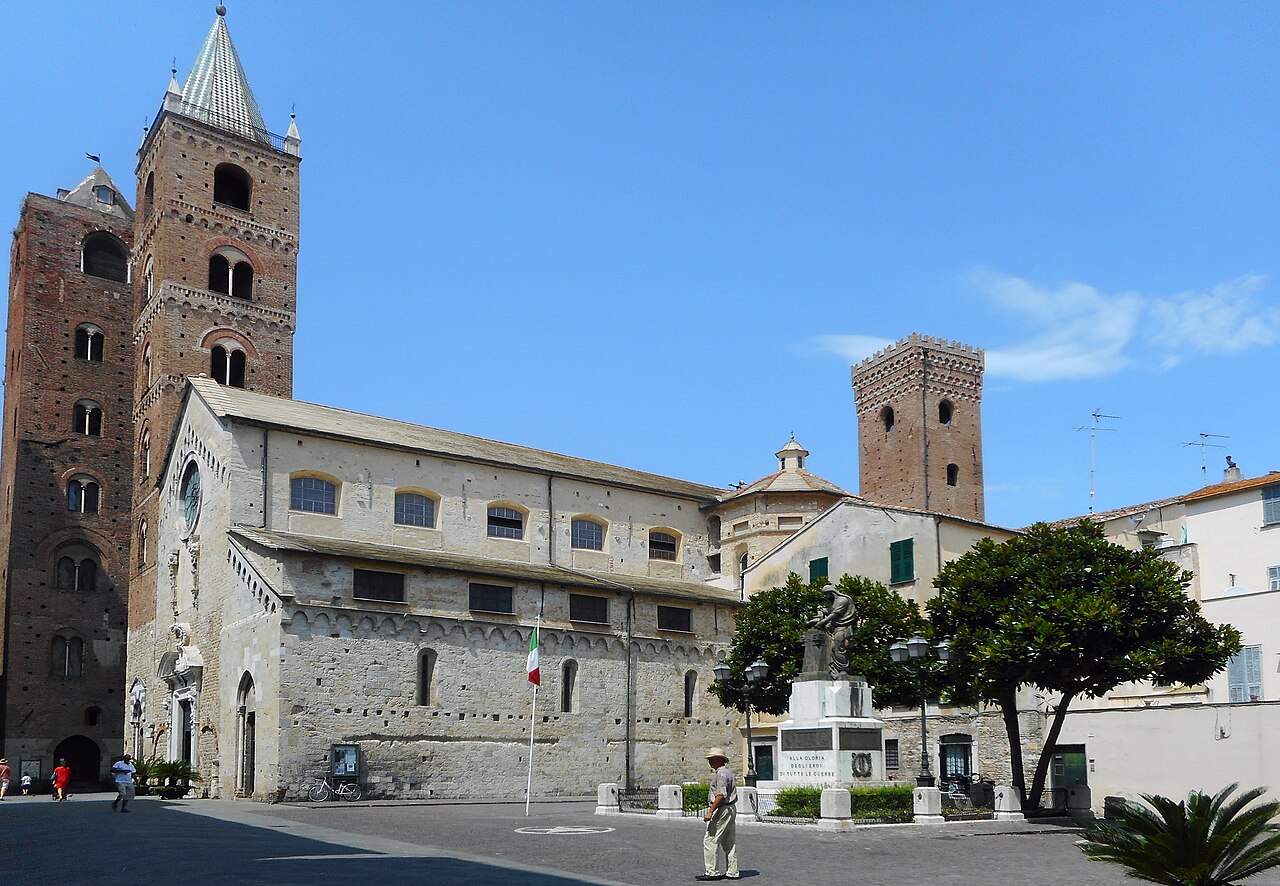
Albenga Cathedral
Albenga · Italy · church
The medieval cathedral of Albenga on Liguria's western coast, dedicated to Saint Michael the Archangel, its banded brick campanile rising over a nave first raised around 1100 on the foundations of a church from the turn of the fifth century.
 Christianity
Alexander Nevsky Cathedral
Sofia · Bulgaria · church
Sofia's golden-domed patriarchal cathedral, raised by the whole Bulgarian people as a memorial to the Russian, Bulgarian, Ukrainian, Moldavian, Finnish and Romanian soldiers who died in the 1877-1878 war that ended five centuries of Ottoman rule.
 Christianity
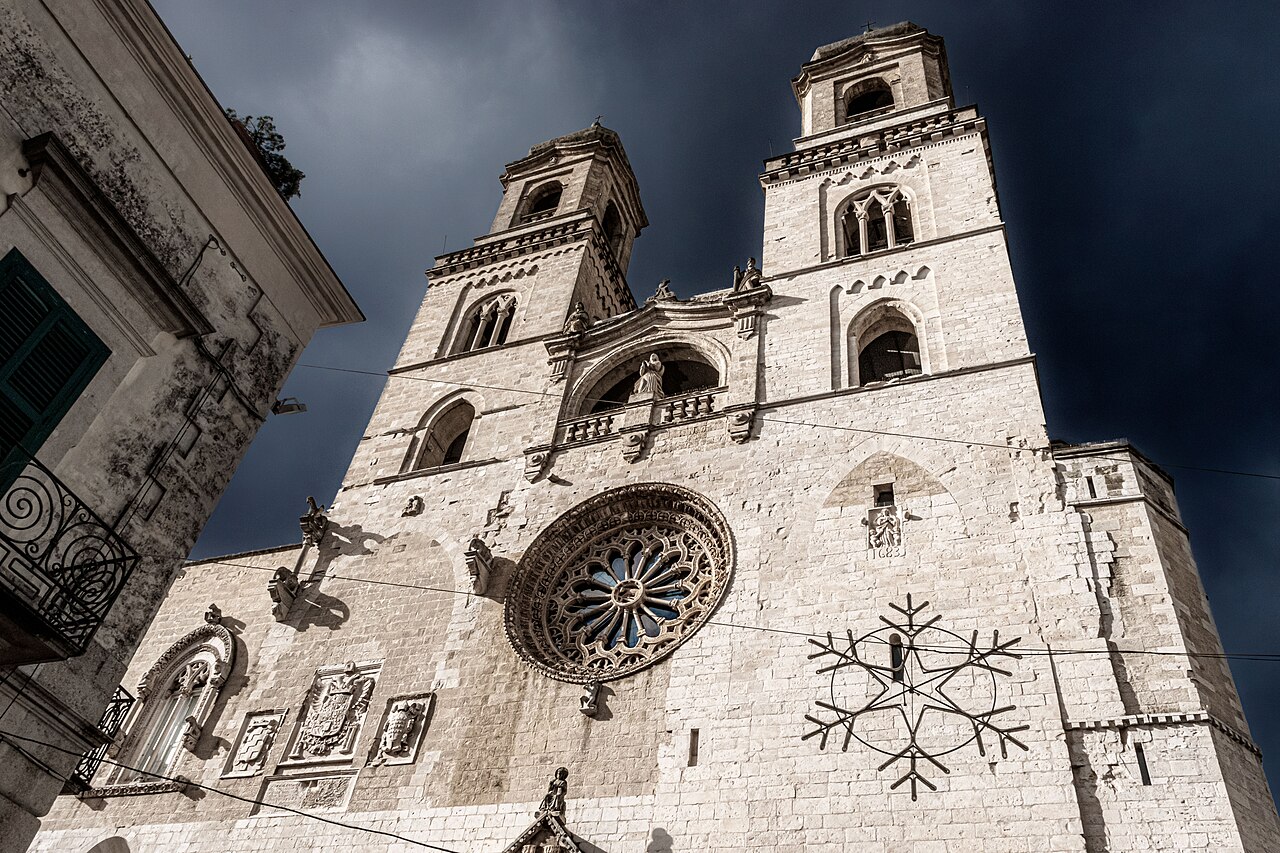
Altamura Cathedral
Altamura · Italy · church
A thirteenth-century 'palatine' cathedral in the Apulian hill town of Altamura, raised at the order of the Holy Roman Emperor Frederick II and dedicated to the Assumption of the Blessed Virgin Mary, its twin Gothic bell towers and carved rose window rising over the old town's main square.
 Christianity
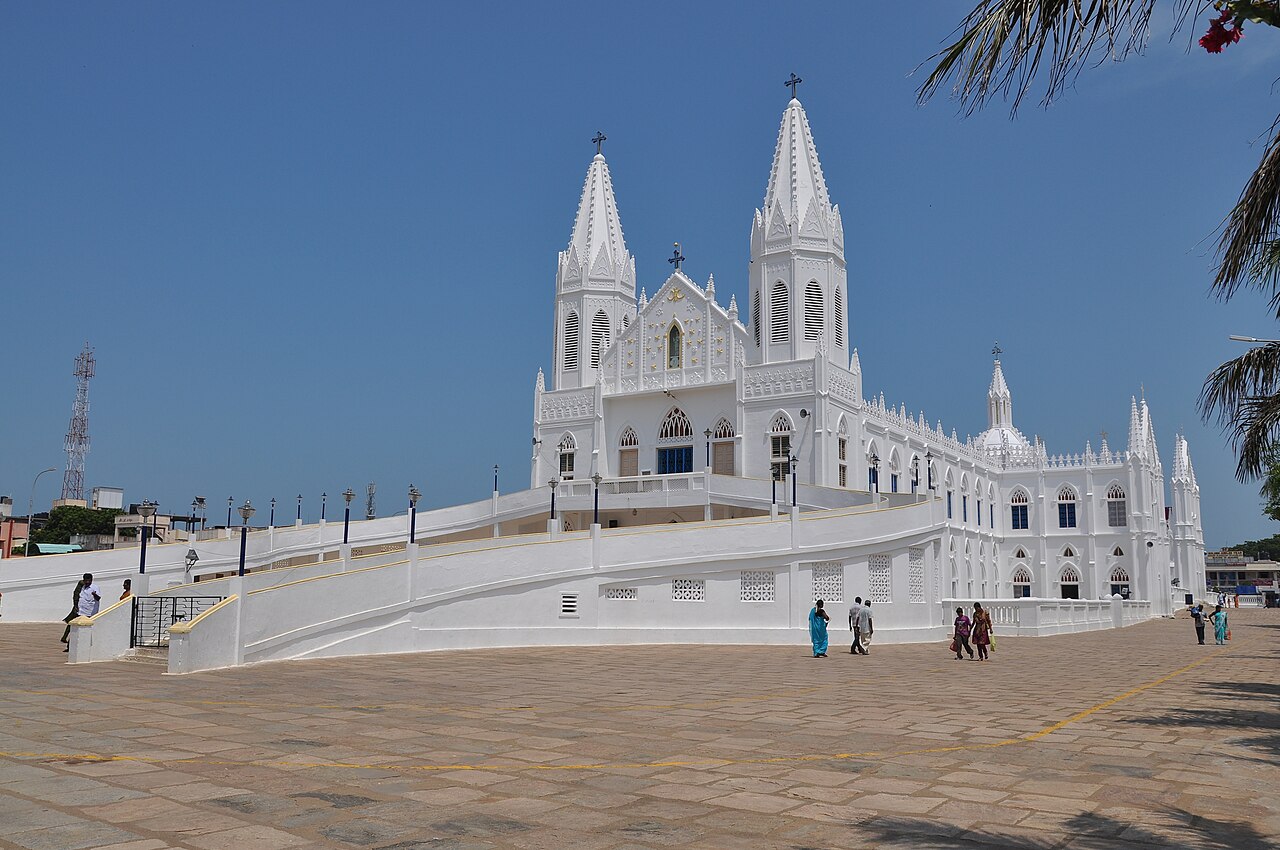
Basilica of Our Lady of Good Health
Velankanni · India · church
White Gothic Marian basilica on the Coromandel shore where Our Lady is held to have appeared to two Tamil boys in the 16th century. Called the Lourdes of the East, it draws millions of pilgrims, most of them Hindu and Muslim, to Annai Velankanni, the Mother of Good Health.
 Christianity
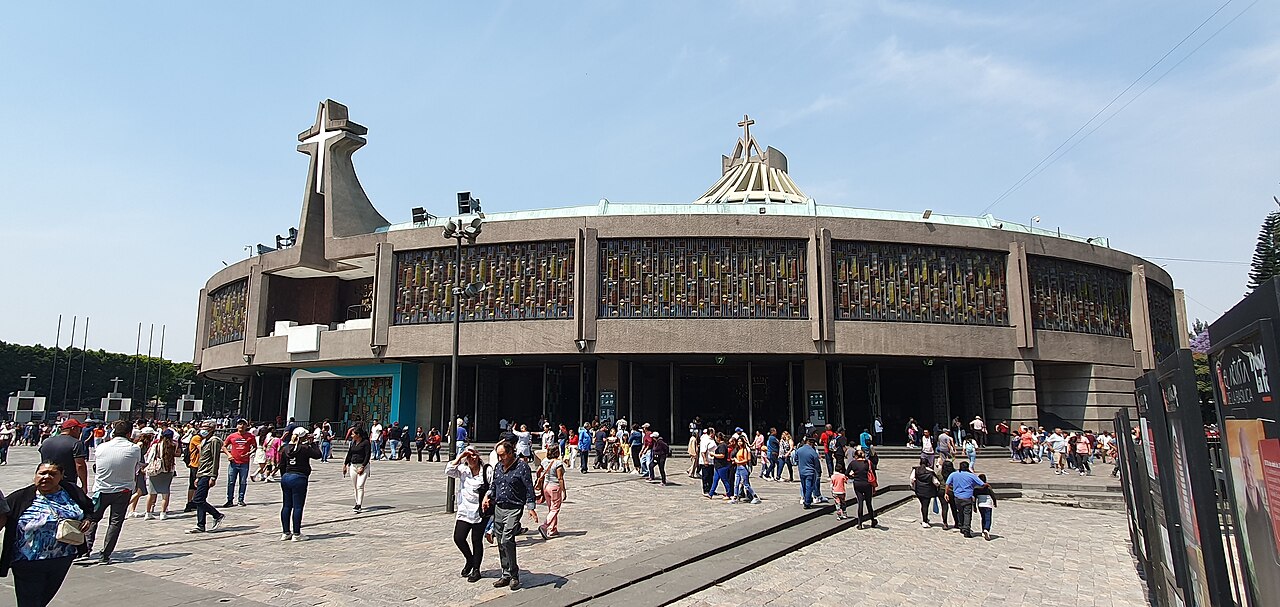
Basilica of Our Lady of Guadalupe
Mexico City · Mexico · church
The most visited Marian shrine in the world, built at the foot of Tepeyac hill where Our Lady appeared to St. Juan Diego in 1531; his tilma bearing her image hangs above the altar of the circular basilica of 1976.
 Christianity
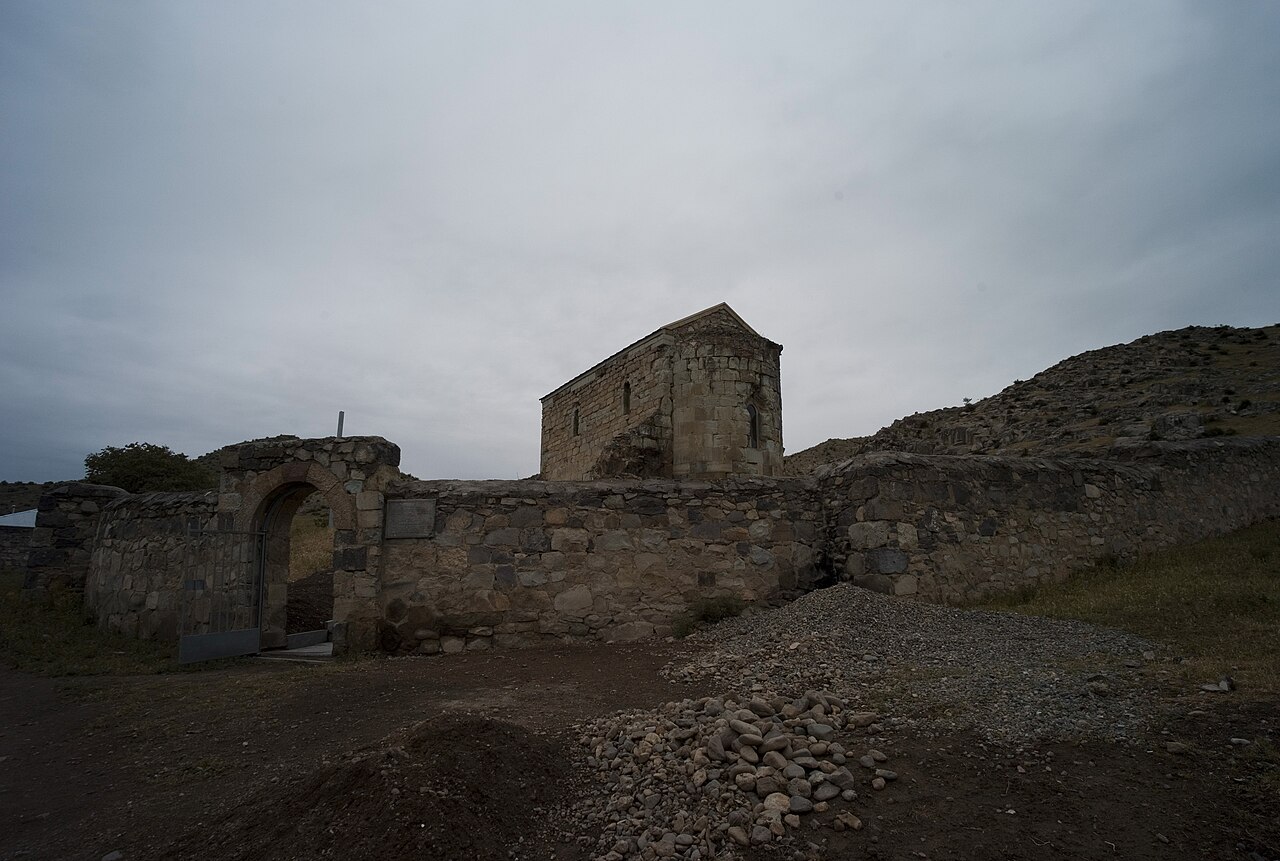
Bolnisi Sioni
· Georgia · church
A late-fifth-century Georgian Orthodox basilica in Bolnisi, the oldest surviving church building in Georgia, famed for its early Georgian-script inscriptions.