Abraham bought this field to bury his dead. Two faiths have kept vigil at the grave ever since.
Be the first to check in
Coming up: Shabbat Chayei Sarah · 7 NovEntry tended 28 Jun 2026
One roof: a mosque and a synagogue Herodian enclosure, 31 to 4 BCE Ten days a year, each faith alone Shabbat Chayei Sarah, 7 Nov 2026 Free entry, both sides Open roughly 4am to 9pm daily
A checkpoint, then a narrow lane climbing through Hebron's old stone souk, and the enclosure rises ahead: walls of pale limestone laid so precisely that scarcely a blade of grass finds the joints between the blocks. Inside, one roof shelters two houses of prayer. Through one door, carpets and a mihrab face Makkah; through another, a synagogue faces the floor beneath which tradition says the cave itself still lies sealed. Two peoples come to the same six graves, and neither one is a guest.
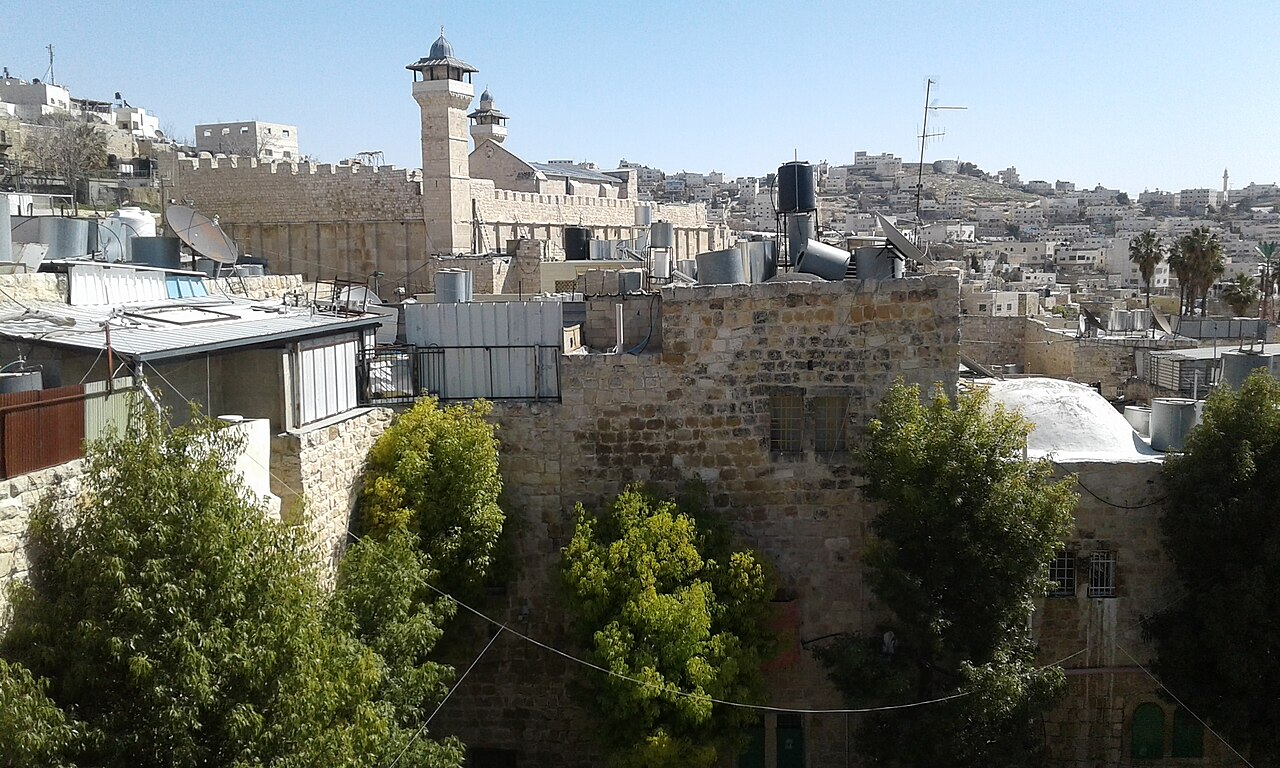
The only building of Herod's reign still standing whole. Raised between 31 and 4 BCE, its rectangular enclosure of drafted limestone, some blocks nearly seven metres long, is the sole structure from his lifetime that survives complete to its original height.
Scripture's first recorded land purchase. In the Book of Genesis, Abraham pays Ephron the Hittite four hundred shekels of silver for this field and its cave to bury Sarah, a transaction the Torah records in detail and Muslims, who honour Ibrahim as father of their own prophetic line, hold in the same reverence.
One roof, two houses of prayer, kept apart and taken in turns. A dividing wall runs through the enclosure; Muslims and Jews enter by separate doors into separate halls, and on ten days a year the whole building passes to one community alone.
The field Abraham bought
According to the Book of Genesis, when Sarah died at Hebron, Abraham refused to bury her as a stranger's guest and instead paid Ephron the Hittite four hundred shekels of silver for the field of Machpelah and its cave, the first purchase of land the Bible records. Tradition holds that Abraham, Isaac and Jacob were laid there beside Sarah, Rebecca and Leah, and Muslims, who honour Ibrahim as father of their own prophetic line through his son Ismail, revere the same six graves. Pottery recovered from beneath the cave and dated in 2020 to the eighth century BCE suggests pilgrims were already coming here in the age of the biblical kings. Between 31 and 4 BCE Herod the Great raised the massive enclosure that still stands, a roofless court with walls nearly two metres thick, built to honour a shrine already ancient in his own lifetime.
Christian pilgrims prayed here under Byzantine rule; the Pilgrim of Bordeaux described, around 333 CE, a monument of square form built of stone of wondrous beauty holding all six graves. Muslim armies took Hebron in 637 CE and the enclosure became a mosque; Crusaders held it as a church from 1100 until Saladin retook the city in 1188, added minarets at its corners, and brought to Hebron a carved wooden minbar first made in 1091 for a shrine at Ascalon, still in use today. Mamluk builders raised the six cenotaphs a pilgrim sees now, and Ottoman sultans sent silk carpets to dress them, while for centuries Jews were kept no closer than the seventh step of an outside stair.
On 25 February 1994, during Ramadan's dawn prayer, an American-born settler named Baruch Goldstein entered the crowded mosque in army uniform and opened fire, killing twenty-nine Muslim worshippers and wounding scores more before survivors overcame and killed him. Israel's government outlawed the movement Goldstein belonged to, and in the arrangement that followed, the building was physically divided: a wall now separates a mosque administered by the Islamic waqf from a smaller synagogue, Jewish access to the hall of Isaac and Rebecca is limited to ten days a year, and Muslim access is barred in turn on ten days reserved for Jewish observance. Israeli soldiers stand watch at both entrances, and the division, three decades on, still holds.
What you'll actually see
1
The Herodian enclosure
A visitor meets the walls first: coursed limestone blocks up to seven metres long, laid without mortar and cut with the same finely drafted margins that mark Herod's work in Jerusalem. No other building from his reign stands complete to its original height; this one alone survived intact.
2
The six cenotaphs
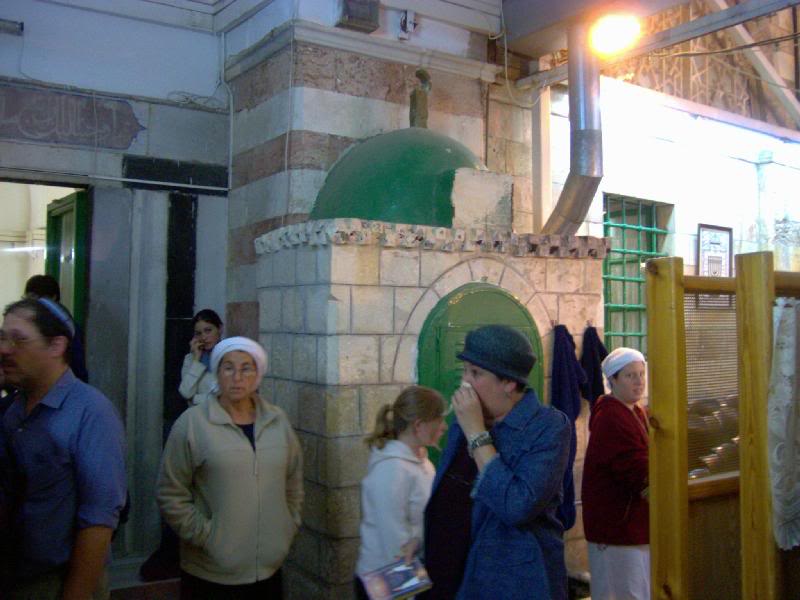
Inside, three pairs of monuments mark the traditional graves: Jacob and Leah, and Abraham and Sarah, each in its own octagonal room on the northwest side; Isaac and Rebecca in the mosque hall to the southeast, flanked by a mihrab set into the qibla wall. The stone is carved in a distinctive red and white stripe, usually hidden beneath heavy embroidered cloth.
3
The minbar of 1091
Beside the mihrab stands a carved wooden pulpit older than the mosque's own reconquest by Saladin: commissioned in 1091 by the Fatimid vizier Badr al-Jamali for a shrine at Ascalon, it was brought to Hebron after 1188 and remains, by most accounts, among the oldest minbars still in active use anywhere in the Muslim world.
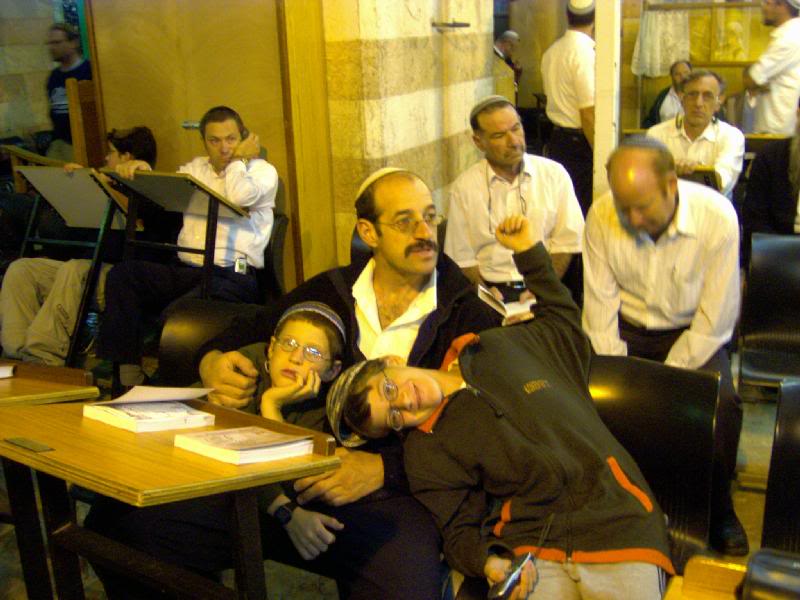
The interior of the Ibrahimi Mosque in Hebron, showing the mihrab and the twelfth-century minbarThe cenotaph of Jacob in the Jewish-accessible section of Me'arat HaMachpela, Hebron
Inside the mosque hall, and the cenotaph of Jacob in the synagogue section · photos CC BY-SA 4.0 (Randa107) and CC BY 2.5 (Dr. Avishai Teicher / PikiWiki Israel), Wikimedia Commons
THE ARRANGEMENT FOUND NOWHERE ELSE
Ten days a year, each faith alone
On ten days named for Jewish observance, among them Yom Kippur, Sukkot and the Shabbat when the portion of Chayei Sarah is read (7 November 2026, when Hebron's Jewish community expects tens of thousands of visitors for the anniversary of Abraham's purchase), the hall of Isaac and Rebecca opens to Jewish prayer alone and the mosque closes. On ten days named for Muslim observance, among them Eid al-Fitr (expected around 9 March 2027) and Eid al-Adha, the whole enclosure closes to Jewish worshippers and belongs to the mosque alone. On each other's days, both communities pray outdoors, in the plaza known as the Seventh Step.
Dates shift with both the Hebrew and the Islamic calendar, the latter by moon sighting; pilgrims of either faith should confirm the current year's schedule locally before planning a visit around a holy day.
Plan your visit
By air
Ben Gurion Airport lies roughly 85 km northwest; the route runs through Jerusalem, then south on Route 60.
By road
Bus 160 runs from Jerusalem's Central Bus Station to Hebron; from the drop-off it is a five to ten minute walk through the Old City souk to the checkpoint.
Timings
The mosque keeps roughly 4:00 am to 9:00 pm, later in summer; the synagogue side keeps similar hours. Both close to visitors of the other faith on the ten days named above.
Entry fee
Free on both sides; there is no ticket.
Security
Every visitor passes an Israeli military checkpoint and metal detector; identity papers are required, and Jewish and Muslim visitors use separate entrances. Access for Muslim worshippers in particular has tightened in recent years; arrangements change without notice, so confirm the current situation locally before travelling.
Dress
Modest dress for all; women cover the hair in both the mosque and the synagogue sections.
Best time
Early morning, before tour groups arrive and before the day's heat settles into the old stone lanes.
Two doors
There is no single combined visit: the mosque is entered from the northeast, the synagogue from the southwest, and a visitor wishing to see both passes through both checkpoints separately.
Me'arat HaMachpela means the Cave of the Double, a name the Talmud reads two ways: two chambers, one above the other, or a cave that doubles the honour of all who lie within it.
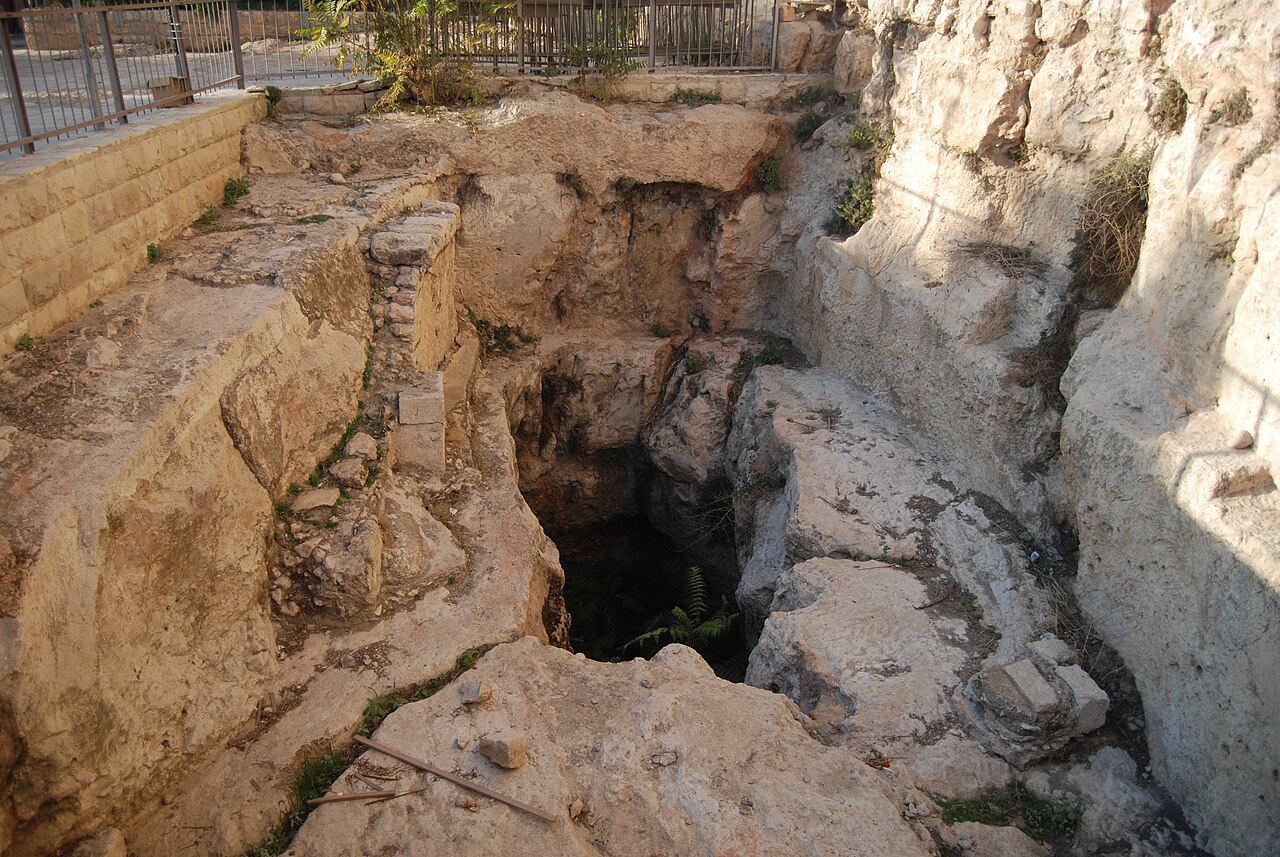
The cave beneath the floor has been sealed since Saladin's time. Most of what is known of it comes from a twelve-year-old girl named Michal, sent down a narrow shaft by Israeli officials in 1968 with a camera, and from local residents who found the same entrance again in 1981.
Some Islamic sources hold that Joseph is buried here too, carried from Egypt by his brothers; the Bible instead places his tomb at Nablus, and both traditions are kept without either one erasing the other.
Hebron's Old City, which surrounds the Cave, was inscribed by UNESCO as a Palestinian World Heritage Site in 2017 and placed simultaneously on the List of World Heritage in Danger, a decision Israel and the United States opposed.
Questions pilgrims ask
Is this really one building shared by two religions?
Yes, and it is the only site in the world arranged quite this way. A wall built after 1994 divides Herod's ancient enclosure into a mosque administered by the Islamic waqf and a smaller synagogue. Muslims and Jews enter by separate doors, and each community is given the whole building to itself on ten days a year that belong to its own calendar.
Can a visitor of any faith go inside?
Both sections are generally open to visitors of any faith or none, subject to security screening and identity checks at the Israeli military checkpoint, and to closures on the ten days reserved for each community. Conditions change without notice, especially for Muslim worshippers and visitors in recent years, so confirm locally before travelling.
What happened here in 1994?
On 25 February 1994, during the dawn prayer of Ramadan, Baruch Goldstein, an American-born Israeli settler, opened fire on Muslim worshippers inside the mosque, killing twenty-nine people and wounding scores more before survivors killed him. The massacre led directly to the physical division of the building and the ten-day access arrangement that governs it today.
Why do Jews call it Machpelah and Muslims the Ibrahimi Mosque?
Each name comes from within its own tradition. Me'arat HaMachpela, the Cave of the Double, is the Hebrew name from the Book of Genesis. Al-Masjid al-Ibrahimi, the Mosque of Ibrahim, honours Abraham by the name Islam gives him. Neither name is a translation of the other; both point to the same six graves.
Is this the Abraham Christians also honour?
Yes. Christians venerated the site through the Byzantine and Crusader periods, when it briefly became a church, and Christian pilgrimage accounts from as early as 333 CE are among the oldest descriptions of the building that survive. Today the site is actively used for worship by Muslims and Jews; Christian visitors come as pilgrims rather than as a resident congregation.
Dharamshalas and guest houses near this Sthan, shared by devotees. Adisthan takes no bookings and no money; contact each stay directly.
No stays are listed here yet. Know one that serves pilgrims well?
Do you serve the waqf that keeps the Ibrahimi Mosque, or the Jewish community that tends Me'arat HaMachpela? Claim this page to keep its hours and its welcome exact for every pilgrim of either faith who comes to Hebron.