
Gurdwara Karamsar Rara Sahib
Gurdwara Karamsar · Gurdwara Rara Sahib
About
Rara Sahib lies about twenty-two kilometres to the southeast of Ludhiana, where the Bathinda canal branch, part of the wider Sirhind Canal network, runs close to the village edge. It is here that Gurdwara Karamsar emerged, in what had once been quiet forest land, growing through decades of worship and selfless labour into one of Punjab's most beloved centres of Sikh devotion. The name Karamsar pays tribute to Sant Karam Singh Ji of Hoti Mardan, a widely revered saint who preceded Sant Attar Singh Ji of Reru Sahib.
Two spiritual masters, Sant Isher Singh Ji and Sant Kishen Singh Ji, shaped the essential character of this place. Disciples of Sant Attar Singh Ji, both immersed themselves in Seva (selfless service) and Bhagati (devotional practice) under his guidance. After their teacher passed on, they left Gurdwara Reru Sahib and made their way to the forested surroundings of Rara Sahib, accepting the earnest request of Sardar Gian Singh Rarewala to sanctify this once-desolate village with their presence. Their years of deep Simran and Samadhi, sustained meditative absorption, gradually drew a gathering community of seekers.
Land for the gurdwara was assembled partly through purchase and partly through gifts from neighbouring villagers who wished to support the mission. Morning and evening recitation of sacred hymns began with the gurdwara's establishment in 1936, and Langar, the tradition of offering free communal meals, has been maintained from the outset. With time, the monthly gathering of Sangrand and the full-moon observance of Pooranmashi became anchoring rhythms of devotional life here.
Today, the Rara Sahib Samparda, the spiritual lineage that grew from this gurdwara's founders, encompasses well over a hundred affiliated places of worship spanning Punjab, Haryana, Britain, continental Europe, Africa, and North America.
History
Sant Isher Singh Ji and Sant Kishan Singh Ji, disciples of Sant Attar Singh Ji of Reru Sahib, came to this once-forested village at the request of Sardar Gian Singh Rarewala and settled here to devote themselves to naam simran and seva. The gurdwara they founded in 1936 was named Karamsar in honour of Sant Karam Singh Ji of Hoti Mardan, a saint revered by their own teacher. Villagers donated part of the land and helped raise the rest by purchase, and from the beginning the gurdwara has offered daily hymn recitation and langar to all who come. Tradition also holds that the sixth Guru, Guru Hargobind Sahib Ji, once passed through the village, an association that lent it the honorific 'Sahib' long before the gurdwara itself was built.
Significance
Gurdwara Karamsar Rara Sahib is the mother gurdwara of the Rara Sahib Samparda, a lineage now carried forward by more than a hundred affiliated gurdwaras across Punjab, Haryana, Britain, Europe, Africa, and North America. For the sangat who visit, it remains a place where naam simran and seva are living daily practices rather than history to be read about, carrying forward a chain of devotion traced back through Sant Attar Singh Ji to Bhai Daya Singh, one of the first Panj Pyare.
Architecture
White marble Sikh gurdwara architecture with domed towers; present sanctum completed 1968
Visiting
Hours
Hours not listed.
Contact
Engage with Gurdwara Karamsar Rara Sahib
Through the four pathways
Seva सेवा — Service
Offer your time and skills here. The following opportunities are open at Gurdwara Karamsar Rara Sahib:
No Seva offerings listed yet.
Sādhana साधना — Practice
Learn the worship and practice associated with Gurdwara Karamsar Rara Sahib:
No Sādhana offerings listed yet.
Sandhāna सन्धान — Wisdom
Unite with the wisdom of this tradition:
No Sandhāna offerings listed yet.
Sādhya साध्य — Giving
Support this sacred place according to your means:
No Sādhya offerings listed yet.
All giving flows directly to Gurdwara Karamsar Rara Sahib. Adisthan does not take a commission.
Gallery
Related sacred places
 Sikhism
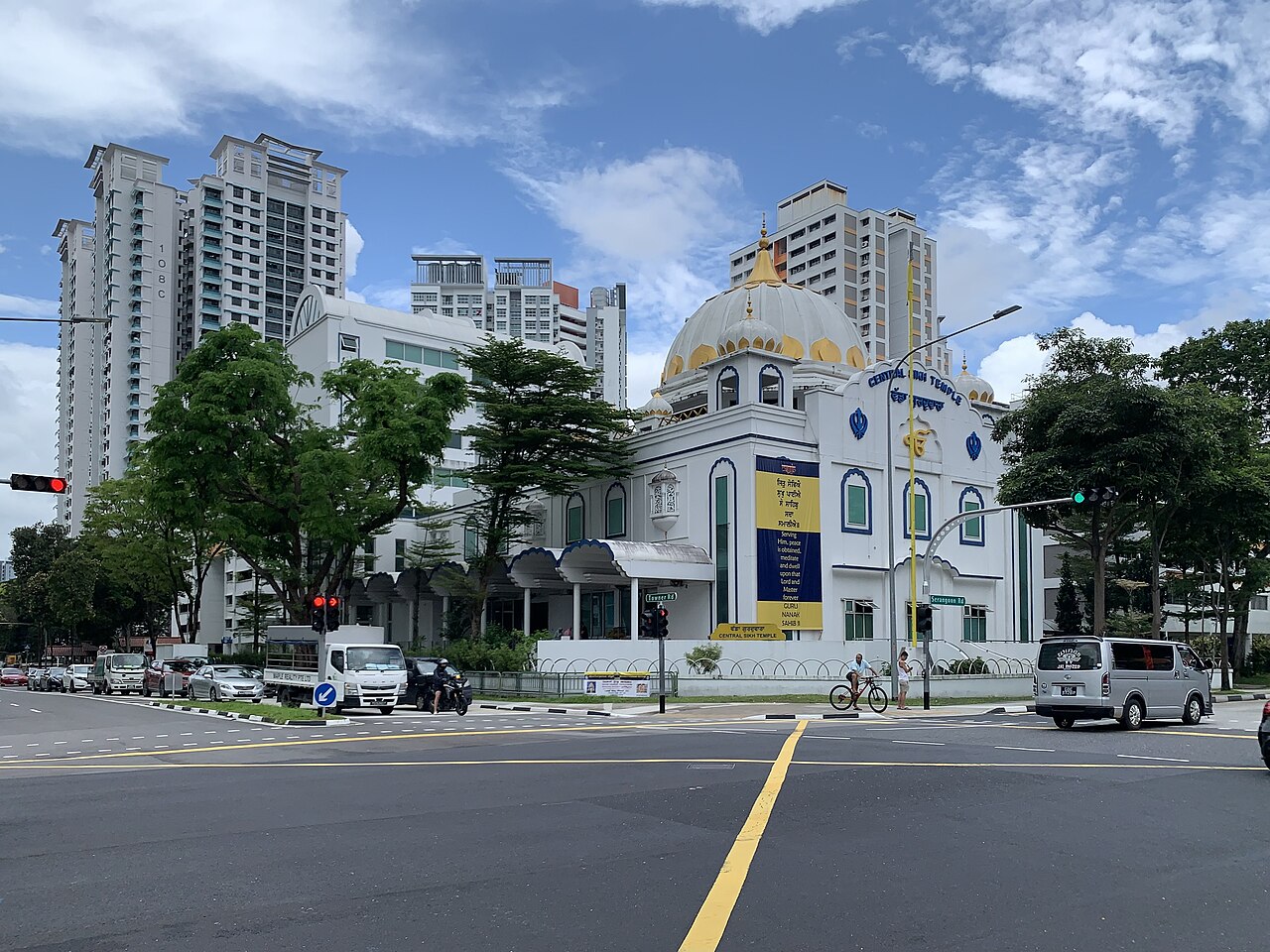
Central Sikh Temple
Singapore · Singapore · gurdwara
At the junction of Towner Road and Serangoon Road in Kallang, the Central Sikh Temple is Singapore's principal gurdwara, its gold-crowned dome rising over a congregation whose roots in the city reach back to 1912. A seven-storey community building stands beside it, carrying the gurdwara's life beyond the prayer hall into daily service and learning.
 Sikhism
Dongbaoxing Road Gurdwara
Shanghai · People's Republic of China · gurdwara
A red brick building in Shanghai's Hongkou District that served as a Sikh gurdwara from 1908 into the early 1970s, now protected as a cultural relic though it has stood deconsecrated, closed to worship, and repurposed as housing and a community clinic for more than fifty years.
 Sikhism
Gurdwara Baba Atal
Amritsar · India · gurdwara
A nine-storey gurdwara rising beside the Kaulsar sarovar in Amritsar, a short walk south of Sri Harmandir Sahib, built in memory of Baba Atal Rai Ji, the young son of Guru Hargobind Sahib.
._Painting_at_Gurdwara_Bal_Leela_Sahib%2C_Sri_Patna_Sahib.jpg%2F1280px-Painting_of_Guru_Gobind_Singh_in_their_Bal_Saroop_(child_form)._Painting_at_Gurdwara_Bal_Leela_Sahib%2C_Sri_Patna_Sahib.jpg&w=3840&q=75) Sikhism
SikhismGurdwara Bal Lila Maini Sangat
Patna · India · gurdwara
A small gurdwara in a quiet lane of Patna Sahib, marking the household of Raja Fateh Chand Maini, where the child Guru Gobind Singh Ji often sat in the queen's lap and shared her simple offering of boiled, salted gram.
 Sikhism
Gurdwara Beri Sahib
Sialkot · Pakistan · gurdwara
A gurdwara in Sialkot, Pakistan, built beside the berry tree under which Guru Nanak Dev Ji is said to have rested and met the Sufi saint Hamza Ghaus.
 Sikhism
Gurdwara Dukh Nivaran Sahib
Patiala · India · gurdwara
A gurdwara in Patiala whose sarovar is held to carry healing grace, raised where Guru Tegh Bahadur Ji rested beneath a banyan tree in 1672 and eased the suffering of the village of Lehal.