Where an open palm stopped a falling stone, and water rose to answer a friend's thirst.
Be the first to check in
Coming up: Guru Nanak Gurpurab · 24 NovEntry tended 24 May 2026
Hasan Abdal, Attock, Pakistan The Panja stone and its sacred spring Baisakhi jatha · 14 Apr 2027 Raised by Hari Singh Nalwa, 1830s Langar served to every pilgrim Entry free, always
You come off the Grand Trunk Road into a small Punjab town, and Hasan Abdal opens into white marble and gold. Cross the sarovar on a walkway lined with arches, wash your feet, cover your head, and step down into a hall filled with kirtan. A hillside rises behind the domes, quiet now, though tradition says it once refused a thirsty traveller water. Ahead, under glass, waits the reason pilgrims cross a hard border to reach this town: an open hand, pressed into stone.
Sikh tradition holds that Guru Nanak Dev Ji stopped a falling boulder with his open hand here in 1521, leaving the print of his palm in the stone and calling up the spring that still feeds the sarovar.
The shrine standing today was raised in the 1830s by Hari Singh Nalwa, the Sikh Empire's most celebrated general, under Maharaja Ranjit Singh, and has been rebuilt and administered since 1947 by the Pakistan Sikh Gurdwara Prabandhak Committee.
Each Baisakhi, thousands of Sikh pilgrims cross from India as an organised jatha under the 1974 shrine-visit protocol, a route distinct from and unconnected to the Kartarpur Corridor, which does not reach this shrine at all.
The hand that stopped a stone
Sikh tradition holds that in the summer of 1521, Guru Nanak Dev Ji and his companion Bhai Mardana came to rest beneath a tree at Hasan Abdal after a long day's walk. Bhai Mardana was thirsty, and the only water nearby rose from a spring kept on the hill above by a hermit remembered as Wali Qandhari, who refused to share it. Water rose instead from the ground where the Guru sat, the story goes, and the hermit, angered, sent a boulder rolling down the hillside toward them. Guru Nanak Dev Ji raised his open hand and stopped it where it stood, and the stone kept, from that moment, the print of his palm.
That is how the tradition tells it: a story of thirst answered and anger stilled, not a quarrel between faiths, and it is told here with the reverence due a place where something was given rather than taken. No independent historical record confirms the episode; it survives as devotional memory. The ground itself was known long before, though: the Chinese pilgrim Xuanzang described a sacred spring near Taxila in the seventh century that scholars connect to this same site.
The shrine now standing here was raised in the 1830s by Hari Singh Nalwa, the Sikh Empire's most renowned general, in the reign of Maharaja Ranjit Singh. Nearly a century later the ground gained a harder memory: on 30 October 1922, during the Guru Ka Bagh agitation, a train carrying arrested Sikh volunteers was halted at the railway station beside the shrine by protestors who lay across the tracks, and several were run over. Bhai Pratap Singh and Bhai Karam Singh died of their injuries the next day, and a fair was held at Panja Sahib in their memory every year until 1947.
What you'll actually see
1
The white-and-gold sanctum over its sarovar
A tiered sanctum of white marble and gilded domes rises directly behind a broad tank of spring-fed water, reached by a covered walkway lined with pointed arches. Small chhatris and turrets crown the roofline in the idiom the Sikh Empire favoured for its holiest buildings.
2
The Panja stone itself
Inside, kept behind glass, is the boulder that gives the gurdwara its name: a rounded stone bearing the clear impression of an open right hand. Pilgrims lean close to the glass above it, and the spring said to have answered Bhai Mardana's thirst still feeds the sarovar outside.
3
The hill of Wali Qandhari
Above the complex rises the hillside from which, tradition says, the boulder was sent down. A shrine and spring associated with the hermit remain there, a quiet counterpart to the gold below, visible from the sarovar's edge to anyone who looks up.
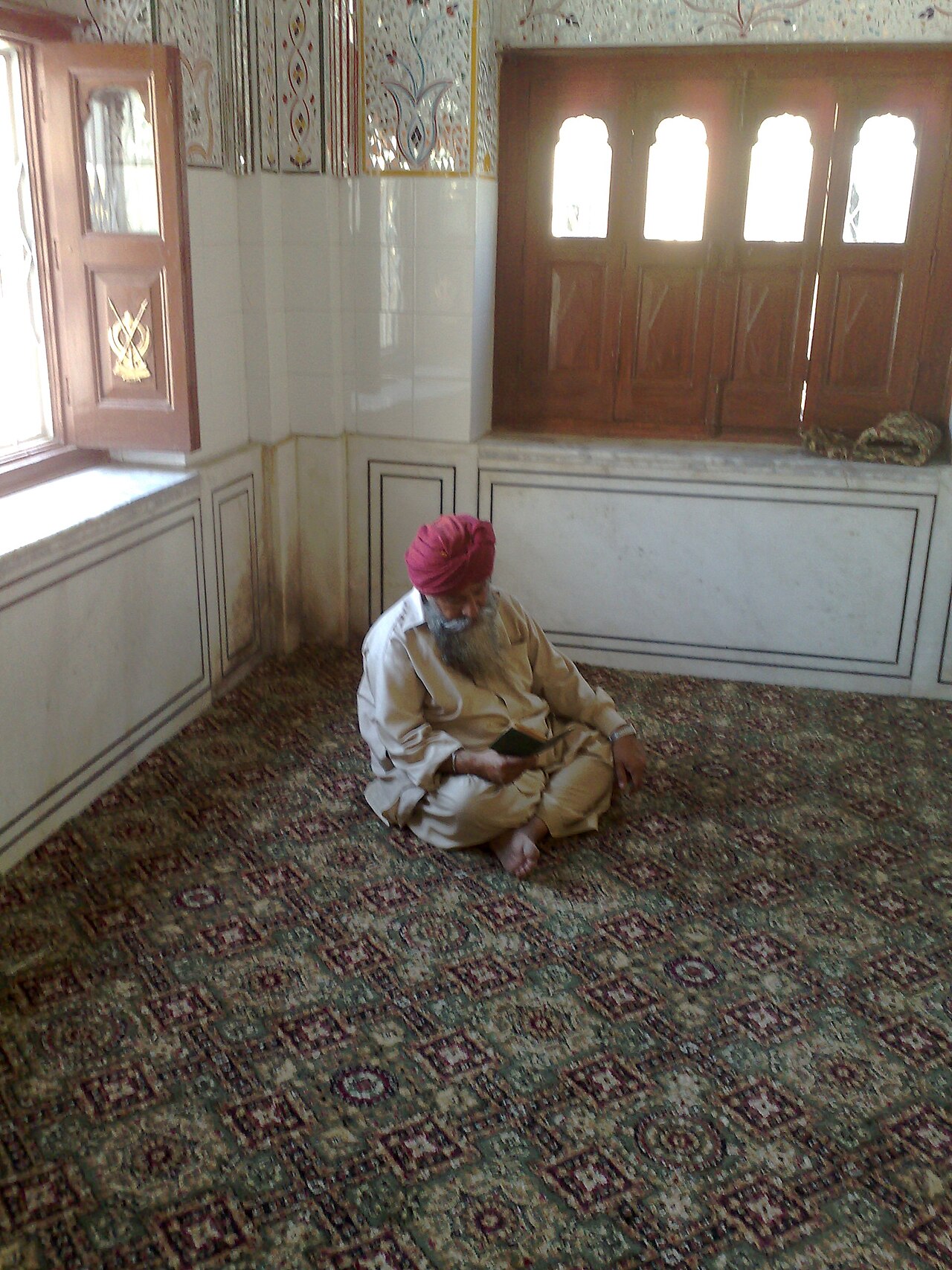
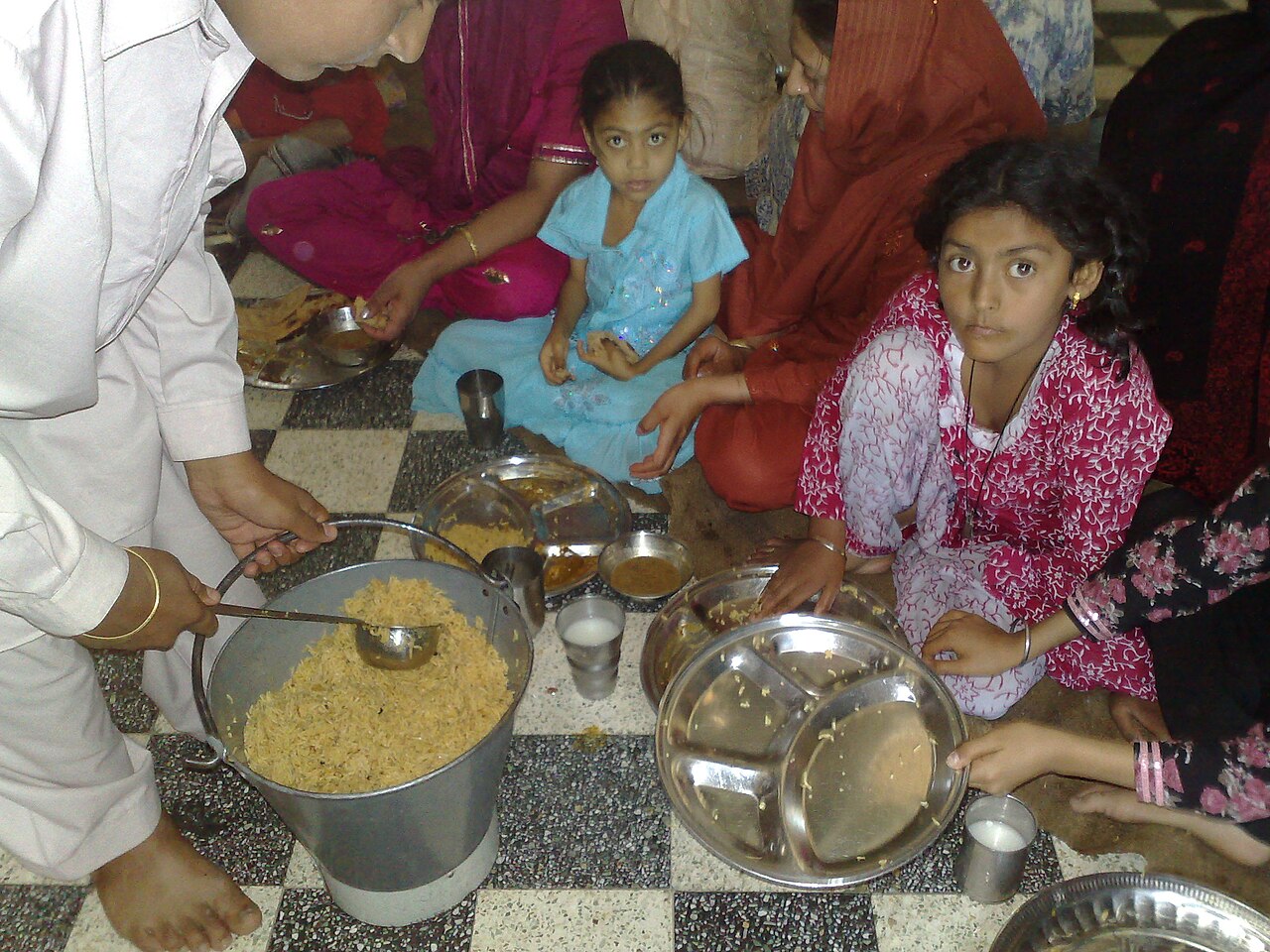
An elder reads from a Gutka Sahib in a marble chamber of Gurdwara Panja Sahib, a carved Khanda set into the door beside himLangar being served from a large pot to families seated on the floor at Gurdwara Panja Sahib
Photos: Al Jazeera English (CC BY-SA 2.0), via Wikimedia Commons
THE JATHA THAT CROSSES FOR BAISAKHI
Baisakhi at Panja Sahib · 14 April 2027
Once a year, thousands of Sikh pilgrims from India cross into Pakistan for Baisakhi, not through the Kartarpur Corridor, which reaches only Kartarpur, but as an organised jatha travelling under the 1974 India-Pakistan Protocol on Visits to Religious Shrines, mostly by way of the Wagah border. For Baisakhi 2025, Pakistan issued visas to close to 6,700 Indian pilgrims for the season, with several thousand more arriving from the wider diaspora, and the festival at Panja Sahib itself ran across several days in mid-April, filling the sarovar's walkways and the langar halls beyond their ordinary capacity. The Nanakshahi solar calendar fixes Baisakhi at 14 April every year.
Apply for the pilgrim visa months ahead if travelling from India; the organised jatha, not individual travel, is how almost everyone from India reaches Panja Sahib for this date.
Plan your visit
By air
Islamabad International Airport is roughly 45 to 50 km away, about an hour by road via the M-1 motorway and the Grand Trunk Road.
By rail
Hasan Abdal railway station sits in the town itself. Rebuilt in 2020 with Sikh pilgrims in mind, it is the stop most travellers use on the way to Panja Sahib and on to Nankana Sahib.
Timings
The complex is generally open to visitors day and night, in the manner of other major gurdwaras, with langar and the sarovar accessible outside formal kirtan hours too.
Best time
Spring, autumn, and winter are kinder than the hot Punjab summer. Outside Baisakhi, weekday mornings are quietest.
Dress
Cover your head at all times inside; dress modestly. Shoes come off at the entrance, and feet are washed before the walkway to the sanctum.
The approach
At Baisakhi the walkways and langar halls are dense with pilgrims and the pace is unhurried; at other times of year there is no queue at all.
Entry
Free, always, for everyone, as is the langar meal served inside.
Panja means the palm of a hand in Punjabi, and the gurdwara takes its name directly from the mark held in the stone inside.
The Kartarpur Corridor, opened in 2019, reaches only Gurdwara Darbar Sahib Kartarpur near the border by Narowal; it does not extend to Panja Sahib, which lies at the opposite end of Punjab, near Islamabad.
Sikh pilgrims from India travel here as an organised jatha under the 1974 India-Pakistan Protocol on Visits to Religious Shrines, with a Pakistani visa arranged in advance rather than as individual travellers.
As at every gurdwara, tobacco, alcohol, and other intoxicants are never brought inside, and the langar kitchen serves a free vegetarian meal to any pilgrim who sits down, whatever their faith.
Questions pilgrims ask
Can I reach Panja Sahib through the Kartarpur Corridor?
No. The Kartarpur Corridor is a separate, visa-free crossing that reaches only Gurdwara Darbar Sahib Kartarpur, near the border by Narowal. Panja Sahib is roughly 300 km away, near Islamabad, and Indian pilgrims reach it only with a Pakistani visa, generally as part of an organised jatha under the 1974 shrine-visit protocol.
Is there an idol inside the gurdwara?
No. Sikhi does not worship images. The sanctum holds the Guru Granth Sahib Ji, read and sung without pause, and, in a separate chamber, the Panja stone itself.
Who was Wali Qandhari, and is this a story about hostility between Sikhs and Muslims?
Sikh tradition names him a hermit who kept the hillside spring above Hasan Abdal and would not share its water. The story, as tradition tells it, is about one man's reluctance and a Guru's response, not a teaching about Islam; Guru Nanak Dev Ji's own life, and the langar practised at every gurdwara since, are built on hospitality across exactly this kind of line. No independent historical record confirms the episode; it survives as devotional memory, told here with the respect it is meant to carry.
Can I actually see the handprint?
Yes. The Panja stone is kept inside the complex behind glass, and pilgrims are able to view it, and touch the glass above the imprint, as part of a visit.
Do I need a visa to visit, and who can go?
Pakistani citizens and international visitors can generally visit as they would any other heritage site in Pakistan. Sikh pilgrims travelling from India need a Pakistani visa, and in practice almost all arrive as part of an organised jatha rather than individually, especially around Baisakhi.
Dharamshalas and guest houses near this Sthan, shared by devotees. Adisthan takes no bookings and no money; contact each stay directly.
No stays are listed here yet. Know one that serves pilgrims well?
Are you a sevadar or officer of the Pakistan Sikh Gurdwara Prabandhak Committee serving Gurdwara Panja Sahib? Claim this page to keep the Baisakhi jatha dates, visiting information, and seva details true for the sangat worldwide.