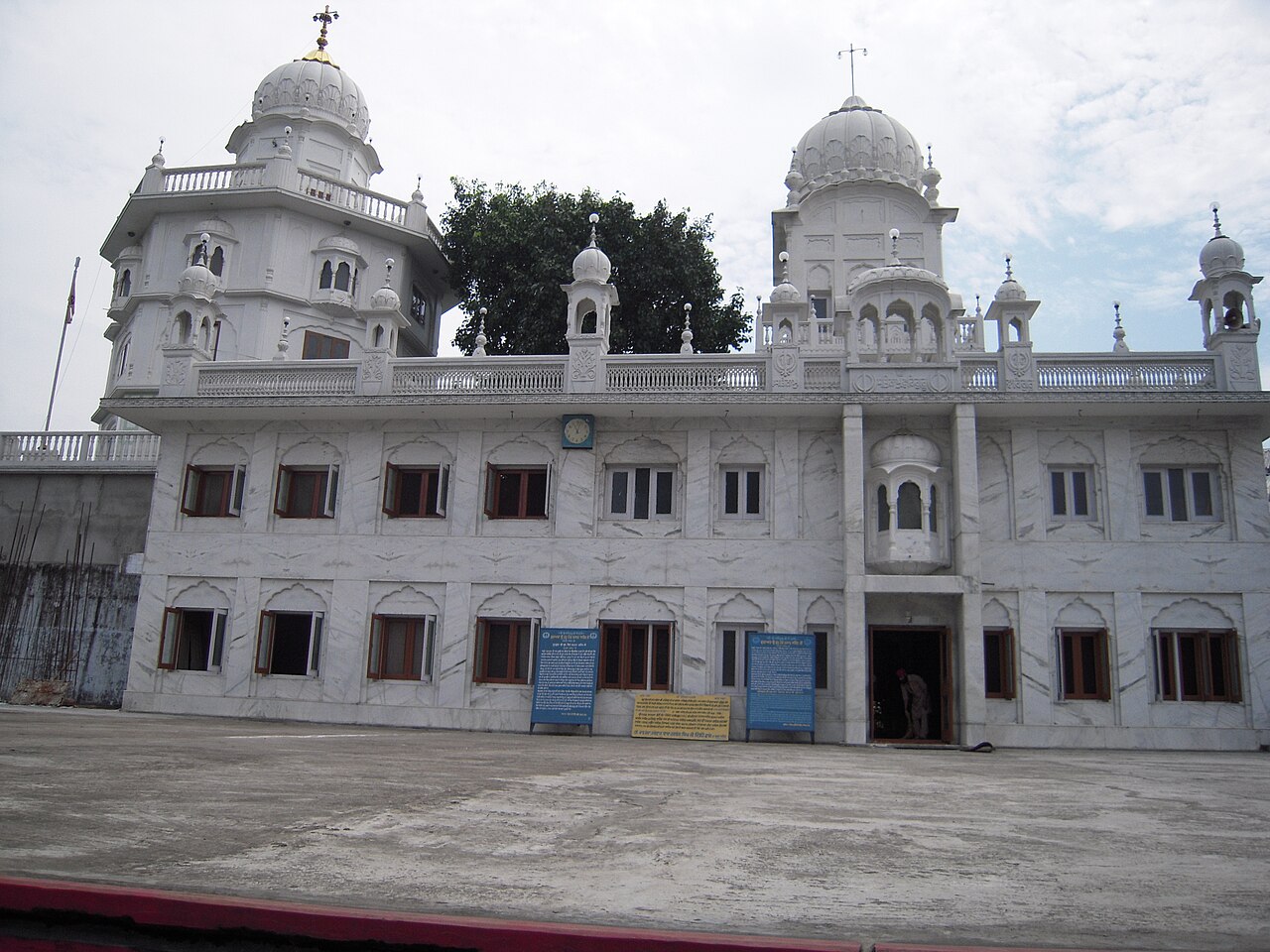
Gurdwara Sri Guru Tegh Bahadur Sahib
Dumdume Gurdwara · Gurdwara Sri Guru Tegbahadur Sahibji
About
Perched along the right bank of the Brahmaputra River where it flows through Dhubri in Assam, Gurdwara Sri Guru Tegh Bahadur Sahib stands as a luminous emblem of Sikh devotion far from the heartland of Punjab. The site carries the memory of two sacred visits separated by more than a century and a half, and its local name, Dumdume Gurdwara, speaks to the deep roots it has put down in Assamese soil.
The gurdwara's atmosphere blends the serenity of a riverine setting with the quiet steadfastness characteristic of Sikh sacred spaces. Devotees gather here for kirtan and ardas beneath skies wide enough to hold the Brahmaputra's immensity, and the shrine preserves a manuscript folio of the Mūl Mantar, the foundational Sikh declaration of divine attributes, believed to date from the ninth Guru's own era.
The surrounding region of Assam carries a deep resonance in Indic tradition, long associated with the ancient land of Kamarupa and its esoteric currents. Hagiographical accounts of both Guru Nanak's and Guru Tegh Bahadur's journeys through this land are interwoven with stories of miraculous encounters, lending the gurdwara an additional layer of spiritual weight that draws pilgrims seeking connection with those extraordinary lives.
History
Guru Nanak Dev Ji is held to have passed through Dhubri in 1505, on his journey from Dhaka into Assam, where tradition recounts he met the Vaishnava saint Srimanta Sankardeva. More than a century and a half later, Guru Tegh Bahadur Ji reached this same riverbank in early 1669, accompanying Raja Ram Singh's mission to negotiate peace between the Mughal Empire and the Ahom kingdom, and members of his retinue stayed on to found and tend the gurdwara that still stands. During the Dundiya rebellion of the early 1790s, the gurdwara sheltered Sikh and Punjabi soldiers serving in the region's forces.
Significance
For the sangat this is a rare ground consecrated by two Gurus in turn, first Guru Nanak Dev Ji and then Guru Tegh Bahadur Ji, and it guards a manuscript folio of the Mul Mantar believed to date from the ninth Guru's own era. Former Indian President Gyani Zail Singh visited the shrine in 1983, a mark of its standing beyond the Sikh community alone.
Architecture
White marble gurdwara architecture with twin domed towers overlooking the Brahmaputra
Visiting
Hours
Hours not listed.
Contact
No contact details listed yet.
Engage with Gurdwara Sri Guru Tegh Bahadur Sahib
Through the four pathways
Seva सेवा — Service
Offer your time and skills here. The following opportunities are open at Gurdwara Sri Guru Tegh Bahadur Sahib:
No Seva offerings listed yet.
Sādhana साधना — Practice
Learn the worship and practice associated with Gurdwara Sri Guru Tegh Bahadur Sahib:
No Sādhana offerings listed yet.
Sandhāna सन्धान — Wisdom
Unite with the wisdom of this tradition:
No Sandhāna offerings listed yet.
Sādhya साध्य — Giving
Support this sacred place according to your means:
No Sādhya offerings listed yet.
All giving flows directly to Gurdwara Sri Guru Tegh Bahadur Sahib. Adisthan does not take a commission.
Festivals & Events
- Nov
Guru Tegh Bahadur Ji Shaheedi Diwas
24 November 2026 · annual
The martyrdom anniversary of the ninth Guru, observed over several days with akhand path, kirtan and katha recounting his sacrifice for religious freedom.
- Apr
Guru Tegh Bahadur Ji Prakash Purab
18 April 2027 · annual
The birth anniversary of the ninth Guru, marked at Dhubri with kirtan, katha and langar for the sangat.
Gallery
Related sacred places
 Sikhism
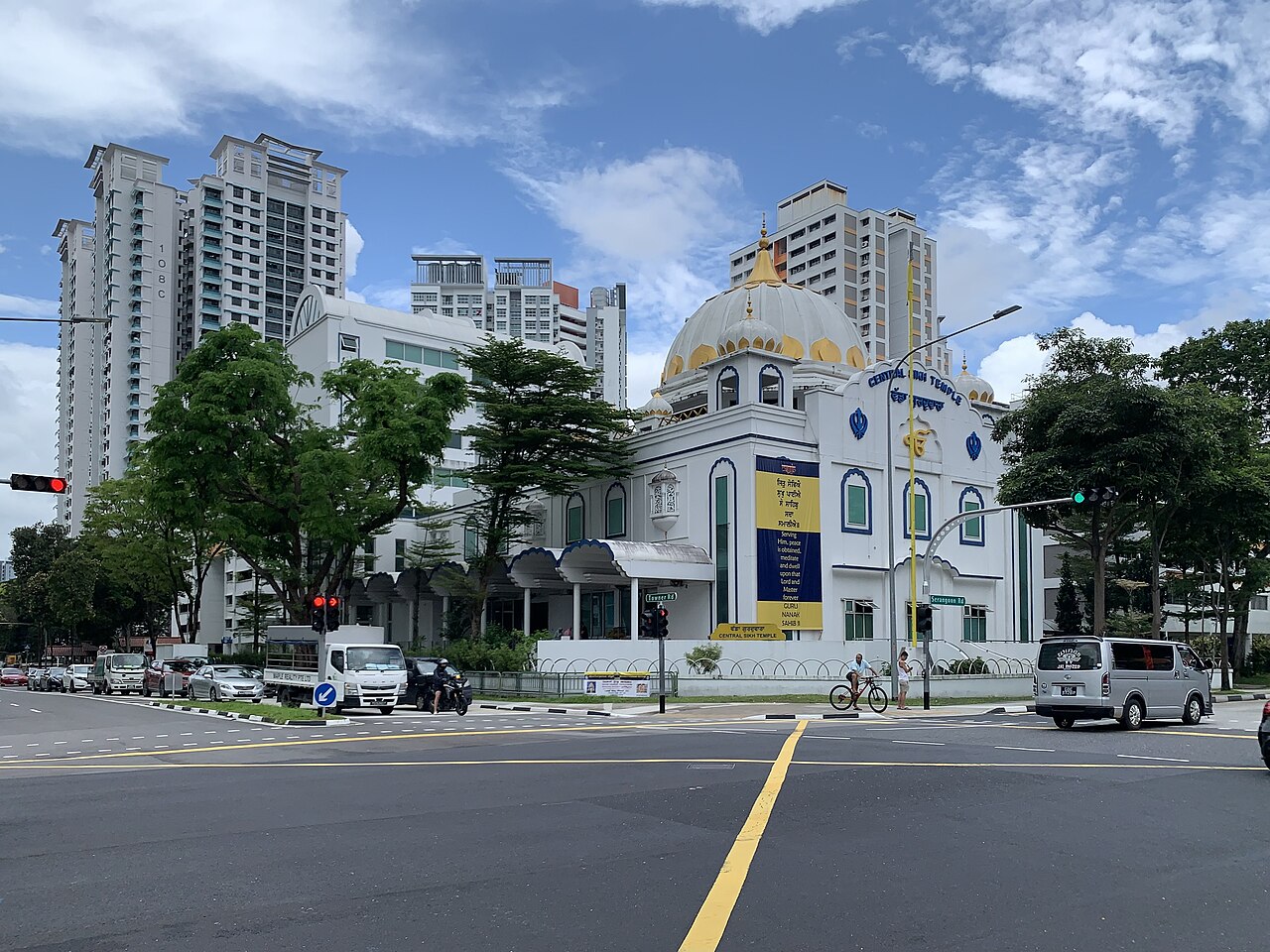
Central Sikh Temple
Singapore · Singapore · gurdwara
At the junction of Towner Road and Serangoon Road in Kallang, the Central Sikh Temple is Singapore's principal gurdwara, its gold-crowned dome rising over a congregation whose roots in the city reach back to 1912. A seven-storey community building stands beside it, carrying the gurdwara's life beyond the prayer hall into daily service and learning.
 Sikhism
Dongbaoxing Road Gurdwara
Shanghai · People's Republic of China · gurdwara
A red brick building in Shanghai's Hongkou District that served as a Sikh gurdwara from 1908 into the early 1970s, now protected as a cultural relic though it has stood deconsecrated, closed to worship, and repurposed as housing and a community clinic for more than fifty years.
 Sikhism
Gurdwara Baba Atal
Amritsar · India · gurdwara
A nine-storey gurdwara rising beside the Kaulsar sarovar in Amritsar, a short walk south of Sri Harmandir Sahib, built in memory of Baba Atal Rai Ji, the young son of Guru Hargobind Sahib.
._Painting_at_Gurdwara_Bal_Leela_Sahib%2C_Sri_Patna_Sahib.jpg%2F1280px-Painting_of_Guru_Gobind_Singh_in_their_Bal_Saroop_(child_form)._Painting_at_Gurdwara_Bal_Leela_Sahib%2C_Sri_Patna_Sahib.jpg&w=3840&q=75) Sikhism
SikhismGurdwara Bal Lila Maini Sangat
Patna · India · gurdwara
A small gurdwara in a quiet lane of Patna Sahib, marking the household of Raja Fateh Chand Maini, where the child Guru Gobind Singh Ji often sat in the queen's lap and shared her simple offering of boiled, salted gram.
 Sikhism
Gurdwara Beri Sahib
Sialkot · Pakistan · gurdwara
A gurdwara in Sialkot, Pakistan, built beside the berry tree under which Guru Nanak Dev Ji is said to have rested and met the Sufi saint Hamza Ghaus.
 Sikhism
Gurdwara Dukh Nivaran Sahib
Patiala · India · gurdwara
A gurdwara in Patiala whose sarovar is held to carry healing grace, raised where Guru Tegh Bahadur Ji rested beneath a banyan tree in 1672 and eased the suffering of the village of Lehal.