The Guru dug a raft into the earth here, and every moonless night since, the sangat has come to cross.
Be the first to check in
Coming up: Guru Nanak Gurpurab · 24 NovEntry tended 28 Jun 2026
Tarn Taran, Punjab Largest sarovar of any gurdwara Masya (Amavasya) · next 12 Aug 2026 Gold-leafed under Maharaja Ranjit Singh, 1836-37 Entry free, always Open day and night
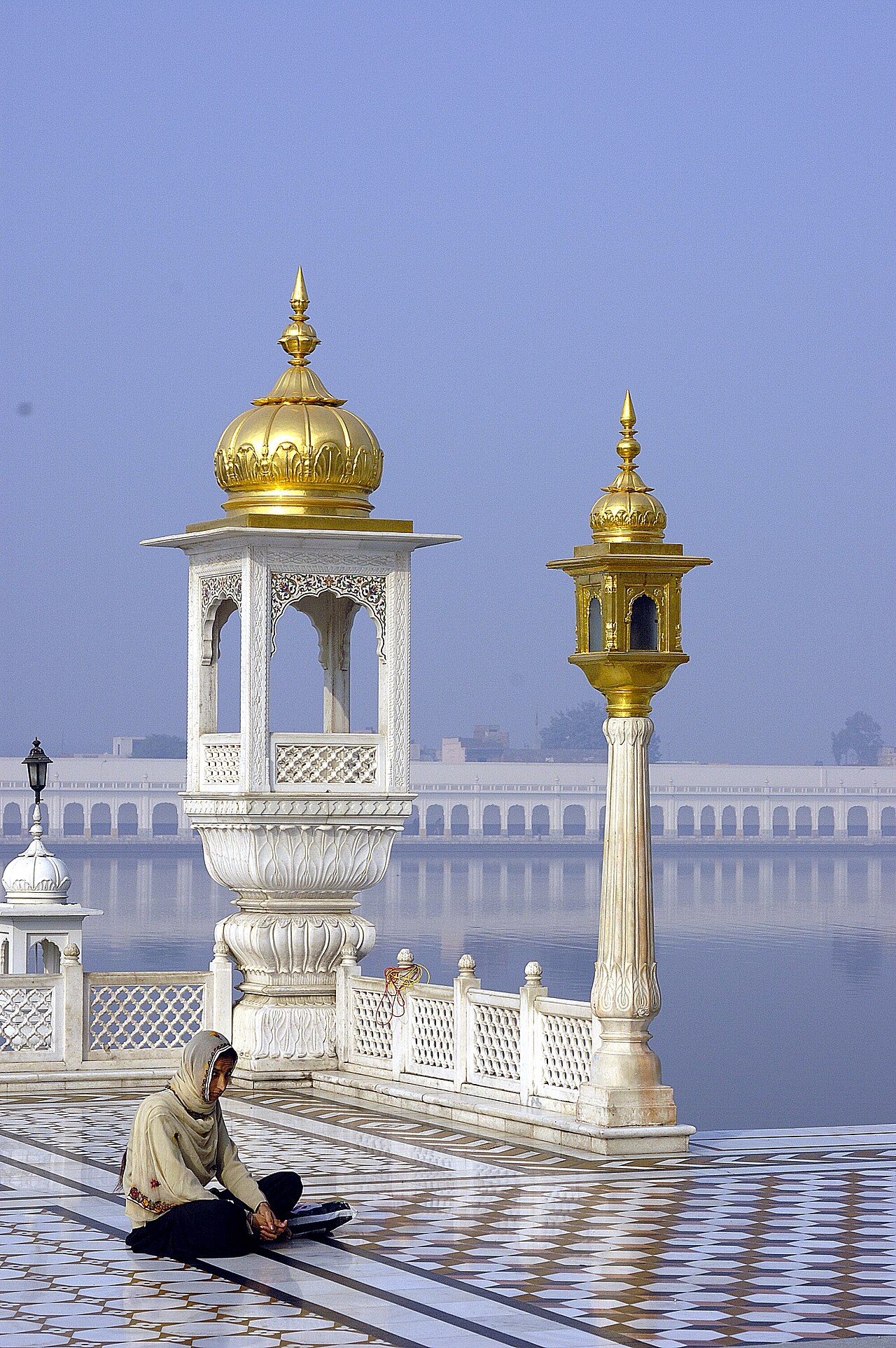
The marble underfoot runs on and on, mirroring a sarovar so wide the far bank blurs into haze. Cover your head, wash your feet at the channel, and the golden sanctum rises ahead, its dome catching the Punjab sun much as Harmandir Sahib's does, twenty five kilometres to the north. But wait for the night the moon disappears entirely. This courtyard fills past capacity then, month after month, not once a year like every festival you already know. This gurdwara keeps a rhythm no other keeps.
Guru Arjan Dev Ji, the fifth Guru, personally commissioned this tank in 1590, and centuries of digging and giving have made it, by tradition, the largest sarovar of any gurdwara, wider even than the sarovar at Harmandir Sahib twenty five kilometres away.
Before it carried the name Tarn Taran, the tank was known as Dukh Nivaran, the reliever of suffering, for water devotees held to ease the pain of leprosy; Guru Arjan Dev Ji is remembered for sheltering and tending those the rest of society had turned away.
Most Sikh festivals return once a year. This one returns every month: on Masya, the night the moon disappears entirely, pilgrims arrive by the tens of thousands to bathe before dawn, a rhythm this gurdwara keeps at a scale few others attempt.
The raft the Guru dug into the earth
In Sambat 1647, the year 1590 by the common calendar, Guru Arjan Dev Ji, the fifth Guru, bought land in the Majha heartland of Punjab and began excavating a tank on a scale nobody nearby had attempted. Dhan Dhan Baba Buddha Ji, the elder who had anointed each of the first five Gurus, laid the foundation stone of the Darbar Sahib that would rise beside it. The Guru named the water Tarn Taran, the raft that carries a soul across the ocean of existence. Local memory holds an earlier name too, Dukh Nivaran, the reliever of affliction, for a healing the water was said to bring those suffering from leprosy, whom the Guru sheltered and tended by its banks.
Guru Hargobind Sahib, the sixth Guru, stayed here long enough that a separate shrine, Gurdwara Manji Sahib, still marks the spot; Guru Tegh Bahadur, the ninth, passed through on his own journey across the Majha villages. The eighteenth century brought war more than worship: Baba Deep Singh Ji is remembered marking this ground before riding to his last battle, and two Sikh warriors, Bota Singh Sandhu and Garja Singh Ji, were martyred nearby in 1739. Maharaja Ranjit Singh rebuilt the Darbar Sahib in 1836 and 1837 and gilded it, as he had Harmandir Sahib, and his grandson Nau Nihal Singh raised a single tower at the sarovar's edge before three more were ever begun.
In 1921, Sikhs reclaimed the gurdwara from hereditary priests who had been keeping its income for themselves, an episode remembered as Saka Tarn Taran and paid for with two lives, Hazara Singh and Hukam Singh. The shrine has been rebuilt and re-marbled since, most recently in 2005, and the sangat that gathers here on Masya each month continues a devotion that has outlasted every one of those centuries.
What you'll actually see
1
The sarovar and its parikarma
You arrive first at the water: a sarovar broader than any other gurdwara keeps, ringed by a marble walkway where pilgrims move slowly, some pausing at the bathing ghats to step down into water they hold to be healing, the same water that gave the place its two old names.
2
The gold-leafed Darbar Sahib
Across the causeway, the sanctum rises in the same gold-leafed style Maharaja Ranjit Singh gave Harmandir Sahib: a white marble base giving way to sheets of hammered gold, domes within domes, and, inside, the Guru Granth Sahib Ji seated beneath its canopy while kirtan continues without pause.
3
The lone minar and Gurdwara Manji Sahib
A single tower stands at one end of the sarovar, the only one of four that Maharaja Nau Nihal Singh's masons ever finished; nearby, the smaller Gurdwara Manji Sahib marks the spot where Guru Hargobind Sahib once stayed, a quieter stop most visitors reach on their way around the water.
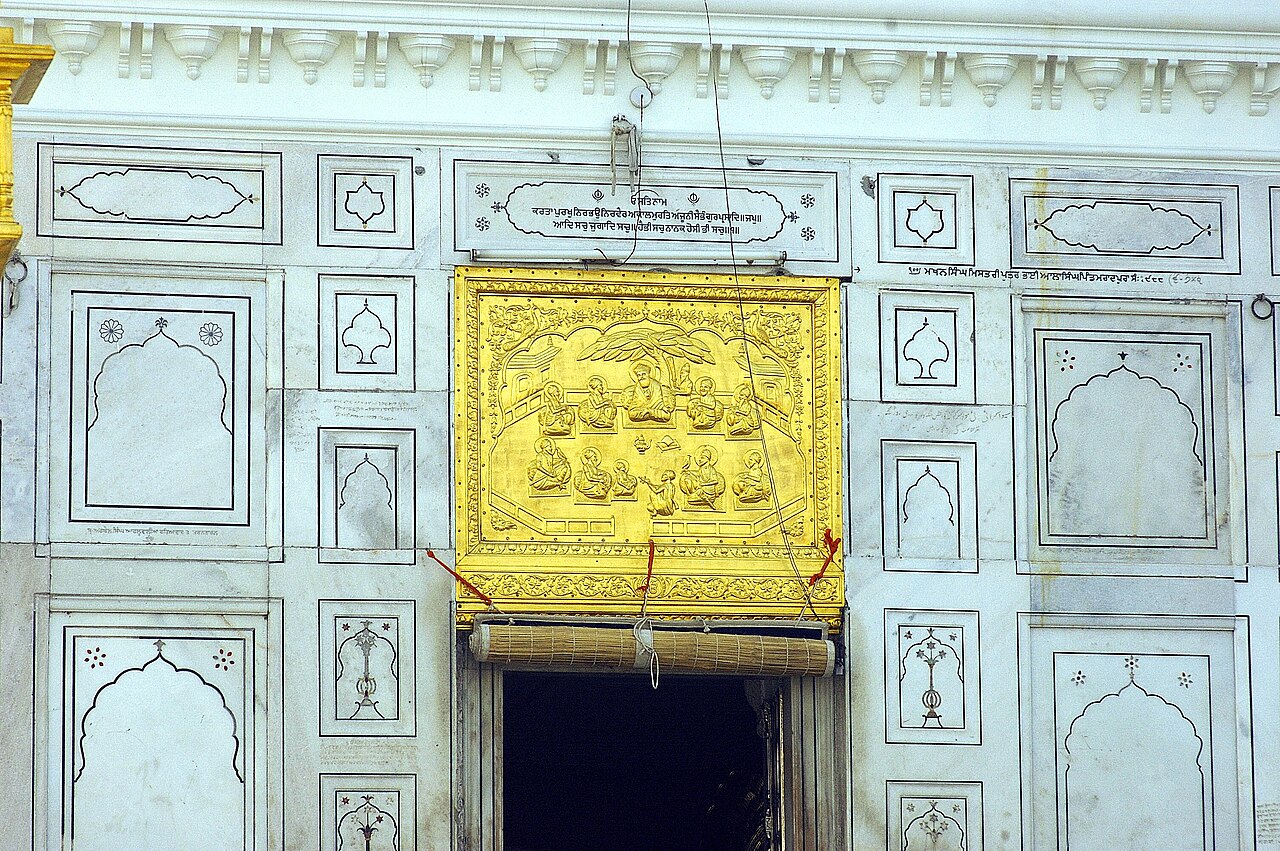
A gold relief panel over an entrance at Gurdwara Sri Tarn Taran Sahib, depicting the Sikh GurusA devotee seated in prayer beside the sarovar at Gurdwara Sri Tarn Taran Sahib
Photos: Giridhar Appaji Nag Y (CC BY 2.0), via Wikimedia Commons
THE NIGHT THAT RETURNS EVERY MONTH
Masya, the gathering on the moonless night
Once each month, on Masya, the night the moon vanishes entirely from the sky, the sangat at Tarn Taran Sahib swells past its ordinary size. Pilgrims arrive from across Majha and beyond through the evening and into the small hours, many timing their visit to bathe in the sarovar before first light, when the water is held to carry its oldest blessing, the same healing tradition holds it once gave those who came here with leprosy centuries ago. Kirtan continues through the night, and the langar hall runs without pause to feed everyone who has come. The next Masya falls on 12 August 2026, and then on the new moon of every month after that.
Most Sikh festivals mark a single day a year; this one repeats monthly, so an ordinary weekday visit can land you in the middle of it by chance. Check a panchang or the current amavasya date before you travel if you mean to catch it, or avoid the crowds.
Plan your visit
By air
Sri Guru Ram Dass Jee International Airport, Amritsar, is about 30 km away; taxis take roughly 45 minutes to an hour.
By rail and road
Tarn Taran Junction railway station is about 1 km from the gurdwara. By road, Tarn Taran sits roughly 25 km southeast of Amritsar on NH354A, about 40 to 50 minutes by car, with regular buses running between the two.
Timings
The complex stays open day and night, with the sanctum's own rhythm of prakash before dawn and sukhasan at night; the parikarma and sarovar remain open through the small hours.
Best time
October to March brings the kindest weather. Masya nights and the major Gurpurabs draw the largest crowds; an ordinary weekday morning is the quietest time to sit by the water.
Dress
Cover your head at all times inside the complex; scarves are available at the entrance. Dress modestly, with shoulders and knees covered.
The parikarma
Circle the sarovar clockwise along the marble walkway, as pilgrims here do; shoes come off and feet are washed at the water channel before you step onto the marble.
Entry
Free, always, for everyone. The langar meal is free as well.
Tarn Taran means the raft that ferries a soul across the ocean of existence, a name tradition holds the sarovar carried before the town grew up around it and took the name for itself.
The sarovar was known even earlier as Dukh Nivaran, the reliever of affliction, for water long held to ease the suffering of those with leprosy, whom Guru Arjan Dev Ji sheltered here.
Tobacco, alcohol, and other intoxicants are not permitted anywhere in the complex, and langar meals are vegetarian only, as at every gurdwara.
A 2019 renovation damaged the historic Darshani Deori gateway at the sarovar's edge, an incident that drew criticism from Sikh heritage groups; the shrine has been repeatedly rebuilt and re-marbled across its four centuries, most recently in 2005.
Questions pilgrims ask
Is Tarn Taran Sahib the same as the Golden Temple in Amritsar?
No, though the resemblance is not an accident. Both were gilded under Maharaja Ranjit Singh in the same era, and Tarn Taran Sahib stands about 25 km south of Amritsar as its own gurdwara, with its own sarovar, its own history, and, by tradition, the larger of the two tanks.
Is there an idol inside the sanctum?
No. Sikhi does not worship images. The Guru Granth Sahib Ji, the scripture Sikhs revere as their living Guru, is seated under a canopy inside the Darbar Sahib, and granthis sing its hymns through the day.
What is Masya, and can anyone attend?
Masya is Amavasya, the night of the new moon, observed here every month rather than once a year. Anyone may come. Pilgrims bathe in the sarovar before dawn, sit for kirtan, and eat in the langar alongside the regular sangat, with no distinction made by faith.
Is the sarovar water actually healing?
Devotees hold it to be so, a belief rooted in the tradition that the water once eased the suffering of those with leprosy whom Guru Arjan Dev Ji sheltered here. Mandala makes no medical claim about the water; this is what the tradition holds and what pilgrims come to receive.
Dharamshalas and guest houses near this Sthan, shared by devotees. Adisthan takes no bookings and no money; contact each stay directly.
No stays are listed here yet. Know one that serves pilgrims well?
Are you a sevadar or officer of the SGPC serving Gurdwara Sri Tarn Taran Sahib? Claim this page to keep timings, Masya dates, and the sangat's own account of this place true for devotees worldwide.