
Guru ka Tal
Gurdwara Dukh Nivaran Sahib · Guru ka Taal
About
Guru ka Tal stands as one of the most poignant Sikh shrines in northern India, situated close to Sikandra on the outskirts of Agra. The gurdwara rises from hallowed earth, the precise location where Guru Tegh Bahadur Ji, revered as the ninth in the line of Sikh Gurus, chose to offer himself willingly into the custody of the Mughal Emperor Aurangzeb. That act of voluntary surrender, undertaken not in defeat but in steadfast principle, transformed this ground into a place of enduring veneration.
Thousands of pilgrims make their way here each year to sit in the presence of that memory, to offer ardās, and to honour a figure whose courage redefined what it means to stand for the rights of others. The atmosphere within the gurdwara carries the quiet gravity that belongs to places where history and faith converge, the langar fires, the recitation of Gurbani, and the steady stream of sangat all speak of a living tradition that holds its martyrs close.
History
The reservoir itself long predates the gurdwara: built in 1610 under the Mughal emperor Jahangir to gather rainwater for the city, it was originally ringed by twelve towers, of which eight still stand. Local Sikh tradition holds that Guru Tegh Bahadur Ji passed through this ground during the journey that ended in his martyrdom in Delhi in 1675, and devotees have long honoured the site as a place of his memory, though many historical accounts place his actual arrest further north, near Ropar in Punjab. The gurdwara that stands here today was raised in the 1970s through the efforts of Sant Baba Sadhu Singh Ji Mauni.
Significance
Guru Tegh Bahadur Ji is honoured by Sikhs as Hind di Chādar, the Shield of India, for laying down his life in defence of another faith's right to worship freely, and Guru ka Tal carries that memory into a corner of Agra otherwise given over to Mughal monuments. Pilgrims come to sit with that history in the shade of the old reservoir's towers, to hear kirtan, and to share in the langar that runs without interruption.
Architecture
Modern white marble gurdwara adjoining a Mughal-era octagonal-towered rainwater tank
Visiting
Hours
Hours not listed.
Contact
No contact details listed yet.
Engage with Guru ka Tal
Through the four pathways
Seva सेवा — Service
Offer your time and skills here. The following opportunities are open at Guru ka Tal:
No Seva offerings listed yet.
Sādhana साधना — Practice
Learn the worship and practice associated with Guru ka Tal:
No Sādhana offerings listed yet.
Sandhāna सन्धान — Wisdom
Unite with the wisdom of this tradition:
No Sandhāna offerings listed yet.
Sādhya साध्य — Giving
Support this sacred place according to your means:
No Sādhya offerings listed yet.
All giving flows directly to Guru ka Tal. Adisthan does not take a commission.
Gallery
Related sacred places
 Sikhism
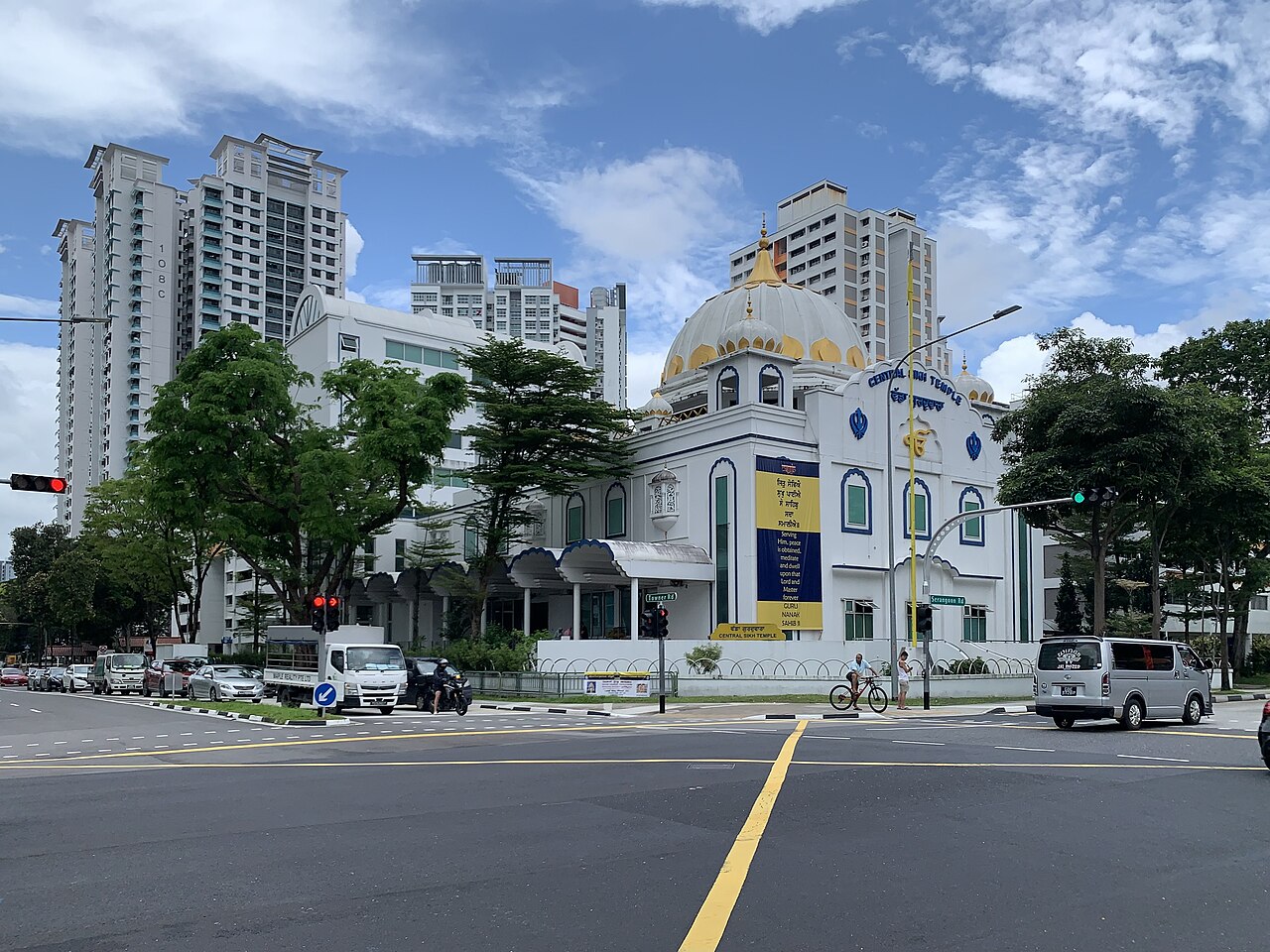
Central Sikh Temple
Singapore · Singapore · gurdwara
At the junction of Towner Road and Serangoon Road in Kallang, the Central Sikh Temple is Singapore's principal gurdwara, its gold-crowned dome rising over a congregation whose roots in the city reach back to 1912. A seven-storey community building stands beside it, carrying the gurdwara's life beyond the prayer hall into daily service and learning.
 Sikhism
Dongbaoxing Road Gurdwara
Shanghai · People's Republic of China · gurdwara
A red brick building in Shanghai's Hongkou District that served as a Sikh gurdwara from 1908 into the early 1970s, now protected as a cultural relic though it has stood deconsecrated, closed to worship, and repurposed as housing and a community clinic for more than fifty years.
 Sikhism
Gurdwara Baba Atal
Amritsar · India · gurdwara
A nine-storey gurdwara rising beside the Kaulsar sarovar in Amritsar, a short walk south of Sri Harmandir Sahib, built in memory of Baba Atal Rai Ji, the young son of Guru Hargobind Sahib.
._Painting_at_Gurdwara_Bal_Leela_Sahib%2C_Sri_Patna_Sahib.jpg%2F1280px-Painting_of_Guru_Gobind_Singh_in_their_Bal_Saroop_(child_form)._Painting_at_Gurdwara_Bal_Leela_Sahib%2C_Sri_Patna_Sahib.jpg&w=3840&q=75) Sikhism
SikhismGurdwara Bal Lila Maini Sangat
Patna · India · gurdwara
A small gurdwara in a quiet lane of Patna Sahib, marking the household of Raja Fateh Chand Maini, where the child Guru Gobind Singh Ji often sat in the queen's lap and shared her simple offering of boiled, salted gram.
 Sikhism
Gurdwara Beri Sahib
Sialkot · Pakistan · gurdwara
A gurdwara in Sialkot, Pakistan, built beside the berry tree under which Guru Nanak Dev Ji is said to have rested and met the Sufi saint Hamza Ghaus.
 Sikhism
Gurdwara Dukh Nivaran Sahib
Patiala · India · gurdwara
A gurdwara in Patiala whose sarovar is held to carry healing grace, raised where Guru Tegh Bahadur Ji rested beneath a banyan tree in 1672 and eased the suffering of the village of Lehal.