Guru Nanak Jhira Sahib
Gurdwara Nanak Jhira Sahib · Nanak Jhira Sahib
About
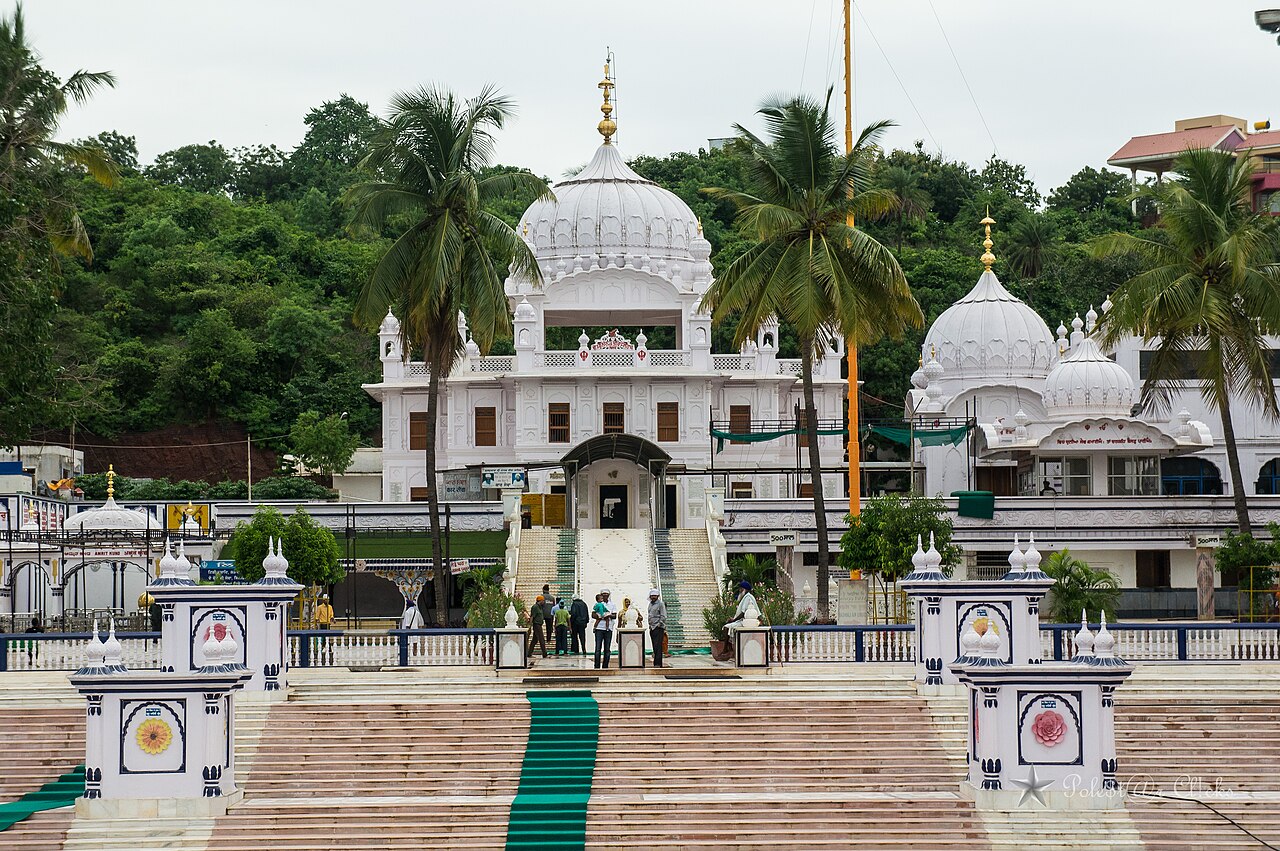
Cradled in a valley enclosed on three sides by laterite hills, Guru Nanak Jhira Sahib is among the most cherished Sikh pilgrimage sites in southern India. The name itself tells the story: *jhira* means stream, and the stream in question, crystal-clear, emerging from a fissure in the rock, has been flowing since the early sixteenth century, when the first Guru of the Sikh faith is said to have brought it forth through prayer. The present Gurdwara complex was erected in 1948, after Indian independence, alongside this enduring spring. A glass enclosure now protects the emergence point, letting pilgrims observe the water appearing from the earth without disturbing it.
The complex is arranged around several distinct spaces: the Darbar Sahib for worship, the Diwan Hall for congregational gathering, and the Langar Hall where food is given freely to every visitor at any hour of day or night, reflecting the Sikh principle of boundless hospitality. The eternal scripture, Guru Granth Sahib, rests in a dedicated sukhaasan room. Across from the Gurdwara's front steps, the spring fills a small sacred reservoir called the Amrit Kund; bathing here is held to purify both body and spirit. A Likhari Room receives donations and issues receipts, while a museum honouring Guru Tegh Bahadur, the ninth Guru, chronicles key chapters of Sikh history through paintings and depictions.
Bidar's association with Sikhism runs deeper than this single shrine. The city gave birth to Bhai Sahib Singh, son of Gurunarayana and Ankamma, who would become one of the Panj Pyare, the five beloved ones who volunteered their lives at Guru Gobind Singh's historic call and were consecrated as the founding members of the Khalsa. Roughly ten kilometres away, the village of Janawada holds another gurdwara, dedicated to Mai Bhagoji, a devotee who accompanied Guru Gobind Singh from Punjab to Nanded and planted the seeds of Sikhism among the people of this district.
History
Between 1510 and 1514, Guru Nanak Dev Ji undertook his second udasi through southern India, travelling from Nagpur and Khandwa to Omkareshwar, on to Nanded, and through Hyderabad and Golconda before reaching Bidar to meet the Sufi teachers Pir Jalaluddin and Yakoob Ali. The Janamsakhis recount that the city then suffered a severe shortage of clean water, and that the Guru, moved by the people's hardship, uttered *Sat Kartar* and loosened a stone with his wooden sandal, whereupon a spring of cool water rose from the rock and has never ceased. The present gurdwara was built beside that spring in 1948, the year of Indian independence.
Significance
Sikh tradition holds Guru Nanak Jhira Sahib to be the second of two miraculous springs called forth by the first Guru, the other being Panja Sahib, now in Pakistan and largely closed to pilgrims from India, which gives this Bidar shrine particular weight for devotees who cannot reach the original. Between four and five lakh pilgrims visit each year, drawing water from the Amrit Kund believed to purify body and spirit, and the city's own Sikh roots run deep: Bhai Sahib Singh, one of the Panj Pyare who answered Guru Gobind Singh Ji's call to found the Khalsa, was born here.
Architecture
Twentieth-century Sikh gurdwara architecture in white marble, domed towers set around the sacred spring and Amrit Kund
Visiting
Hours
Hours not listed.
Contact
No contact details listed yet.
Engage with Guru Nanak Jhira Sahib
Through the four pathways
Seva सेवा — Service
Offer your time and skills here. The following opportunities are open at Guru Nanak Jhira Sahib:
No Seva offerings listed yet.
Sādhana साधना — Practice
Learn the worship and practice associated with Guru Nanak Jhira Sahib:
No Sādhana offerings listed yet.
Sandhāna सन्धान — Wisdom
Unite with the wisdom of this tradition:
No Sandhāna offerings listed yet.
Sādhya साध्य — Giving
Support this sacred place according to your means:
No Sādhya offerings listed yet.
All giving flows directly to Guru Nanak Jhira Sahib. Adisthan does not take a commission.
Festivals & Events
- Nov
Guru Nanak Gurpurab
24 November 2026 · annual
The birth anniversary of Guru Nanak Dev Ji draws the largest crowds of the year, with the gurdwara adorned in flags and lights and volunteers taking up seva in the kitchens and at the shoe-keeping posts.
Gallery
Related sacred places
 Sikhism
Central Sikh Temple
Singapore · Singapore · gurdwara
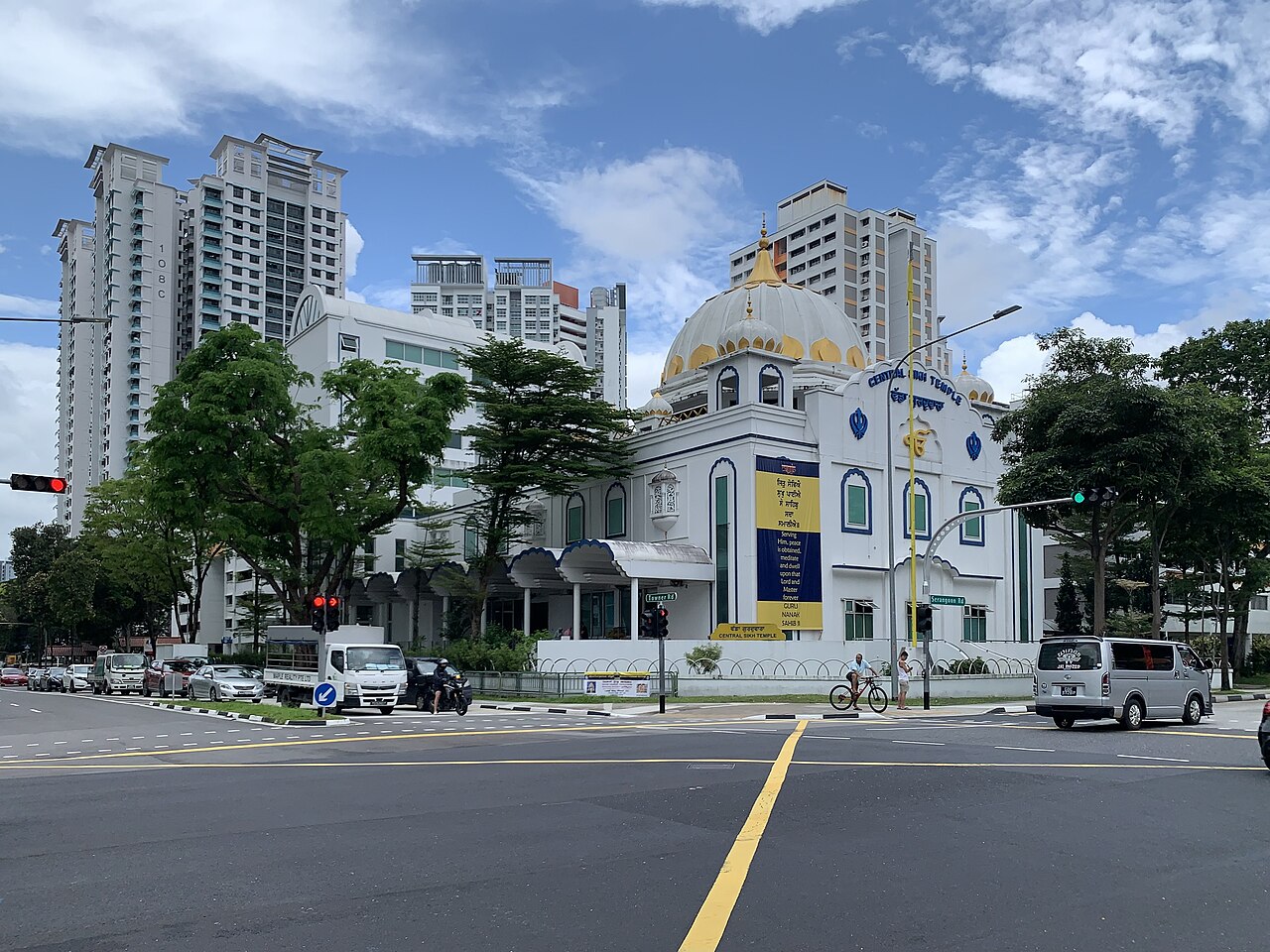
At the junction of Towner Road and Serangoon Road in Kallang, the Central Sikh Temple is Singapore's principal gurdwara, its gold-crowned dome rising over a congregation whose roots in the city reach back to 1912. A seven-storey community building stands beside it, carrying the gurdwara's life beyond the prayer hall into daily service and learning.
 Sikhism
Dongbaoxing Road Gurdwara
Shanghai · People's Republic of China · gurdwara
A red brick building in Shanghai's Hongkou District that served as a Sikh gurdwara from 1908 into the early 1970s, now protected as a cultural relic though it has stood deconsecrated, closed to worship, and repurposed as housing and a community clinic for more than fifty years.
 Sikhism
Gurdwara Baba Atal
Amritsar · India · gurdwara
A nine-storey gurdwara rising beside the Kaulsar sarovar in Amritsar, a short walk south of Sri Harmandir Sahib, built in memory of Baba Atal Rai Ji, the young son of Guru Hargobind Sahib.
._Painting_at_Gurdwara_Bal_Leela_Sahib%2C_Sri_Patna_Sahib.jpg%2F1280px-Painting_of_Guru_Gobind_Singh_in_their_Bal_Saroop_(child_form)._Painting_at_Gurdwara_Bal_Leela_Sahib%2C_Sri_Patna_Sahib.jpg&w=3840&q=75) Sikhism
SikhismGurdwara Bal Lila Maini Sangat
Patna · India · gurdwara
A small gurdwara in a quiet lane of Patna Sahib, marking the household of Raja Fateh Chand Maini, where the child Guru Gobind Singh Ji often sat in the queen's lap and shared her simple offering of boiled, salted gram.
 Sikhism
Gurdwara Beri Sahib
Sialkot · Pakistan · gurdwara
A gurdwara in Sialkot, Pakistan, built beside the berry tree under which Guru Nanak Dev Ji is said to have rested and met the Sufi saint Hamza Ghaus.
 Sikhism
Gurdwara Dukh Nivaran Sahib
Patiala · India · gurdwara
A gurdwara in Patiala whose sarovar is held to carry healing grace, raised where Guru Tegh Bahadur Ji rested beneath a banyan tree in 1672 and eased the suffering of the village of Lehal.