
Guru Ram Rai Darbar Sahib
Darbar Sahib · Guru Ram Rai Durbar · Jhanda Sahib
About
Guru Ram Rai Darbar Sahib stands in the heart of Dehradun as a place of profound historical and devotional weight within the Sikh tradition. It is consecrated to the memory of Baba Ram Rai, the eldest son of Guru Har Rai, the seventh among the ten Sikh Gurus, who made this valley his permanent home after a rupture with Sikh orthodoxy in the mid-seventeenth century.
What distinguishes the Darbar above all else is its extraordinary architecture. Where a conventional gurudwara draws on a palette familiar to the Sikh tradition, this complex is shaped overwhelmingly by Indo-Islamic forms, minarets, broad domes, and a compact Mughal-style garden encircling the central mausoleum. The central mausoleum itself drew inspiration from the Tomb of Jahangir. This aesthetic arose not from accident but from the cordial relations Baba Ram Rai maintained with the Mughal emperor Aurangzeb, whose patronage supplied both land and resources for the site, a remarkable circumstance given that the era was generally marked by tension between Sikhs and Mughal authority.
The complex once housed a remarkable collection of Mughal-style wall paintings, among the rarest such murals found anywhere in Uttarakhand. Many date to the seventeenth century and have survived more than three centuries, though successive repainting and marbling have obscured or damaged much of the original work. The Archaeological Survey of India undertook restoration of these historic murals between 2004 and 2014.
History
Baba Ram Rai Ji settled in this valley in the mid-seventeenth century after altering a word of the Adi Granth before the Mughal emperor Aurangzeb to avoid giving offence, an act for which the Sikh orthodoxy of the time cast him out. Devotees still trace the city's name to his camp, the dera of Guru Ram Rai in the Doon valley, worn down over generations into Dehradun. He died in 1687, and his wife Mata Panjab Kaur oversaw completion of the central Darbar in 1699 and continued directing its affairs until her own death in 1741 or 1742, work carried onward since by an unbroken line of celibate Sajjada Nashin Shri Mahants.
Significance
What sets the Darbar apart is its architecture: raised with the cordial support of Aurangzeb himself, an unusual alliance in an era of tension between Sikhs and Mughal authority, its minarets, bulbous dome and Mughal garden draw directly on the Tomb of Jahangir rather than on any conventional gurdwara. Its walls once carried extensive Mughal-style murals, among the rarest such paintings anywhere in Uttarakhand, some over three centuries old and restored by the Archaeological Survey of India between 2004 and 2014.
Architecture
Indo-Islamic architecture unusual for a Sikh site: white marble minarets and a bulbous central dome inspired by the Tomb of Jahangir, set within a Mughal-style garden
Visiting
Hours
Hours not listed.
Contact
No contact details listed yet.
Engage with Guru Ram Rai Darbar Sahib
Through the four pathways
Seva सेवा — Service
Offer your time and skills here. The following opportunities are open at Guru Ram Rai Darbar Sahib:
No Seva offerings listed yet.
Sādhana साधना — Practice
Learn the worship and practice associated with Guru Ram Rai Darbar Sahib:
No Sādhana offerings listed yet.
Sandhāna सन्धान — Wisdom
Unite with the wisdom of this tradition:
No Sandhāna offerings listed yet.
Sādhya साध्य — Giving
Support this sacred place according to your means:
No Sādhya offerings listed yet.
All giving flows directly to Guru Ram Rai Darbar Sahib. Adisthan does not take a commission.
Festivals & Events
- Mar
Jhanda Mela
27 March 2027 · annual
The 'flag fair' marking Baba Ram Rai Ji's arrival in the Doon valley, held since 1676, when the sangat gathers to lower and re-raise a hundred-foot ceremonial flagstaff wrapped anew in cloth.
Gallery
Related sacred places
 Sikhism
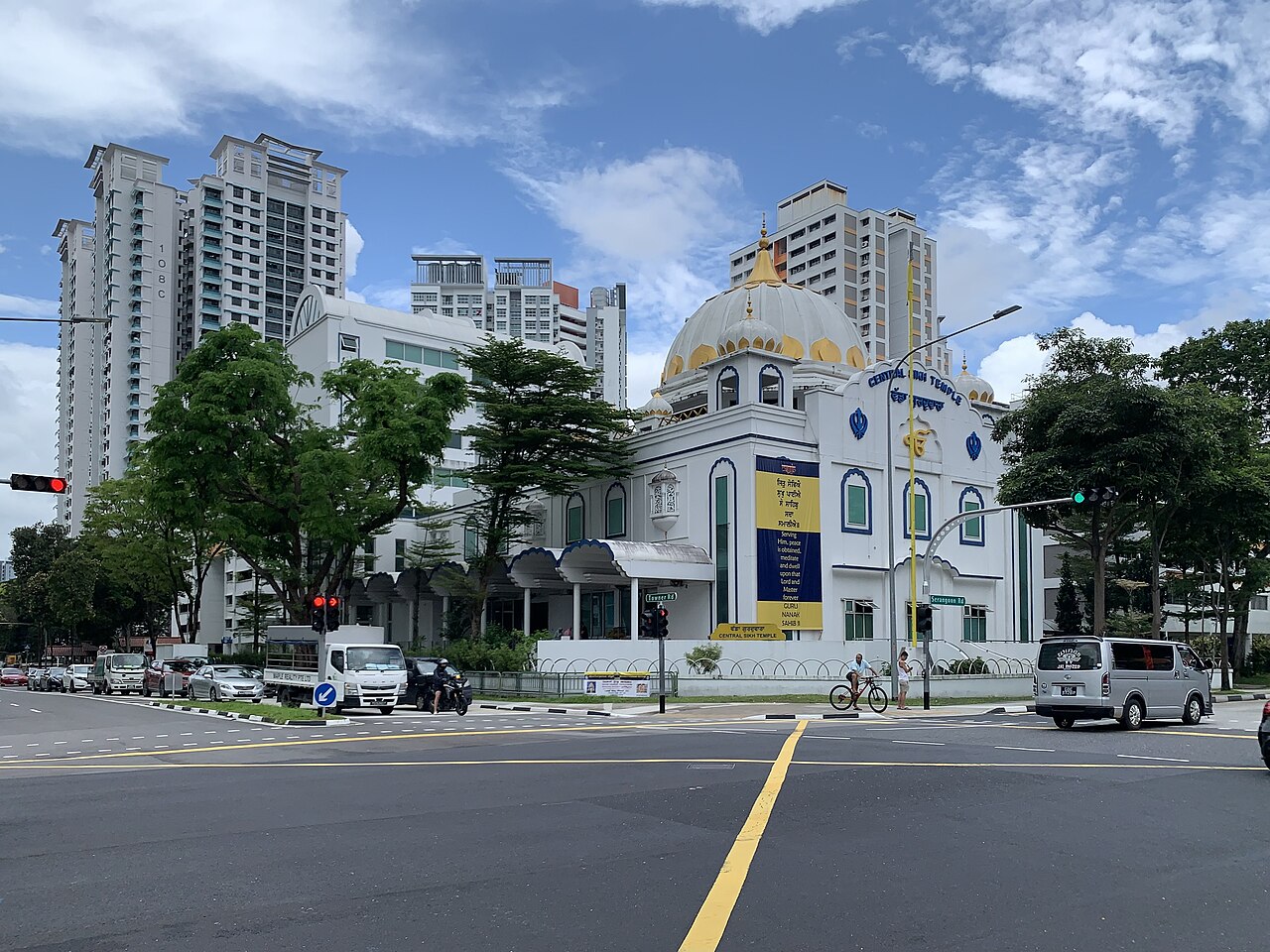
Central Sikh Temple
Singapore · Singapore · gurdwara
At the junction of Towner Road and Serangoon Road in Kallang, the Central Sikh Temple is Singapore's principal gurdwara, its gold-crowned dome rising over a congregation whose roots in the city reach back to 1912. A seven-storey community building stands beside it, carrying the gurdwara's life beyond the prayer hall into daily service and learning.
 Sikhism
Dongbaoxing Road Gurdwara
Shanghai · People's Republic of China · gurdwara
A red brick building in Shanghai's Hongkou District that served as a Sikh gurdwara from 1908 into the early 1970s, now protected as a cultural relic though it has stood deconsecrated, closed to worship, and repurposed as housing and a community clinic for more than fifty years.
 Sikhism
Gurdwara Baba Atal
Amritsar · India · gurdwara
A nine-storey gurdwara rising beside the Kaulsar sarovar in Amritsar, a short walk south of Sri Harmandir Sahib, built in memory of Baba Atal Rai Ji, the young son of Guru Hargobind Sahib.
._Painting_at_Gurdwara_Bal_Leela_Sahib%2C_Sri_Patna_Sahib.jpg%2F1280px-Painting_of_Guru_Gobind_Singh_in_their_Bal_Saroop_(child_form)._Painting_at_Gurdwara_Bal_Leela_Sahib%2C_Sri_Patna_Sahib.jpg&w=3840&q=75) Sikhism
SikhismGurdwara Bal Lila Maini Sangat
Patna · India · gurdwara
A small gurdwara in a quiet lane of Patna Sahib, marking the household of Raja Fateh Chand Maini, where the child Guru Gobind Singh Ji often sat in the queen's lap and shared her simple offering of boiled, salted gram.
 Sikhism
Gurdwara Beri Sahib
Sialkot · Pakistan · gurdwara
A gurdwara in Sialkot, Pakistan, built beside the berry tree under which Guru Nanak Dev Ji is said to have rested and met the Sufi saint Hamza Ghaus.
 Sikhism
Gurdwara Dukh Nivaran Sahib
Patiala · India · gurdwara
A gurdwara in Patiala whose sarovar is held to carry healing grace, raised where Guru Tegh Bahadur Ji rested beneath a banyan tree in 1672 and eased the suffering of the village of Lehal.