Gurudwara Buddha Johad
Gurdwara Budha Johad · Gurudwara Buddha Johad Sahib · ਗੁਰਦੁਆਰਾ ਬੁੱਢਾ ਜੌਹੜ · बुड्ढा जोहड़ गुरुद्वारा
About
Gurudwara Buddha Johad stands near Dabla village in the Raisinghnagar tehsil of Ganganagar district, Rajasthan, situated along the Padampur–Jaitsar road. Roughly 85 kilometres from Ganganagar town and some 350 kilometres from Amritsar, it occupies a quiet landscape that was once dense jungle, a far remove from the populous centres of Punjab.
The gurdwara enshrines the memory of a pivotal episode in Sikh history: after Bhai Sukha Singh and Bhai Mehtab Singh fulfilled their mission of retribution against Massa Ranghar, they made their way into northern Rajasthan and, at the site now known as Buddha Johad, suspended Ranghar's severed head from a tree. In later years the Sikh community raised a substantial gurdwara at this very spot, transforming it into a place of veneration and communal gathering.
Within the complex, historical murals and monuments recall the events surrounding the site's founding. A Jand tree, under which tradition held that Sukha Singh and Mehtab Singh tied their horses before presenting the head to Jathedar Baba Budha Singh, stood on the grounds until it fell in the year 2000. A large sacred pond graces the precinct, and on each Massya, the moonless night of the lunar month, devotees assemble here in considerable numbers for a fair and acts of worship. The gurdwara also serves as a centre for students who come to learn the devotional singing of Gurbani.
History
In 1740, the Mughal-appointed strongman Massa Ranghar occupied the Harmandir Sahib in Amritsar and defiled its sanctum with dancing girls, meat and wine. Bhai Sukha Singh of Mari Kamboke and Bhai Mehtab Singh of Mirankot disguised themselves as revenue collectors, entered the shrine on 11 August 1740, and struck off his head before the Mughal garrison could react. Carrying the head south into the then-wild forests of northern Rajasthan, the two Sikhs hung it from a tree at this spot before presenting it to Jathedar Baba Budha Singh, and in later years the Sikh community raised a gurdwara here to mark the place. The old Jand tree under which they had tied their horses stood on the grounds until it fell in the year 2000.
Significance
For Sikhs the gurdwara stands as a memorial to Khalsa courage and to the sanctity of Harmandir Sahib, remembered as an act of justice by ordinary devotees against imperial persecution. A sacred pond graces the precinct, and on Massya, the moonless night of each lunar month, devotees gather here for worship and a fair; students also come to learn the devotional singing of Gurbani. The gurdwara binds a remote corner of Rajasthan into the wider memory of the Sikh Panth.
Visiting
Hours
Hours not listed.
Contact
No contact details listed yet.
Address
Engage with Gurudwara Buddha Johad
Through the four pathways
Seva सेवा — Service
Offer your time and skills here. The following opportunities are open at Gurudwara Buddha Johad:
No Seva offerings listed yet.
Sādhana साधना — Practice
Learn the worship and practice associated with Gurudwara Buddha Johad:
No Sādhana offerings listed yet.
Sandhāna सन्धान — Wisdom
Unite with the wisdom of this tradition:
No Sandhāna offerings listed yet.
Sādhya साध्य — Giving
Support this sacred place according to your means:
No Sādhya offerings listed yet.
All giving flows directly to Gurudwara Buddha Johad. Adisthan does not take a commission.
Related sacred places
 Sikhism
Central Sikh Temple
Singapore · Singapore · gurdwara
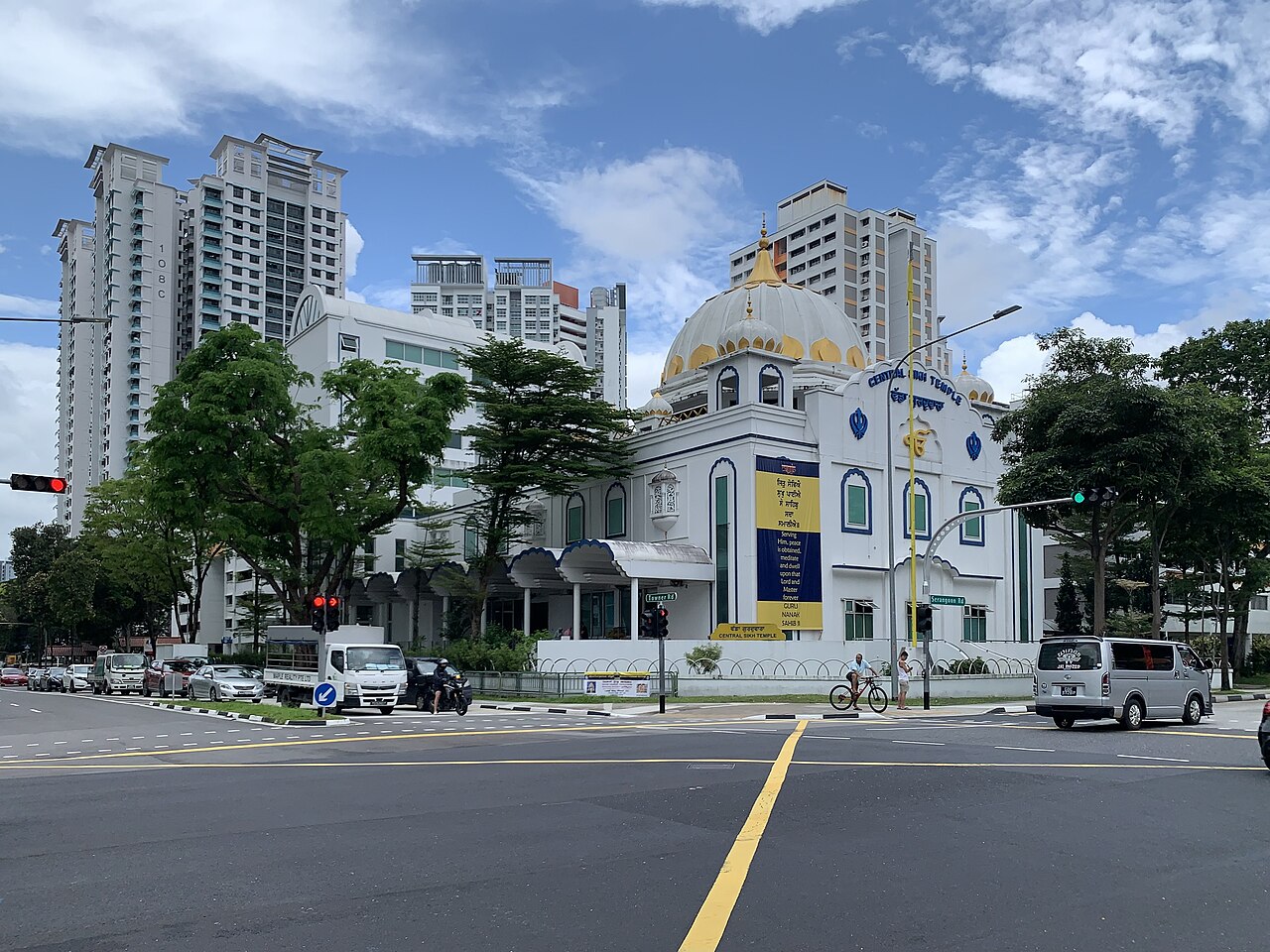
At the junction of Towner Road and Serangoon Road in Kallang, the Central Sikh Temple is Singapore's principal gurdwara, its gold-crowned dome rising over a congregation whose roots in the city reach back to 1912. A seven-storey community building stands beside it, carrying the gurdwara's life beyond the prayer hall into daily service and learning.
 Sikhism
Dongbaoxing Road Gurdwara
Shanghai · People's Republic of China · gurdwara
A red brick building in Shanghai's Hongkou District that served as a Sikh gurdwara from 1908 into the early 1970s, now protected as a cultural relic though it has stood deconsecrated, closed to worship, and repurposed as housing and a community clinic for more than fifty years.
 Sikhism
Gurdwara Baba Atal
Amritsar · India · gurdwara
A nine-storey gurdwara rising beside the Kaulsar sarovar in Amritsar, a short walk south of Sri Harmandir Sahib, built in memory of Baba Atal Rai Ji, the young son of Guru Hargobind Sahib.
._Painting_at_Gurdwara_Bal_Leela_Sahib%2C_Sri_Patna_Sahib.jpg%2F1280px-Painting_of_Guru_Gobind_Singh_in_their_Bal_Saroop_(child_form)._Painting_at_Gurdwara_Bal_Leela_Sahib%2C_Sri_Patna_Sahib.jpg&w=3840&q=75) Sikhism
SikhismGurdwara Bal Lila Maini Sangat
Patna · India · gurdwara
A small gurdwara in a quiet lane of Patna Sahib, marking the household of Raja Fateh Chand Maini, where the child Guru Gobind Singh Ji often sat in the queen's lap and shared her simple offering of boiled, salted gram.
 Sikhism
Gurdwara Beri Sahib
Sialkot · Pakistan · gurdwara
A gurdwara in Sialkot, Pakistan, built beside the berry tree under which Guru Nanak Dev Ji is said to have rested and met the Sufi saint Hamza Ghaus.
 Sikhism
Gurdwara Dukh Nivaran Sahib
Patiala · India · gurdwara
A gurdwara in Patiala whose sarovar is held to carry healing grace, raised where Guru Tegh Bahadur Ji rested beneath a banyan tree in 1672 and eased the suffering of the village of Lehal.