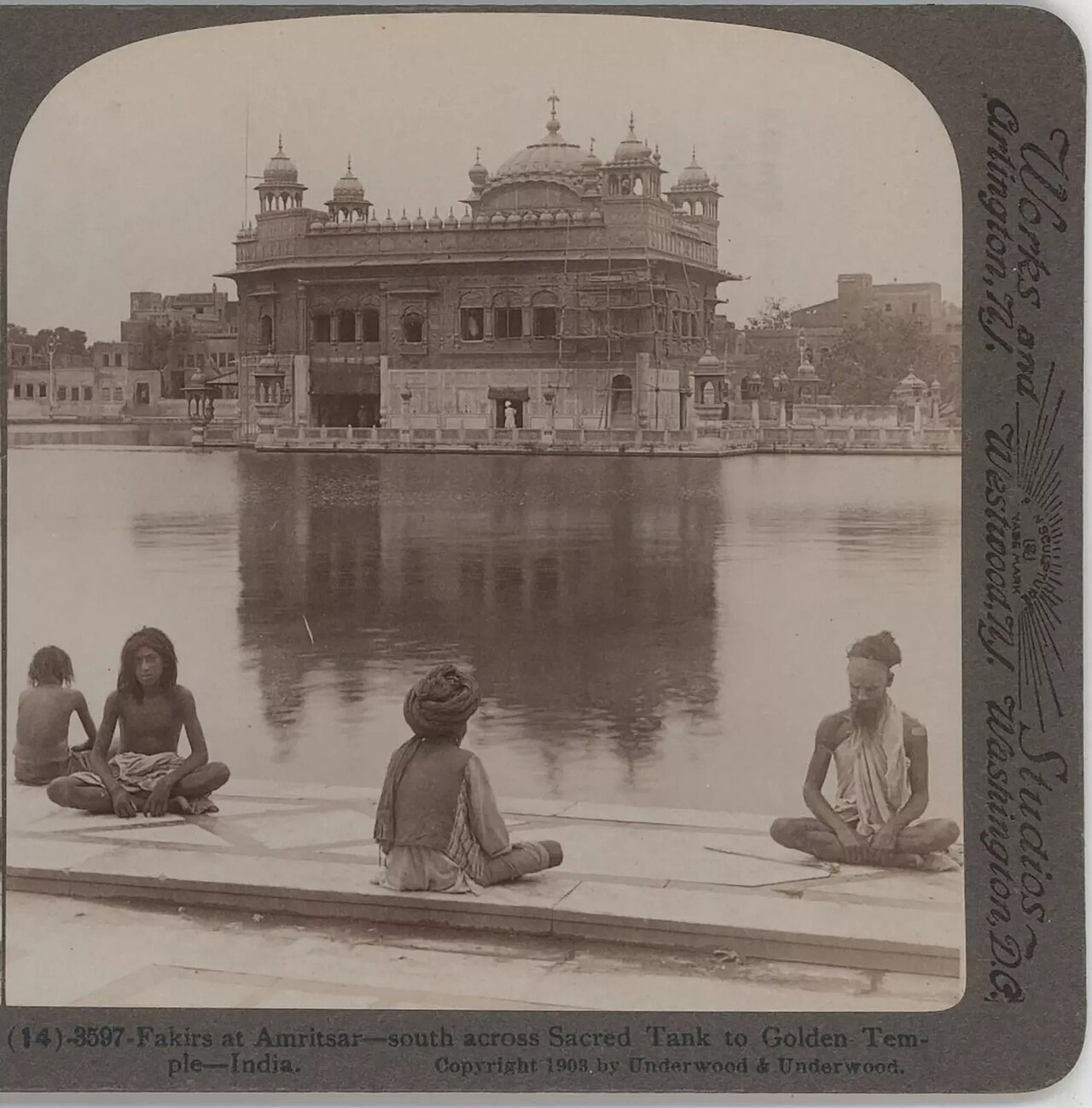
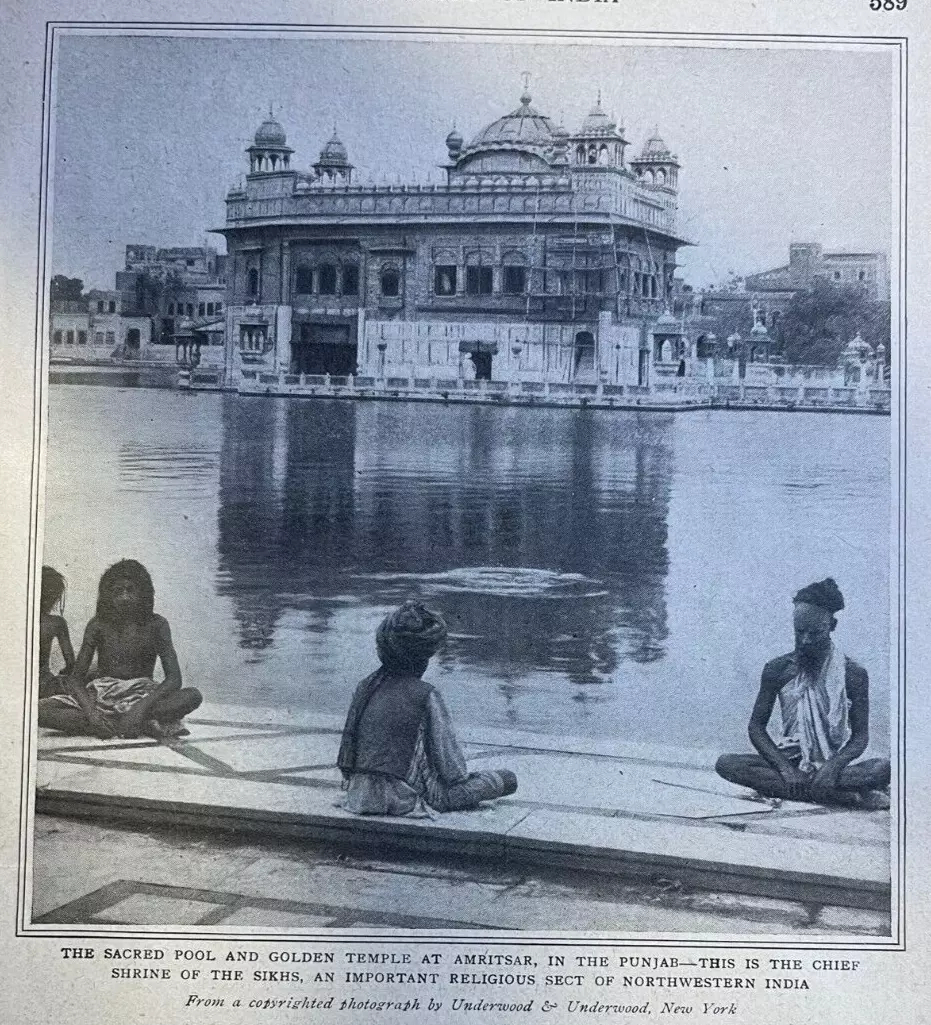
The Guru rests upon the water, and all four doors stand open.
Be the first to check in
Coming up: Bandi Chhor Divas · 8 NovEntry tended 28 Jun 2026
Amritsar, Punjab Open to all, day and night Langar: 100,000 free meals daily Guru Nanak Gurpurab · 24 Nov 2026 Entry free, always Gilded under Maharaja Ranjit Singh, 1830
Long before first light, kirtan drifts across the water. You leave your shoes at the gate, wash your feet in the running channel, cover your head, and step down onto cool marble. Ahead, the gold of the sanctum burns in the dark surface of the Amrit Sarovar, and the singing does not stop. There is no idol waiting at the end of the causeway. The Guru Granth Sahib Ji, the living Guru, is seated there, and every one of the four doors stands open.
This is the seat of the Guru Granth Sahib Ji, the scripture the Sikhs revere as their living Guru. Since 1604 the Word, not any image, has presided at the heart of the sarovar, with kirtan sung through nearly every waking hour.
Guru Arjan Dev Ji built the sanctum low, so that every pilgrim steps down to enter, and gave it four doors, one facing each direction, so that no caste, creed, or country would find itself shut out. Tradition holds he invited the Muslim saint Mian Mir of Lahore to lay the foundation stone.
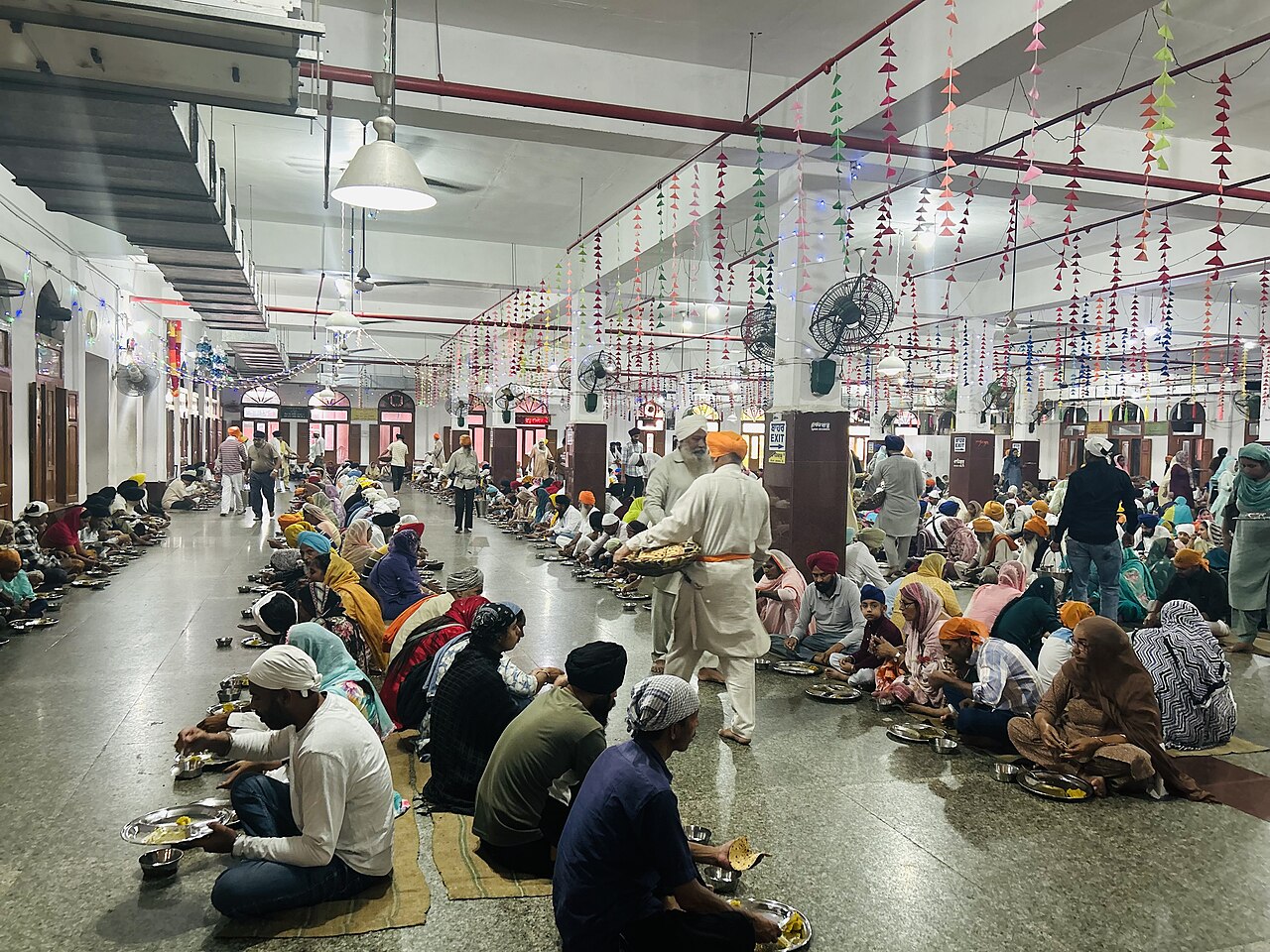
Guru Ka Langar here is the largest free kitchen in the world. Around 100,000 people eat every day, seated together on the floor in pangat, prince and pauper in the same row, at no charge and with no questions asked.
The pool of nectar and the House of God
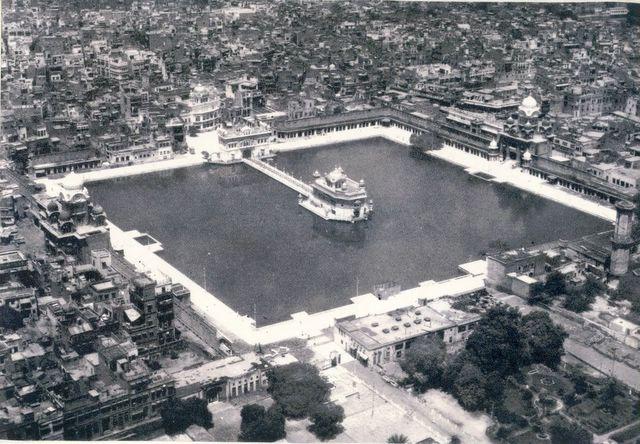
Guru Ram Das Ji, the fourth Guru, settled this ground and completed the great pool in 1577. The town that grew around it took its name from the water: Amritsar, the pool of amrit, nectar. His son Guru Arjan Dev Ji, the fifth Guru, raised the Harmandir, the House of God, at the pool's centre, beginning the work in 1581. Where other sanctuaries rise above the pilgrim, he set this one below the level of the surrounding land, a teaching in humility carved in architecture, and he opened it to the four directions with four doors.
On 16 August 1604 Guru Arjan Dev Ji installed the newly compiled Adi Granth in the sanctum and appointed Baba Buddha Ji its first granthi. From that day the scripture itself has presided here, and in time the Guru Granth Sahib Ji was recognised as the eternal living Guru of the Sikhs. The shrine was thrown down more than once in the eighteenth century by the armies of Ahmad Shah Durrani, and the Sikhs rebuilt it every time. After Maharaja Ranjit Singh took Amritsar, the sanctum was renewed in marble and copper in 1809, and in 1830 he donated the gold that overlaid its upper storeys in gold leaf. It is that covering the world names the Golden Temple.
In June 1984 the complex was the site of Operation Blue Star, an Indian Army action in which Sri Akal Takht Sahib was severely damaged. The Takht has since been rebuilt, and the daily round of kirtan, langar, and seva continues unbroken.
What you'll actually see
1
The parikrama and the Amrit Sarovar
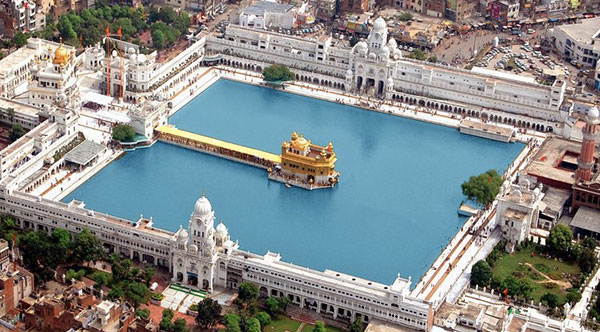
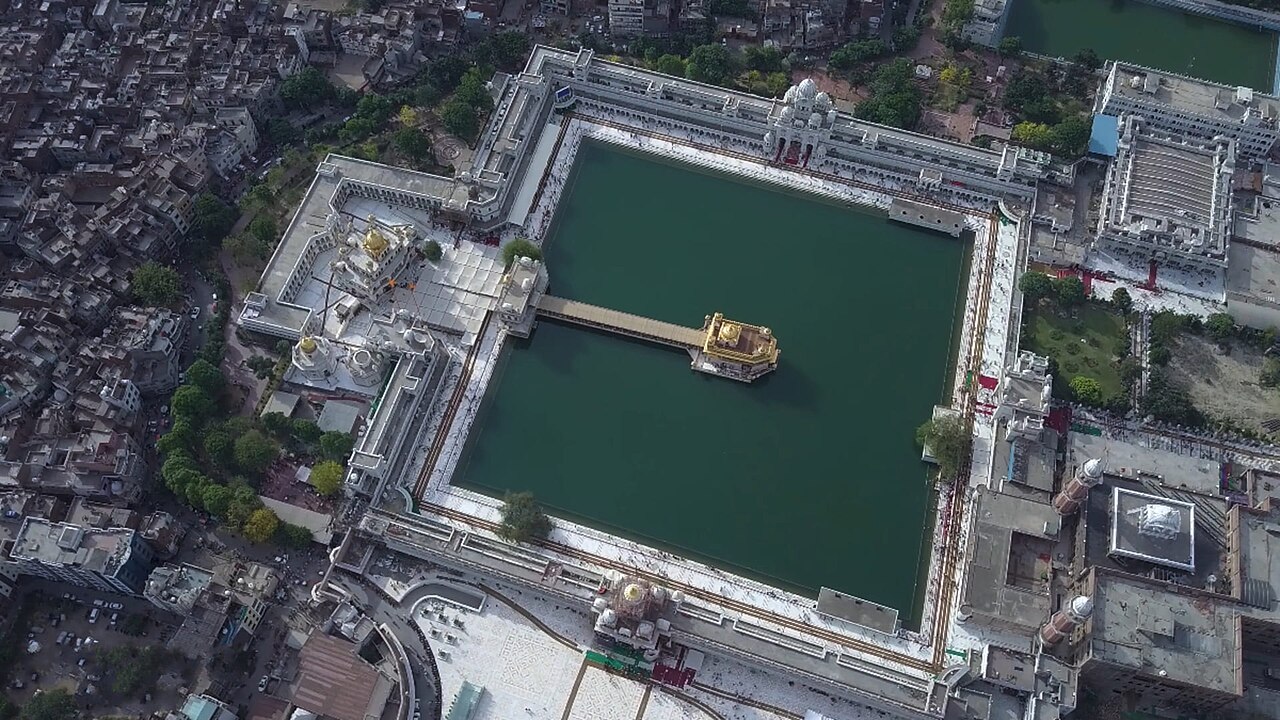
You enter down a flight of steps and the whole complex opens at once: a wide white marble walkway, the parikrama, circling a pool roughly 150 metres to a side. Pilgrims move clockwise, bare feet on stone that is cool even in summer heat, and at the bathing ghats devotees descend into the sarovar's water, which Sikhs hold to be healing and blessed.
2
The Darshani Deori and the causeway
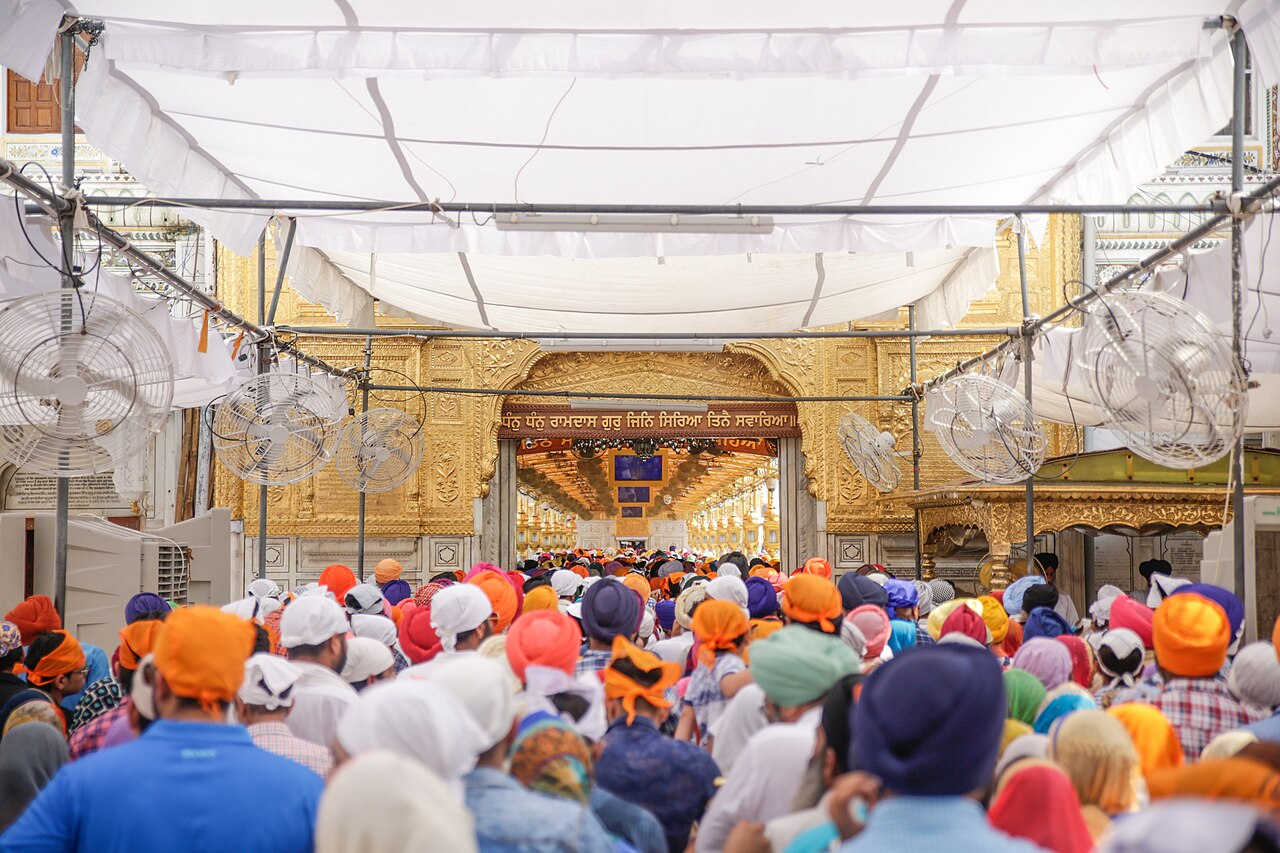
A gilded gateway, the Darshani Deori, opens onto the marble causeway that runs out over the water to the sanctum. The line moves slowly, singing with the kirtan relayed from inside. The lower storey of the sanctum is white marble inlaid with pietra dura flowers; the upper storeys and the ribbed dome are sheathed in gilded copper, and inside, the Guru Granth Sahib Ji sits enthroned under a jewelled canopy.
3
Sri Akal Takht Sahib
Facing the causeway across the parikrama stands the Akal Takht, the Throne of the Timeless One, established by the sixth Guru, Guru Hargobind Sahib, as the seat of the Panth's temporal authority. Each night the Guru Granth Sahib Ji is carried here in the Palki Sahib to rest, and each morning the palanquin returns the Guru to the sanctum on the shoulders of the sangat.
The Darshani Deori, the gateway to the causeway that leads across the sarovar to Sri Harmandir SahibSevadars and sangat in Guru Ka Langar, the free community kitchen of Sri Harmandir Sahib
Photos: Dey.sandip (CC BY-SA 4.0), Amritpal Singh Mann (CC BY-SA 4.0), Harvinder Chandigarh (CC BY 4.0), via Wikimedia Commons
THE KITCHEN THAT NEVER CLOSES
Guru Ka Langar
Every day, around the clock, the langar hall of Sri Harmandir Sahib feeds about 100,000 people, and on gurpurabs the number can rise toward 150,000. Hundreds of sevadars, most of them volunteers, roll rotis, stir cauldrons of dal, and wash tens of thousands of steel plates, going through thousands of kilograms of wheat, lentils, rice, and milk in a single day. Everyone, of every faith and none, sits in rows on the floor in pangat and eats the same food, exactly as Guru Nanak Dev Ji intended when he set the practice: no one above, no one below, no one turned away, no one asked to pay. The whole kitchen runs on donations and on seva, the offering of one's own hands.
Take the meal seated with your head covered, finish what you are served, and if you wish, join the seva afterwards; rolling rotis and washing dishes are open to any willing pair of hands.
Plan your visit
By air
Sri Guru Ram Dass Jee International Airport, Amritsar, is about 13 km from the complex, roughly half an hour by taxi.
By rail
Amritsar Junction is about 2 km away; cycle rickshaws, autos, and a free bus run toward the complex.
Timings
The complex stays open day and night. The Palki Sahib brings the Guru Granth Sahib Ji to the sanctum around 4 am in summer and 5 am in winter; the night Sukhasan follows around 9:30 pm to 10:30 pm by season. Confirm current timings at sgpc.net.
Best time
Come at Amrit Vela, before dawn, for the Palki Sahib and the first kirtan, or after dark, when the gilded sanctum stands lit above its own reflection. October to March is the kindest season; summer marble is hot by midday.
Dress
Cover your head at all times inside the complex; scarves are available at the entrances. Dress modestly. Shoes and socks are deposited free at the joda ghar, and every entrance has a channel of running water for washing your feet.
The queue
The darshan line moves slowly along the causeway. Early morning is lightest; weekends and gurpurab days run longest. There is no paid or shortcut queue; everyone waits together.
Entry
Free, always, for everyone. The langar meal is free as well.
Harmandir means the House of God, and the shrine is also called Darbar Sahib, the Court of the Lord; the city of Amritsar takes its name from the Amrit Sarovar, the pool of nectar, that surrounds the sanctum.
Tobacco, alcohol, and intoxicants must not be brought anywhere in the complex, and meals inside are vegetarian only.
The sanctum was deliberately built lower than the land around it, so every visitor, whatever their station, steps down to meet the Guru.
Simple pilgrim lodging is run by the SGPC in sarais near the complex, and the information office by the main entrance helps first-time visitors.
Questions pilgrims ask
Is the Golden Temple only for Sikhs?
No. The four doors were set facing the four directions precisely so that every person of every faith, caste, and country may enter. Anyone may walk the parikrama, take darshan of the Guru Granth Sahib Ji, and eat in the langar, free of charge.
Is there an idol inside the sanctum?
No. Sikhi does not worship images. Inside the sanctum the Guru Granth Sahib Ji, the scripture the Sikhs revere as their living Guru, sits enthroned under a canopy while granthis and ragis sing its hymns through the day.
What must I do before entering?
Cover your head, deposit your shoes at the free joda ghar, wash your hands, and walk through the water channel at the entrance to wash your feet. Leave tobacco, alcohol, and intoxicants behind entirely.
Can anyone eat in the langar?
Yes. Guru Ka Langar exists so that all may eat together as equals. Sit in the rows on the floor, accept what the sevadars serve, and eat with your head covered. There is no charge, and donations are never demanded.
When is the Temple closed?
The complex itself does not close. The sanctum rests only in the small hours, between the night Sukhasan, when the Guru Granth Sahib Ji is carried to Sri Akal Takht Sahib, and the pre-dawn Palki Sahib that brings the Guru back. The parikrama remains open through the night.
Dharamshalas and guest houses near this Sthan, shared by devotees. Adisthan takes no bookings and no money; contact each stay directly.
No stays are listed here yet. Know one that serves pilgrims well?
Are you a sevadar or officer of the SGPC serving Sri Harmandir Sahib? Claim this page to keep timings, gurpurab dates, and seva information true for the sangat worldwide.