Seven peaks keep watch over the lake where the Guru prayed before he was born.
Be the first to check in
Coming up: Kapat closing of the yatra season · 10 OctEntry tended 11 Jul 2026
4,632 m · highest gurdwara 19 km trek from Govindghat Open 23 May to about 10 Oct 2026 Langar: hot tea and khichdi Icy sarovar dip before darshan Free · yatra registration required
The last six kilometres above Ghangaria are all stone steps and thin air. You climb through cloud, past glacier melt and slopes of blue poppies, resting where the pilgrims ahead of you rest, and the jaikara calls of the sangat come down the mountain long before the top does. Then the path levels, and there it is: a still, dark lake at 4,632 metres, seven peaks standing around it, and a gurdwara on the water's edge. The Guru never walked here in his lifetime. He remembered it from before his birth.
In the Bachittar Natak, Guru Gobind Singh Ji writes that in his previous life he performed deep tapasya at Hemkunt Parbat, adorned with seven peaks. No other Sikh shrine rests on a Guru's own written memory of the life before this one.
At 4,632 metres, about 15,197 feet, this is honoured as the highest gurdwara in the world, ringed by seven peaks that each fly a Nishan Sahib above the glacial lake.
There is no road to the top. Every pilgrim reaches the Guru's lake by the same 19 kilometre path from Govindghat, on foot, by pony, or by helicopter partway, and no one may stay the night beside it.
The lake the Guru remembered, and the men who found it
In the Bachittar Natak, his own account within the Dasam Granth, Guru Gobind Singh Ji tells of the life before this one. On the mountain called Hemkunt, the lake of snow, adorned with seven peaks, at the place where King Pandu of the Mahabharata once practised yoga, he sat in long austerity, absorbed in the Timeless One, until the Divine command sent him into the world to be born at Patna Sahib. Tradition holds that the ascetic of that former life was Dusht Daman, the destroyer of evil, sent to meditate by the lake until he was called.
For centuries the lake was known only to the shepherds of the Bhyundar valley, who called it Lokpal and kept a small shrine of Lakshman on its shore. In 1884 the scholar Pandit Tara Singh Narotam matched the Guru's verse to this water in his Sri Gur Tirath Sangrah. Stirred by the poet Bhai Vir Singh's telling of the Guru's early life, a retired granthi, Sant Sohan Singh, searched these mountains and in 1934 stood at last where seven peaks ringed the lake. With 2,100 rupees from Bhai Vir Singh, a ten foot by ten foot stone gurdwara rose here in 1936, and Havildar Modan Singh of the Bengal Sappers gave the rest of his life to its seva. After he passed in 1960, a seven member trust took up the care of the shrine and built gurdwaras all along the pilgrim road.
What you'll actually see
1
The climb from Ghangaria
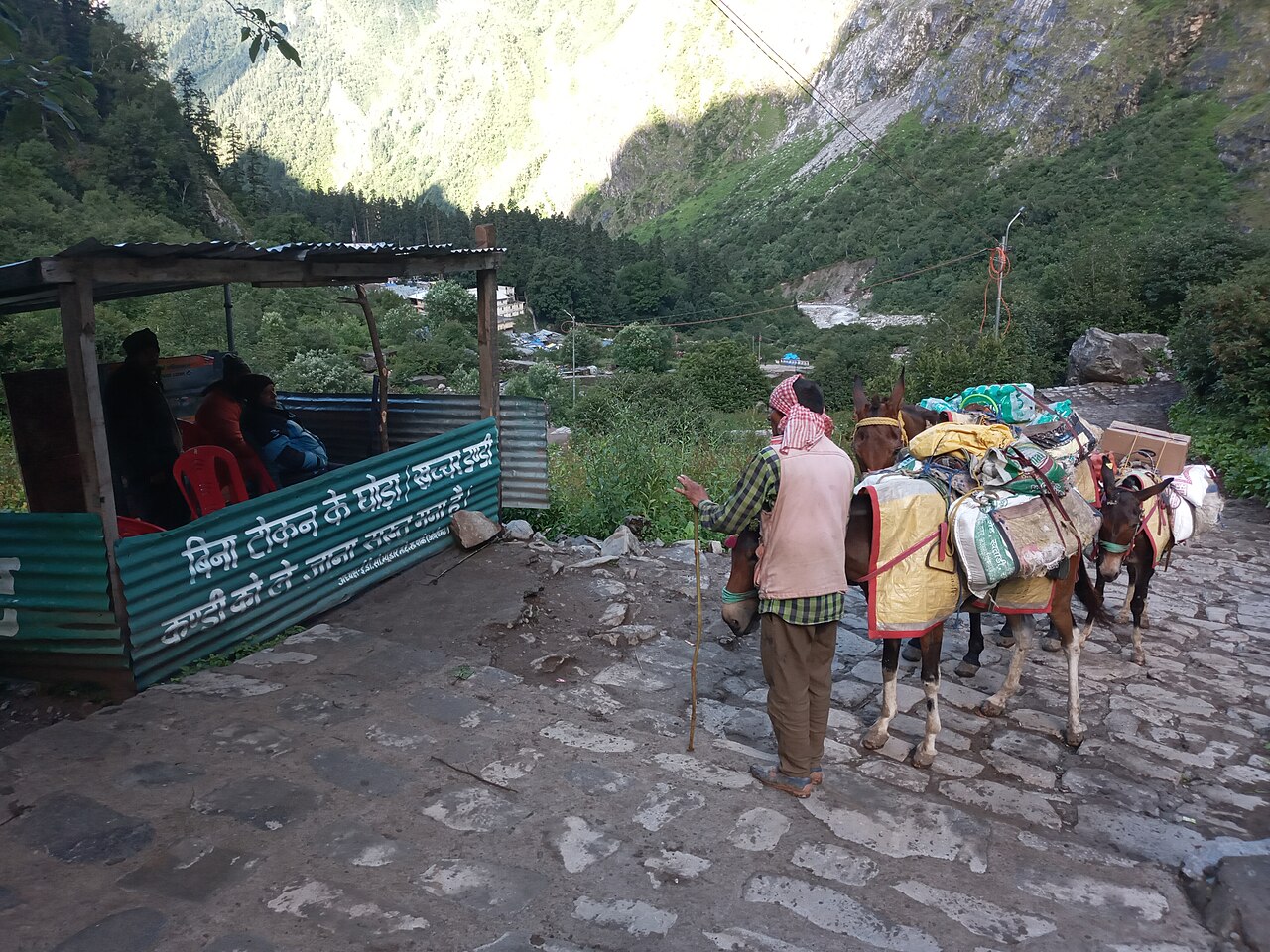
From the night halt at Ghangaria, at 3,050 metres, a stone paved path climbs about 1,100 metres in six kilometres. Early in the season pilgrims cross banks of old snow, and sevadars serve water along the way. Ponies and porters can be hired at Ghangaria, and the trail is walked by grandparents and children alike, slowly.
2
The pentagonal gurdwara
The present building was raised between 1968 and 1993 by the Army's engineers under Major General Harkirat Singh, to a design by architect Manmohan Singh Siali: a five sided hall like an inverted lotus, with a door on every side and a roof shaped to shed the thirty odd feet of snow that bury it each winter. The Guru Granth Sahib Ji was ceremonially installed in the completed sanctum in 1994.
3
The sarovar and the Lakshman Temple
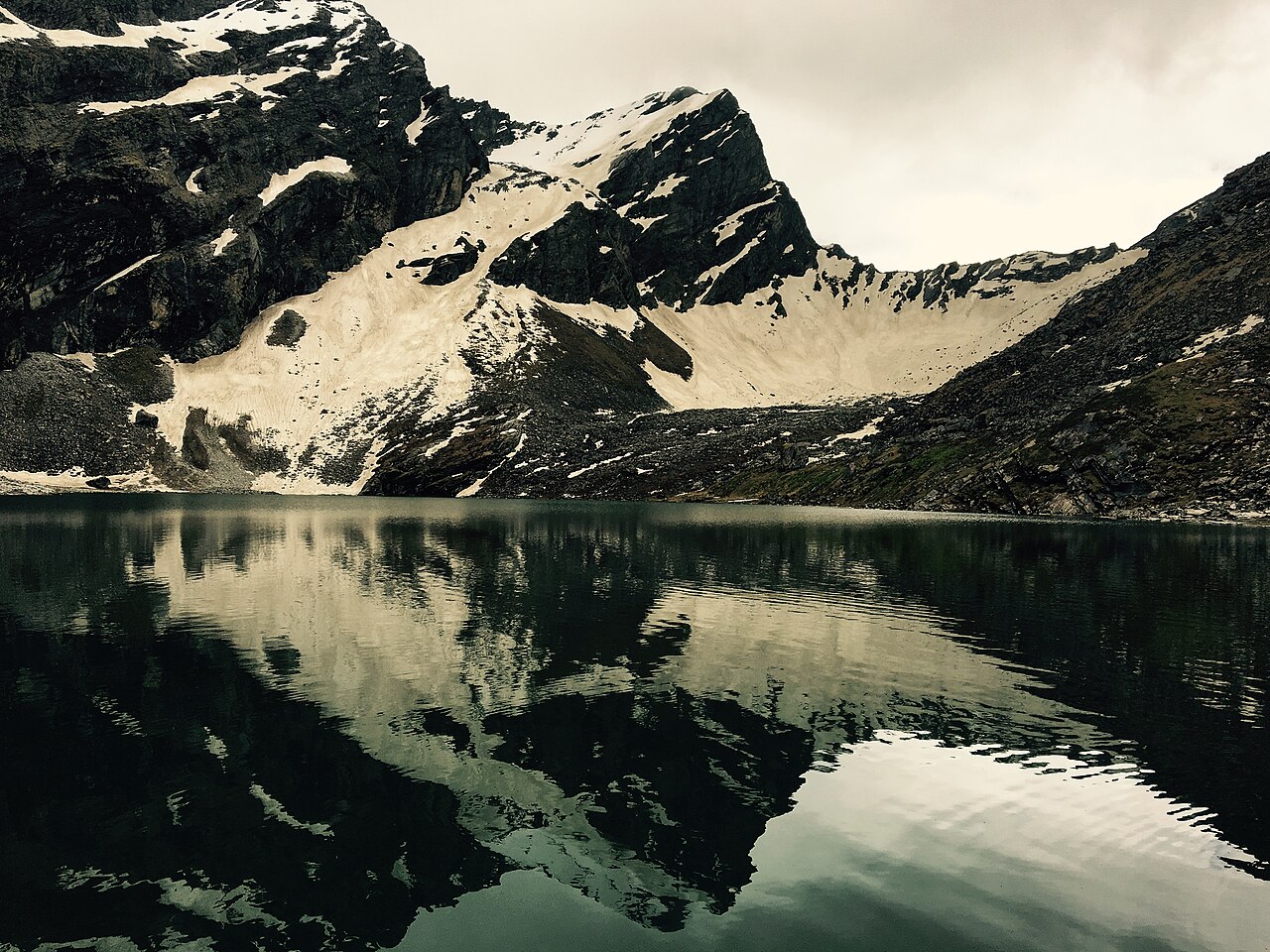
The glacial lake is the sarovar itself. Many pilgrims take a short, breath stealing dip in its near freezing water before darshan, and beside the gurdwara stands the small stone Temple of Lakshman, kept from the older Lokpal tradition of the valley. The two shrines share the shore in peace.
Pilgrims and pack mules on the stone path from Ghangaria up to Hemkund SahibSnow streaked peaks reflected in the still water of the Hemkund sarovar
Photos: Harshit SR (CC BY-SA 4.0), Rudolph A. Furtado (CC0), Naresh Chandra (CC BY-SA 4.0), via Wikimedia Commons
THE SEASON THE SNOW DECIDES
A yatra of four and a half months
Hemkund Sahib lies under deep snow for most of the year, and each spring the Indian Army and the Trust's sevadars cut the path open again before the gates can open. In 2026 the kapat opened on 23 May at noon: the first jatha, led by the Panj Pyare, climbed from Ghangaria at dawn, and more than 3,000 devotees stood by the lake for the first Ardas and Hukamnama of the season. The yatra runs until early October, with the closing expected around 10 October 2026, when the Guru Granth Sahib Ji is brought down and the lake is left to the snow.
June and September are the quieter months; July and August bring the flowers, the monsoon rain, and the largest sangat.
Plan your visit
By air
Jolly Grant Airport, Dehradun, is about 292 km from Govindghat; helicopters fly Govindghat to Ghangaria in season, bookable on the IRCTC HeliYatra portal (about ₹10,584 round trip in 2026).
By rail
Rishikesh is the nearest railhead, about 273 km from Govindghat on the Badrinath highway.
By road
Drive Rishikesh to Govindghat via Devprayag, Srinagar, Chamoli and Joshimath, a long mountain day of about 10 hours. A 4 km motorable road continues from Govindghat to Pulna, where the trek begins.
The trek
Govindghat to Ghangaria is about 13 km including the Pulna road; stay the night at Ghangaria (3,050 m). The final 6 km to Hemkund climbs about 1,100 m on a stone path. Ponies and porters are available; about ₹2,000 to ₹3,500 both ways from Ghangaria.
Timings
Day darshan only. There is no overnight stay at Hemkund Sahib; all pilgrims begin the descent by 2 pm so they reach Ghangaria before dark.
Season
Opened 23 May 2026; closing expected around 10 October 2026. Confirm dates with the Gurdwara Sri Hemkunt Sahib Management Trust before travelling.
Dress and gear
Keep your head covered at the gurdwara. Carry warm layers and a rain shell in every month; weather at 4,600 metres turns without warning.
Best time
Leave Ghangaria at first light: the climb is cooler, the peaks are clear, and you have time for darshan, the langar, and an unhurried descent.
Registration on the Uttarakhand government's yatra portal or the Tourist Care Uttarakhand app is mandatory for Hemkund Sahib, as it is for the Char Dham shrines.
This is serious altitude: ascend gradually, sleep at Ghangaria, walk slowly, and turn back if headache, nausea or breathlessness sets in. Oxygen and medical posts operate along the route in season.
The langar at the top serves hot tea and khichdi to every pilgrim without charge, and the Trust runs gurdwaras with simple lodging at Govindghat, Ghangaria, Joshimath and along the whole route.
Hemkund means lake of snow, and the older local name Lokpal, sustainer of the people, still names the lake; the trail to the UNESCO listed Valley of Flowers forks from Ghangaria, about 3 km away.
Questions pilgrims ask
Did Guru Gobind Singh Ji visit Hemkund in his lifetime?
No. The connection is deeper and stranger: in the Bachittar Natak the Guru writes that he meditated at Hemkunt Parbat, with its seven peaks, in his previous life, before the Divine command sent him to be born. The site matching that verse was identified in 1884 and confirmed by Sikh searchers in 1934.
Can non-Sikhs make the yatra?
Yes. The gurdwara's five doors welcome every direction and every faith. Cover your head, remove shoes at the shrine, and share the langar. Hindu pilgrims also come for the Lakshman Temple beside the lake, which local tradition has honoured as Lokpal since long before the gurdwara rose.
How hard is the trek, honestly?
It is a steady two day effort: about 13 km to Ghangaria, a night's rest, then 6 km gaining 1,100 m to the lake at 4,632 m. Thousands of ordinary pilgrims of every age complete it each week in season, but the altitude is real. Ponies, porters, and the Govindghat to Ghangaria helicopter can carry you most of the way; the last stretch is everyone's own.
Can I stay the night at Hemkund Sahib?
No. Overnight stay at the lake is not permitted, and everyone descends by 2 pm. Ghangaria, the trailside village below, has the Trust's gurdwara and simple lodges, and is the night halt for the yatra.
Do I really take a dip in that water?
Many pilgrims do, briefly: the sarovar is glacial melt, near freezing even in July, and devotees hold the short immersion before darshan as a washing away of weariness and more. It is devotion, not requirement. Enter slowly, stay seconds, and skip it if your heart or health advises.
Dharamshalas and guest houses near this Sthan, shared by devotees. Adisthan takes no bookings and no money; contact each stay directly.
No stays are listed here yet. Know one that serves pilgrims well?
Are you a sevadar or trustee of the Gurdwara Sri Hemkunt Sahib Management Trust? Claim this page to keep season dates, langar and lodging information true for the sangat that climbs to the Guru's lake each year.