Swami Rock · Trincomalee Most sacred Pancha Ishwaram Ther festival · April Dakshina Kailasam Temple of a Thousand Pillars
The road climbs through the old fort gate and the land simply runs out: a granite headland, a fall of 400 feet, the Indian Ocean turning white below. Salt wind carries Temple bells down the cliff as you walk the last stretch to the summit shrine. Here on Konesar Malai, the sacred hill of Trincomalee, Maa Shankari Devi Keeps Her Seat beside Shiva as Konesar. The sea took this Temple once. The Temple came back.
Of the Fifty-One pieces into which the Body Of Maa Sati fell, Her Groin Is Held To Have Fallen on this headland, making Koneswaram a Shakti Peetha, One of the Fifty-One seats where The Mother Herself Abides in the earth.
The goddess shrine of the old compound, raised To Ambal, To Maa Uma, To Maa Shankari Devi, was counted among the eighteen Maha Shakta Pithas named by the philosopher Adi Shankara in his Ashta dasa Shakta pitha stotram.
The hill is honoured as Dakshina Kailasam, Kailash of the South, for it lies on the very longitude of Mount Kailash, and Saivite tradition ranks it with Chidambaram and Kailash itself among the three foremost abodes of Shiva.
The story the rock remembers
When Maa Sati gave up Her body in the fire of Her father's insult, Shiva carried Her, and grief moved across the world. Vishnu loosed his discus, and the Body Of The Goddess came to earth in Fifty-One pieces, a Shakti Peetha awakening wherever a piece touched the ground. On this headland above Gokarna bay, tradition holds, fell Her Groin, and The Mother Remained here as Maa Shankari Devi.
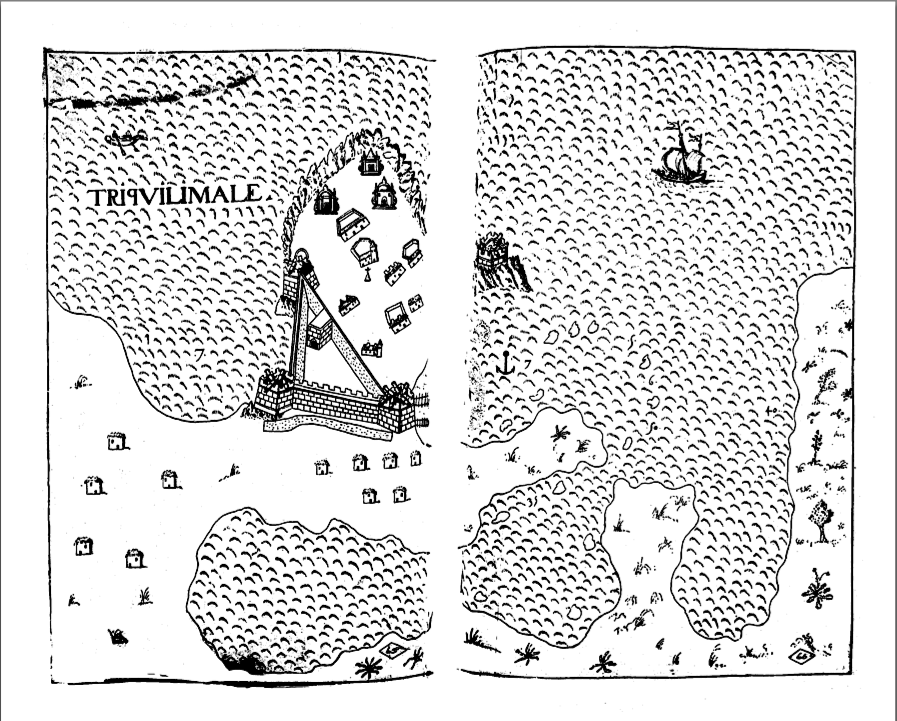
Around Her rose one of the greatest sanctuaries of its age: the Temple of a Thousand Pillars, black granite worked in relief, gilded gopuram towers over three great shrines to Shiva, to Vishnu Thirumal, and to the goddess. In April 1622 colonial soldiers looted the complex and levered it over the cliff into the sea, and a fort was built from its stones. Yet the buried idols came out of the ground in 1950, the drowned ruins were found on the seabed in 1956, and on 3 March 1963 worship returned to the restored shrine.
What you'll actually see
1
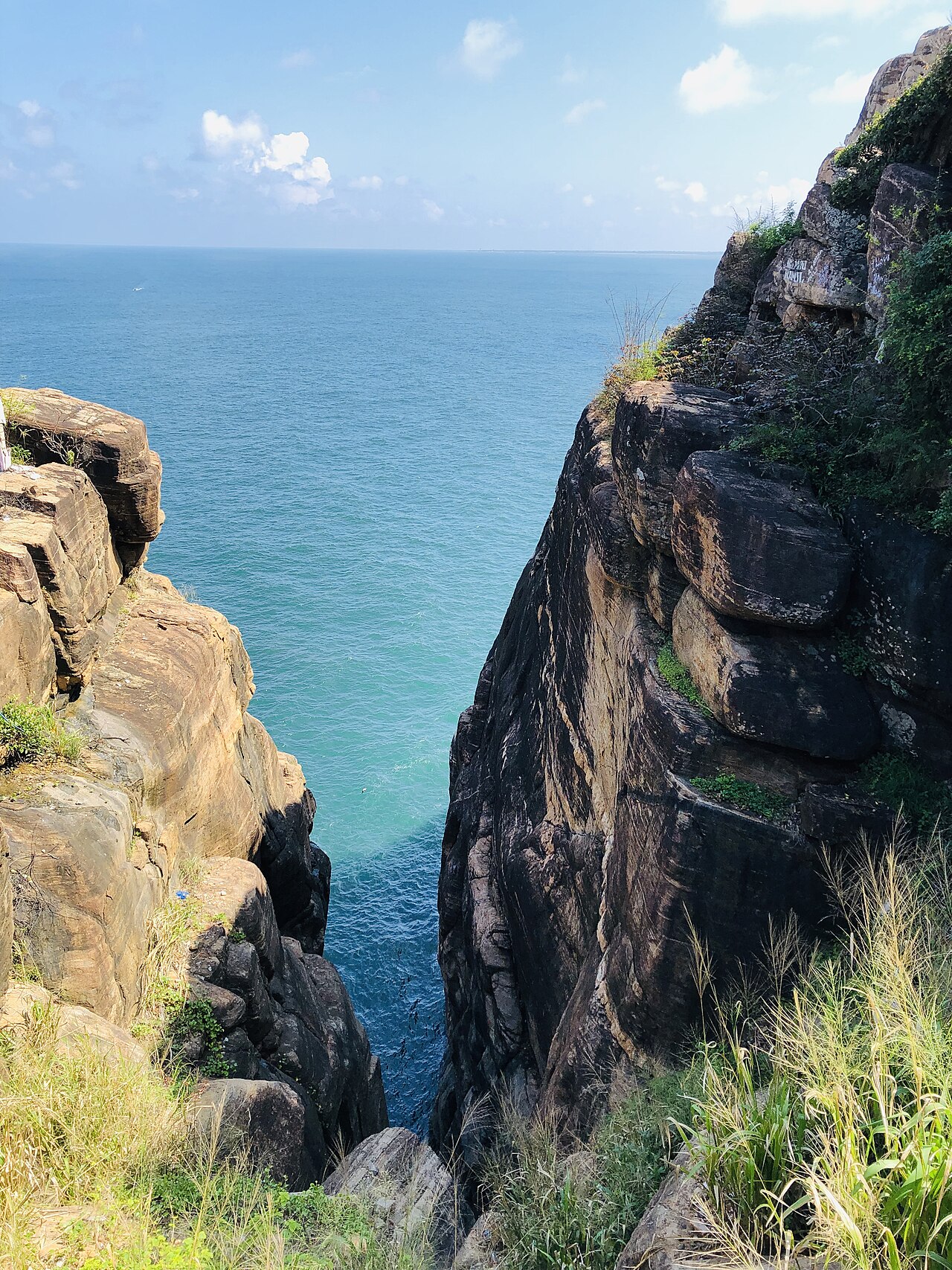
Swami Rock and Ravana's Cleft
The Ramayana tradition says King Ravana and his mother worshipped Shiva here, and that when the king strained to lift the rock itself, his sword fell and split it: the gash is still called Ravana Vettu. He is believed to have installed here a swayambhu lingam, one among sixty-nine such lingams he bore away from Mount Kailash. Divers recovered that lingam from the ocean floor in the 1950s, and it was reinstalled at the shrine.
2
The bronzes that came home
In 1950, workers digging a well five hundred yards from the site struck gold and copper alloy images believed to be from the tenth century: Shiva as Somaskanda and as Chandrasekhar, Maa Parvati, Mathumai Ambal, and Ganesha. Arthur C. Clarke, who helped find the underwater ruins, judged them among the finest Hindu bronzes known. They were carried in procession around the region and returned to the Temple.
3
The pilgrim path of Konesar Road
The pilgrimage through town begins where Konesar Road opens, then moves shrine by shrine through the compound: Maa Bhadrakali, Ganesha, Vishnu Thirumal, Surya, Ravana, Ambal Shakti, Murukan, and at last Shiva presiding at the height of the promontory. A pillar from the original Temple still stands under a decorated Vilvam tree on Swami Rock.
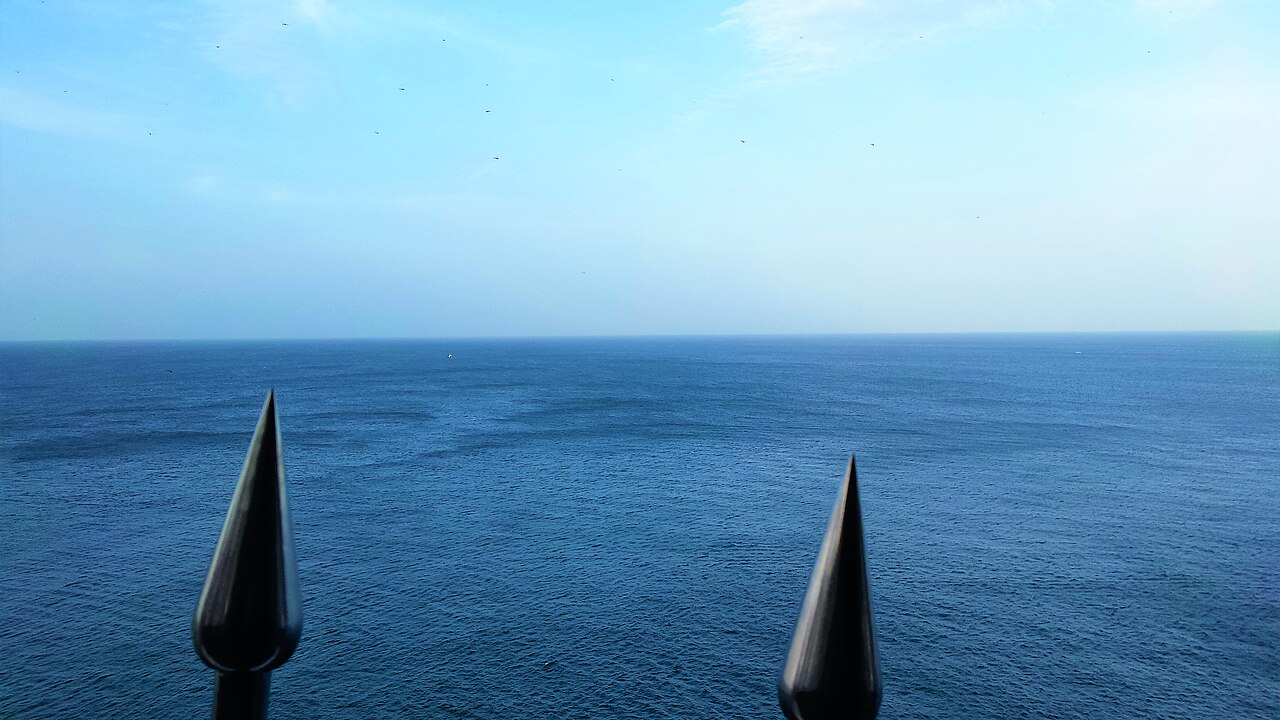
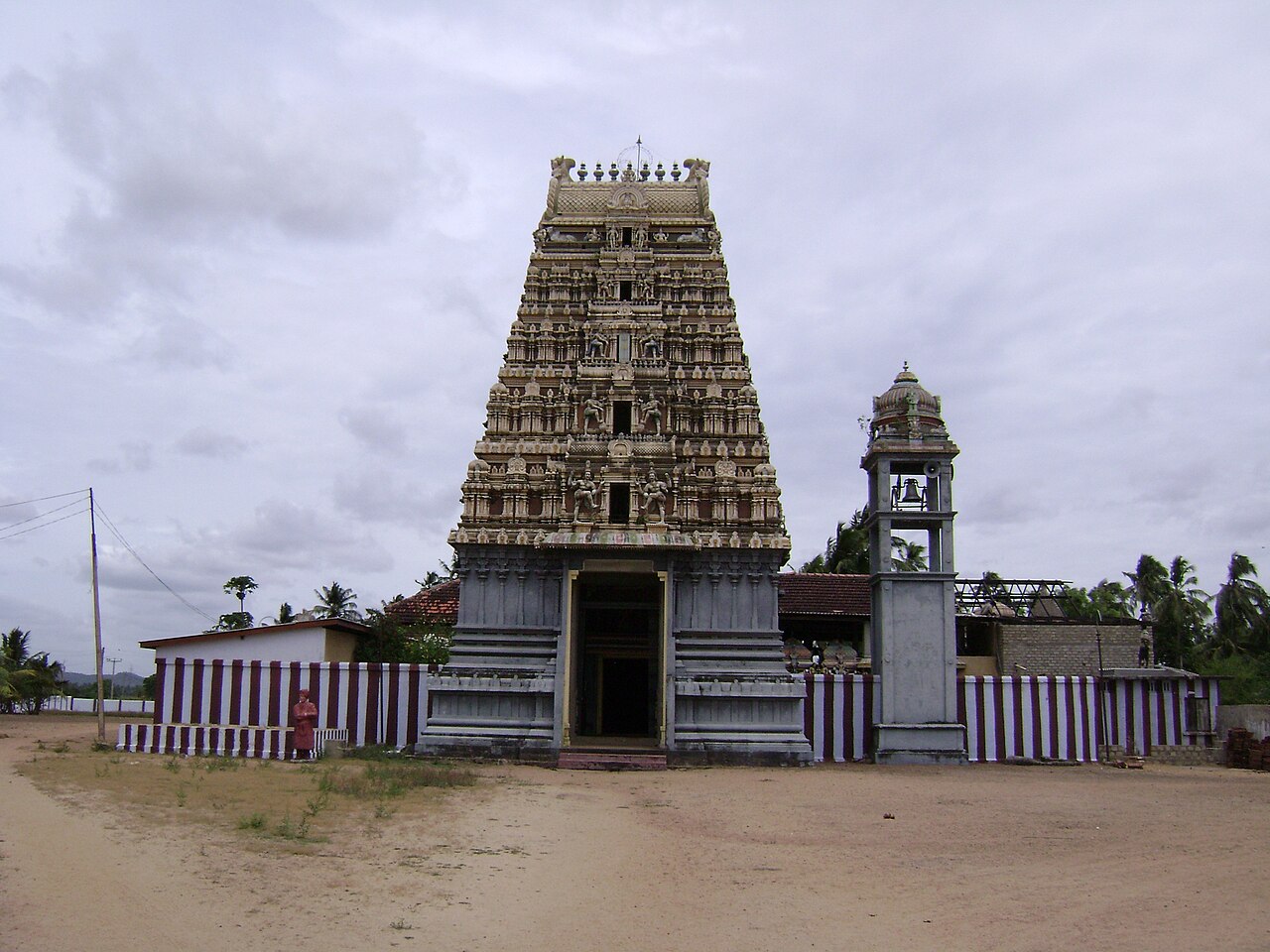
The rebuilt Koneswaram Temple on Swami Rock, where Maa Shankari Devi Is HonouredThe ocean seen from Her headland at Koneswaram, Trincomalee
The temple on Swami Rock, and the sea beneath Her cliff · photos CC BY-SA 4.0, Wikimedia Commons
Twenty-two days of the chariot
Ther Thiruvilah · April, around Puthandu
The festival opens with the hoisting of the Temple's Nandi flag. Konesar and Maa Mathumai Ambal Ride an ornate chariot Temple car through Trincomalee district, Pillayar and Murugan going ahead in two more, and at the centuries-old Papanasachunai holy well on Swami Rock the deities Are Bathed while devotees are sprayed with the sacred water. In the Theppath boat festival The Mother and Her Lord Are Carried by sea from the Back Bay to the Dutch Bay, returning through the fort entrance on the morning of Puthandu, the Tamil New Year.
Navaratri devotes nine days To aspects of the presiding goddess, and a three-day procession has followed Maha Shivaratri every year since 1951. For quiet darshan, come outside these festival windows.
Plan your visit
Where
Swami Rock, the promontory of Trincomalee town, Eastern Province, Sri Lanka; the shrine stands within the grounds of the old fort.
The approach
Enter along Konesar Road and walk the pilgrim path through the courtyard shrines up to the summit; the final stretch passes through the Fort Frederick entrance.
Timings
Daily pujas are held; fixed public hours are not recorded in our sources, so confirm darshan times with the Temple office before you travel.
Festivals
Ther chariot festival, twenty-two days each April; Navaratri over nine days; Sivarathri with its three-day procession.
Theertham
The water-cutting rite takes place at the Papanasachunai holy well on Swami Rock during the Ther festival period.
Dress
Modest dress, as at any Hindu Temple, is the safe rule; check locally for current requirements.
Trincomalee is the English form of the old Tamil Thiru-kona-malai, Lord of the Sacred Hill; the whole town carries the name of this rock.
Swami Rock drops about 400 feet (120 metres) straight into the sea; Ravana's Cleft in its face is also called Lover's Leap, after a Dutch legend attached to a pillar re-erected there in 1687.
The statue of Shiva was reconstructed in 2018; other statues that survived the destruction remain at the Ati Konanayakar Temple in nearby Thampalakamam.
Questions pilgrims ask
Is Koneswaram a Temple of Shiva or of The Goddess?
Both. The presiding shrine honours Shiva as Konesar with His consort Maa Mathumai Amman, while the goddess shrine of the compound, sacred To Maa Shankari Devi, gives the hill its place among the Shakta Pithas.
When should I plan my pilgrimage?
The Ther chariot festival fills twenty-two days each April around Puthandu, with the boat procession and the water-cutting rite at the holy well; Navaratri and Sivarathri also draw great crowds. Outside those windows the daily pujas are far quieter.
Is anything left of the original Temple?
Yes. The tenth-century bronzes unearthed in 1950 Were Returned To the shrine, a pillar of the old Temple stands under a Vilvam tree on Swami Rock, and the drowned ruins found in 1956 still lie on the seabed below the cliff.
Dharamshalas and guest houses near this Sthan, shared by devotees. Adisthan takes no bookings and no money; contact each stay directly.
No stays are listed here yet. Know one that serves pilgrims well?
Are you a priest, trustee, or sevak of Koneswaram Temple? Claim this page to add true timings, festival updates, and a way for pilgrims To actually reach you.