West Jaintia Hills, Meghalaya Shakti Maa Jayanti · Bhairava Kamadishwar Plantain trunk, marigold worship Durga Puja each autumn 600-year-old hill shrine
You climb into the West Jaintia Hills of Meghalaya and the noise of the plains falls away, until you stand before a shrine the Hindus of these hills call the permanent home Of Maa Durga: not a place She visits, but a place She Lives. Step inside and you find no carved image at all, only a plantain trunk dressed in marigold flowers standing For The Goddess, in the old Khasi way. This Is Nartiang, where Her Left Thigh Fell, and where She Is Worshipped As Maa Jayanti.
One of the Fifty-One Shakta Peethas: when the Body Of Maa Sati Fell across the earth, Her Left Thigh Is Believed To Have Come To rest upon this ground, and so The Goddess Here Is also Known As Jainteshwari.
The Shakti Of this shrine Is Addressed As Maa Jayanti and Her Bhairava as Kamadishwar; the Hindus of the Jaintia Hills hold the Temple To Be Her permanent abode.
Worship here blends Hindu rite with ancient Khasi tradition: no figurine image is made, and every prayer rises To Her through a plantain trunk dressed in marigolds.
The story the hills remember
The old telling begins with an insult: King Daksha held his great yagna and left his daughter, Maa Sati, and Lord Shiva unhonoured, and She Gave Up Her Body in that fire. Shiva lifted Her Corpse and wandered the earth in a grief that would not be consoled. Along the path he walked, Fifty-One Parts Of Her Body Fell to the ground, and each landing place became a Shakta Peetha, a holy abode Of Parashakti.
At Nartiang, devotees hold that Her Left Thigh Fell among these hills, and so The Goddess Here Bears the Name Jainteshwari. Centuries later, the legend says, She Appeared in a dream To the Jaintia king Jaso Manik, Revealed the sanctity of this ground, and Asked him to raise a Temple in Her honour. From that dream rose the Jainteshwari Temple of Nartiang, where She Is Worshipped As Maa Jayanti with Kamadishwar beside Her.
What you'll actually see
1
A queen's devotion, a king's dream
The Jaintia king Jaso Manik, who reigned from 1606 to 1641, married Lakshmi Narayana, daughter of the Hindu Koch king Nara Narayana. She was an ardent devotee Of Maa Durga, and it is said her faith drew the Jaintia royal house and its people To the Shakta path, before The Goddess Herself Called the king in a dream.
2
A shrine within a fort
King Dhan Manik, who reigned from 1596 to 1612, chose Nartiang as the summer seat of his Jaintia Kingdom some 600 years ago. The Temple's commanding position and the presence of old weapons suggest it once formed part of a fort of the Jaintia kings. A Shiva Temple within walking distance still keeps the remains of ancient cannons, and its priests descend directly from those who first came from Jaintiapur.
3
Worship in the Khasi way
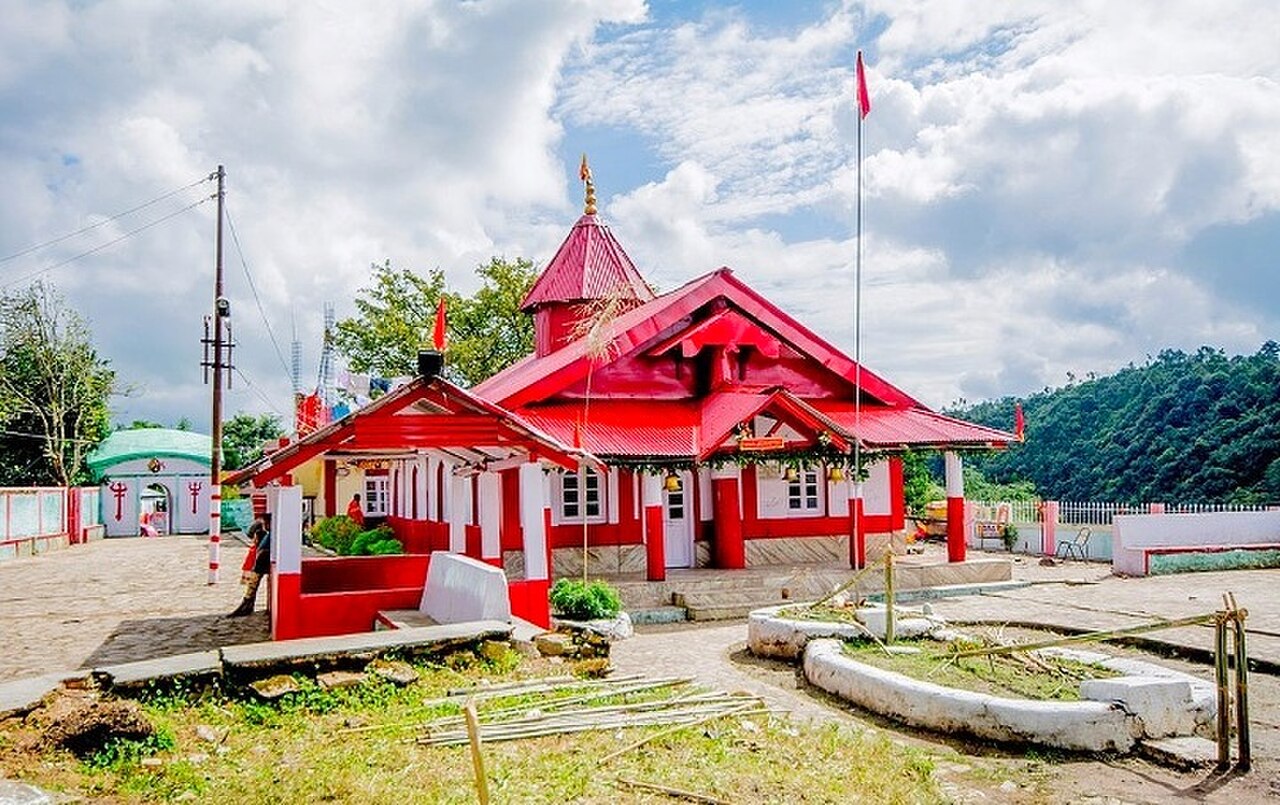
The rites here are a blend of Hindu practice and ancient Khasi tradition, not the conventional worship of the plains. In keeping with the Khasi custom of making no figurine images of gods, Maa Durga Is Represented By a plantain trunk dressed in marigold flowers. The Syiem, the local chieftain, is the Temple's chief patron, and still offers goats during Durga Puja.
The Durga Temple at Nartiang in the West Jaintia Hills, permanent abode Of Maa JayantiThe hill shrine where Her Left Thigh Is Believed To Have Fallen
The temple at Nartiang, home Of Maa Jayanti · photos CC BY-SA 4.0, Wikimedia Commons
A puja unlike any in the plains
Durga Puja at Nartiang · Bengal meets the Khasi Hills
Each autumn the great festival arrives in a form found nowhere else: a banana plant is dressed and Worshipped As The Goddess, in a fusion of Bengali custom and the culture of the Khasi Jaintia Hills. When Four days of festivity close, the plant is carried To the Myntdu River and ceremoniously immersed, and a gun salute Is Offered To Her. Pilgrims travel from all over the country for these days, for this Temple Is Held To Be Her lasting home.
Durga Puja is this Temple's greatest festival and its fullest season. Come in autumn for the whole rite, or on an ordinary day for unhurried Darshan.
Plan your visit
Where
Nartiang, West Jaintia Hills district, Meghalaya, in northeastern India.
Nearby
A Shiva Temple stands within walking distance, with remains of ancient cannons resting inside it.
Timings
Daily hours are not published in our sources; confirm with the Temple office before you travel.
When to come
Durga Puja each autumn is the high season, when pilgrims arrive from across the country.
Entry
No entry fee is recorded in our sources; confirm arrangements with the Temple office.
Caretaker
The Central Puja Committee, representing Meghalaya's Hindu community, oversees the Temple and meets much of its daily expense.
The Shakti Here Is Named Maa Jayanti and the Bhairava Kamadishwar; because Her Left Thigh Fell in the Jaintia Hills, The Goddess Is also Called Jainteshwari.
No figurine image is used, honouring Khasi custom: The Mother Is Present in a plantain trunk dressed in marigold flowers, and the Syiem, the local chieftain, is the Temple's chief patron.
Goat sacrifice by the Syiem continues during Durga Puja in the old way, so the rites can feel intense; in 2017 a union minister said the Temple would be declared a heritage site.
Questions pilgrims ask
Which part Of Maa Sati Fell at Nartiang?
Her Left Thigh Is Believed To Have Fallen here in the Jaintia Hills, and so The Goddess Is Known As Jainteshwari. The shrine is counted among the Fifty-One Shakta Peethas, and the Hindus of these hills hold it To Be Her permanent abode.
Is there an idol of The Goddess to see?
No. In keeping with the Khasi custom of making no figurine images, Maa Durga Is Worshipped through a plantain trunk dressed in marigold flowers, a blend of Hindu and ancient Khasi tradition unlike the rites of the plains.
When should I plan my pilgrimage?
Durga Puja each autumn is the heart of the year, when the dressed banana plant Is Worshipped As The Goddess For Four days and then immersed in the Myntdu River with a gun salute. Daily timings are not published in our sources, so confirm with the Temple office before you travel.
Dharamshalas and guest houses near this Sthan, shared by devotees. Adisthan takes no bookings and no money; contact each stay directly.
No stays are listed here yet. Know one that serves pilgrims well?
Are you a priest, trustee, or sevak of the Nartiang Durga Temple? Claim this page to add true timings, festival dates, and a way for pilgrims To actually reach you.