Jawalamukhi · Kangra district, Himachal Pradesh, India
Her Tongue Fell here, and It has never stopped burning.
Be the first to check in
Entry tended 2 Jul 2026
Flame from living rock Her Tongue Fell here Kangra, Himachal Pradesh About 610 m in the hills Panda pilgrimage registers
You climb through a small hill town where every lane leads to one door. Inside, the sanctum holds no statue and no carved face, only a flame rising from a fissure in the bare rock, burning with no wood, no oil, no fuel you can see. Pilgrims have watched it burn across generations and given it the only name that fits. Here The Mother Is Fire.
A flame that burns naturally from a fissure in the rock, with no fuel any eye can find, Worshipped as The Direct Presence Of Maa rather than as any image fashioned by human hands.
One of the Fifty-One Shakti Peethas: here the Tongue Of Maa Sati Fell, and devotees behold It still, Speaking as fire out of the stone.
Hereditary record keepers called pandas maintain genealogy registers of pilgrim families here, so that every generation that walks To Maa Jwalamukhi is written into the town's long memory.
The story burning in the rock
The old telling begins with grief. When Maa Sati, The First Consort Of Shiva, gave up Her body at Her father's insult, Shiva lifted Her and danced a sorrow that shook the worlds. To end it, Vishnu loosed his discus, and the Body Of The Goddess parted into Fifty-One pieces; wherever a piece touched the earth, a Shakti Peetha Was Born.
Upon these Kangra hills Fell Her Tongue: the organ of speech, of taste, of the mantra itself. Here She Is Called Maa Jwalamukhi Devi, She Of The Flaming Mouth, and also Maa Ambika, and Her Tongue still Speaks as a flame that rises from the fissured rock without fuel. The town that grew around Her took Her Name, and lives by Her light to this day.
What you'll actually see
1
The flame with no fuel
The heart of the Temple is not an image but a fissure in the rock from which fire emanates naturally and burns continuously. Devotees honor it as a direct, unmediated sign of the divine feminine, The Goddess Present without any sculptor's hand.
2
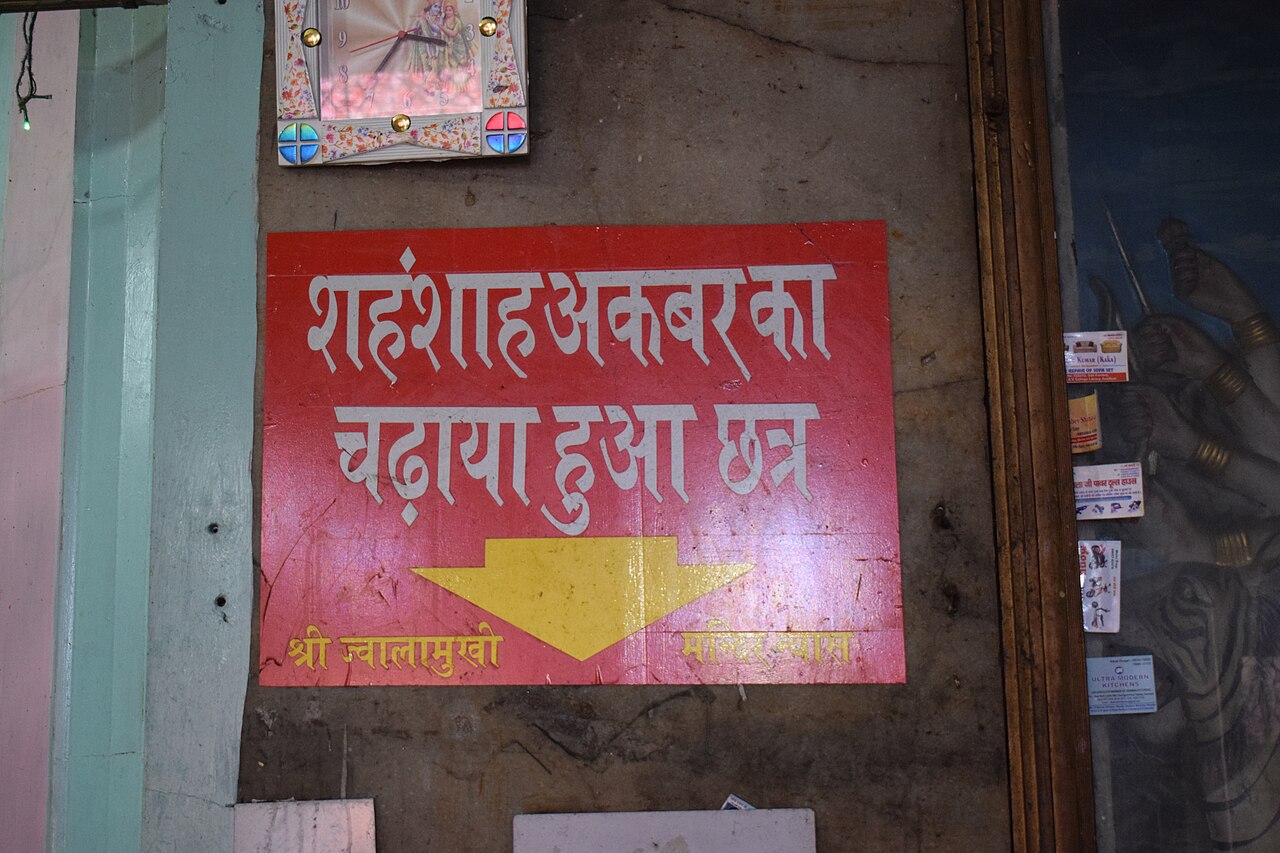
Akbar's golden chattar
A golden parasol, a chattar, associated with the Mughal emperor Akbar's offering To Maa Jwalamukhi, can be seen at the Shrine. Its worked gold is a reminder that even emperors came to this hillside as pilgrims.
3
The registers of the pandas
For generations the pandas of Jawalamukhi have kept Hindu genealogy registers, writing down the families who come To Her. Many pilgrims find parents, grandparents, and far older ancestors recorded in those pages.
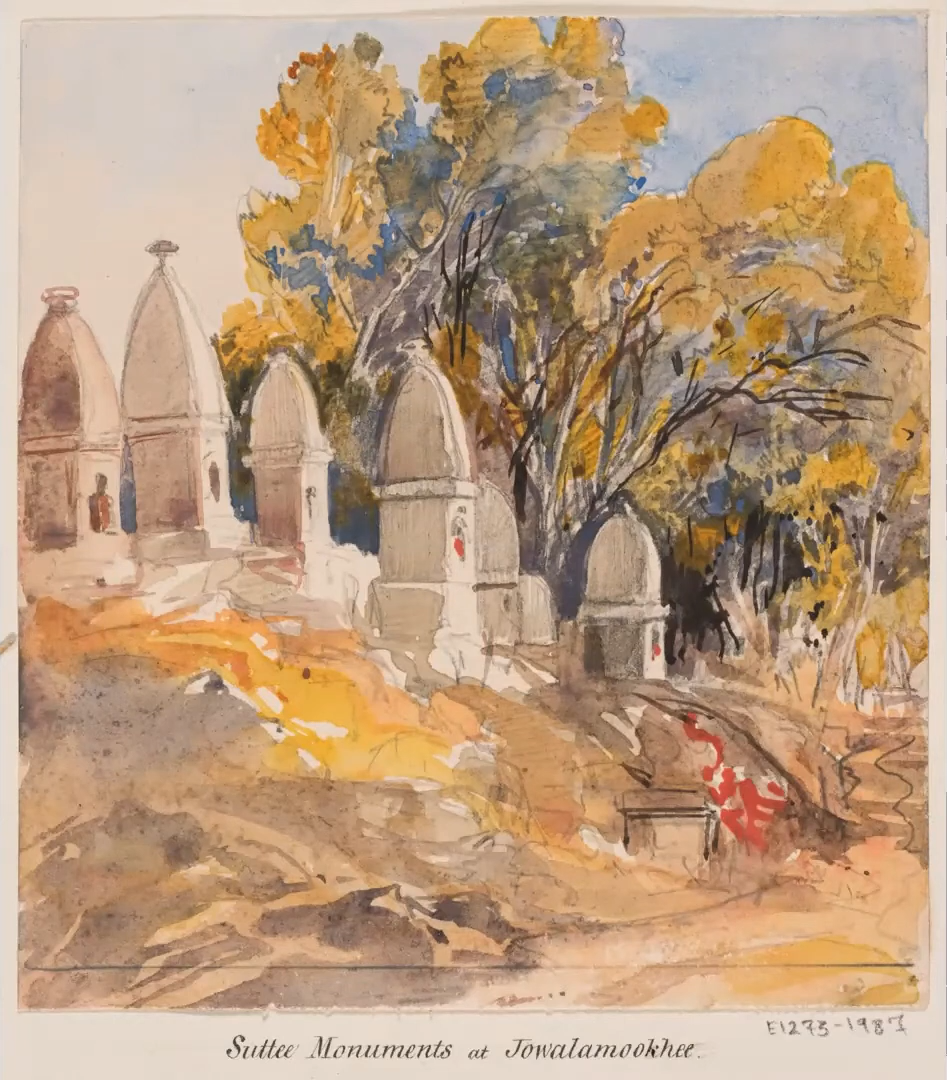
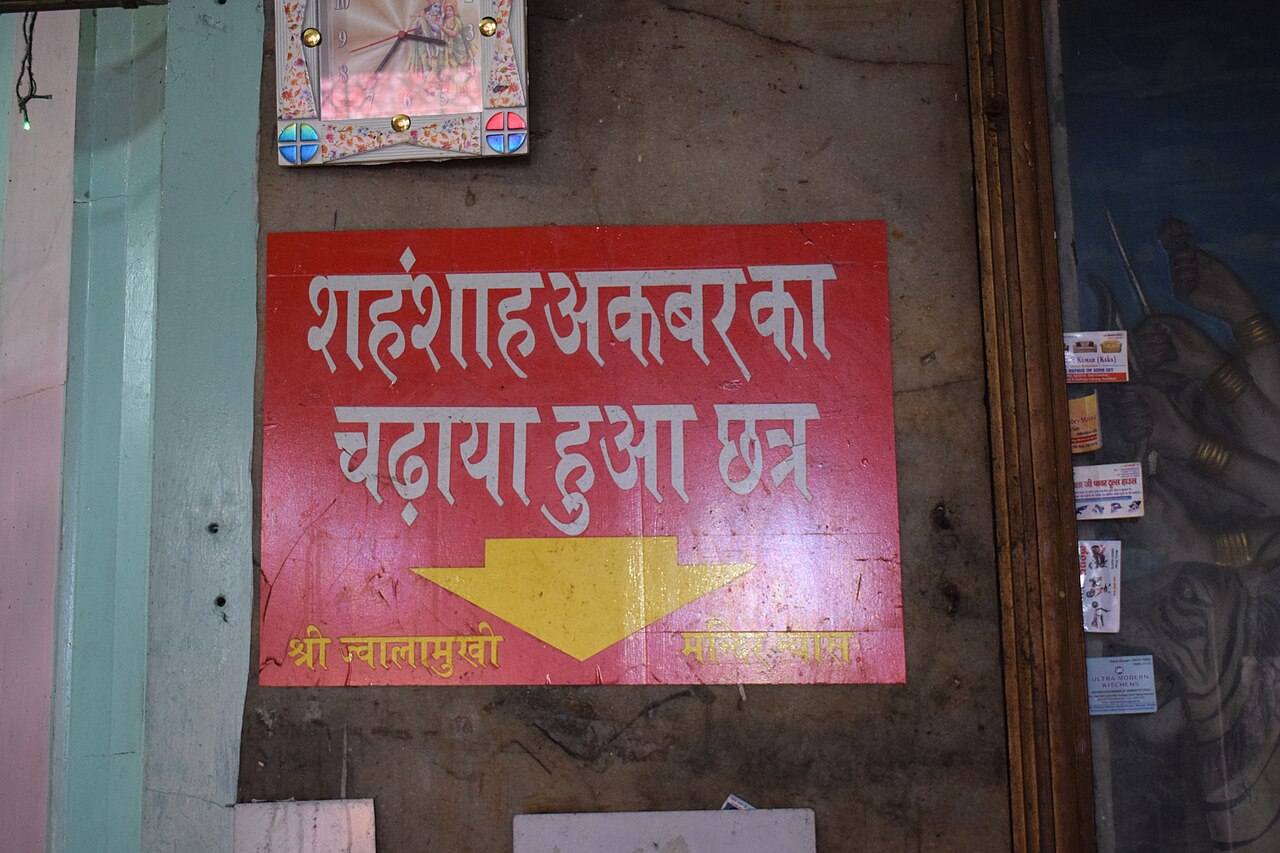
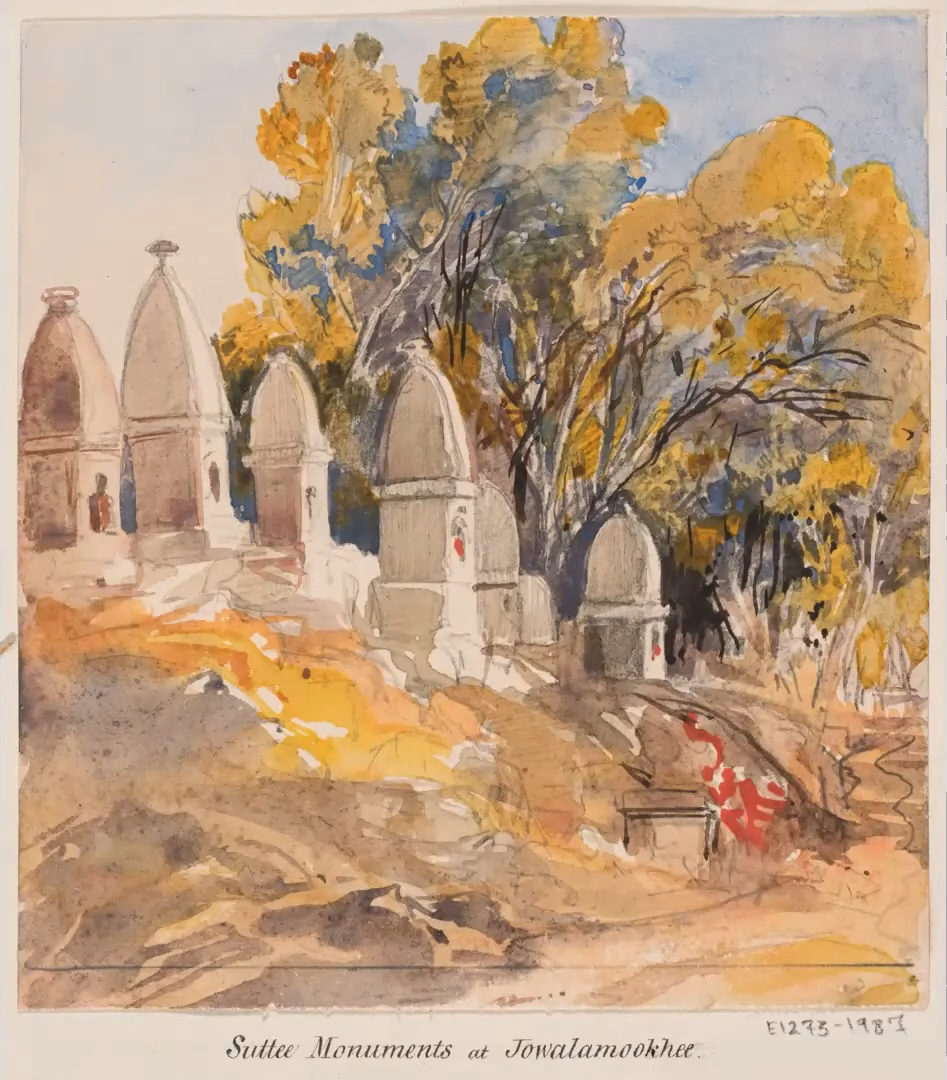
The golden chattar remembered as the emperor Akbar's offering To Maa JwalamukhiA watercolour from about 1860 by Charlotte Canning showing sati monuments at Jawalamukhi
The golden chattar offered To Maa in the emperor Akbar's name, and Charlotte Canning's watercolour of monuments at Jawalamukhi, about 1860 · photos CC BY-SA 4.0 and public domain, Wikimedia Commons
The wonder found nowhere else
A flame that no one lights
In the sanctum, fire rises from a fissure in the bare rock and burns continuously, with no wood, no wick, no visible source sustaining it. Devotees take this as The Goddess Showing Herself directly, Her Tongue of flame, needing no idol and no intermediary. It is the living heart of the Shrine, and the reason the town around it exists at all.
The flame Is Honored as Maa Herself. Darshan and aarti hours are not published in our records yet; confirm timings with the Temple office before you travel.
Plan your visit
Where
Jawalamukhi town, a nagar parishad in Kangra district, Himachal Pradesh, India.
Elevation
About 610 metres above sea level in the Kangra hills.
Timings
Not published in our records yet; confirm darshan hours with the Temple office before you travel.
Best time
Mornings are quietest at most hill shrines; plan an early Darshan and confirm aarti times locally.
Dress
Modest, covered shoulders and knees, as at any Shakti Peetha.
Family records
The pandas keep genealogy registers of pilgrim families; ask about your family's entry when you arrive.
Her Name Is a description: Jwalamukhi, She Of The Flaming Mouth. The flame Is Honored as Her Tongue.
There is no carved idol at the heart of this Shrine; the fire Itself Is The Deity, a sign of the divine feminine unmediated by human hands.
The town is modest in scale and draws its whole identity From Her Shrine at its center; its old names include Maa Jwalamukhi and Jawala-ji.
Questions pilgrims ask
Is there an idol to see?
No. Maa Is Worshipped as a natural flame that emanates from a fissure in the rock and burns continuously. Devotees honor It as Her Tongue, The Goddess Present without any image made by human hands.
What makes this one of the Fifty-One Shakti Peethas?
The tradition holds that the Tongue Of Maa Sati Fell here when Her Body parted into Fifty-One pieces. The site is counted among the Shakta pithas, and the ever burning flame is taken as Her direct presence.
Can I trace my family's pilgrimage here?
Often, yes. Hereditary pandas at Jawalamukhi maintain Hindu genealogy registers of pilgrim families, preserving lineages across generations; ask the pandas about your family name when you arrive.
The Sthan in photographs
Walk the sacred map
This Is one Seat among many. Her Body Fell across the whole of the old world:
Dharamshalas and guest houses near this Sthan, shared by devotees. Adisthan takes no bookings and no money; contact each stay directly.
No stays are listed here yet. Know one that serves pilgrims well?
Are you a priest, trustee, or sevak of Maa Jwalamukhi Temple? Claim this page to add true timings, aarti schedules, and a way for pilgrims To actually reach you.