Thrown down again and again, never ended: Maa Chandrabhaga Keeps this shore.
Be the first to check in
Entry tended 28 Jun 2026
Prabhas Patan, Veraval coast Seat of Maa Chandrabhaga Devi First of twelve jyotirlingas Maru-Gurjara style · 1951 Triveni Sangam of three rivers
Salt hangs in the air, and the boom of the Arabian Sea rolls under every bell. You stand where three rivers once met the ocean, and the pale shikhara climbs fifteen metres into the light above the sanctum. Temples fell on this spot again and again across a thousand years; what you see rose in 1951, and what It holds Is far older.
Among the Fifty-One Shakti Peethas, this shore Is where the Stomach Of Maa Sati Fell to earth. Here The Goddess Is Known as Maa Chandrabhaga Devi, and every devotee who comes for Shiva also stands Before Her.
The Temple is first among the twelve jyotirlinga shrines of Shiva, heading the oldest known list in the Jnanasamhita of the Shiva Purana.
The old texts call this place Prabhasa, the place of splendor, where Soma the moon god bathed at the Triveni Sangam of the Kapila, Hiran and Saraswati rivers to win back his lost lustre.
The story the sea keeps
When Maa Sati gave up Her body in the fire of Her father's insult, Shiva carried Her and grieved a grief the world could not hold. Vishnu's discus parted The Body Of The Goddess into Fifty-One pieces, and wherever a piece touched the earth a Shakti Peetha awoke. On this coastline of Saurashtra Fell Her Stomach, and She Remained here as Maa Chandrabhaga Devi.
The moon too was healed on this shore: cursed and dimmed, Soma bathed in the Sarasvati here and regained his light, which is why the town is named Prabhasa and the lord is Somnath, lord of the moon. Raiders threw the Temple down repeatedly from 1026 onward, and kings and queens raised it again each time. The final rebuilding began after Indian independence and was completed in May 1951, in the Maru-Gurjara style of the Sompura master masons of Gujarat.
What you'll actually see
1
The Kailash Mahameru Prasad
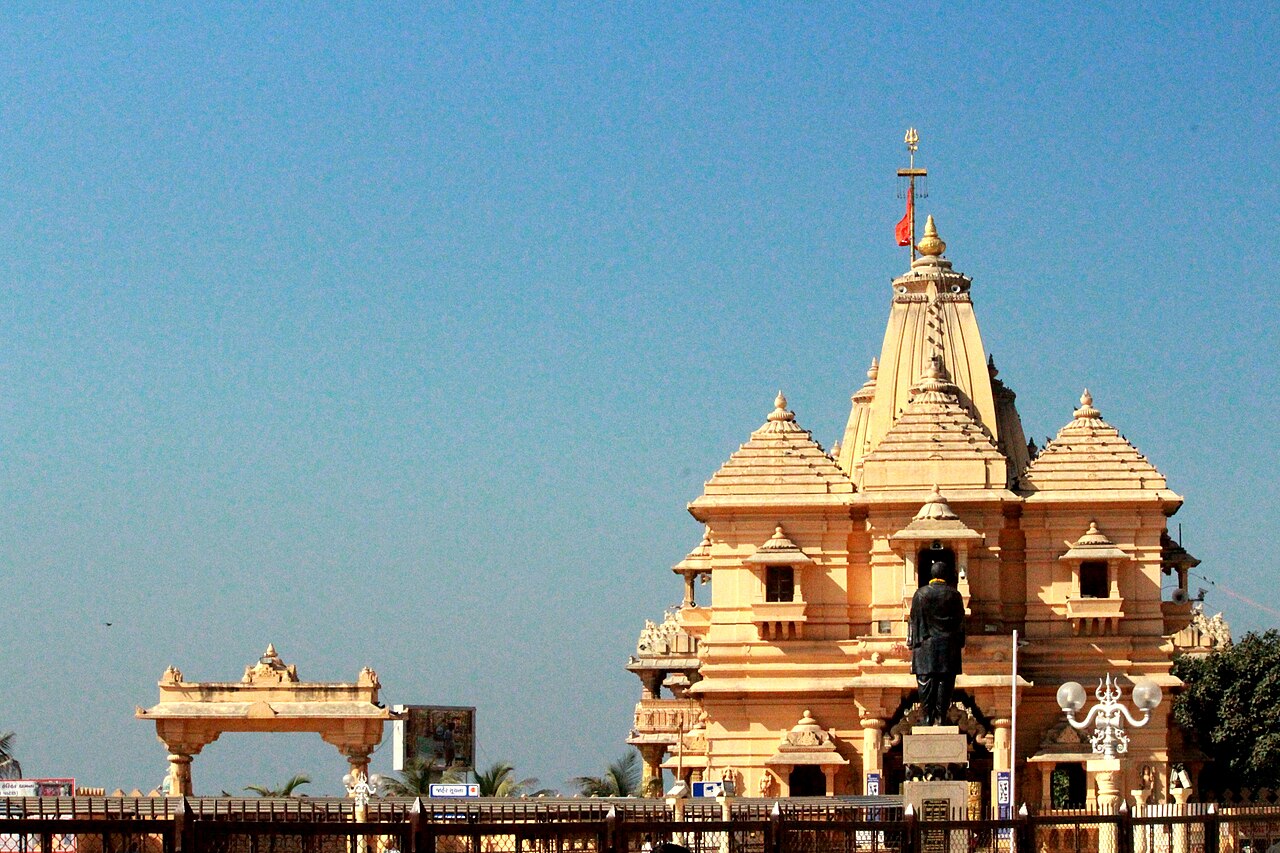
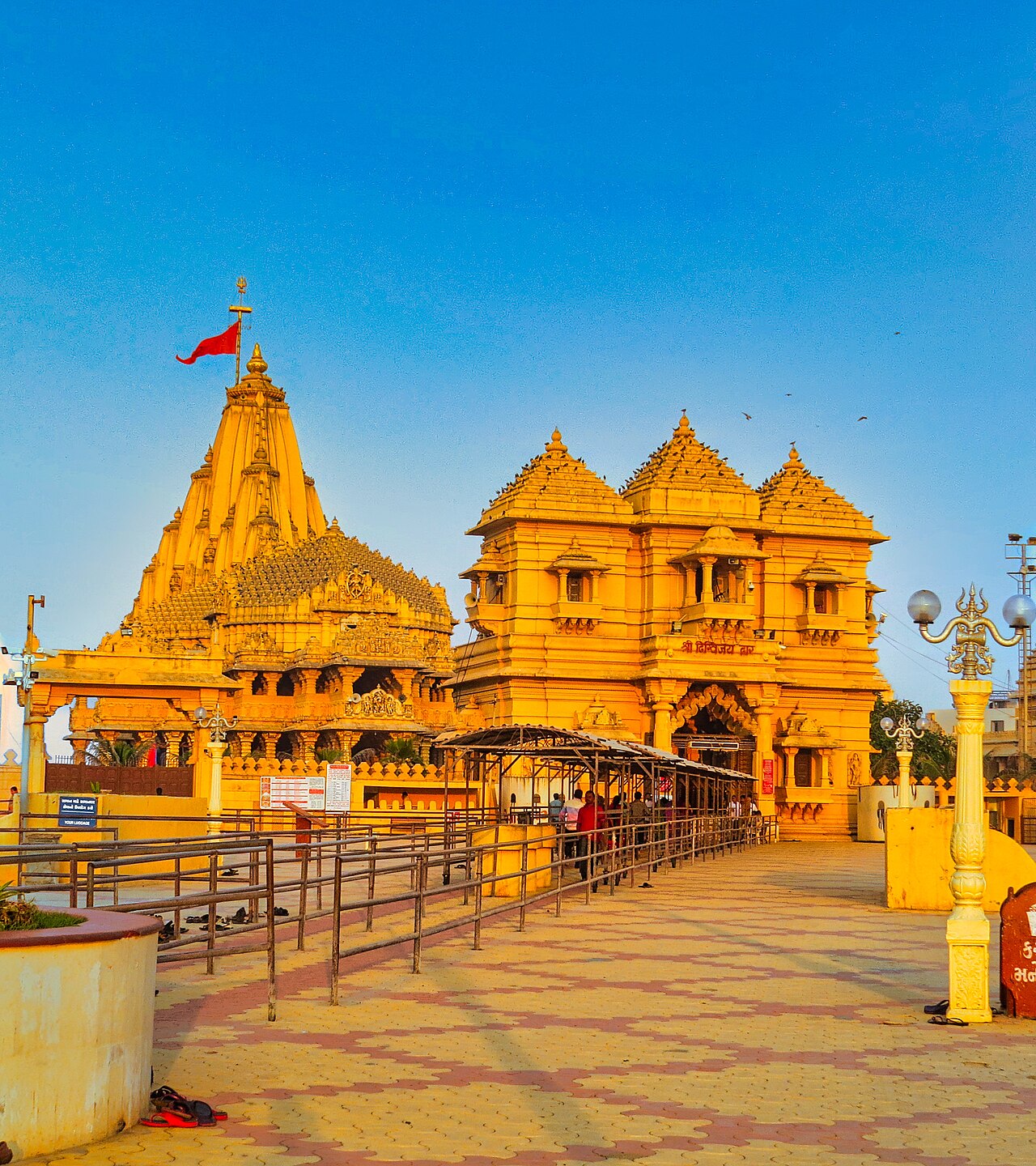
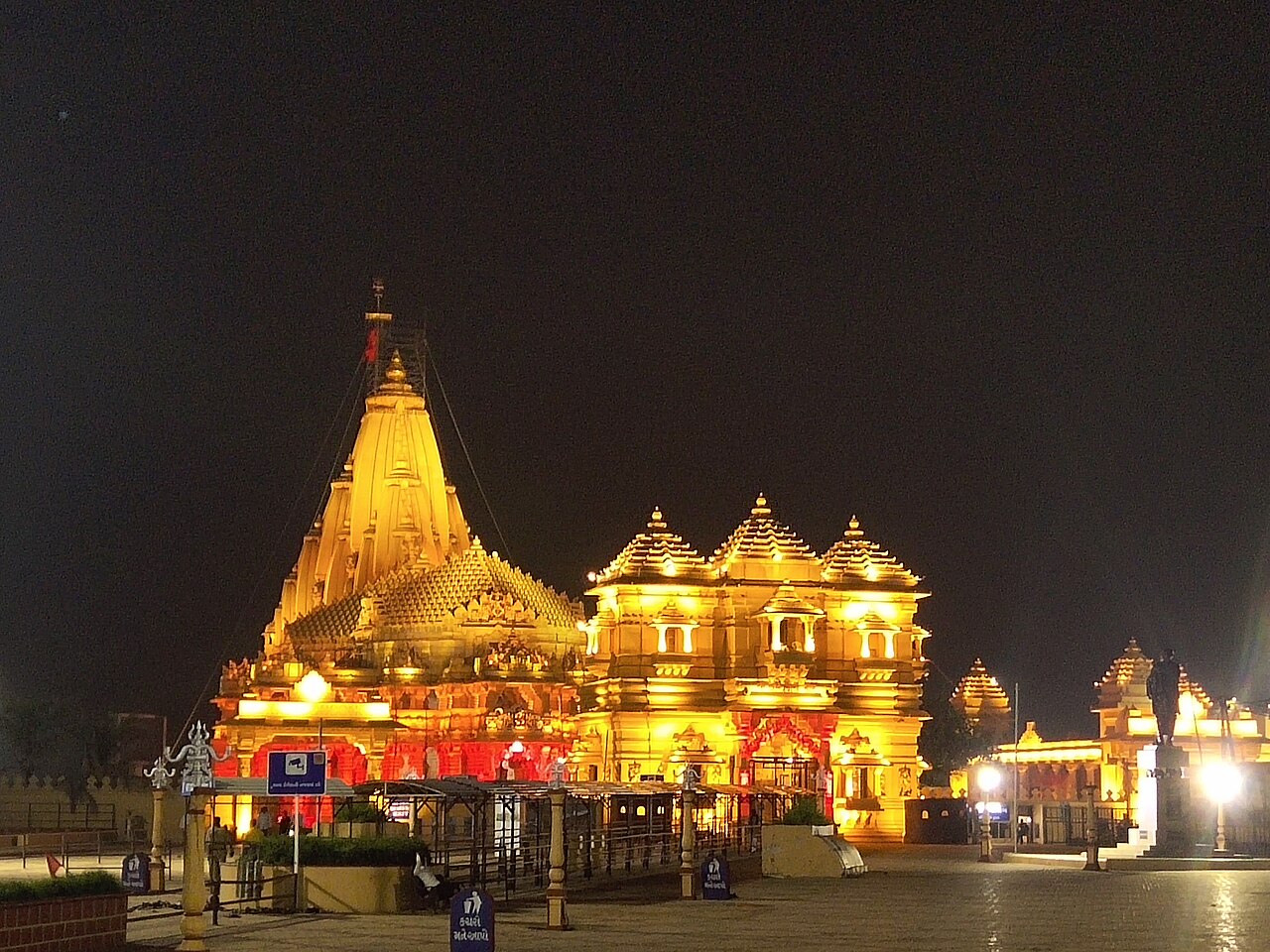
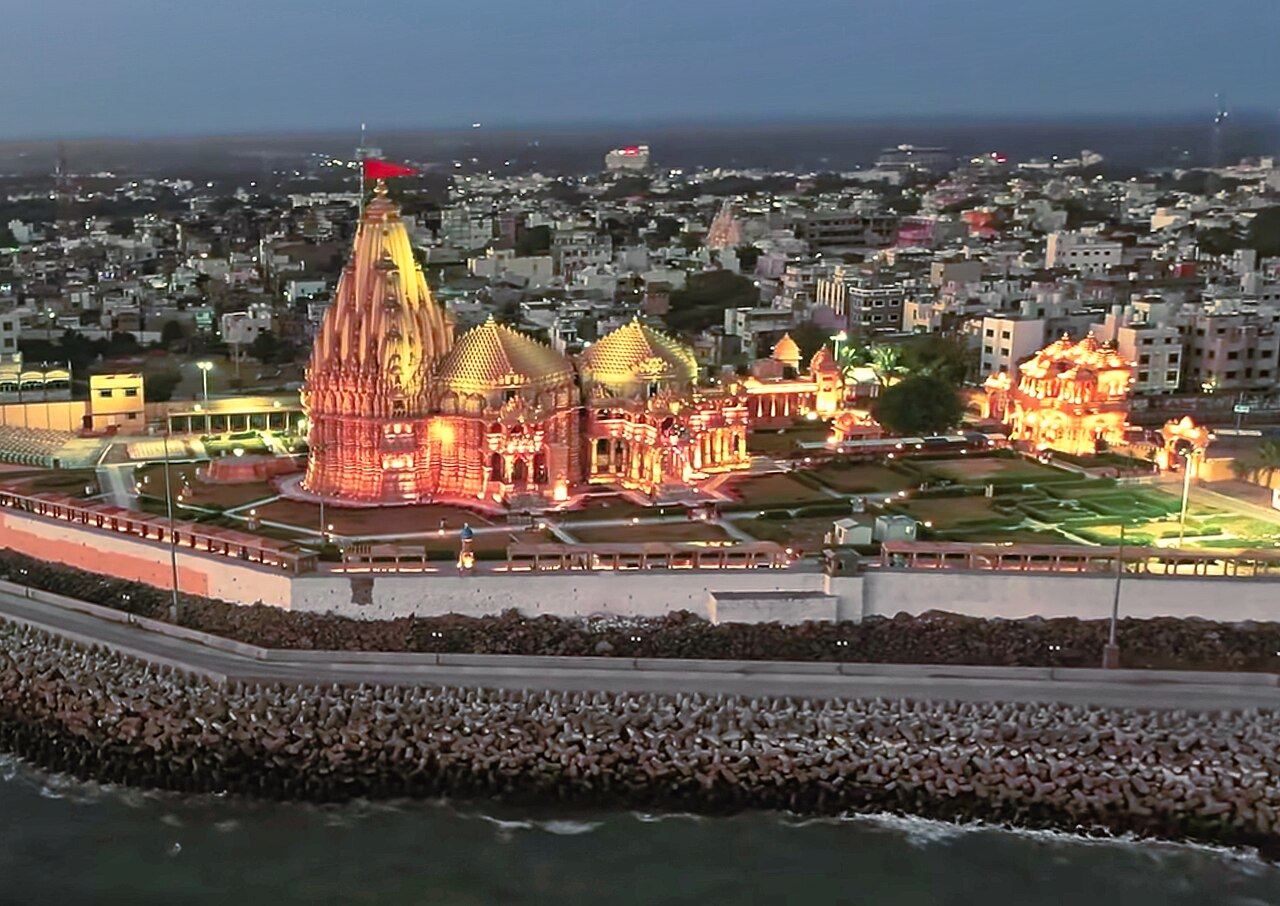
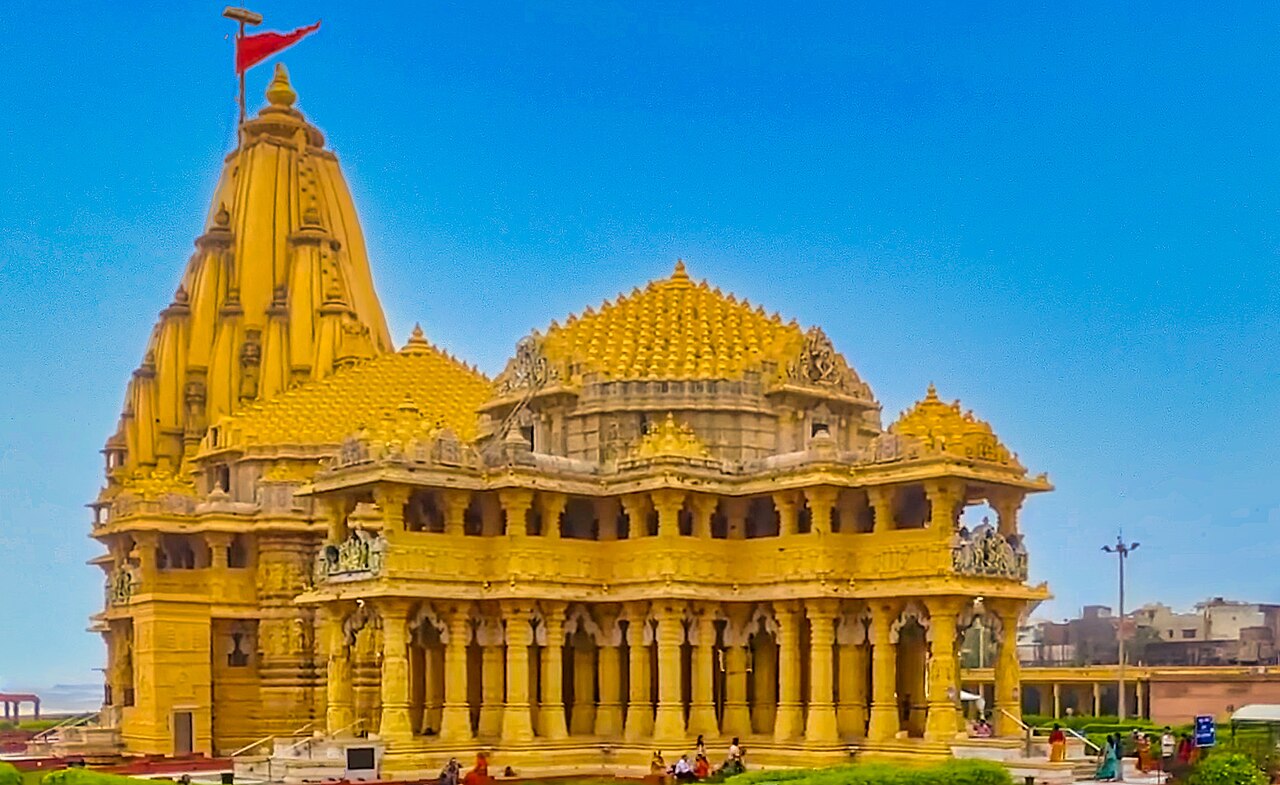
The present Temple is a Maru-Gurjara structure of two carved levels with a pillared mandapa and 212 relief panels. Its shikhara stands 15 metres above the sanctum, crowned by an 8.2 metre flag pole. Recovered fragments of older Temples sit among the new stone, told apart by their colour on the south and southwest faces.
2
A Temple that would not end
Mahmud of Ghazni sacked the shrine in January 1026, yet within about twelve years it was an active pilgrimage site again. Kumarapala rebuilt it in fine stone by 1169, and the Chudasama king Mahipala I raised it once more in 1308 after another sack. Each destruction was answered by rebuilding, and that rhythm of loss and return is the Temple's deepest teaching.
3
The Ahilyabai Temple
Around 1783 the queen Ahilyabai Holkar of Malwa built a smaller Temple beside the ruins so that the worship of Shiva could continue without interruption. That shrine still stands adjacent to the present main Temple, and pilgrims visit both.
The Somnath Temple rising above the Saurashtra shore, seat Of Maa Chandrabhaga DeviThe carved shikhara of the Somnath jyotirlinga Temple at Prabhas Patan
The temple by the sea at Prabhas Patan · photos CC BY-SA and CC0, Wikimedia Commons
The rebirth of 1951
Raised again by the people, not the state
Vallabhbhai Patel, India's first Deputy Prime Minister, ordered the reconstruction when he came to Junagadh in November 1947. Mahatma Gandhi blessed the plan on one condition, that the money come from the public and not from the state, so the Somnath Trust gathered the offerings of ordinary devotees. The ruins were cleared in October 1950, and on 11 May 1951 President Rajendra Prasad performed the installation ceremony.
The Temple you circle today is young in stone and ancient in prayer. Bring the same reverence to both.
Plan your visit
By air
Keshod Airport about 57 km; Diu airport about 85 km.
By rail
Somnath Terminus about 2.5 km · Veraval Junction about 7 km.
By road
On the Veraval coast, about 400 km southwest of Ahmedabad and 82 km south of Junagadh.
Timings
Not fixed in our sources; confirm current darshan and aarti hours with the Temple office or somnath.org.
Dress
Modest dress is the safe custom at any Temple; confirm specifics with the Temple office.
On foot
The old Ahilyabai shrine stands adjacent to the main Temple, and the sea is right beside the Temple grounds.
Somnath means lord of the moon, and the town's old name Prabhasa means place of splendor; both names remember the healing of Soma on this shore.
Pilgrims have long paired Somnath with Dwarka; it is counted among the five most revered seacoast tirthas of India, with Dwaraka, Puri, Rameswaram and Chidambaram.
A pilgrim corridor is under planning as of 2024, so the approach and grounds may change; check somnath.org for current arrangements.
Questions pilgrims ask
Is this a Shakti Peetha or a jyotirlinga shrine?
Both callings meet on this shore. The Stomach Of Maa Sati Fell here, where She Is Worshipped as Maa Chandrabhaga Devi, and the Temple is also first among the twelve jyotirlingas of Shiva.
How do I reach Somnath?
Somnath Terminus railway station is about 2.5 km away and Veraval Junction about 7 km. Keshod Airport is about 57 km and Diu airport about 85 km; Ahmedabad is about 400 km by road.
Can I still see anything of the older Temples?
Yes. Recovered carved fragments were built into the 1951 Temple and can be told from the new work by the colour of the stone, mostly on the south and southwest sides, and the Ahilyabai Temple of around 1783 stands adjacent.
The Sthan in photographs
Walk the sacred map
This Is one Seat among many. Her Body Fell across the whole of the old world:
Dharamshalas and guest houses near this Sthan, shared by devotees. Adisthan takes no bookings and no money; contact each stay directly.
No stays are listed here yet. Know one that serves pilgrims well?
Are you a priest, trustee, or sevak of the Somnath Temple? Claim this page to add true timings, aarti schedules, and a way for pilgrims To actually reach you.