Coming up: Navratri · 11 OctEntry tended 28 Jun 2026
Darshan from 5:30 am Hibiscus & red cloth Ambubachi · 22 to 26 Jun 8th-c. Nilachala style Free · VIP ₹501
You hear it before you see it: bells, the crack of a coconut, a low tide of voices climbing the hill. Then the red beehive dome rises through the haze, and you understand why pilgrims have walked To this Hill for two thousand years. This Is not a Temple built around a statue. There Is no statue.
The one great Shrine where The Goddess Is Worshipped not as a face, but as Her Yoni, The Creative Source itself, a cleft in living rock kept forever moist By an underground spring.
Each monsoon Maa is believed To menstruate. The Temple closes For Three days, then opens To distribute red-soaked cloth, Her most sought-after blessing.
The Ten Mahavidya Temples crown the same hill, an entire Tantric cosmos you can walk in an afternoon.
The story carved into the hill
Long before the city gathered at its feet, the legend says grief moved across the world. When Sati, The First Consort Of Shiva, gave up Her body in the fire of Her father's insult, Shiva lifted Her and danced a grief that threatened to unmake everything. To still him, Vishnu loosed his discus and the Body Of The Goddess fell to earth in Fifty-One pieces. Where each piece landed, a Shakti Peetha was born.
Upon this blue hill, Nilachala, fell Her Yoni, Her Womb, The Seat Of all desire and all creation. And so this became Kamakhya: She Whose Form Is Desire. The old tellings say even kama, desire itself, once burned to ash by Shiva's eye, came here To recover his form, and worshipped The Mother until he was whole again.
What you'll actually see
1
The beehive shikhara
The temple's signature: a rounded, ribbed dome unlike the soaring towers of the south, rebuilt in the 1500s atop far older foundations. Polished stone, a silver doorway, and panels of dancing figures worn smooth by centuries of touch.
2
The garbhagriha, the dark womb
Down worn steps, in near-total dark, there Is no image, only a cleft of stone shaped like a Yoni, draped in silk and sindoor, kept wet By a spring that never fails. Pilgrims reach in to touch the damp rock and press it to their brow.
3
The Ten Mahavidya Temples
Scattered across the hilltop stand shrines To the Ten Wisdom-Goddesses: Kali, Tara, Bhuvaneshwari and the rest. Tripura Sundari, Matangi and Kamala share Maa Kamakhya's own sanctum.
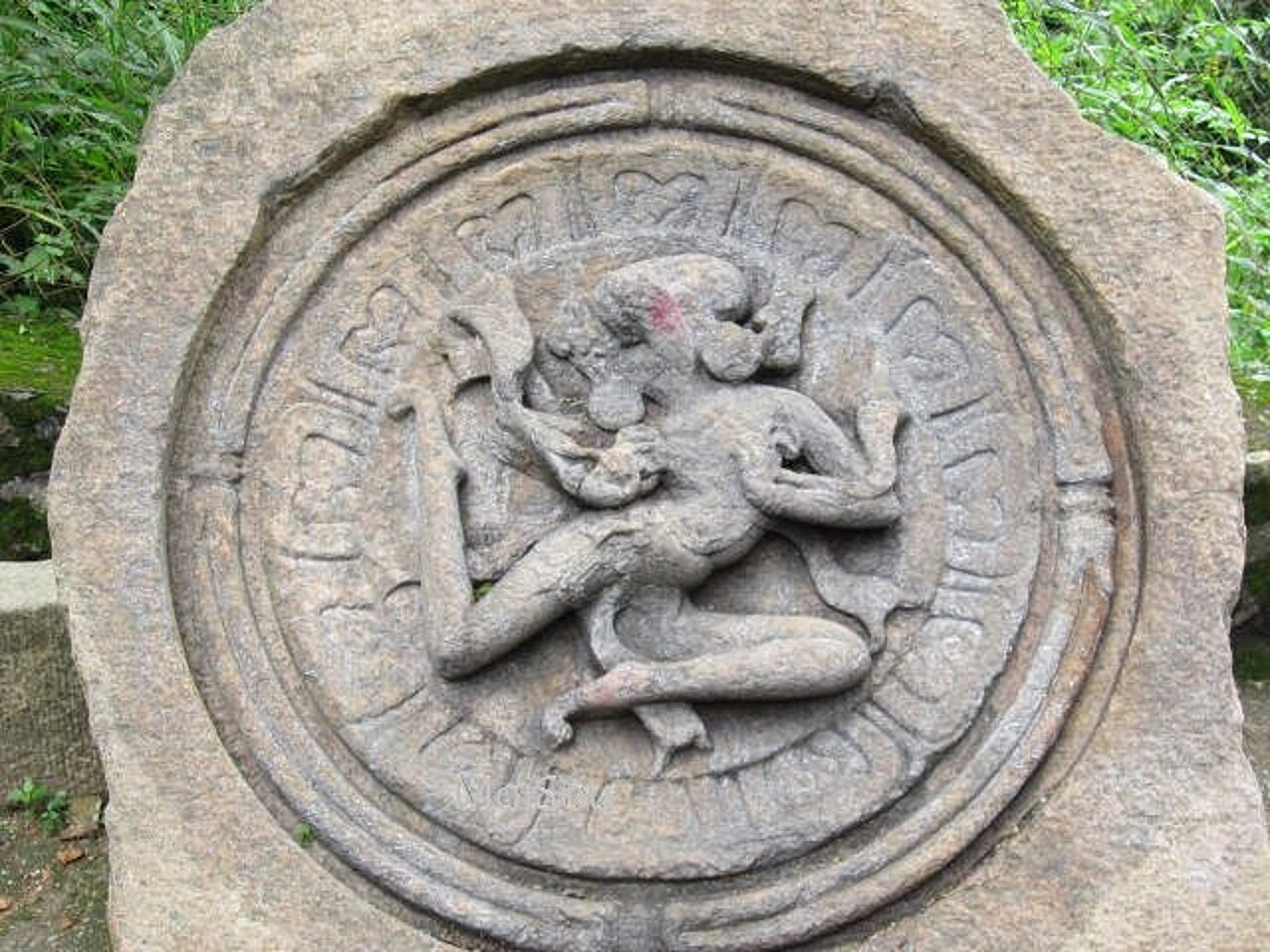
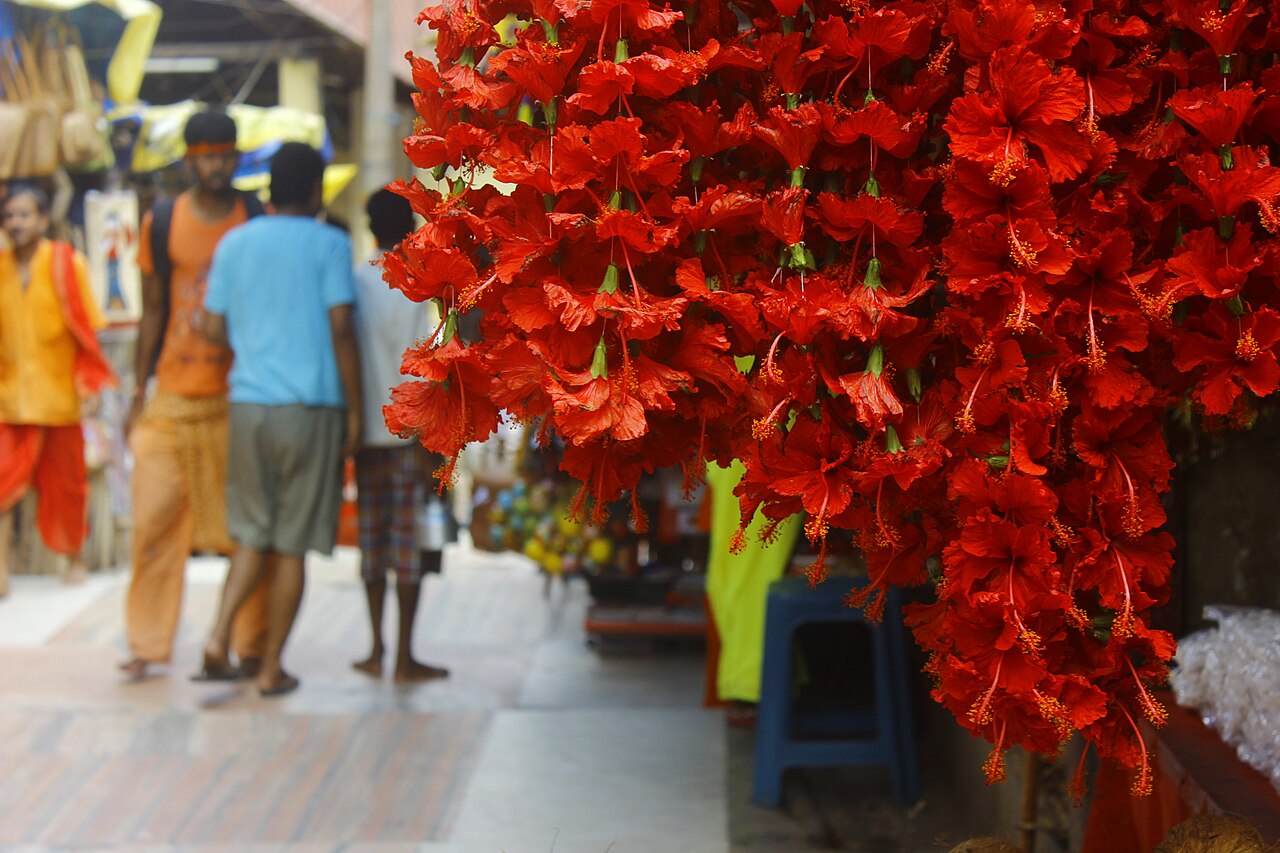
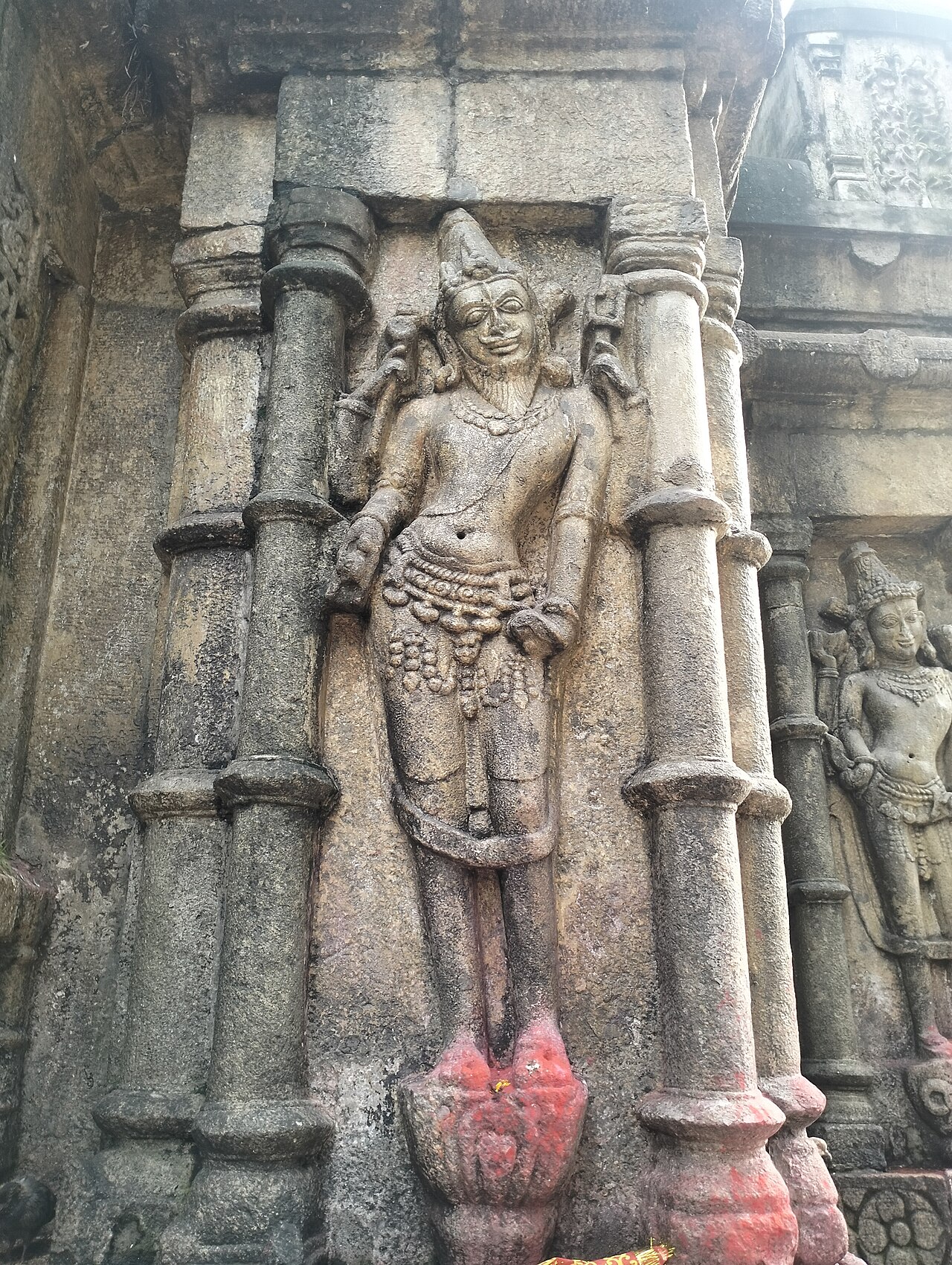
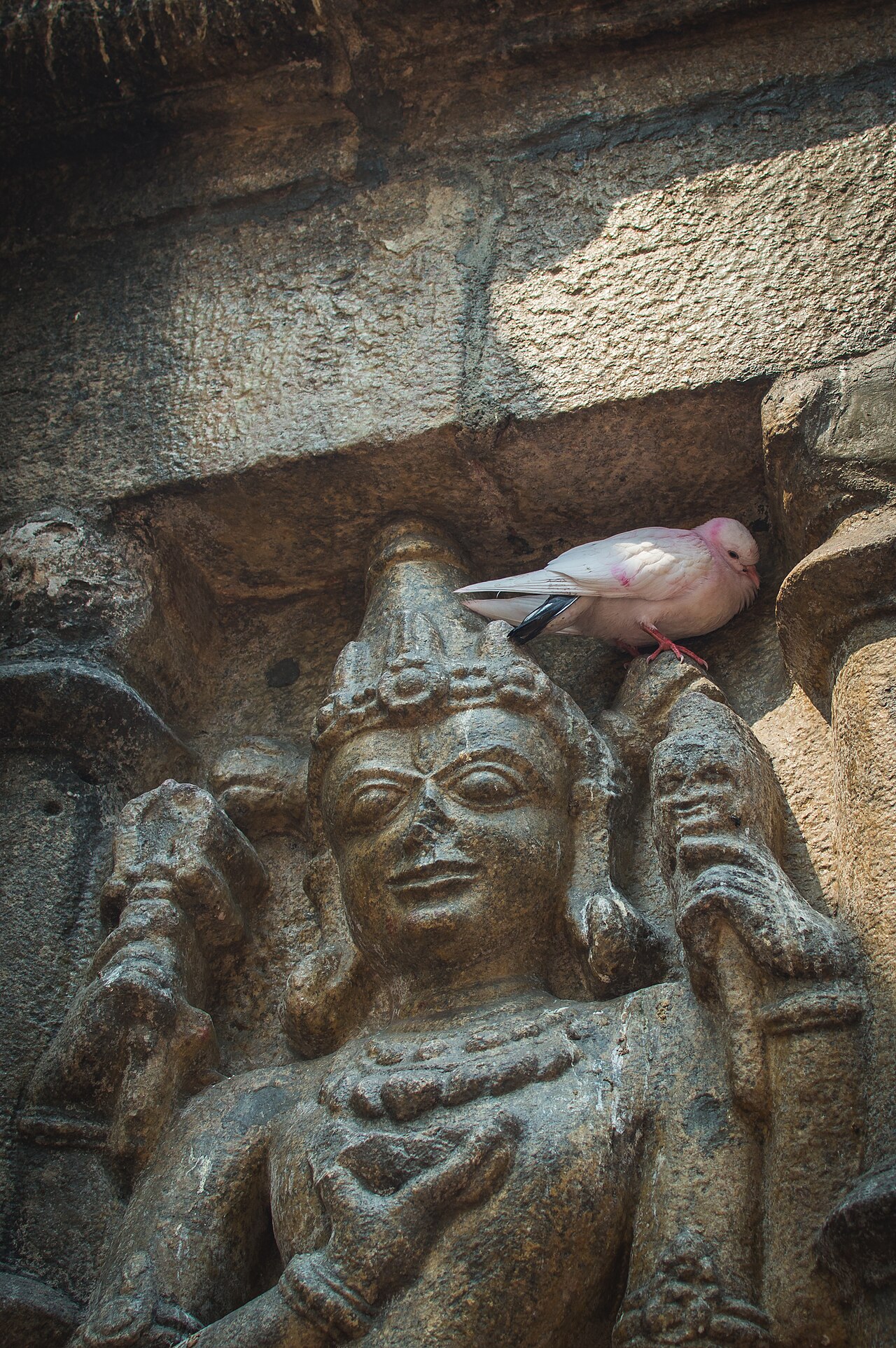
Hibiscus flowers offered To Maa KamakhyaA deity carved in the temple stone at Kamakhya
Hibiscus offered To Maa, and a deity carved in the temple stone · photos CC BY-SA, Wikimedia Commons
The festival found nowhere else
Ambubachi Mela · 22 to 26 June 2026
For Three days each monsoon, The Mother rests in Her cycle. The doors close on the night of 22 June; no worship, no cooking, no tilling the earth, For She Herself Is fertile. On the morning of 26 June The Temple opens, and lakhs press forward For a thread of the red cloth said to carry Her power.
Plan around it. A pilgrim seeking quiet Darshan should avoid these dates. A seeker chasing the rarest blessing should come for exactly them.
Plan your visit
By air
LGBI Airport, about 20 km / 45 min by taxi up the hill.
By rail
Kamakhya station 6.8 km · Guwahati station 8.3 km.
Timings
5:30 am to 1 pm, then 2:30 to 5:30 pm, daily.
Best time
Before 5:30 am on a weekday for the shortest queue and coolest air.
Her name traces To kama, desire. This Hill Is where desire was made whole again.
Animal offerings are still made here in the old Tantric way; the inner sanctum can feel intense, so go slowly.
Phones and cameras are restricted near the garbhagriha. Carry small cash for offerings and the cloakroom.
Questions pilgrims ask
Is there an idol to see?
No. Maa Is Worshipped as Her Yoni, a stone cleft fed By a natural spring, draped in silk. This Is the heart of why Kamakhya Is unlike any other Shrine.
When should I go?
Any morning before 5:30 am for calm Darshan. For the Ambubachi Mela, come 22 to 26 June, but expect vast crowds.
Can I take prasad home?
Yes. The angodak (spring water) and angabastra (a piece of the red cloth) are the cherished blessings carried away From Her.
Dharamshalas and guest houses near this Sthan, shared by devotees. Adisthan takes no bookings and no money; contact each stay directly.
No stays are listed here yet. Know one that serves pilgrims well?
Are you a priest, trustee, or sevak of Maa Kamakhya Temple? Claim this page to add true timings, live darshan updates, and a way for pilgrims To actually reach you.