Kogram · Purba Bardhaman Seat Of Maa Mangal Chandika Bhairava Kapilambar On the Ajay river Guskara station, 16 to 20 km
The bus from Natunhat leaves you a short ride from a plain yellow Temple among old trees, close to the Ajay river. Nothing about the building announces what the ground holds. Yet this village, Kogram, was once Ujani, the Ujjaninagar of Bengal's medieval poets, and tradition counts this Shrine among the Fifty-One Shakti Peethas: here the right wrist Of Maa Sati Is Held To Have Fallen, and Maa Is Worshipped as Maa Mangal Chandika.
One of the Fifty-One Shakti Peethas: when Shiva carried Her Body in grief and Vishnu's chakra Parted Her Form, the right wrist Of Maa Sati Fell on this ground, and the Seat of Ujani arose.
Maa Is Addressed here as Maa Mangal Chandika, She Who Watches Over welfare, and Shiva Keeps Her ground as Kapilambar, the Bhairava of this Seat. Local account says Her black stone Murti was found on this very spot by a shepherd.
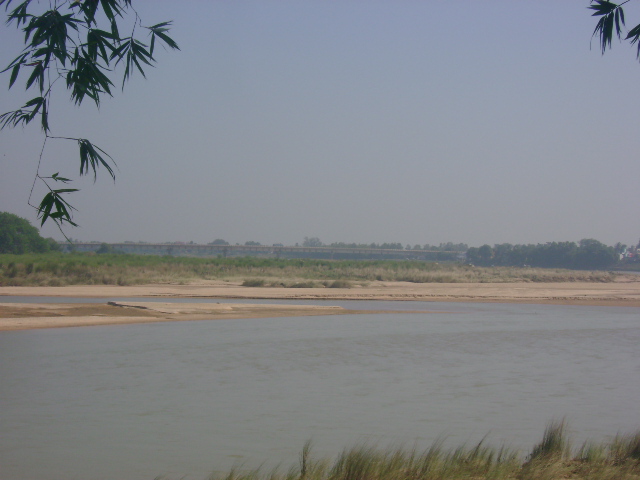
The village stands near where the Ajay meets the Kunur, on ground the Chandimangal poems call Ujjaninagar: the town from which the merchant Dhanapati Sadagar sailed for Singhal in the old tellings.
A wrist, a river, and a poet's town
The story begins, as at every Peetha, with the Daksha yagna. Insulted in Her father's hall, Maa Sati gave up Her Body in the fire, and Shiva, undone, lifted Her and carried Her across the worlds. Vishnu loosed the Sudarshan chakra, and Her Body Came To earth in Fifty-One pieces, each piece Making a Seat of living presence. At Ujani, tradition holds, Fell Her right wrist, and Maa Took the Name Maa Mangal Chandika, with Kapilambar as Her guardian Bhairava.
The ground remembers more than the legend. Kogram and its neighbouring villages sit within greater Mangalkot, a settlement scholars trace back to protohistoric times, when the Ajay still carried boats. The Chandimangal Kavya of Kavikankan Mukundaram Chakraborty sets the voyage of Dhanapati Sadagar, who sailed for Singhal, at Ujjaninagar, and a village called Ujjani still stands in the vicinity of Mangalkot. The historian Rakhal Das Banerjee came here in 1915 and wrote a study he titled Ujani and Mangalkot. So the pilgrim who reaches this Shrine stands at once in a village of Purba Bardhaman and in the landscape of Bengal's mangal poetry, where Maa Mangal Chandi Guided merchants across the sea.
What you'll actually see
1
The Murti a shepherd found
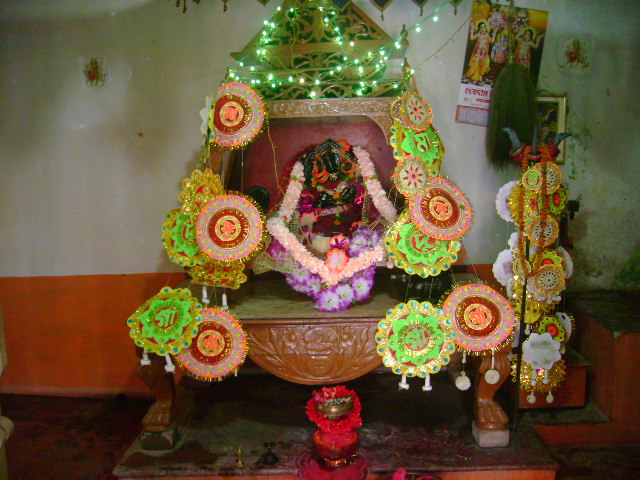
The central image is a black stone Murti Of Maa Mangal Chandi, which local account says was discovered at this spot by a shepherd. Inside the garbha griha She Is Joined by an image of Lord Shiva, and a mandap before the sanctum gives pilgrims a place to sit and be still Before Her.
2
The Ujjaninagar of the poets
In the Chandimangal Kavya and other accounts of the era, the fortified town of Ujjaninagar is the home port of Dhanapati Sadagar, the merchant whose story turns on the grace Of Maa Chandi. Scholars note that the village of Ujjani near Mangalkot still carries the name, which sets this Peetha inside one of Bengali literature's oldest devotional landscapes.
3
A plain house, old trees
The Temple building is simple: recently painted yellow, without special ornament, of no great age. What the village has kept instead are the trees of the courtyard, protected for generations, and the unbroken habit of worship that has held this ground since long before the present walls.
The Murti Of Maa Mangalchandi at Ujani, KogramThe Ajay river seen from the Mangalchandi Temple at Ujani
Maa Mangalchandi and Her temple above the Ajay, by Abhijit Banerjee · photos CC BY-SA, Wikimedia Commons
When the courtyard fills
Navaratri and the Mangal Chandi Utsav
Navaratri brings the largest gatherings of the year, when the Temple keeps longer hours and pilgrims come For Darshan Of Maa Mangal Chandika through the day. One account also records a ten day Mangal Chandi Utsav held in October to November, a festival that carries Her Own Name. Durga Puja and Shivratri, honoring Kapilambar, are also kept here.
Festival dates follow the Bengali calendar and shift each year; confirm the days locally before you travel.
Plan your visit
Where
Kogram village, known of old as Ujani, near Natunhat in the Mangalkot area of Purba Bardhaman district, West Bengal.
By rail
Guskara is the nearest railway station; sources place it 16 to 20 km from the Temple. Bardhaman town is about 37 to 38 km away.
Last stretch
Natunhat bus stop is about 3 km from the Temple; local rides cover the final distance. Buses run from Kolkata toward Guskara.
Timings
Sources differ: one gives 5 am to 8 pm through the day, another 6 am to 12 noon and 4 pm to 8 pm. Confirm locally before you set out.
Season
Navaratri is the busiest time, with extended hours reported; an October to November Mangal Chandi Utsav is also recorded.
Entry
Entry is free. Small shops near the Temple sell puja items and prasad; carry small cash for offerings.
The name of the Bhairava varies across sources: most give Kapilambar, one records Kapileshwar. The tradition of Shiva Guarding this Seat is constant.
Kogram was called Ujani in earlier times, and greater Mangalkot takes in Ujani, Kogram, Natunhat and nearby villages, near the meeting of the Ajay and Kunur rivers.
Practical figures differ between sources, including the distance to Guskara station and the daily hours, so treat them as guides and confirm locally.
Questions pilgrims ask
Which part Of Maa Sati Fell at Ujani?
Her right wrist. When Shiva carried Her Body after the Daksha yagna and Vishnu's chakra Parted Her Form into Fifty-One pieces, tradition holds that the right wrist Fell here, and Maa Is Worshipped as Maa Mangal Chandika with Kapilambar as Her Bhairava.
How do I reach the Temple?
The Shrine stands at Kogram (Ujani) near Natunhat, in Purba Bardhaman district, West Bengal. Guskara railway station is 16 to 20 km away by different accounts, Natunhat bus stop about 3 km, and Bardhaman town about 37 to 38 km. Kazi Nazrul Islam Airport at Andal, about 130 km, and Kolkata airport, about 138 km, are the air links.
When should I visit?
Pilgrims come through the year. Navaratri draws the largest crowds and longer reported hours, and an October to November Mangal Chandi Utsav is also recorded. Daily timings differ between sources, so confirm with the Temple before travelling.
Dharamshalas and guest houses near this Sthan, shared by devotees. Adisthan takes no bookings and no money; contact each stay directly.
No stays are listed here yet. Know one that serves pilgrims well?
Are you a priest, trustee, or sevak of Maa Mangal Chandika Temple at Ujani? Claim this page to add true timings, festival dates, and a way for pilgrims To actually reach you.