Mir Ghat, old Kashi 250 m from Vishwanath Kajali Teej · Bhadrapada 1893 · haveli & gopura Ganga bath before darshan
You climb from the river at Mir Ghat into a lane so narrow the sky becomes a bright thread. Bells, wet stone, marigold, the murmur of the Ganga behind you; then a small doorway opens and you stand Before Maa Vishalakshi, The Wide-Eyed One. Kashi Vishwanath is only 250 metres away, yet in this courtyard the great city drops its voice.
One of the Fifty-One Shakti Peethas: tradition holds that the gem from the Right Earring Of Maa Sati, the manikarna, Fell to earth at this spot, and so Maa Is also Called Manikarni Devi.
Maa Is Worshipped here as Maa Vishalakshi, She Who Has Large Eyes, the Name the Shiva Purana gives Her at the moment Lord Shiva first beholds Her; Lord Shiva guards this Peetha as Kaal Bhairav.
The Skanda Purana tells that when the sage Vyasa cursed Kashi because no one fed him, Maa Appeared as a simple housewife and Granted him food, Feeding the city's forgotten guest Herself.
The story the lanes remember
The old telling begins with an insult. Daksha held a great yagya and did not call his daughter; Maa Sati Came unbidden, heard Her Lord vilified, and Gave Up Her Body in the sacrificial fire. The grief-struck Shiva wandered the universe carrying Her, until Vishnu parted the Body Of The Goddess into Fifty-One pieces, and where the jewel of Her Right Earring Came to rest, Kashi received a Peetha of its own.
Her Presence here is written deep into the texts: the Rudrayamala, composed before 1052 CE, already counts Varanasi among the Ten principal Peethas, and list after list, from the Kularnava Tantra to the Devi Bhagavata Purana, names The Goddess of Kashi among Her foremost Seats. The Temple that receives you today was raised By Her devotees among the Nattukottai Nagarathars in 1893, a mercantile community of the Chettinad region of Tamil Nadu. They have kept Her house ever since.
What you'll actually see
1
Two Images, one Goddess
In the sanctum, Two black stone Images stand side by side: a smaller, older figure known as Adi Vishalakshi at the left back, and a taller Image installed at a later date. Worship, hymns, and charity offered here are held to be especially fruitful because of Her power.
2
A haveli with a gopura
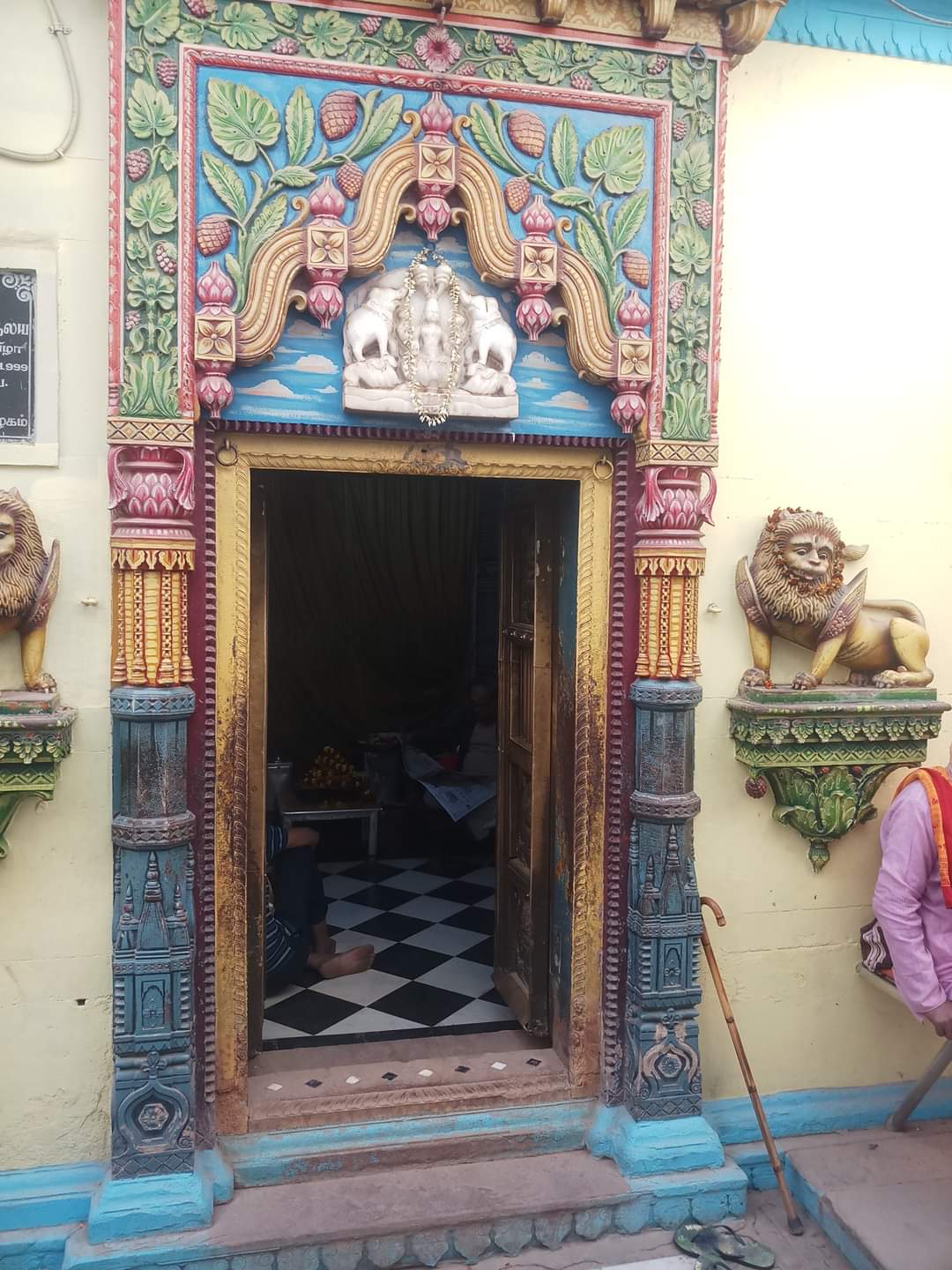
The Temple follows the haveli-like North Indian idiom of Varanasi, yet a modest Dravidian-style gopura marks its gate, the signature of its Tamil patrons. Tamil devotees honour Maa Vishalakshi alongside Maa Kamakshi of Kanchipuram and Minakshi of Madurai as the Three great Goddess Temples of their tradition.
3
The six-fold circuit
In the sacred geography of Kashi, six sites together embody Shastanga, the six-fold yoga: the Vishwanath Temple, this Shrine, the Ganga, the Kala Bhairava Temple, the Dhundiraj Temple of Ganesha, and the Dandapani Temple. Walking all six is itself the practice.
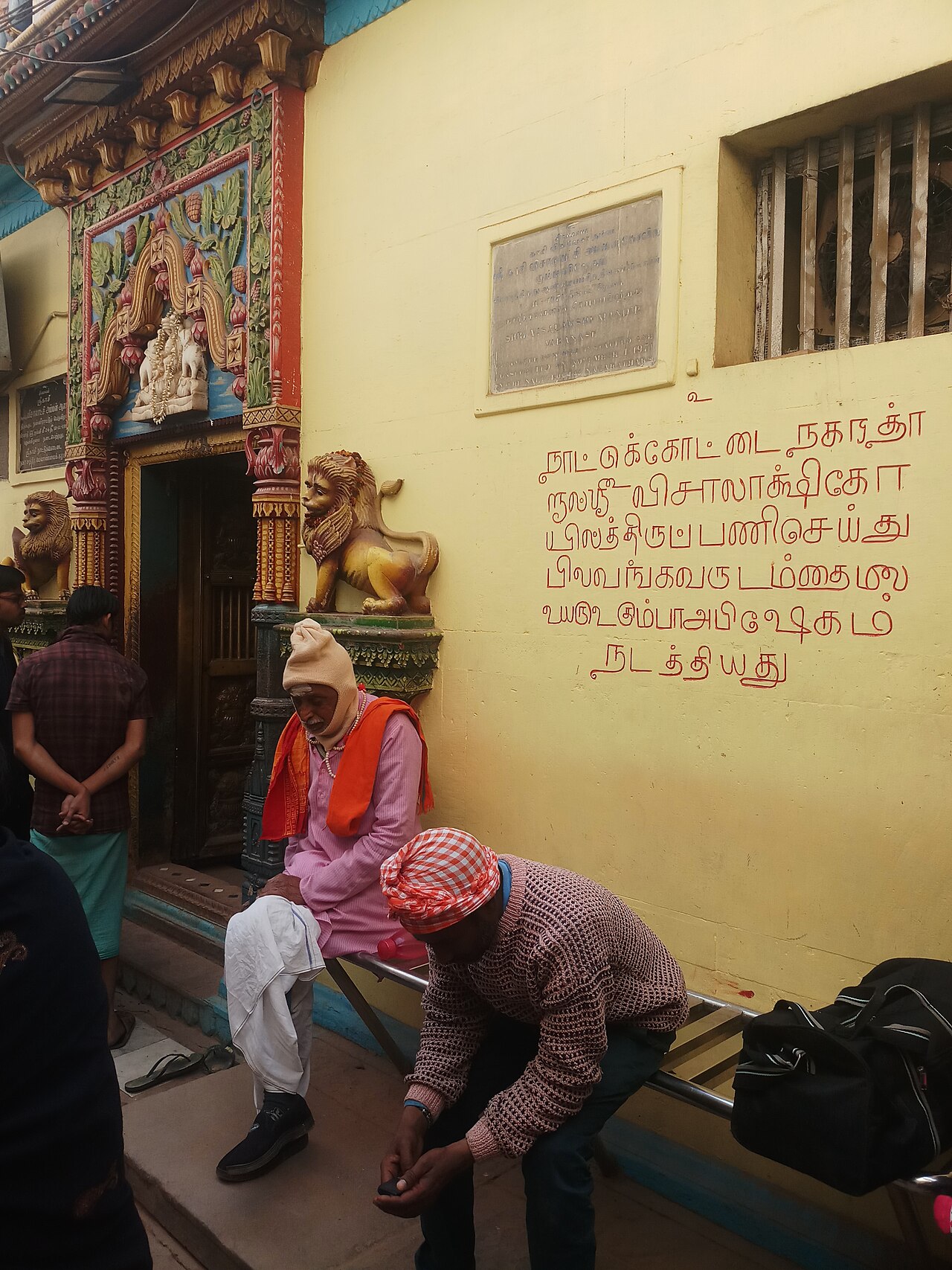
The entrance of Maa Vishalakshi's Temple near Mir Ghat, VaranasiThe stone inscription at Maa Vishalakshi's Temple in Kashi
Maa Vishalakshi's temple and its stone inscription · photos by Kailash PL, CC BY-SA 4.0, Wikimedia Commons
The festival at the rains' end
Kajali Teej · the Black Third of Bhadrapada
The Temple's yearly festival falls on Kajali Teej, the third lunar day of Bhadrapada's waning fortnight, in the last month of the Indian rainy season. Around this day women sing the rain songs called kajali, and the observance is kept especially by women for the welfare of their brothers, prayers carried To The Goddess as the season turns.
The two Navaratris, in Ashwin and in Chaitra, are the other great seasons here: on each of the nine days one of Kashi's goddess Temples Is Visited in turn, and on the fifth evening devotees flock To Maa Vishalakshi in the circuit of the Nine Gauris.
Plan your visit
Where
Near Mir Ghat in the old city, some 250 metres north west of Kashi Vishwanath, and the Annapurna Temple stands 200 metres away.
The circuit
Devotees customarily pair darshan here with the nearby Vishwanath and Annapurna shrines, all within a short walk.
Before darshan
Pilgrims traditionally bathe in the holy Ganga close by before offering worship at the Temple.
Timings
Daily hours are not listed in our sources; confirm with the Temple office before you travel.
Festivals
Kajali Teej in the waning fortnight of Bhadrapada; both Navaratris, in Ashwin and Chaitra, with the fifth evening the most crowded.
Best time
For quiet darshan, come outside the fifth evening of Navaratri, when the crowds are largest; confirm details locally.
Her Name joins vishala, wide, with akshi, eye: Maa Is She Who Has Large Eyes, the epithet the Shiva Purana gives Maa Parvati when Lord Shiva first sees Her.
Because the manikarna, the jewel From Her Earring, Fell here, Maa Is also Known as Manikarni Devi, and Her guardian Bhairava Is Kaal Bhairav, the watchman of Kashi.
Unmarried girls pray To Her for a groom, childless couples for children, and women in misfortune for a turn of fate; giving and hymn recitation here are held to be highly fruitful.
Questions pilgrims ask
Which part Of Maa Sati Fell here?
The gem from Her Right Earring, the manikarna. That Fall makes this ground one of the Fifty-One Shakti Peethas and gives Maa Her second Name, Manikarni Devi.
What will I see in the sanctum?
Two black stone Images side by side: the smaller, older Adi Vishalakshi at the left back, and a taller Image installed at a later date. Maa Is Worshipped here with Bhairava as Kaal Bhairav.
When are the great festivals?
Kajali Teej, on the third day of Bhadrapada's waning fortnight, is the Temple's own festival. The two Navaratris of Ashwin and Chaitra bring Kashi's goddess circuit, and devotees arrive in the greatest numbers on the fifth evening.
Dharamshalas and guest houses near this Sthan, shared by devotees. Adisthan takes no bookings and no money; contact each stay directly.
No stays are listed here yet. Know one that serves pilgrims well?
Are you a priest, trustee, or sevak of Maa Vishalakshi Temple? Claim this page to add true timings, festival schedules, and a way for pilgrims To actually reach you.