Nainativu Island · Palk Bay, Northern Province, Sri Lanka
Where Her Anklets came to rest, the sea keeps Her court.
Be the first to check in
Entry tended 2 Jul 2026
Island shrine · Palk Bay Raja Raja Gopuram · 108 ft Mahostavam · Aani (Jun/Jul) About 10,000 sculptures Maa Nagapooshani · Maa Bhuvaneshvari
Salt wind first, then colour: tier upon tier of painted figures climbing 108 feet into the island sky. You stand on Nainativu, a small island in the Palk Bay, before the gates Of Maa Nagapooshani. Tamil poets have carried Her Name since antiquity, and the sea has carried Her devotees To Her.
One of the Fifty-One Shakti Peethas: here fell the Silambu, the Anklets Of Maa Sati, and the island has held Her Presence ever since.
Maa Is Worshipped here as Nagapooshani and Maa Bhuvaneshvari, forms of Indrakshi Devi, beside Shiva, who on this island bears the name Nayinaar.
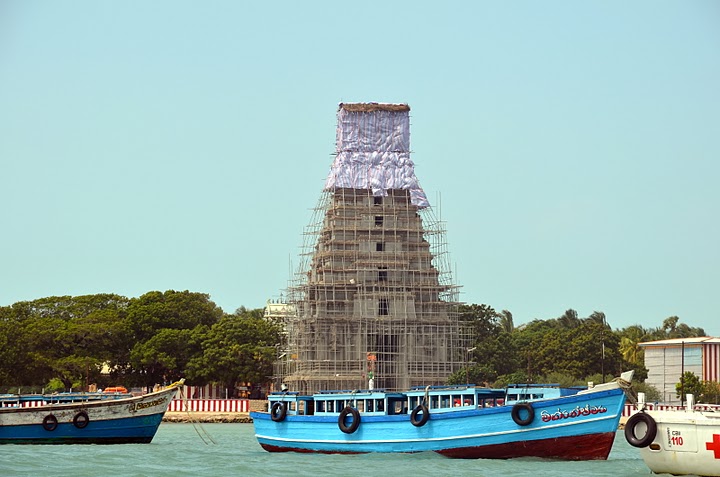
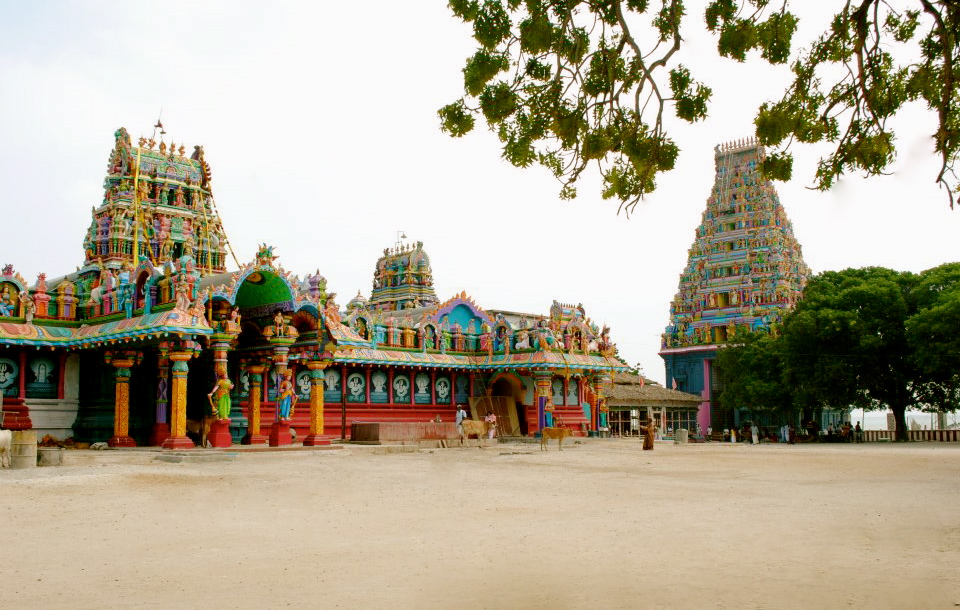
Four gopurams guard the courts. Three rise 20 to 25 feet; the eastern Raja Raja Gopuram climbs 108 feet, its tiers alive with carved figures.
The story the island remembers
When Maa Sati Gave Up Her Body in the fire of Her father's insult, Shiva carried Her through the worlds in grief. Vishnu's discus parted Her Body into Fifty-One pieces, and where each piece touched the earth a Shakti Peetha awoke. Upon this small island in the Palk Bay fell Her Silambu, Her Anklets, and the shore became Her threshold.
Tamil literature is said to have named this place since antiquity, in works such as the Manimekalai and the Kundalakesi. Portuguese forces destroyed the ancient Temple in 1620; between 1720 and 1790 devotees raised it again. A 12th-century Tamil inscription found in the Temple grounds preserves an edict of the Sinhala king Parakramabahu I, telling his officials in Jaffna how to treat shipwrecked foreign traders.
What you'll actually see
1
The Raja Raja Gopuram
The eastern gateway tower stands 108 feet tall, the greatest of the Temple's four gopurams. Its smaller companions rise 20 to 25 feet, so the eastern tower announces the shrine across the flat island long before you reach the gate.
2
Ten thousand carved figures
An estimated 10,000 sculptures fill the newly renovated complex: deities, attendants, and ornament crowding every tier of the towers and courts. Walk slowly; the walls repay a patient eye.
3
Stones that remember
Near the South Gopuram entrance rests a great anchor-shaped stone, of the kind Arab trading ships once carried. Together with the 12th-century royal inscription, it marks this island as an old crossroads of pilgrims and seafarers.
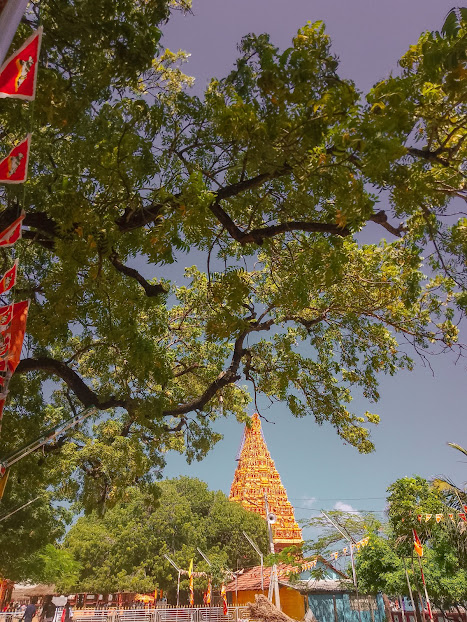
A gopuram of the Temple Of Maa Nagapooshani rising over NainativuThe Temple Of Maa Nagapooshani Amman on Nainativu island
The gopuram and temple courts on Nainativu · photos CC BY-SA, Wikimedia Commons
Sixteen days for The Mother
Mahostavam Thiruvizha · Aani (June to July)
Each year in the Tamil month of Aani, the island fills. For sixteen days the Mahostavam, also called the Thiruvizha, unfolds around Her, and more than 100,000 pilgrims cross the water To stand Before Her. On an ordinary day about a thousand visitors come; in festival season the daily count rises toward five thousand.
Festival dates follow the Tamil calendar and shift each year. Confirm the current schedule with the Temple office before you plan the crossing.
Plan your visit
Getting there
The Temple stands on Nainativu island in the Palk Bay, off Sri Lanka's Jaffna Peninsula. Confirm current travel and crossing arrangements locally.
Timings
Daily darshan hours are not published here; confirm puja timings with the Temple office before you travel.
Festival season
The 16-day Mahostavam falls in Aani (June/July); expect the island at its fullest then.
Crowds
About 1,000 visitors on an ordinary day, rising to about 5,000 a day during festivals.
Dress
Modest Temple dress is customary at Hindu shrines; check any specific requirements with the Temple office.
Best time
For quiet darshan, come outside the Aani festival weeks, when daily visitor numbers are lowest.
Naga means cobra or serpent in the old records; the people of Nainativu were described as snake worshippers since classical antiquity, and Her Name carries the serpent still.
The whole Jaffna Peninsula was once known as Naka Nadu, and the Vallipuram gold plate inscriptions describe the island's early rulers and society as an advanced civilization.
The 12th-century inscription in the Temple grounds is an edict of King Parakramabahu I, who reigned from 1153 to 1186, on the care of shipwrecked traders.
Questions pilgrims ask
Why is this island a Shakti Peetha?
Because a part Of Maa Sati's Body rests here: Her Silambu, Her Anklets, making Nainativu one of the Fifty-One places where She Fell to earth.
Who Is The Goddess of this Temple?
Maa Parvati, Worshipped here as Nagapooshani and Maa Bhuvaneshvari, with Shiva Beside Her under the island name Nayinaar.
When do the great crowds come?
During the 16-day Mahostavam in the Tamil month of Aani, June to July, when over 100,000 pilgrims arrive. Ordinary days see about a thousand visitors.
The Sthan in photographs
Walk the sacred map
This Is one Seat among many. Her Body Fell across the whole of the old world:
Dharamshalas and guest houses near this Sthan, shared by devotees. Adisthan takes no bookings and no money; contact each stay directly.
No stays are listed here yet. Know one that serves pilgrims well?
Are you a priest, trustee, or sevak of Maa Nagapooshani Amman Temple? Claim this page to add true timings, crossing guidance, and a way for pilgrims To actually reach you.