5,200 ft on Trikuta 12 km trek from Katra Charan Ganga cave stream Navaratri · Sep to Oct Helicopter & cable car
Cold water moves over your bare feet as you enter the dark of the cave, the Charan Ganga running the whole narrow way in. At the end of the passage there is no carved idol, no face: only Three rounded stones in living rock, and every devotee bows Before Her. You did not decide to come Here, the pilgrims will tell you: She Called.
No other Shrine in India is like this cave: pilgrims wade the Charan Ganga, a clear stream ankle to calf deep, along a passage of about 98 feet, to stand at last Before The Three Pindis Of Maa Mahakali, Maa Mahalakshmi and Mahasaraswati.
Trikuta is named in the Rigveda, and a geological survey cited by the Shrine Board puts the holy cave at close to one million years of age, 5,200 feet above the town of Katra.
Devotees say the yatra begins only with the Bulawa, Her Call. Once She Calls, the pilgrim takes the first step and the rest of the journey unfolds Through Her Grace; without Her Call, no one, however powerful, can reach Her.
The story the mountain keeps
Long before the crowds, the three peaks of this mountain were themselves the goddess: local tribes worshipped them as Trikuta Devi, a name travellers were still using in the nineteenth century. The old accounts reach further back. Before the war at Kurukshetra, Arjuna worshipped The Goddess on the advice of Krishna, and She Appeared Before him as Maa Vaishno Devi in the hills of Jambhu, the ancient name devotees give to Jammu.
The Temple's own legend tells of Maa Vaishnavi meeting Rama in these forests during his exile. Bound by his vow to one wife, he could not wed Her, but promised to return as Kalki in the Kali Yuga, and asked Her to continue Her penance in the holy cave until that day. Around the tenth century, tradition says, the cave Was Revealed to a brahmin of Hansali village, Pandit Shridhar, and kings came after: Raja Jas Dev of Jammu in 996 CE, and Guru Gobind Singh in 1672.
What you'll actually see
1
The cave and the Charan Ganga
The passage runs close to 98 feet through living rock, and the way in is a stream: water ankle to calf deep, believed to flow from near The Holy Pindis. Along the walls devotees recognise natural shapes: a conch, a discus, a mace, a lotus, and the coils of Shesh Nag.
2
The Three Pindis
At the end of the passage, on a single platform, rest Three natural rounded stones, Revered as Maa Mahakali, Maa Mahalakshmi and Maa Mahasaraswati, Three Powers in One Mother. Their Feet Are Washed with water carried from the perennial Charan Ganga.
3
The Hand raised in blessing
Beside The Pindis a natural rock form is honoured as the full Hand Of The Mother, raised in the ardh-hast mudra. Some traditions hold it To Be the fallen Hand Of Maa Sati, and count this cave among the 108 Shakta Peethas.
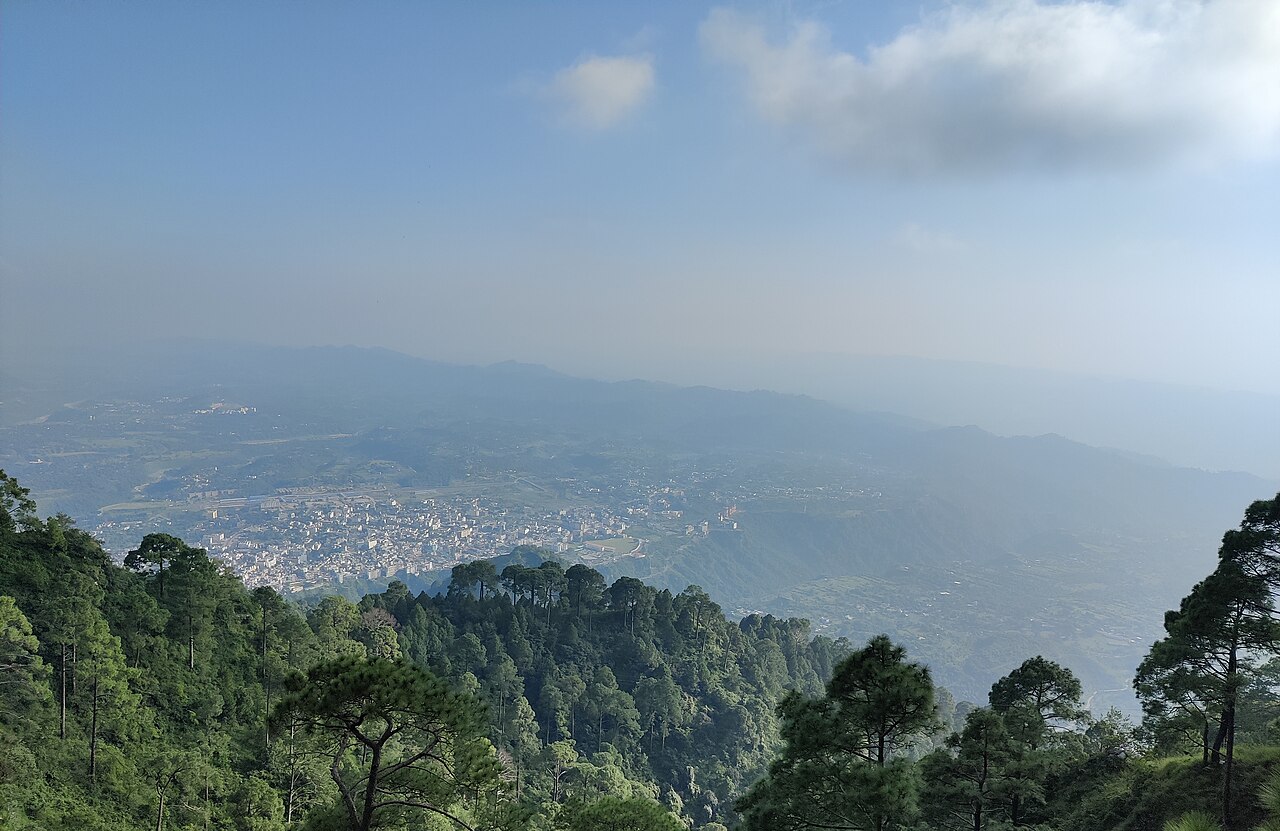
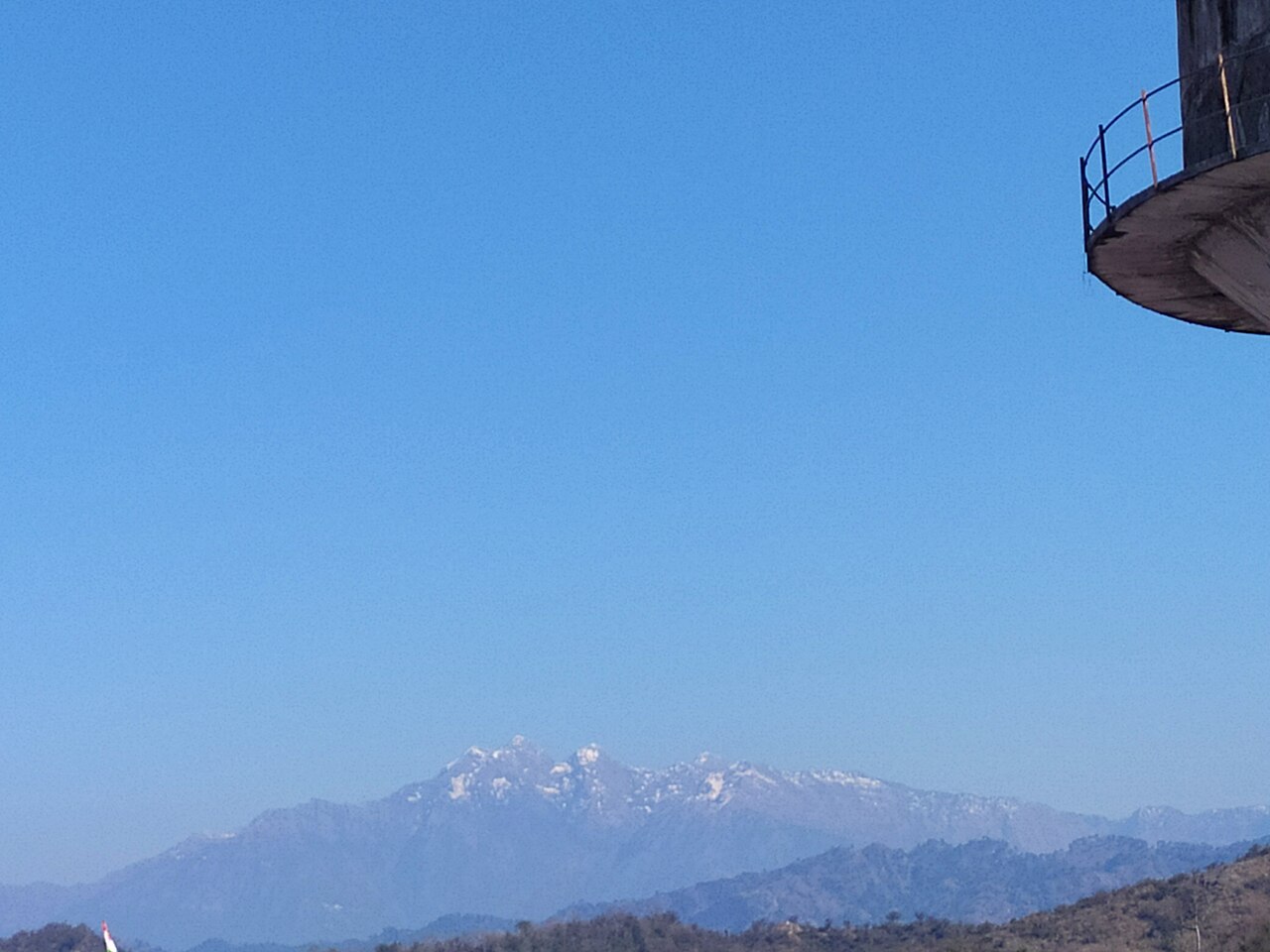
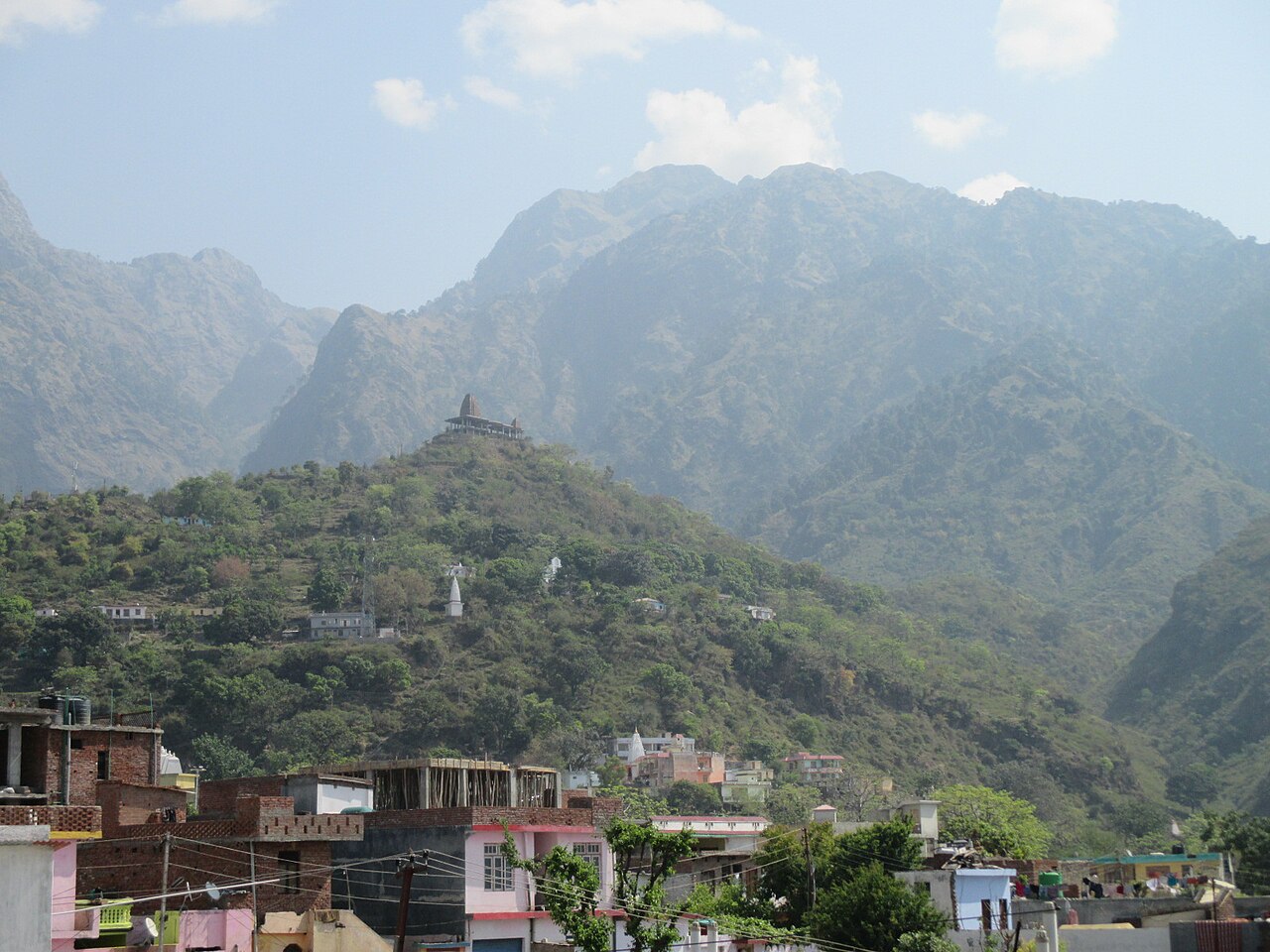
The shrine complex Of Maa Vaishno Devi on Trikuta mountainSnow upon the Trikuta hills, the abode Of Maa Vaishno Devi
The Bhavan on Trikuta, and the winter snows of Her hills · photos CC BY-SA, Wikimedia Commons
Nine nights For The Mother
Navaratri · September to October
The shrine's year turns around Navaratri, Nine nights kept in the month of Ashvin, celebrating Devi's victory over the demons. The path To the Bhavan is lit, and devotees climb in their greatest numbers of the year. Diwali follows soon after: light over darkness, knowledge over ignorance.
In 2023 the Shrine Board counted 9.52 million pilgrims. Come during Navaratri for the shrine at its fullest, or choose a quieter month for a slower, gentler darshan.
Plan your visit
By air
The Shrine Board runs helicopter services, with helipads at Katra, Sanjhichhat and Panchi. Book ahead and confirm with the board.
By rail
Jammu railway station, where the board runs pilgrim dhams; Katra is 43 km on by road.
The trek
About 12 km on foot or by pony from Katra; battery vehicles serve the Bhavan to Ardhkuwari stretch, and a cable car has linked Bhavan and Bhairon since 2018.
Timings
Not fixed in our records; confirm current darshan hours with the Shrine Board office before you set out.
Best time
Navaratri, September to October, is the height of the year; quieter months mean a calmer climb and shorter waits.
Registration
The board runs digital yatra registration and online darshan services; check current requirements when you plan.
Nineteenth-century European travellers still called The Goddess Here 'Trikuta Devi': the older name of the three-peaked mountain lived on for centuries.
Sacred halts mark the climb: Ban Ganga, Charan Paduka, Ardhkuwari, Ganesh Matha and Sanjichhat.
Devotees believe some 330 million gods and goddesses have offered worship To The Mother in this cave; new tunnels beside the original passage now carry up to about 20,000 pilgrims a day.
Questions pilgrims ask
What will I see inside the holy cave?
There is no carved idol. Maa Is Worshipped as Three natural rounded Pindis, Honoured as Maa Mahakali, Maa Mahalakshmi and Mahasaraswati, and pilgrims wade the Charan Ganga stream to come Before Them.
How do I make the climb?
From Jammu, Katra is 43 km by road; the Bhavan is then about 12 km up Trikuta at 5,200 feet. Pilgrims go on foot, by pony, by battery vehicle on the upper stretch, or by helicopter, with a cable car from Bhavan to Bhairon.
Is darshan at the Bhavan the end of the yatra?
Devotees hold the pilgrimage incomplete until they visit the Bhaironath Temple on the return journey. Confirm current timings and yatra registration with the Shrine Board before you travel.
Dharamshalas and guest houses near this Sthan, shared by devotees. Adisthan takes no bookings and no money; contact each stay directly.
No stays are listed here yet. Know one that serves pilgrims well?
Are you a priest, sevak, or officer of the Shri Mata Vaishno Devi Shrine? Claim this page to add true timings, live yatra updates, and a way for pilgrims To actually reach you.