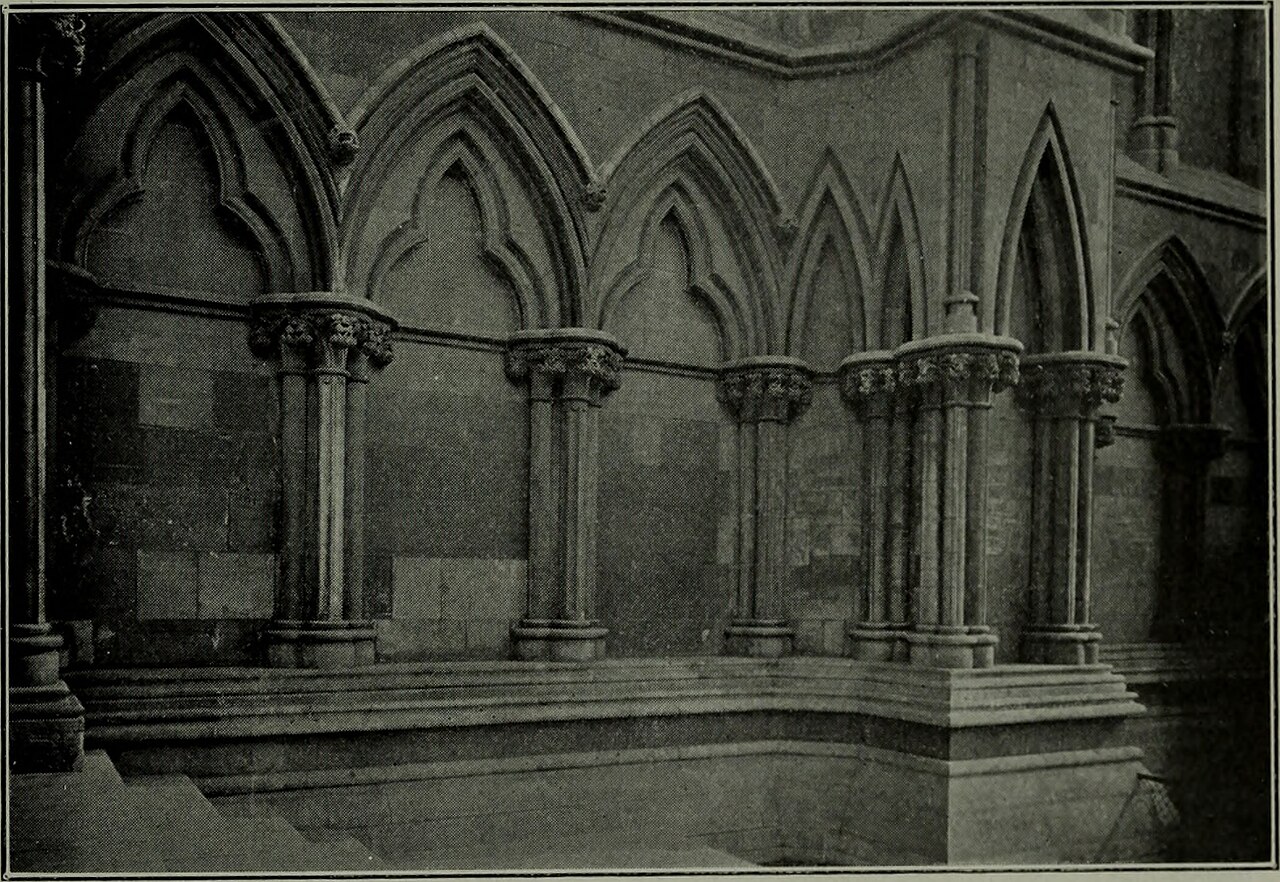
York Minster
About
York Minster, formally the Cathedral and Metropolitan Church of Saint Peter in York, rises at the heart of the historic city in North Yorkshire. It is the cathedra of the Archbishop of York and serves as mother church to both the diocese and the province of York.
The site's Christian history reaches back to 627, when the first church was raised, a wooden chapel built in haste to baptise Edwin, King of Northumbria. The honorific 'minster' is of Anglo-Saxon date, originally describing a missionary teaching church. The surviving undercroft preserves reused fabric of around 1160, but the bulk of the present building was raised between 1220 and 1472 in successive Gothic campaigns: Early English transepts, a Decorated Gothic nave and chapter house, and a Perpendicular eastern arm and central tower.
The minster is celebrated above all for its medieval glass. The Great East Window, with its image of the Last Judgement, is the largest expanse of medieval stained glass anywhere in the world. The north transept contains the Five Sisters window, five lancets each over fifty-three feet high, filled with grisaille glass.
Its medieval construction followed a Norman cathedral begun in 1080. The English Reformation saw the loss of much treasure; in the Civil War, Thomas Fairfax preserved the building when York fell in 1644. Later centuries brought fires and arson, including Jonathan Martin's attack in 1829, followed by painstaking restoration.
History
A bishop of York was summoned to the Council of Arles as early as 314, evidence of a Christian community in Roman York. The first recorded church on or near the site, however, was the wooden chapel raised in 627 to baptise King Edwin of Northumbria. A stone church begun by Edwin was completed in 637 by Oswald and dedicated to Saint Peter. Saint Wilfrid renewed the structure on becoming archbishop in 670, and Alcuin later described its splendour.
A Norman cathedral was begun in 1080 under Archbishop Thomas of Bayeux following Norman damage to the earlier building. The present Gothic minster rose between 1220 and 1472, beginning under Archbishop Walter de Gray. The central tower collapsed in 1407 and was rebuilt; the western towers were completed by 1472, when the cathedral was declared complete and consecrated. The cathedral has weathered the Reformation, the English Civil War, an arson attack in 1829, and an accidental fire in 1840, each followed by careful restoration.
Significance
York Minster has served continuously as the chief church of the Province of York for over a millennium, and its dean and chapter remain at the heart of Anglican worship in the north of England. The minster's stained glass, particularly the Great East Window and the Five Sisters, preserves an irreplaceable witness to medieval English religious art.
Visiting
Engage with York Minster
Through the four pathways
Seva सेवा — Service
Offer your time and skills here. The following opportunities are open at York Minster:
No Seva offerings listed yet.
Sādhana साधना — Practice
Learn the worship and practice associated with York Minster:
No Sādhana offerings listed yet.
Sandhāna सन्धान — Wisdom
Unite with the wisdom of this tradition:
No Sandhāna offerings listed yet.
Sādhya साध्य — Giving
Support this sacred place according to your means:
No Sādhya offerings listed yet.
All giving flows directly to York Minster. Adisthan does not take a commission.
Gallery
Related sacred places
 Christianity
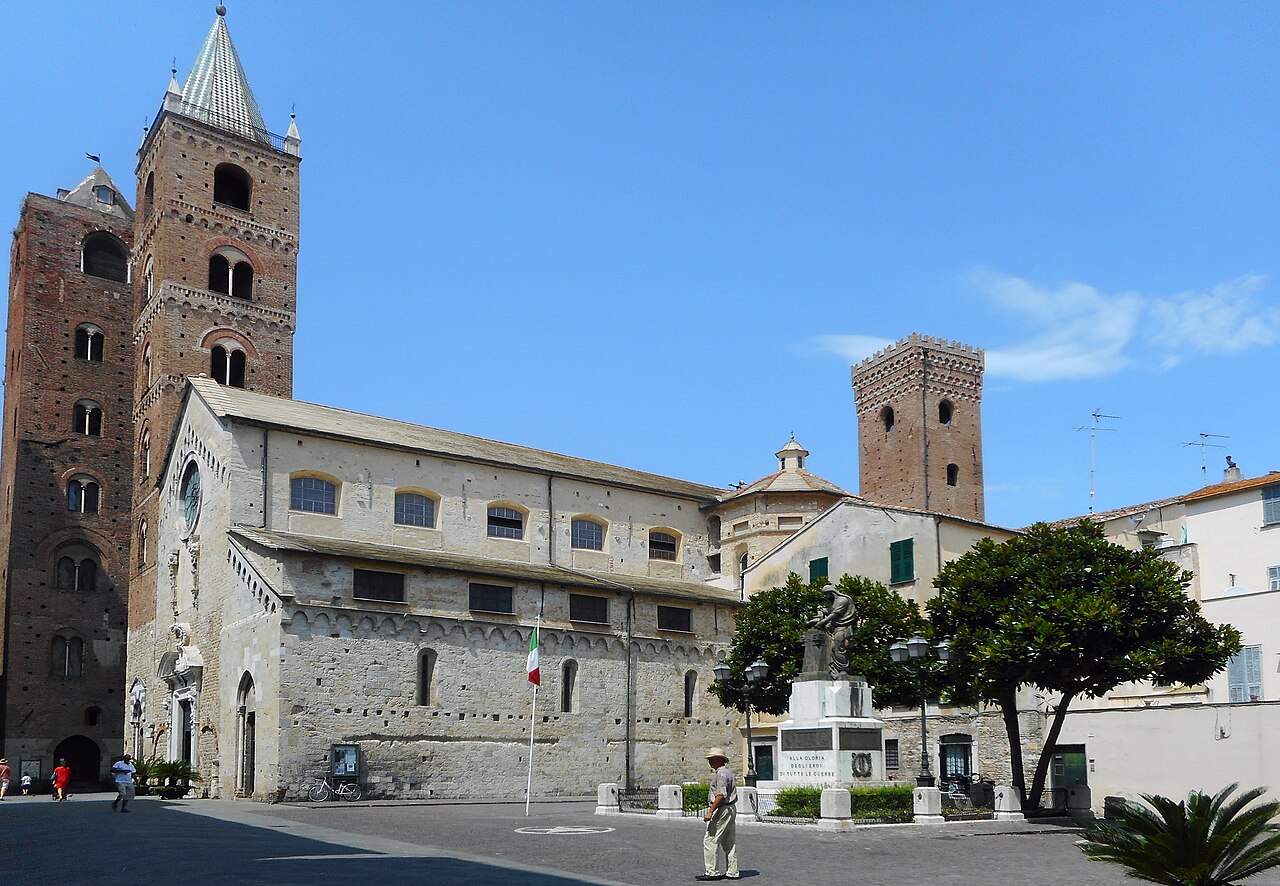
Albenga Cathedral
Albenga · Italy · church
The medieval cathedral of Albenga on Liguria's western coast, dedicated to Saint Michael the Archangel, its banded brick campanile rising over a nave first raised around 1100 on the foundations of a church from the turn of the fifth century.
 Christianity
Alexander Nevsky Cathedral
Sofia · Bulgaria · church
Sofia's golden-domed patriarchal cathedral, raised by the whole Bulgarian people as a memorial to the Russian, Bulgarian, Ukrainian, Moldavian, Finnish and Romanian soldiers who died in the 1877-1878 war that ended five centuries of Ottoman rule.
 Christianity
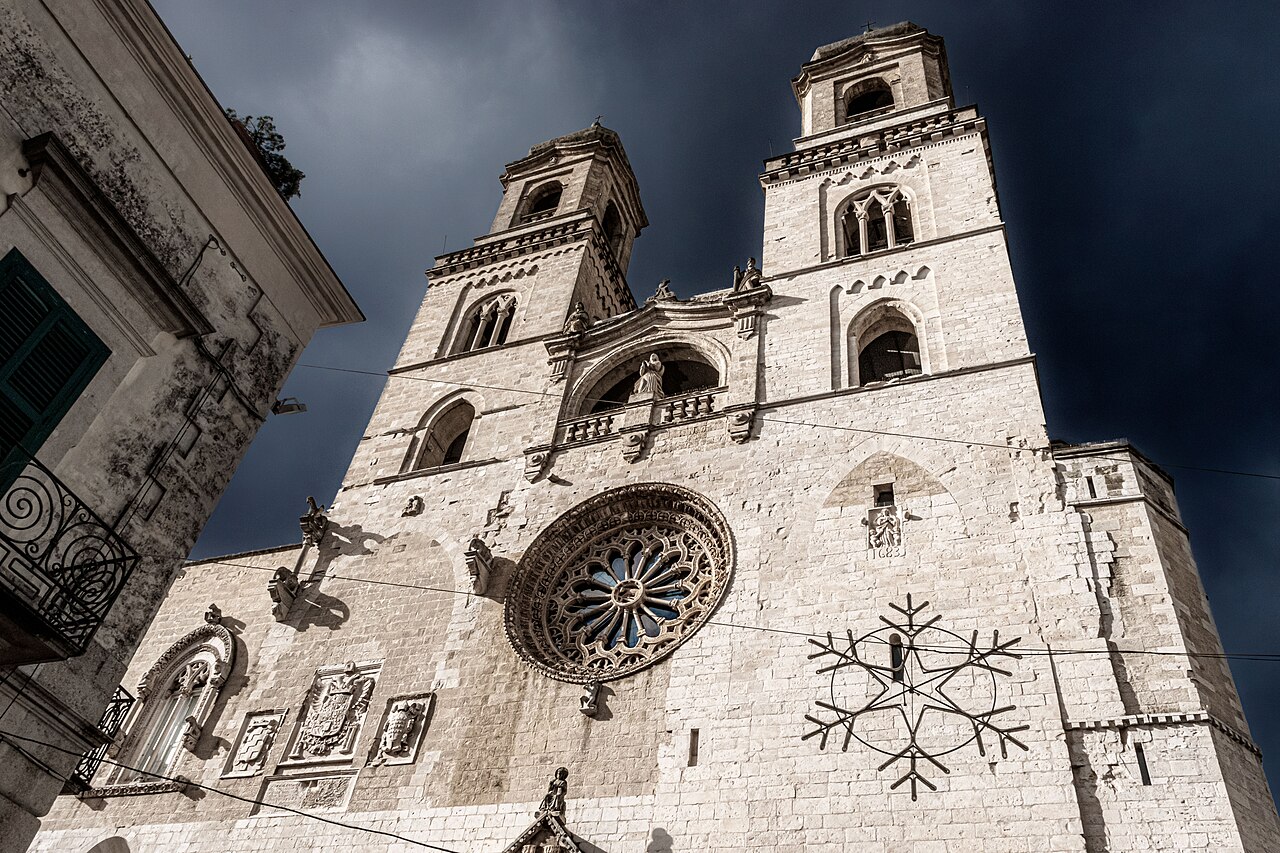
Altamura Cathedral
Altamura · Italy · church
A thirteenth-century 'palatine' cathedral in the Apulian hill town of Altamura, raised at the order of the Holy Roman Emperor Frederick II and dedicated to the Assumption of the Blessed Virgin Mary, its twin Gothic bell towers and carved rose window rising over the old town's main square.
 Christianity
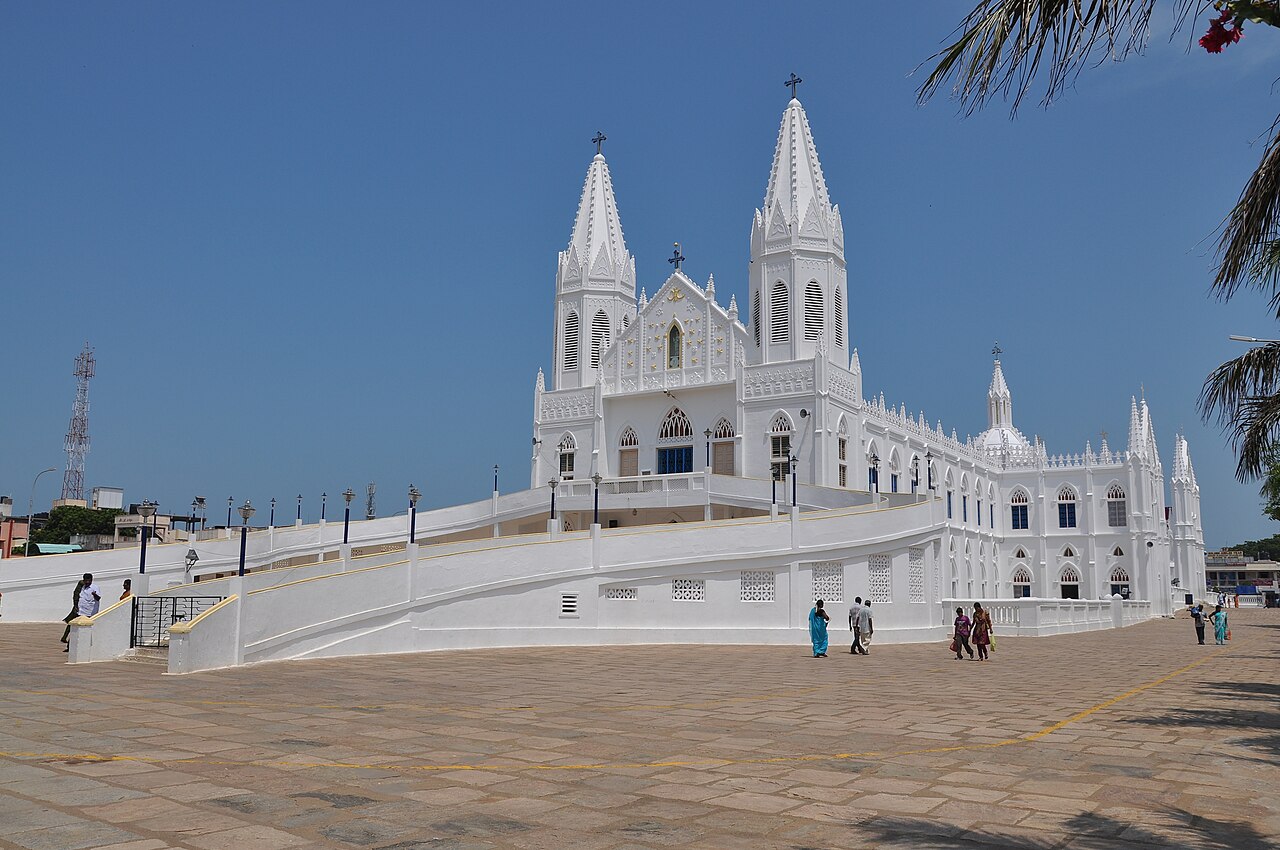
Basilica of Our Lady of Good Health
Velankanni · India · church
White Gothic Marian basilica on the Coromandel shore where Our Lady is held to have appeared to two Tamil boys in the 16th century. Called the Lourdes of the East, it draws millions of pilgrims, most of them Hindu and Muslim, to Annai Velankanni, the Mother of Good Health.
 Christianity
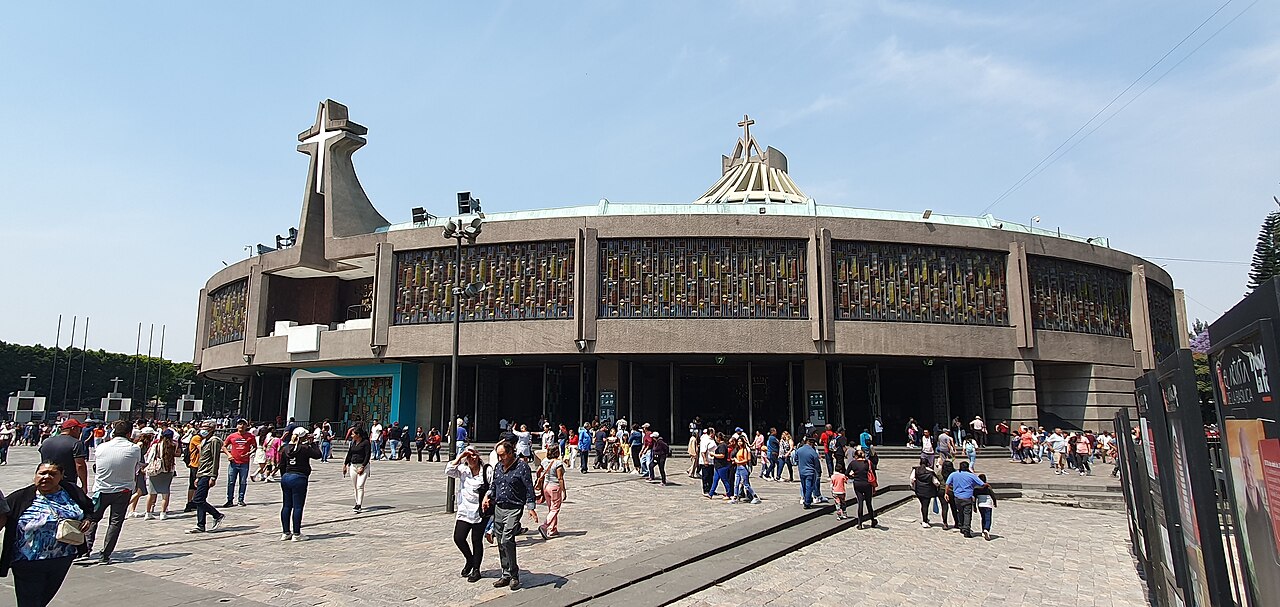
Basilica of Our Lady of Guadalupe
Mexico City · Mexico · church
The most visited Marian shrine in the world, built at the foot of Tepeyac hill where Our Lady appeared to St. Juan Diego in 1531; his tilma bearing her image hangs above the altar of the circular basilica of 1976.
 Christianity
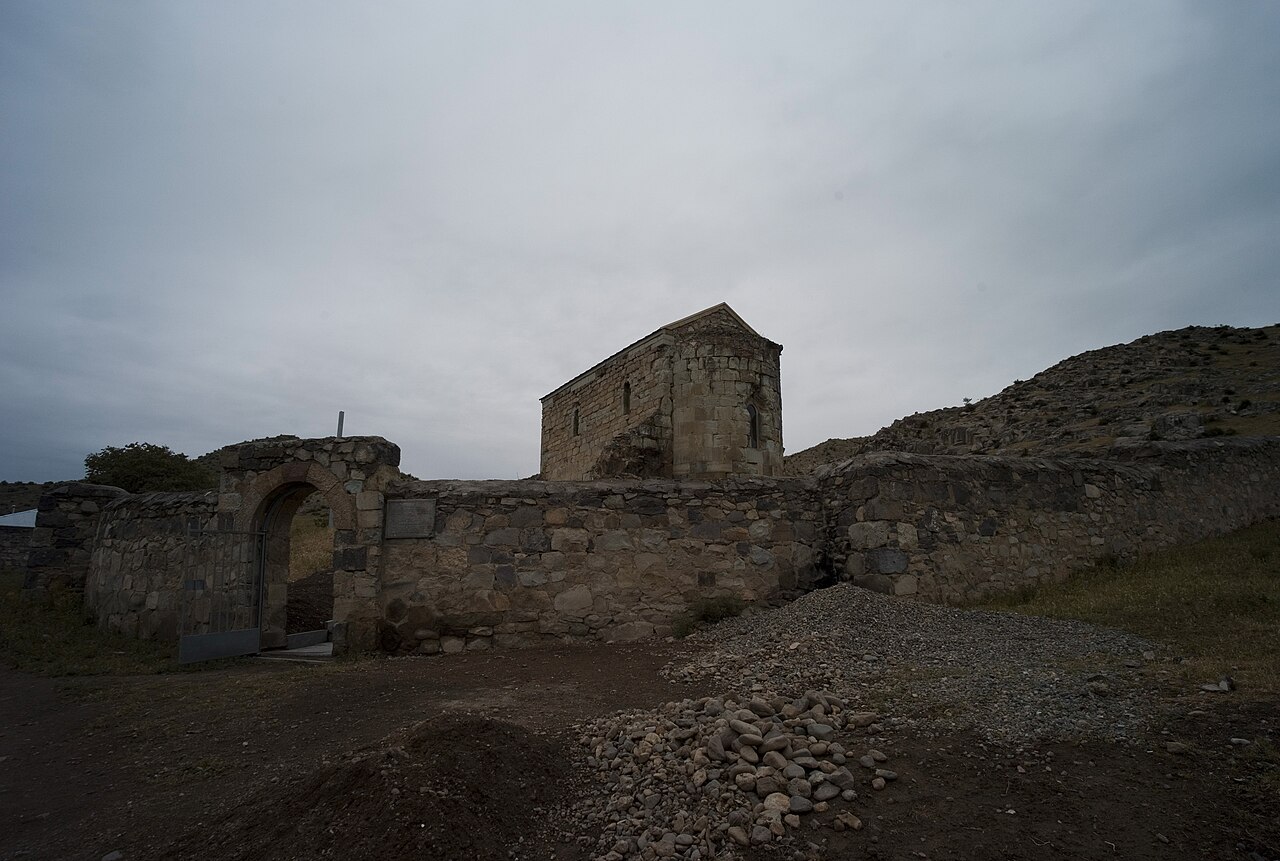
Bolnisi Sioni
· Georgia · church
A late-fifth-century Georgian Orthodox basilica in Bolnisi, the oldest surviving church building in Georgia, famed for its early Georgian-script inscriptions.
Page history · 1 recent change
- 17 Jul 2026 · visit checkin