Amrutesvara Temple
Amruteshvara Temple · Amrutheshwara Temple · Amriteshwara Temple
About
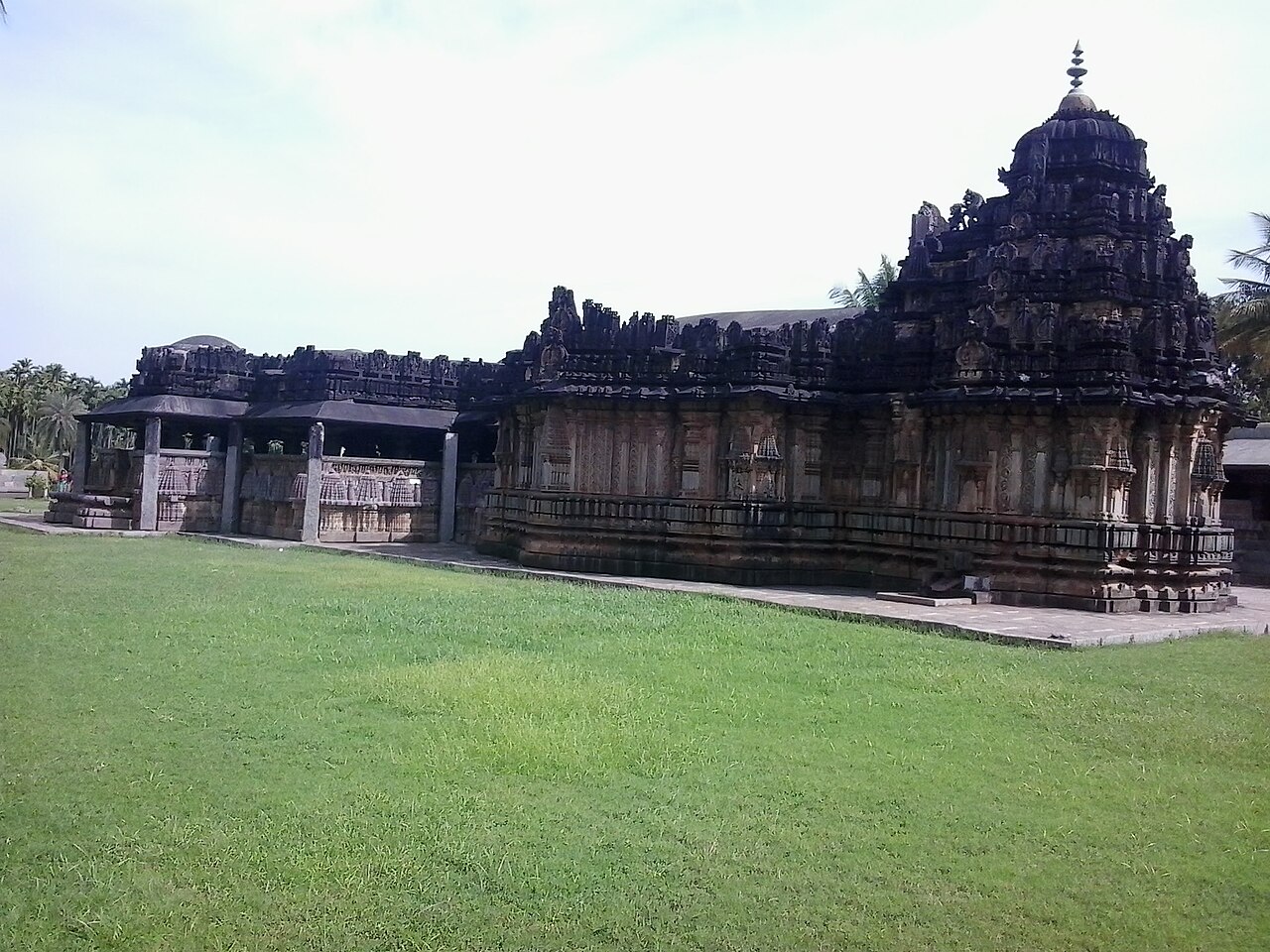
Rising quietly from the agrarian landscape of Chikkamagaluru district, the Amrutēśvara Temple stands as one of the more refined expressions of Hoysala craftsmanship in Karnataka. Dedicated to Lord Śiva in his form as Amrutēśvara, "lord of nectar", the shrine follows the ekakuṭa plan, meaning a single vimāna (sanctum and its crowning tower) joined by an enclosed vestibule to a spacious open maṇṭapa, or columned assembly hall.
The outer walls carry an encircling register of circular carvings spaced with notable regularity, giving the exterior a measured, almost meditative rhythm. Inside, rows of finely lathe-turned pillars, a hallmark of the Hoysala-Chalukya decorative vocabulary, support ceilings whose deep domed bays are adorned with elaborate floral compositions. The open maṇṭapa spreads across twenty-nine bays, while the closed inner hall counts nine, with a side porch offering entry to a secondary shrine on the southern flank.
The śikhara above the sanctum retains its original form, embellished with kīrtimukha (fierce guardian faces) and miniature aedicules. Notably, the panel of Hindu deities typically found below the superstructure is absent here. At the base of the outer wall, five horizontal mouldings mark what the art historian Foekema identifies as an earlier variant of Hoysala stylistic convention. The sukanāsi, the projecting tower crowning the vestibule, likened to a nose, carries the Hoysala dynastic emblem of the hero Sala confronting a lion.
History
Amrutheshwara Dandanayaka, a military commander serving the Hoysala king Veera Ballala II, commissioned the Temple in 1196 CE, and the village of Amruthapura grew up around it, taking its name from the Temple's presiding deity. A stone inscription near the entrance porch preserves verses by the medieval Kannada poet Janna, who carried the honorific Kavichakravarti, sovereign among poets, and the sculptor Ruvari Mallitamma is said to have begun his career working on the domed ceilings of the main hall. The Temple follows the Hoysala ekakuta plan, a single sanctum and tower joined through an enclosed vestibule to a large open pillared hall of twenty nine bays.
Significance
The Temple is valued among students of Hoysala architecture for the scope of its sculpture: one hundred and forty relief panels run around the open hall's outer parapet, with seventy panels on the south wall unfolding the Ramayana in an unusual anti-clockwise sequence, and the north wall carrying twenty five panels from the life of Lord Krishna and forty five more from the Mahabharata in the customary clockwise direction. Its outer wall is also known for a band of evenly spaced circular carvings, a treatment art historians read as an older variant of Hoysala style.
Architecture
Hoysala Temple architecture, ekakuta (single-shrine) plan with an open pillared mantapa of twenty nine bays
Visiting
Hours
Hours not listed.
Contact
No contact details listed yet.
Engage with Amrutesvara Temple
Through the four pathways
Seva सेवा — Service
Offer your time and skills here. The following opportunities are open at Amrutesvara Temple:
No Seva offerings listed yet.
Sādhana साधना — Practice
Learn the worship and practice associated with Amrutesvara Temple:
No Sādhana offerings listed yet.
Sandhāna सन्धान — Wisdom
Unite with the wisdom of this tradition:
No Sandhāna offerings listed yet.
Sādhya साध्य — Giving
Support this sacred place according to your means:
No Sādhya offerings listed yet.
All giving flows directly to Amrutesvara Temple. Adisthan does not take a commission.
Gallery
Related sacred places
 Hinduism
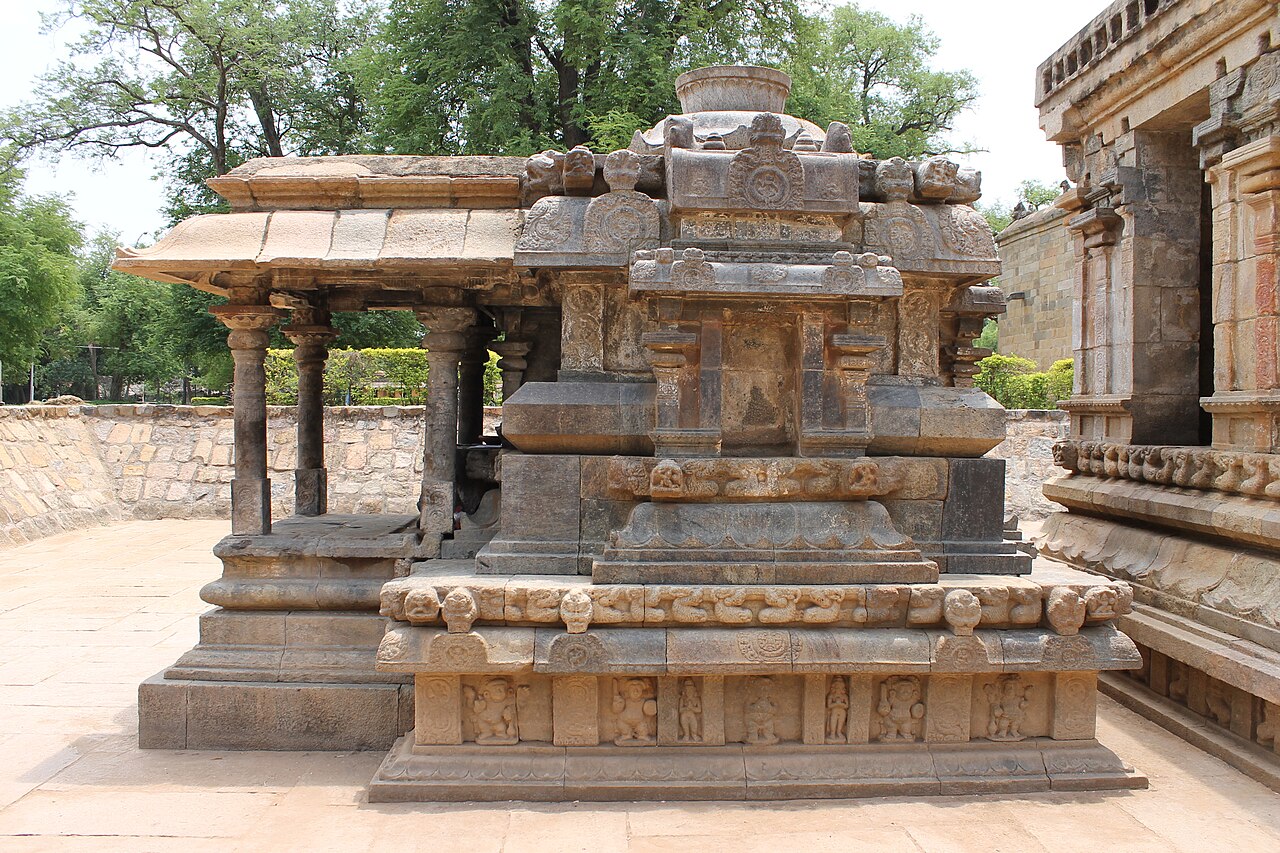
Airavatesvara Temple, Darasuram
Darasuram (Kumbakonam) · India · temple
The third of the Great Living Chola Temples, raised by Rajaraja Chola II around 1166 CE at Darasuram near Kumbakonam: a chariot-form shrine of Lord Shiva as Airavatesvara, famed for its carved stone wheels, its singing steps, and worship that has continued for over eight centuries.
Aisanyesvara Siva Temple
Bhubaneswar · India · temple
A living thirteenth-century Shiva shrine in the Old Town of Bhubaneswar, standing close to the western wall of the great Lingaraj Temple, where a Shivalinga set within a circular yonipitha still receives daily worship in the Kalinga architectural tradition.
 Hinduism
Akhadachandi Temple
Bhubaneswar · India · temple
A tenth-century Kalinga-style shrine on the southwestern bank of Bhubaneswar's sacred Bindusagar tank, Akhadachandi Temple honours Maa Mahishasuramardini, the Goddess in her form as slayer of the buffalo demon, within the dense cluster of ancient shrines that fills the city's Old Town.
 Hinduism
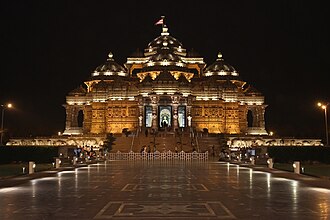
Akshardham
New Delhi · India · temple
A vast contemporary Hindu mandir campus on the Yamuna's west bank in East Delhi, raised without structural steel by 11,000 artisans and volunteers, and recognised by Guinness World Records in 2007 as the world's largest comprehensive Hindu Temple.
 Hinduism
Amarnath Temple
· India · temple
A high Himalayan cave shrine in Jammu and Kashmir where a naturally forming ice lingam is venerated as Lord Śiva, drawing one of India's great seasonal pilgrimages.
 Hinduism
Ambalappuzha Sri Krishna Temple
Ambalappuzha · India · temple
A Vaishnava shrine on the Kerala backwaters consecrated to Sri Krishna in his Parthasarathy form, counted among the seven great Temples of the former kingdom of Travancore and famed across South India for its Ambalapuzha Paal Payasam offering.