Ananthapura Lake Temple
Sri Ananthapadmanabha Swamy Temple · Sree Anantha Padmanabha Swamy Kshetram · Anantha Padmanabha Swamy Temple, Kumbla
About
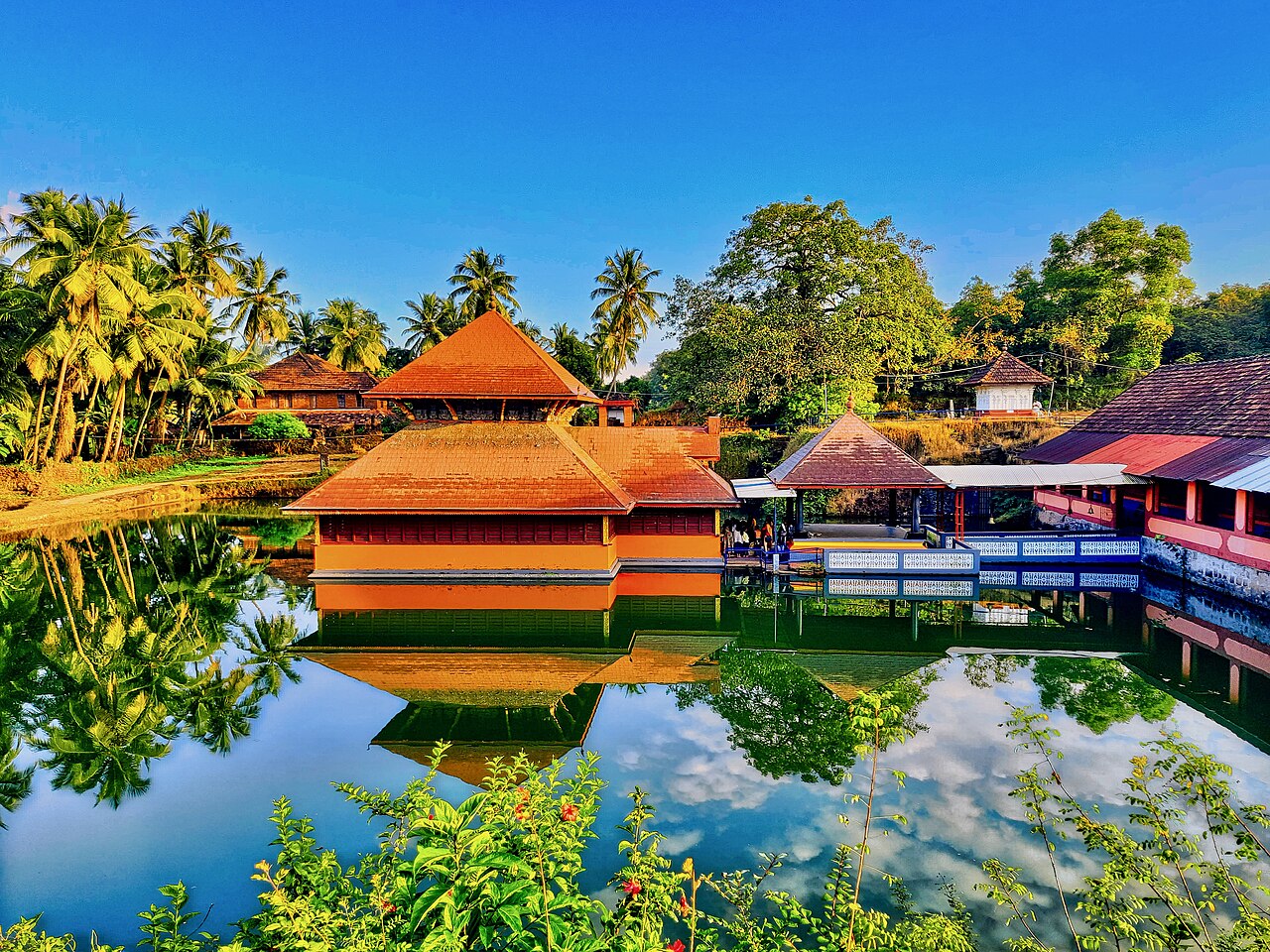
Nestled in Ananthapura village within Manjeshwaram taluk, the Sri Ananthapadmanabha Swamy Temple occupies an island position at the centre of a rectangular water tank, fed by perennial spring water, that devotees reverently call a lake. The sreekovil (sanctum sanctorum), the Namaskara-mandapam, the Thitappalli, a shrine to Jala-Maa Durga, and the entrance of an ancient cave all share this sacred enclosure, the mandapam connected to the surrounding eastern rock by a single foot-bridge that serves as the sole approach to the inner shrine.
The presiding deity is Lord Vishnu, depicted in a seated posture upon the five-hooded serpent king Anantha. What makes the original consecration particularly remarkable is that the earliest idols were crafted not from metal or stone but from a blend of over seventy medicinal substances known as kadu-sharkara-yogam. In 1972 these were replaced by panchaloha metal images donated by Kanchi Kamakoti Mathadhipathi Jayendra Saraswathi. Efforts have continued to recreate and reinstall the original kadu-sharkara-yogam forms.
The ceiling of the mandapam carries an exceptional programme of wood carvings, narrative panels drawn from the Dashavatara, the ten divine incarnations of Lord Vishnu, some of them enlivened with paint. The Nava-grahas, the nine planetary deities, are rendered in the Muktha-mandapam, while the dvara-palakas Jaya and Vijaya stand guard on either side of the sanctum, beautifully worked in timber. Ruins of subsidiary shrines visible around the lake's perimeter hint at a once-extensive Temple complex of considerable scale. The Temple warmly receives visitors of every background, with no restriction by caste or creed.
History
Tradition holds that the sage Divakara Muni Vilwamangalam was performing penance here when Lord Vishnu appeared before him as a luminous, mischievous child, who later vanished into the forest of Anantha and was found transformed into the reclining form of the deity upon the serpent king Anantha. A cave at the lake's northern edge is remembered locally as the passage the deity took onward to Thiruvananthapuram, which is why the two Temples share a kindred name. The shrine's own construction date is not fixed by inscription; Kerala Tourism's official account places it in the ninth century CE, with renovations continuing across the centuries since.
Significance
Many Vaishnava lineages regard Ananthapura as the Moolasthanam, the primordial seat, of Ananthapadmanabha, counting it among the 108 Abhimana Kshetrams of the tradition. Its sanctum, reached only by a single footbridge across the lake, stands unlike any other Temple in Kerala. For some seventy five years the Temple's waters were also home to Babiya, a gentle crocodile that ate only the prasad devotees offered and never harmed a soul, a presence still spoken of here with quiet wonder since her passing in 2022.
Architecture
Traditional Kerala Temple architecture: a steeply pitched, multi-tiered tiled sanctuary roof rising from an island within a rectangular spring-fed tank, approached by a single footbridge.
Visiting
Daily worship
| Morning darshan | 05:30 to 12:30 | |
| Evening darshan | 17:30 to 19:30 |
Hours
Hours not listed.
Contact
Address
Engage with Ananthapura Lake Temple
Through the four pathways
Seva सेवा — Service
Offer your time and skills here. The following opportunities are open at Ananthapura Lake Temple:
No Seva offerings listed yet.
Sādhana साधना — Practice
Learn the worship and practice associated with Ananthapura Lake Temple:
No Sādhana offerings listed yet.
Sandhāna सन्धान — Wisdom
Unite with the wisdom of this tradition:
No Sandhāna offerings listed yet.
Sādhya साध्य — Giving
Support this sacred place according to your means:
No Sādhya offerings listed yet.
All giving flows directly to Ananthapura Lake Temple. Adisthan does not take a commission.
Gallery
Related sacred places
 Hinduism
Airavatesvara Temple, Darasuram
Darasuram (Kumbakonam) · India · temple
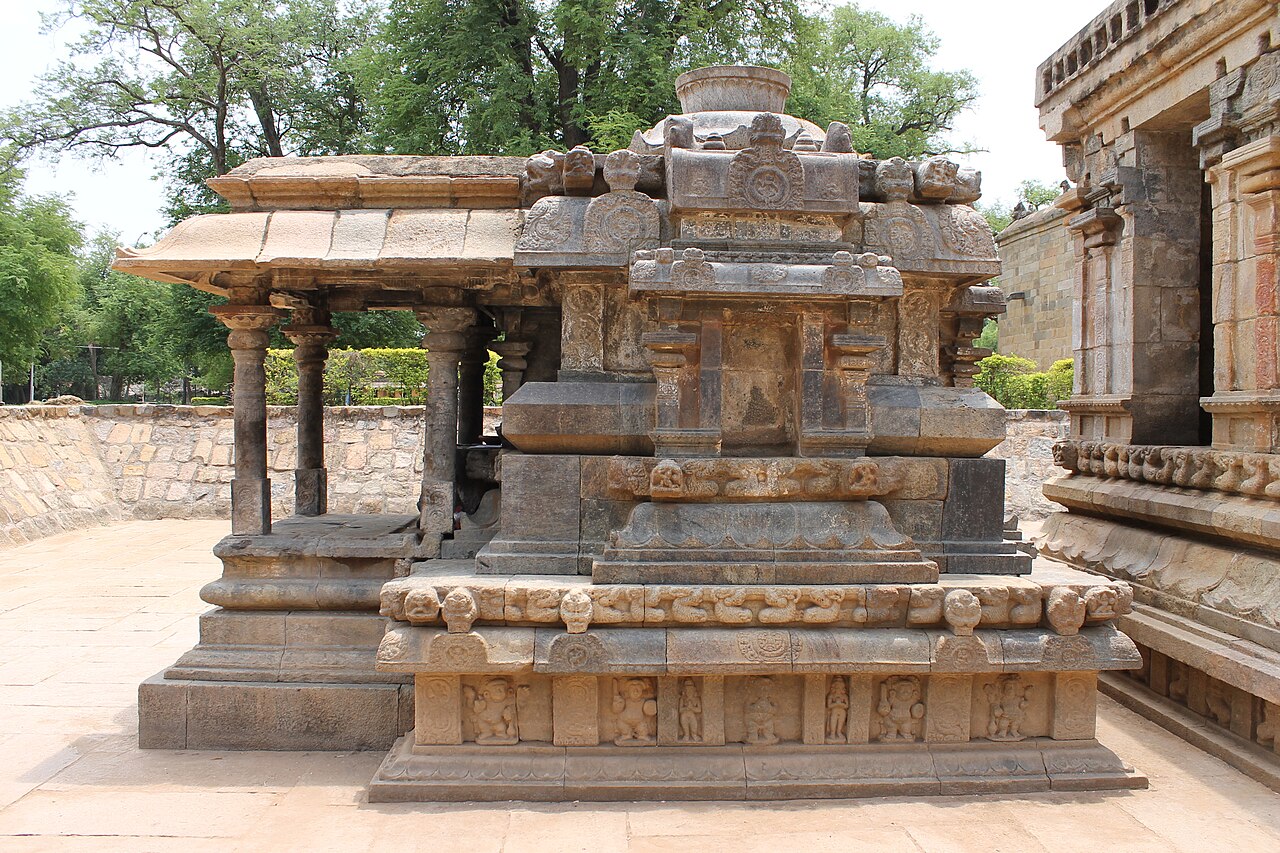
The third of the Great Living Chola Temples, raised by Rajaraja Chola II around 1166 CE at Darasuram near Kumbakonam: a chariot-form shrine of Lord Shiva as Airavatesvara, famed for its carved stone wheels, its singing steps, and worship that has continued for over eight centuries.
Aisanyesvara Siva Temple
Bhubaneswar · India · temple
A living thirteenth-century Shiva shrine in the Old Town of Bhubaneswar, standing close to the western wall of the great Lingaraj Temple, where a Shivalinga set within a circular yonipitha still receives daily worship in the Kalinga architectural tradition.
 Hinduism
Akhadachandi Temple
Bhubaneswar · India · temple
A tenth-century Kalinga-style shrine on the southwestern bank of Bhubaneswar's sacred Bindusagar tank, Akhadachandi Temple honours Maa Mahishasuramardini, the Goddess in her form as slayer of the buffalo demon, within the dense cluster of ancient shrines that fills the city's Old Town.
 Hinduism
Akshardham
New Delhi · India · temple
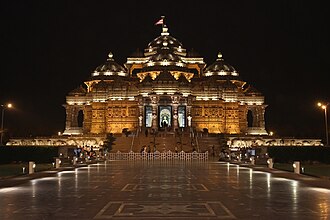
A vast contemporary Hindu mandir campus on the Yamuna's west bank in East Delhi, raised without structural steel by 11,000 artisans and volunteers, and recognised by Guinness World Records in 2007 as the world's largest comprehensive Hindu Temple.
 Hinduism
Amarnath Temple
· India · temple
A high Himalayan cave shrine in Jammu and Kashmir where a naturally forming ice lingam is venerated as Lord Śiva, drawing one of India's great seasonal pilgrimages.
 Hinduism
Ambalappuzha Sri Krishna Temple
Ambalappuzha · India · temple
A Vaishnava shrine on the Kerala backwaters consecrated to Sri Krishna in his Parthasarathy form, counted among the seven great Temples of the former kingdom of Travancore and famed across South India for its Ambalapuzha Paal Payasam offering.