
Avantiswamin Temple
Avantisvamin Temple · Avanti Swami Temple · Pandav Lari
About
Where the Jhelum winds through the Kashmir Valley near the town of Awantipora, the weathered stones of the Avanti Swami Temple complex rise from the earth as quiet witnesses to a golden era of Kashmiri royal patronage. What was once a pair of grand sanctuaries now survives as an evocative ruin, its colonnaded courtyards and carved remnants preserved under the stewardship of the Archaeological Survey of India.
The complex originally housed two distinct shrines placed in close proximity: one consecrated to Lord Shiva and the other to Lord Vishnu, together reflecting the broad devotional vision of its royal founder. This dual dedication, honoring both the great Shaiva and Vaishnava streams of Hindu worship, speaks to a tradition of religious inclusivity that characterized the Utpala court.
Local inhabitants have long known the site by the affectionate name Pandav Lari, a phrase that translates as "house of the Pāṇḍavas," weaving the ruins into the living fabric of Mahābhārata lore. Even in their incomplete state, the remaining structures convey something of the architectural ambition that once gave this valley its sacred skyline, a place where stone was shaped into devotion and a king's faith was made visible for generations to come.
History
Official signage from the Archaeological Survey of India's Srinagar Circle records that the Avantiswamin Temple was built by King Avantivarman during his reign, 855 to 883 CE, its shrine set on a two-tiered base at the centre of a paved courtyard enclosed by a colonnaded peristyle, the entrance on the west wall reached by a flight of steps. Some scholarly accounts instead place the Vishnu Temple's construction slightly earlier, before Avantivarman's formal accession to the Utpala throne, distinguishing it from the neighbouring Avantishvara Temple, a separate Shiva shrine roughly half a kilometre away that was built during his established reign. Both Temples were reduced to ruin in the medieval period and excavated by archaeologist Daya Ram Sahni in the early twentieth century, after which the Archaeological Survey of India took the site under formal protection.
Significance
The carved entrance walls and stair pilasters, ornamented both internally and externally, and the four subsidiary shrines set at the courtyard's corners, mark this as one of the most architecturally ambitious Vaishnava monuments Kashmir produced under Utpala patronage. Tradition holds that an image of Vaikuntha Vishnu, the four-faced form of the god especially revered in Kashmiri Vaishnavism, once stood as the Temple's frontispiece. Local memory calls the wider Awantipora ruins Pandav Lari, house of the Pandavas, weaving the site into the Mahabharata's living lore even as its stones now stand open to the sky.
Architecture
Kashmiri Utpala-era Hindu Temple architecture: a two-tiered central shrine within a colonnaded peristyle courtyard, four subsidiary shrines at the corners, sculpted entrance reliefs
Visiting
Hours
Hours not listed.
Contact
No contact details listed yet.
Address
Engage with Avantiswamin Temple
Through the four pathways
Seva सेवा — Service
Offer your time and skills here. The following opportunities are open at Avantiswamin Temple:
No Seva offerings listed yet.
Sādhana साधना — Practice
Learn the worship and practice associated with Avantiswamin Temple:
No Sādhana offerings listed yet.
Sandhāna सन्धान — Wisdom
Unite with the wisdom of this tradition:
No Sandhāna offerings listed yet.
Sādhya साध्य — Giving
Support this sacred place according to your means:
No Sādhya offerings listed yet.
All giving flows directly to Avantiswamin Temple. Adisthan does not take a commission.
Gallery
Related sacred places
 Hinduism
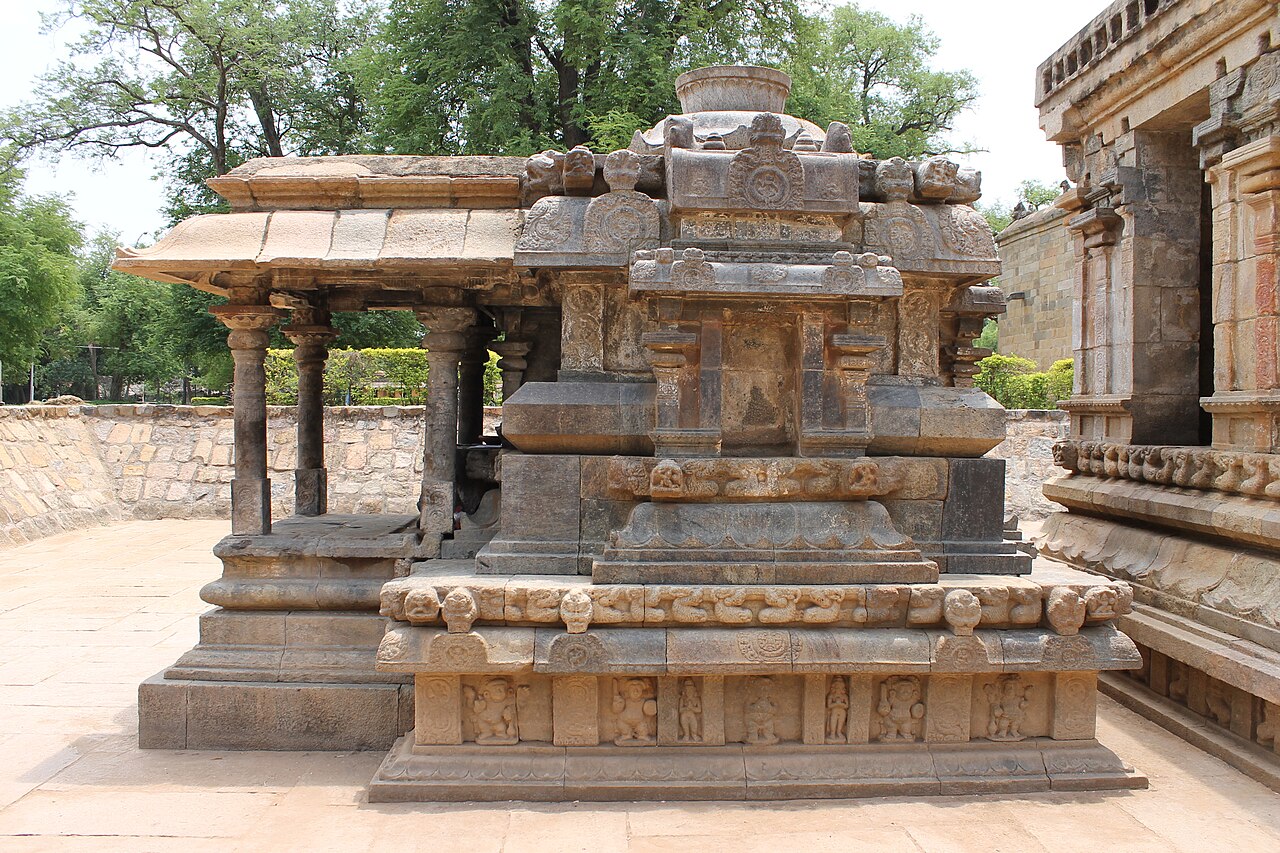
Airavatesvara Temple, Darasuram
Darasuram (Kumbakonam) · India · temple
The third of the Great Living Chola Temples, raised by Rajaraja Chola II around 1166 CE at Darasuram near Kumbakonam: a chariot-form shrine of Lord Shiva as Airavatesvara, famed for its carved stone wheels, its singing steps, and worship that has continued for over eight centuries.
Aisanyesvara Siva Temple
Bhubaneswar · India · temple
A living thirteenth-century Shiva shrine in the Old Town of Bhubaneswar, standing close to the western wall of the great Lingaraj Temple, where a Shivalinga set within a circular yonipitha still receives daily worship in the Kalinga architectural tradition.
 Hinduism
Akhadachandi Temple
Bhubaneswar · India · temple
A tenth-century Kalinga-style shrine on the southwestern bank of Bhubaneswar's sacred Bindusagar tank, Akhadachandi Temple honours Maa Mahishasuramardini, the Goddess in her form as slayer of the buffalo demon, within the dense cluster of ancient shrines that fills the city's Old Town.
 Hinduism
Akshardham
New Delhi · India · temple
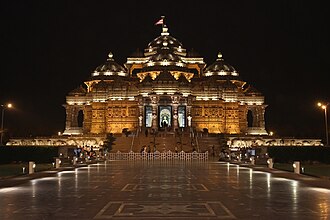
A vast contemporary Hindu mandir campus on the Yamuna's west bank in East Delhi, raised without structural steel by 11,000 artisans and volunteers, and recognised by Guinness World Records in 2007 as the world's largest comprehensive Hindu Temple.
 Hinduism
Amarnath Temple
· India · temple
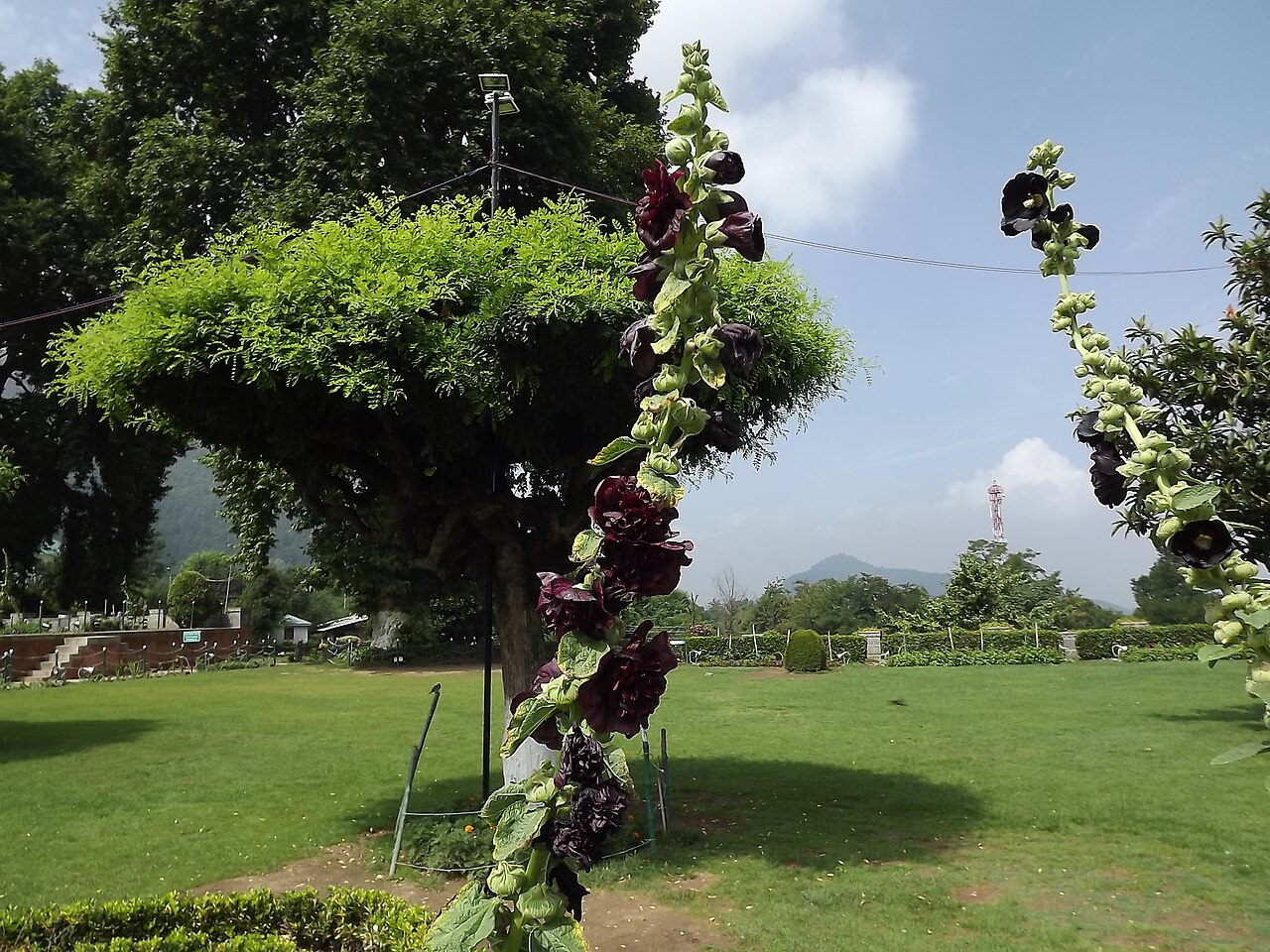
A high Himalayan cave shrine in Jammu and Kashmir where a naturally forming ice lingam is venerated as Lord Śiva, drawing one of India's great seasonal pilgrimages.
 Hinduism
Ambalappuzha Sri Krishna Temple
Ambalappuzha · India · temple
A Vaishnava shrine on the Kerala backwaters consecrated to Sri Krishna in his Parthasarathy form, counted among the seven great Temples of the former kingdom of Travancore and famed across South India for its Ambalapuzha Paal Payasam offering.