
Badami Cave Temples
Badami Caves · Vatapi Cave Temples
About
Set into the soft red sandstone cliffs above an ancient man-made lake at Badami, in the Bagalkot district of northern Karnataka, these rock-cut Temples are among the foundational monuments of Indian Temple architecture. They were carved out of the living rock from the late sixth century onward, when the surrounding town, then known as Vātāpi, served as the capital of the Early Chalukya dynasty.
Four principal caves face south-east into the escarpment. Cave 1 is largely dedicated to Śiva and is celebrated for a sweeping relief of Naṭarāja, the cosmic dancer. Cave 2 is mainly Vaiṣṇavite, with imagery of Harihara, Ardhanārī, Mahiṣamardinī, Gaṇeśa and Skanda, along with a striking depiction of Vishnu as Trivikrama. Cave 3, the largest and most ornate, is again devoted to Vishnu, showing him as Ananta seated on the coiled serpent, Varāha with Bhūdevī, Narasimha, Trivikrama, and the Virāṭ form. Cave 4 is given over to revered figures of Jainism, while a further cave by the lake is thought to be Buddhist, and another nearby gallery known as Arali Tīrtha holds around twenty-seven additional carvings.
Together with the Temples at neighbouring Aihole and Pattadakal, the Badami caves helped turn the Malaprabha River valley into a cradle of South Indian Temple architecture whose influence reached far beyond the Deccan.
History
Badami, once known as Vatapi, served as the capital of the Early Chalukya dynasty from the sixth century CE, and its rulers carved four principal sanctuaries into the sandstone escarpment above the town's man-made lake. Cave 3, dedicated to Lord Vishnu, carries its own dedicatory inscription recording consecration by the Chalukya ruler Mangalesha in Saka 500, corresponding to 578 CE, on a full moon day now reckoned as 1 November, which makes it the earliest firmly dated Hindu cave Temple in India. Cave 1 and Cave 2 followed in the late sixth and early seventh centuries, dedicated chiefly to Lord Shiva and Lord Vishnu, while Cave 4 was carved somewhat later for the Digambara Jain community and dedicated to the Tirthankaras. A smaller cave by the lakeside is thought by some scholars to have held a Buddhist image, though its identity is still debated among historians.
Significance
Together with the Temples at nearby Aihole and Pattadakal, Badami's caves helped turn the Malaprabha river valley into a cradle of Indian Temple architecture, and Cave 3 in particular blends the northern Nagara and southern Dravida idioms within a single hillside, an early witness to the transitional Vesara style that later spread across the Deccan. The site is protected by the Archaeological Survey of India as a Monument of National Importance and sits on India's UNESCO tentative list under the title Evolution of Temple Architecture, Aihole-Badami-Pattadakal, fourteen miles from Pattadakal's own fully inscribed World Heritage Temples. Its four caves, three Hindu and one Jain, together with a further probable Buddhist cave nearby, bear quiet witness to the religious plurality the Chalukya rulers chose to patronise.
Architecture
Badami Chalukya rock-cut architecture, combining the northern Nagara and southern Dravida idioms (Cave 3 shows both, plus early Vesara-style fusion elements)
Visiting
Hours
Hours not listed.
Contact
No contact details listed yet.
Engage with Badami Cave Temples
Through the four pathways
Seva सेवा — Service
Offer your time and skills here. The following opportunities are open at Badami Cave Temples:
No Seva offerings listed yet.
Sādhana साधना — Practice
Learn the worship and practice associated with Badami Cave Temples:
No Sādhana offerings listed yet.
Sandhāna सन्धान — Wisdom
Unite with the wisdom of this tradition:
No Sandhāna offerings listed yet.
Sādhya साध्य — Giving
Support this sacred place according to your means:
No Sādhya offerings listed yet.
All giving flows directly to Badami Cave Temples. Adisthan does not take a commission.
Gallery
Related sacred places
 Hinduism
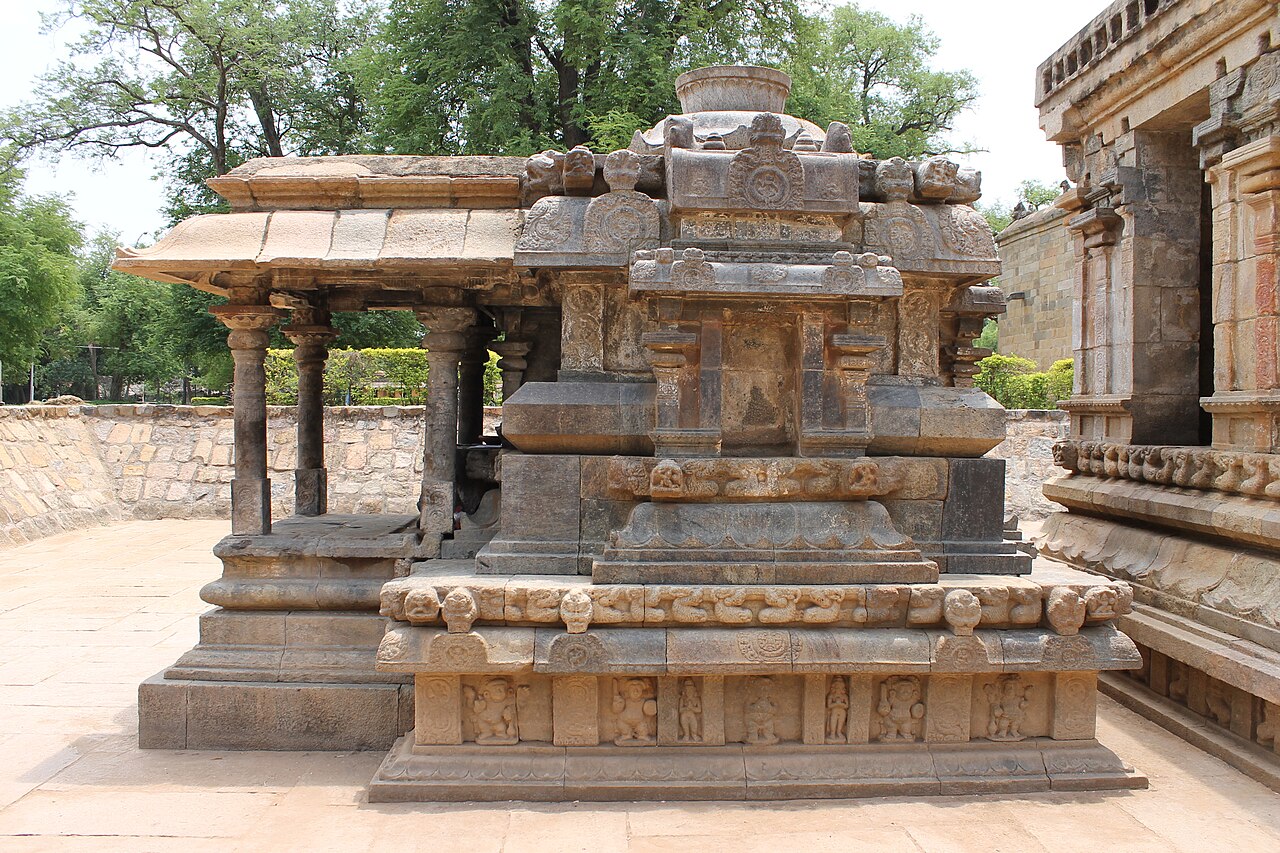
Airavatesvara Temple, Darasuram
Darasuram (Kumbakonam) · India · temple
The third of the Great Living Chola Temples, raised by Rajaraja Chola II around 1166 CE at Darasuram near Kumbakonam: a chariot-form shrine of Lord Shiva as Airavatesvara, famed for its carved stone wheels, its singing steps, and worship that has continued for over eight centuries.
Aisanyesvara Siva Temple
Bhubaneswar · India · temple
A living thirteenth-century Shiva shrine in the Old Town of Bhubaneswar, standing close to the western wall of the great Lingaraj Temple, where a Shivalinga set within a circular yonipitha still receives daily worship in the Kalinga architectural tradition.
 Hinduism
Akhadachandi Temple
Bhubaneswar · India · temple
A tenth-century Kalinga-style shrine on the southwestern bank of Bhubaneswar's sacred Bindusagar tank, Akhadachandi Temple honours Maa Mahishasuramardini, the Goddess in her form as slayer of the buffalo demon, within the dense cluster of ancient shrines that fills the city's Old Town.
 Hinduism
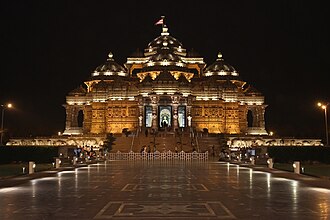
Akshardham
New Delhi · India · temple
A vast contemporary Hindu mandir campus on the Yamuna's west bank in East Delhi, raised without structural steel by 11,000 artisans and volunteers, and recognised by Guinness World Records in 2007 as the world's largest comprehensive Hindu Temple.
 Hinduism
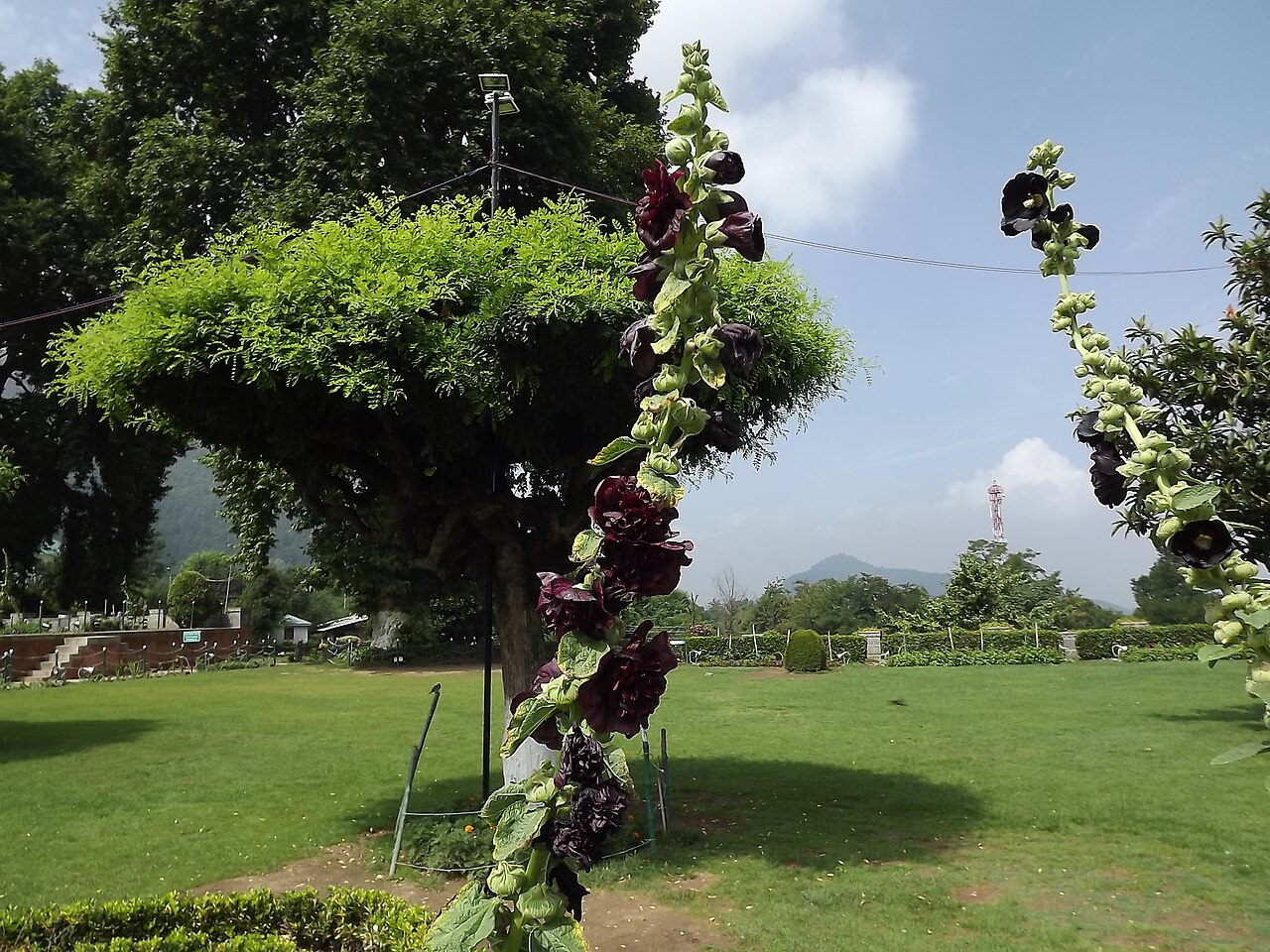
Amarnath Temple
· India · temple
A high Himalayan cave shrine in Jammu and Kashmir where a naturally forming ice lingam is venerated as Lord Śiva, drawing one of India's great seasonal pilgrimages.
 Hinduism
Ambalappuzha Sri Krishna Temple
Ambalappuzha · India · temple
A Vaishnava shrine on the Kerala backwaters consecrated to Sri Krishna in his Parthasarathy form, counted among the seven great Temples of the former kingdom of Travancore and famed across South India for its Ambalapuzha Paal Payasam offering.