Bahá'í House of Worship for the North American Continent
Mashriqu'l-Adhkár · Bahá'í Temple · Wilmette Bahá'í Temple · Chicago Bahá'í Temple
About
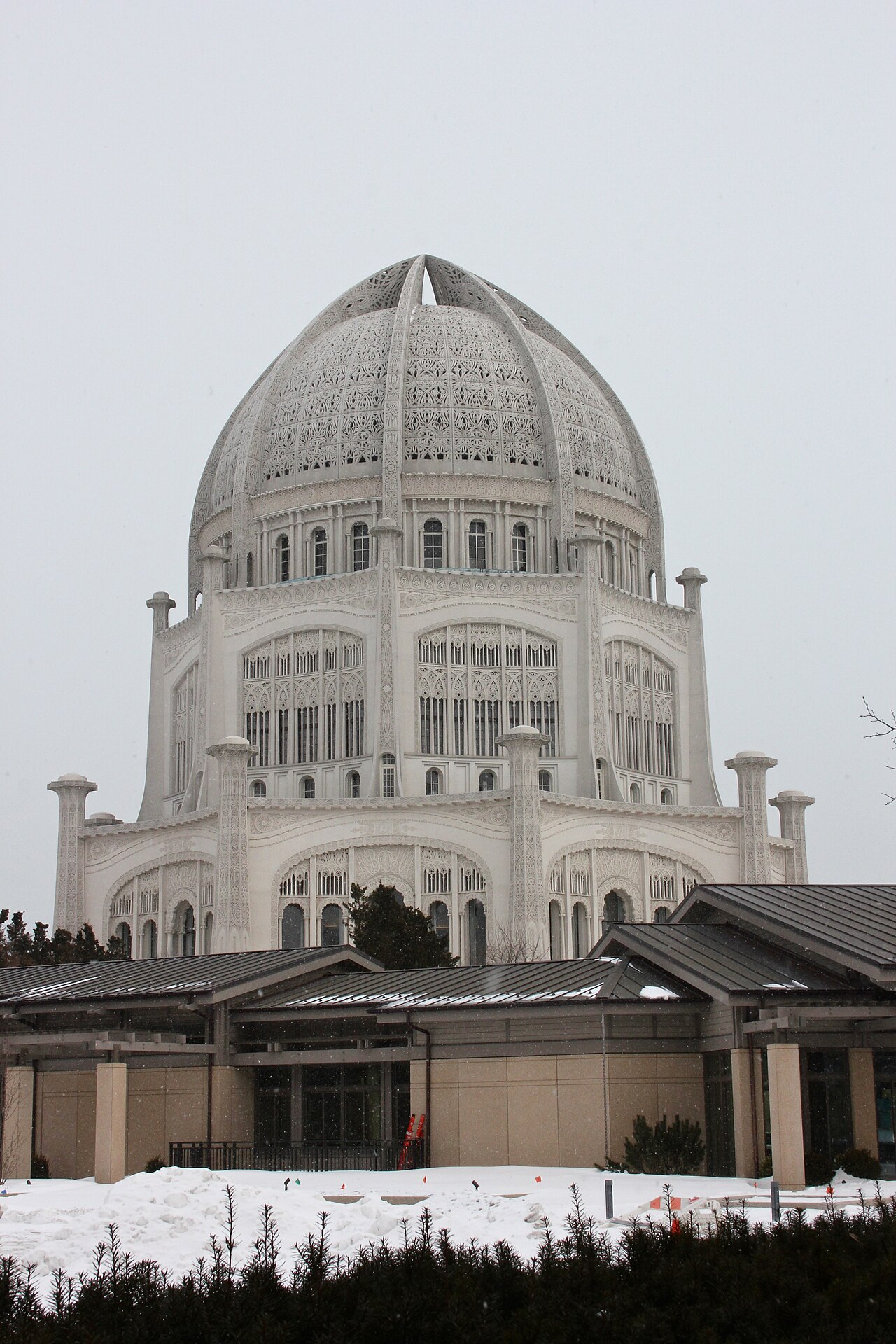
The Bahá'í House of Worship in Wilmette, Illinois speaks quietly and eloquently of the Bahá'í conviction that humanity's many faiths share a single divine source. Its architect, Louis Bourgeois, born in French Canada in 1856, spent years shaping a design that braids together motifs drawn from traditions across the world. Carved into the ornate concrete pillars, one finds the cross of Christianity, Judaism's Star of David, the Islamic crescent and star, and the swastika as it appears in Hindu and Buddhist sacred art. A nine-pointed star crowns each pillar, signaling the Bahá'í Faith itself.
The number nine pervades the building's geometry. In Bahá'í understanding, nine, the final digit before numbers cycle back, carries a sense of completion and perfection; it also corresponds numerically, in the Abjad system, to Bahá, the Arabic word for glory. So the auditorium receives worshippers through nine entrances, the dome is articulated into nine sections, and nine alcoves line the interior walls. Overhead, the dome soars 138 feet from floor to ceiling, its interior measuring 72 feet across. Below it, 1,191 seats are arranged in a space designed less for congregational ownership than for universal welcome.
The cladding that gives the building its luminous, lace-like surface is a specialized casting of Portland cement blended with two distinct varieties of quartz. Words of Baháʼu'lláh, the religion's founder, are set into the material above each entrance and within the alcoves. Nine fountains and gardens spread across nearly seven acres around the structure, extending its geometry outward to the landscape.
Bahá'í Temples are not envisioned as the property of any single congregation. They are devotional sanctuaries for all who come, regardless of the tradition from which they arrive, and the Wilmette Temple has welcomed visitors of every background since its dedication.
History
Chicago Bahá'ís first discussed building a House of Worship in 1903, and 'Abdu'l-Bahá, then head of the Bahá'í Faith, laid a symbolic cornerstone during his visit to Wilmette in 1912. Construction under architect Louis Bourgeois's design began in earnest in the 1920s but stalled repeatedly through funding shortages, the Great Depression, and the Second World War. The exterior cladding was finished in January 1943 and the interior detailing completed after the war, and the Temple was formally dedicated on 2 May 1953 before more than 3,500 people, among them 91-year-old Corinne True, who had championed the project from its earliest days.
Significance
As the second Bahá'í House of Worship ever built and the oldest surviving example, the Wilmette Temple occupies a founding place in the faith's architecture, its pillars carved with the cross, the Star of David, the crescent and star, and other sacred symbols as a literal expression of the Bahá'í teaching that all religions share one divine source. It was added to the National Register of Historic Places in 1978 and is recognized by the Illinois Office of Tourism as one of the Seven Wonders of Illinois.
Architecture
Bahá'í Temple architecture by Louis Bourgeois uniting decorative motifs from many of the world's religions, cast in concrete cladding of Portland cement and quartz over a nine-sided domed plan
Visiting
Daily worship
| Daily devotional program | 12:30 pm to 12:45 pm | |
| Daily devotional program | 5:30 pm to 5:45 pm | |
| Extended Sunday devotional program, with discussion following | 12:30 pm to 1:00 pm |
Hours
Hours not listed.
Contact
Engage with Bahá'í House of Worship for the North American Continent
Through the four pathways
Seva सेवा — Service
Offer your time and skills here. The following opportunities are open at Bahá'í House of Worship for the North American Continent:
No Seva offerings listed yet.
Sādhana साधना — Practice
Learn the worship and practice associated with Bahá'í House of Worship for the North American Continent:
No Sādhana offerings listed yet.
Sandhāna सन्धान — Wisdom
Unite with the wisdom of this tradition:
No Sandhāna offerings listed yet.
Sādhya साध्य — Giving
Support this sacred place according to your means:
No Sādhya offerings listed yet.
All giving flows directly to Bahá'í House of Worship for the North American Continent. Adisthan does not take a commission.
Festivals & Events
- Nov
The Twin Holy Birthdays
10 November 2026 · annual
The linked birth anniversaries of the Báb and Bahá'u'lláh, the Faith's two Founders, observed on consecutive days with devotional gatherings.
- Mar
Naw-Rúz
21 March 2027 · annual
The Bahá'í New Year, fixed to the spring equinox and observed by Bahá'ís everywhere, including at the House of Worship, with prayers and gathering to mark the turning of the year.
- Apr
Ridván
21 April 2027 · annual
The 'Most Great Festival,' commemorating Bahá'u'lláh's declaration of His mission in a garden outside Baghdad; its first day is the most joyous of the Bahá'í Holy Days.
Gallery
Related sacred places
 Baháʼí
Bahá'í House of Worship for the South American Continent
Santiago · Chile · temple
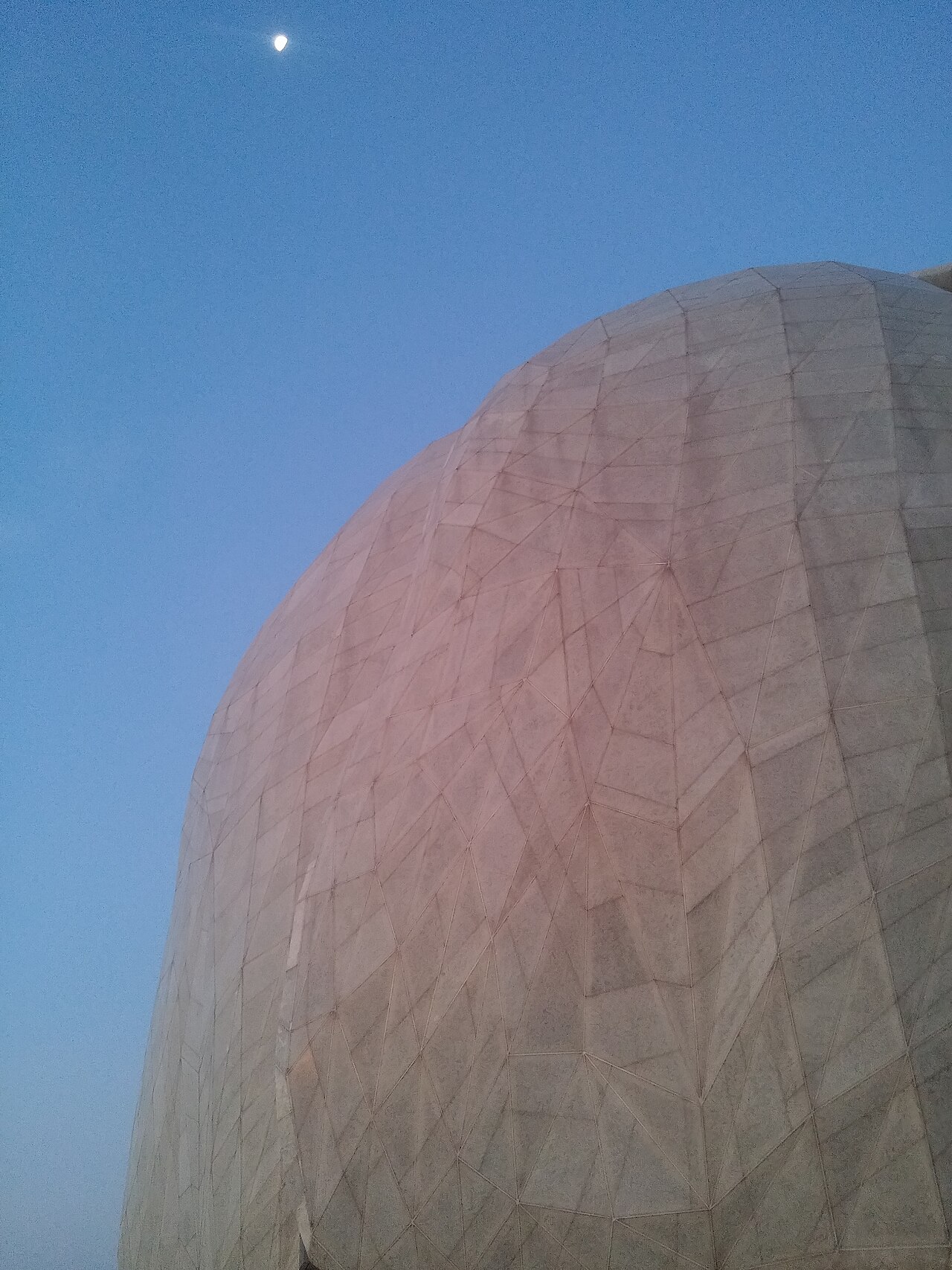
Rising above Peñalolén on the eastern edge of Santiago, Chile, the Bahá'í House of Worship for South America gathers nine curving petals of translucent cast glass, pale as alabaster, around a marble-lined sanctuary. Dedicated in 2016, it is the last of the faith's eight continental Temples, and it stands open to people of every tradition.
 Baháʼí
Lotus Temple (Bahá'í House of Worship)
New Delhi · India · other
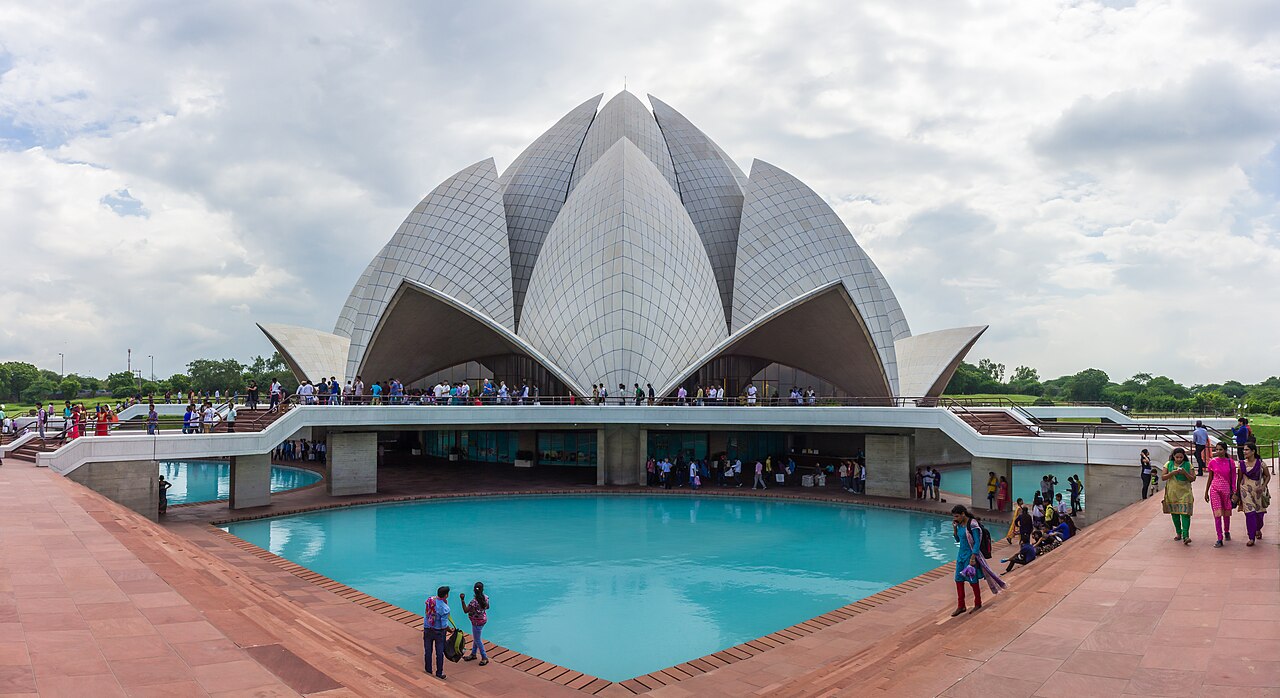
A Bahá'í House of Worship of 27 white marble petals forming nine sides, its nine doors open free to people of every religion to pray and meditate in silence.
 Baháʼí
Sydney Bahá'í Temple
Ingleside · Australia · temple
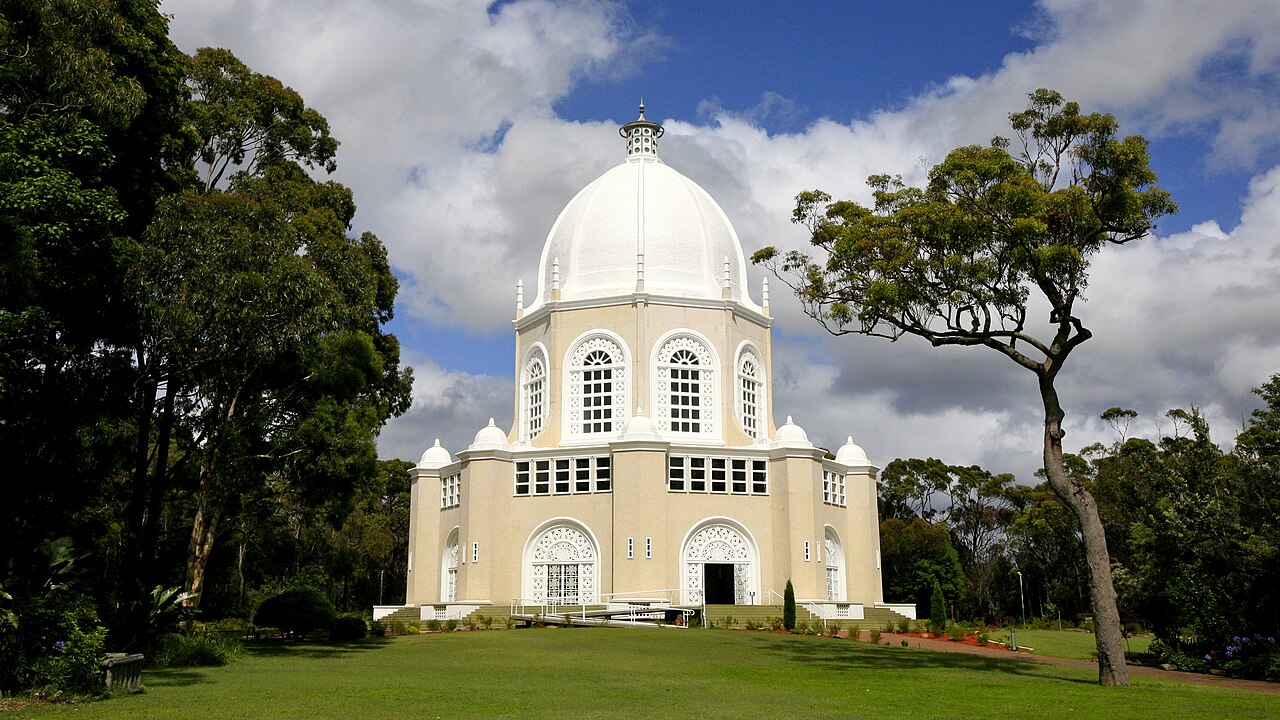
The Bahá'í House of Worship for the Pacific, a nine-sided domed sanctuary set among eucalyptus woodland at Ingleside on Sydney's northern outskirts, open in silence to people of every faith who wish to pray or reflect.