Bahá'í House of Worship for the South American Continent
Templo Bahá'í de Sudamérica · Templo Bahá'í de Chile · Santiago Bahá'í Temple · Mother Temple of South America · Mashriqu'l-Adhkár
About
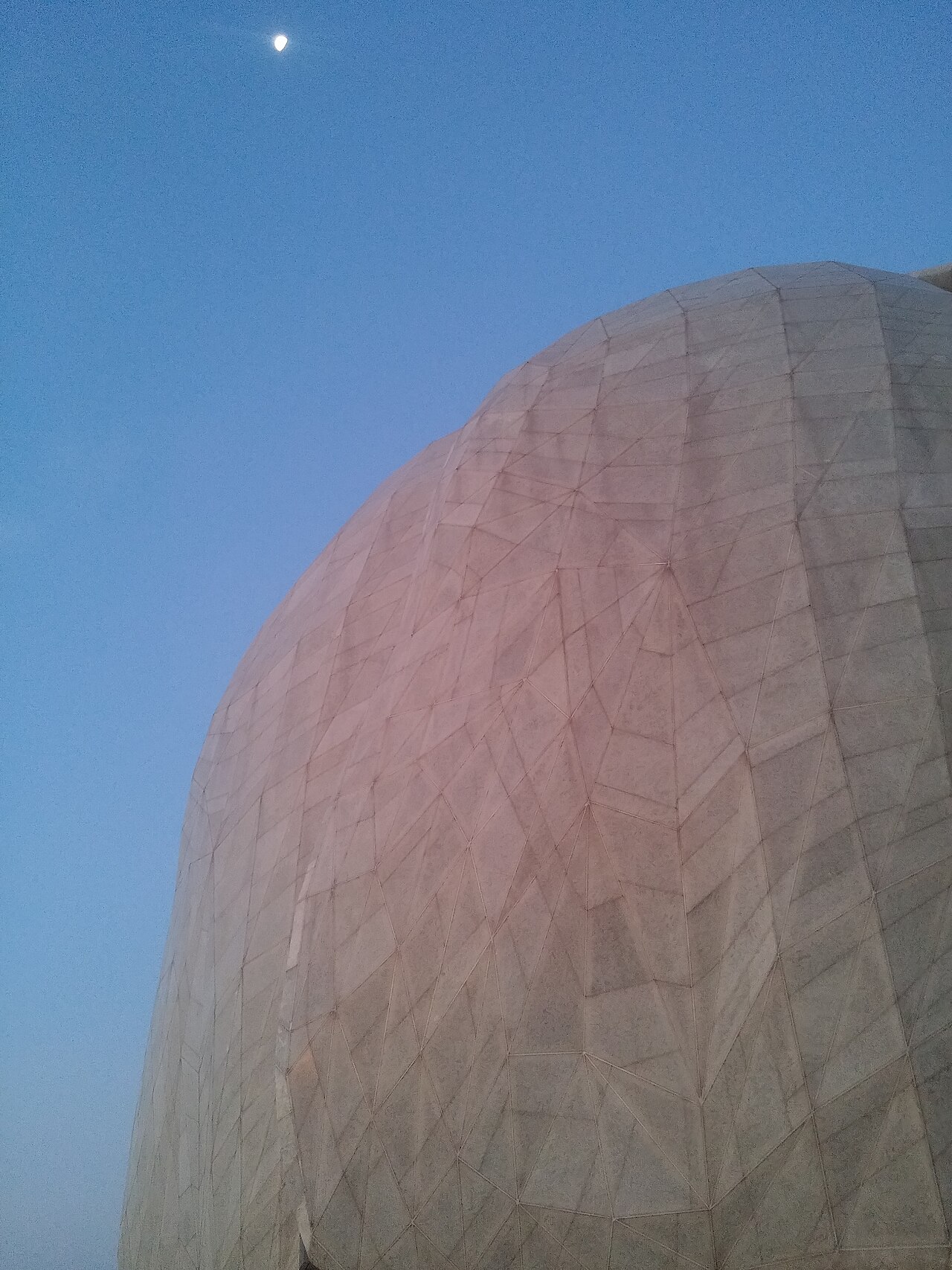
Nestled in the foothills east of Santiago, the Bahá'í House of Worship for South America stands as the continent's sacred gathering place for all who seek stillness and communion. Architect Siamak Hariri conceived the structure around nine arching forms that many describe as petals of a great flower, their translucent surfaces catching the Andean light and diffusing it gently through the interior. Between each petal, panels of glass draw daylight deep into the space, while Portuguese marble lines the inner walls, lending warmth and quiet grandeur.
The building rises thirty metres and spans thirty metres across, accommodating up to six hundred visitors within its circular, nine-sided form, a geometry shared by every Bahá'í House of Worship worldwide. Nine pathways lead to nine entrances, and nine fountains mark the surrounding gardens, each number echoing the tradition's understanding of unity and completeness. The outer faces of the petals are clad in cast glass, giving the structure an appearance that shifts from translucent to luminous depending on the hour and the weather. Beneath the visible surfaces, a steel and aluminum superstructure carries the whole.
Within, no fixed liturgy governs the hours; instead, sacred writings from the Bahá'í tradition and from other faiths may be read or chanted aloud. Choral singing is welcome, though instrumental music is not played inside. The intention is a place where humanity's many languages of prayer can be heard without hierarchy or ritual constraint. By 2024, more than two and a half million people had crossed its threshold since the doors first opened, a testament to the depth of longing this space answers.
History
Shoghi Effendi, then head of the Bahá'í Faith, designated Chile as the site for South America's continental House of Worship in 1953. Decades later, in 2001, the Universal House of Justice called for construction to begin on what it named the Mother Temple of South America, and Chile's National Spiritual Assembly opened an international design competition the following year. The Canadian firm Hariri Pontarini Architects, led by Siamak Hariri, won with a design of nine arching forms likened to the petals of a flower. Fabrication of components began in 2007, construction started in November 2010, and the cast glass cladding was installed from October 2014 onward. The Temple was dedicated on 13 October 2016 and opened its doors to the public six days later.
Significance
As the last of the Bahá'í Faith's eight continental Houses of Worship to be completed, the Santiago Temple marks the fulfilment of a vision Shoghi Effendi set in motion in 1953. Its architecture has drawn wide recognition, including honours from the Royal Architectural Institute of Canada, the Chicago Athenaeum, and the American Institute of Architects between 2017 and 2019. By 2024, more than two and a half million visitors had crossed its threshold. Like every Bahá'í House of Worship, it holds no fixed liturgy: the sacred writings of any tradition may be read or chanted within it, and it welcomes worshippers of every background, without clergy or ritual.
Architecture
Contemporary Bahá'í sacred architecture: nine curved petal-like forms clad in translucent cast glass over a steel and aluminum superstructure, with Portuguese marble lining the interior; designed by Siamak Hariri of Hariri Pontarini Architects, winner of a 2002 international design competition
Visiting
Hours
Hours not listed.
Contact
Address
Engage with Bahá'í House of Worship for the South American Continent
Through the four pathways
Seva सेवा — Service
Offer your time and skills here. The following opportunities are open at Bahá'í House of Worship for the South American Continent:
No Seva offerings listed yet.
Sādhana साधना — Practice
Learn the worship and practice associated with Bahá'í House of Worship for the South American Continent:
No Sādhana offerings listed yet.
Sandhāna सन्धान — Wisdom
Unite with the wisdom of this tradition:
No Sandhāna offerings listed yet.
Sādhya साध्य — Giving
Support this sacred place according to your means:
No Sādhya offerings listed yet.
All giving flows directly to Bahá'í House of Worship for the South American Continent. Adisthan does not take a commission.
Festivals & Events
- Nov
Ascension of 'Abdu'l-Bahá
28 November 2026 · annual
The commemoration of the passing of 'Abdu'l-Bahá, son of Bahá'u'lláh and appointed head of the Faith after him, observed by Bahá'ís worldwide.
- Mar
Naw-Rúz
21 March 2027 · annual
The Bahá'í New Year, marking the vernal equinox and the start of the Bahá'í calendar year, observed at the Temple as at every Bahá'í House of Worship.
- Apr
Ridván
21 April 2027 · annual
The holiest and most joyous of Bahá'í festivals, twelve days commemorating Bahá'u'lláh's declaration in the Garden of Ridván at Baghdad in 1863; its First Day falls on this date.
Gallery
Related sacred places
 Baháʼí
Bahá'í House of Worship for the North American Continent
Wilmette · United States · temple
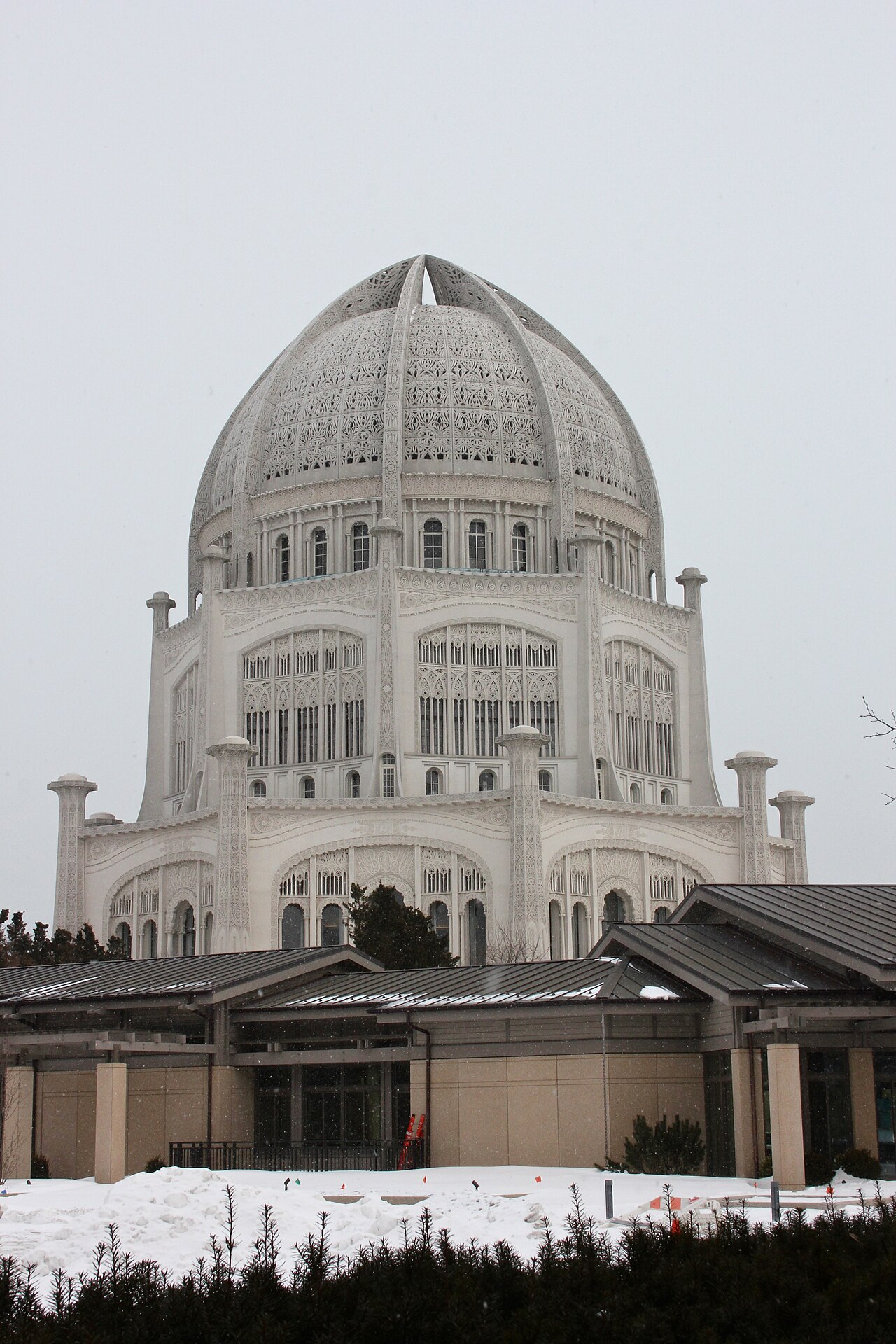
The oldest Bahá'í House of Worship still standing, this nine-sided domed sanctuary rises on the shore of Lake Michigan in Wilmette, Illinois, its lace-carved facade drawing on the sacred symbols of many world religions to welcome worshippers of every background.
 Baháʼí
Lotus Temple (Bahá'í House of Worship)
New Delhi · India · other
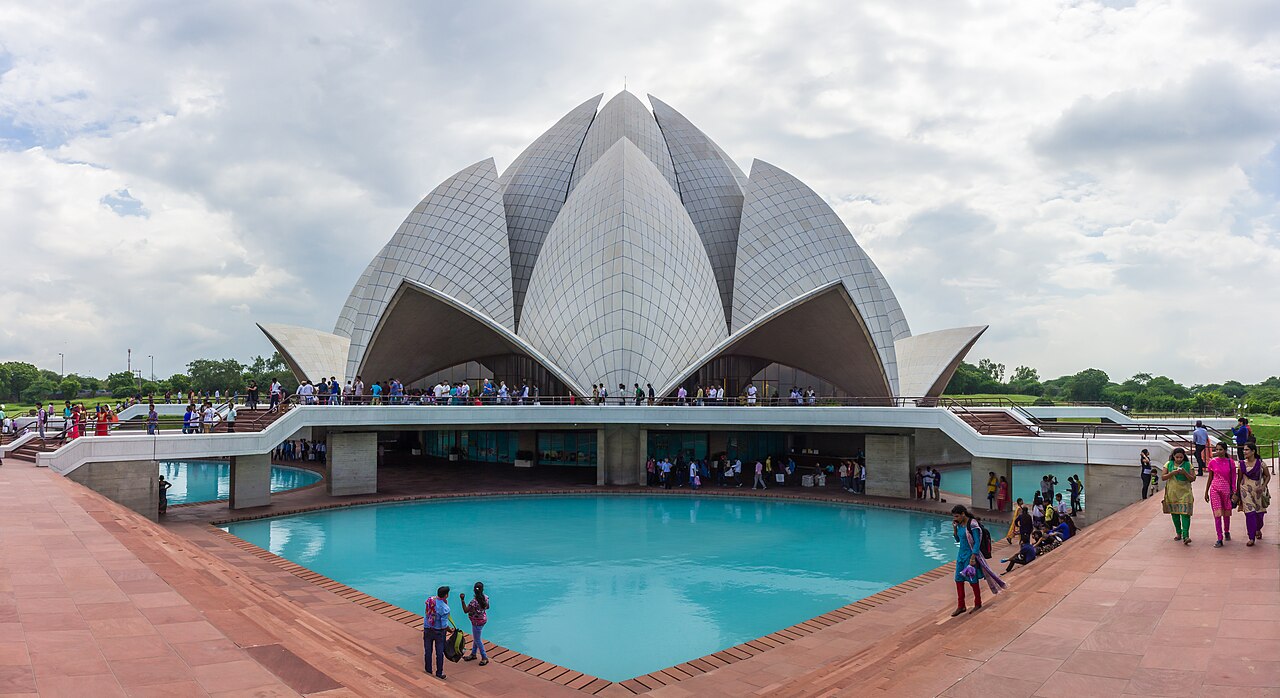
A Bahá'í House of Worship of 27 white marble petals forming nine sides, its nine doors open free to people of every religion to pray and meditate in silence.
 Baháʼí
Sydney Bahá'í Temple
Ingleside · Australia · temple
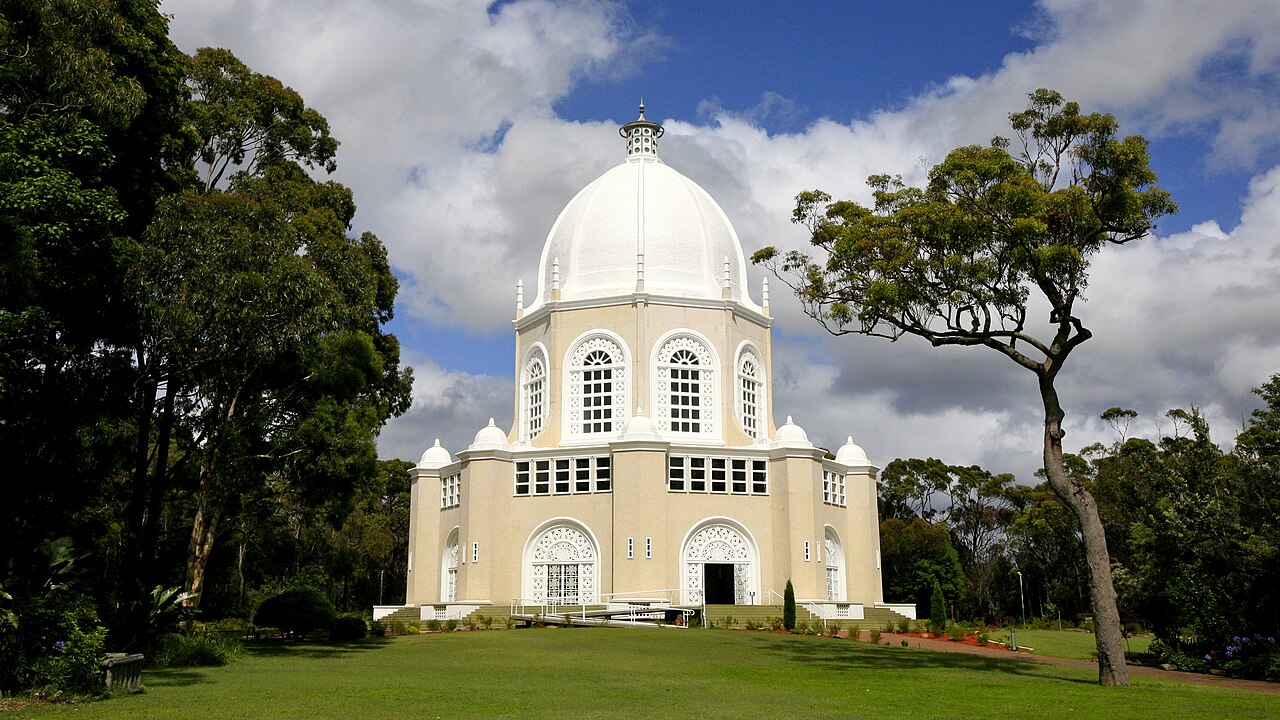
The Bahá'í House of Worship for the Pacific, a nine-sided domed sanctuary set among eucalyptus woodland at Ingleside on Sydney's northern outskirts, open in silence to people of every faith who wish to pray or reflect.