Baitala Deula
Vaital Deul · Vaitala Deula · Baital Deul · Tini Mundia Deula
About
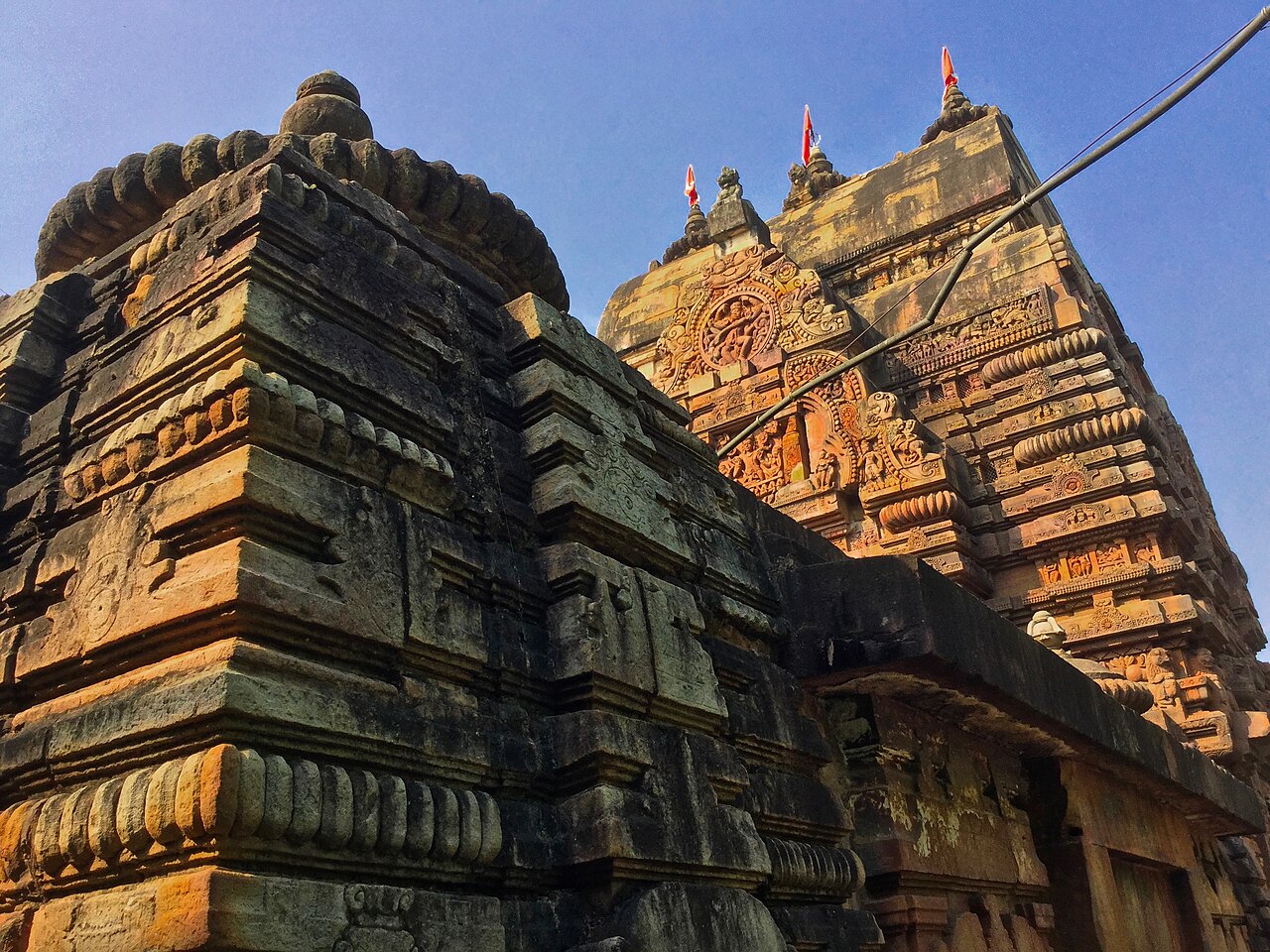
Standing in Bhubaneswar, Odisha's temple-rich capital, Baitāḷa Deuḷa is one of the most distinctive sacred structures in the entire Kaliṅga canon. Built during the 8th century, it belongs to the Khākharā order, a style whose semi-cylindrical, barrel-shaped sanctuary roof sets it apart from the more familiar vertical śikhara towers of northern Hindu architecture. The form carries a clear kinship with the gopuram gateways of South Indian Temple complexes, pointing to currents of cross-regional influence that shaped Odishan sacred building.
The Temple's oblong ground plan is punctuated at each corner by a small subsidiary shrine, while the rectangular jagamohaṇa (assembly hall) anchors the front. Across the outer walls, stone panels bear finely worked images of Śiva and Pārvatī, royal hunting processions, the capture of wild elephants, and occasional erotic couples, the full register of life carved in relief with notable delicacy and balance. Above the jagamohaṇa's left facade, two chaitya windows frame remarkable sculptures: the lower holds Sūrya, the sun god, flanked by Uṣā and Pratyuṣā drawing their bows, with Aruṇa guiding a chariot of seven horses before him; the upper contains a ten-armed Naṭarāja, the dancing Śiva, resplendent in stone.
Within the sanctum, darkness deepens the Tāntric atmosphere. The presiding image, an eight-armed Chamunda locally revered as Kapaḷinī, sits upon a corpse, accompanied by a jackal and an owl and garlanded with skulls. She bears a snake, bow, shield, sword, triśūla, thunderbolt, and arrow, her power directed against a vanquished demon. The surrounding niches hold her retinue, among them a skeletal Bhairava on the east wall and, on the north, a fierce attendant drinking from a skull-cup. A stone sacrificial post before the jagamohaṇa affirms that this remains, in essence, a living Śākti shrine of the most primal kind.
History
Odisha's own tourism department dates the Temple to around 800 CE, placing it among the oldest surviving shrines in Bhubaneswar's dense field of Temples, and independent architectural sources concur on an eighth century origin. Its khakhara order roof, a barrel vault found in only a handful of Odishan Temples, carries a clear kinship with the gopuram gateways of South Indian Temple complexes, a sign of the currents of influence that reached the Kalinga coast from the south. For more than twelve centuries Maa Chamunda has been worshipped here in unbroken tantric rite, and the stone sacrificial post still standing before the jagamohana bears witness to that continuous devotional life.
Significance
As a shrine to Maa Chamunda, one of the fiercest forms the Divine Mother takes, Baitala Deula holds a singular place among Bhubaneswar's many Temples: its three spires are read by devotees as the union of Maa Mahasaraswati, Maa Mahalakshmi, and Maa Mahakali, the triple power of the Goddess gathered into one form. Lord Shiva appears here too, carved into the Temple's chaitya windows in his wedding to Maa Parvati and as the ten-armed Nataraja, but it is Maa Chamunda, seated on a corpse and garlanded with skulls in the sanctum's near darkness, who remains the Temple's living heart. Protected today by the Archaeological Survey of India, the shrine still receives tantric worship, a rare survival of the esoteric Shakta rites once practised widely across the Kalinga coast.
Architecture
Khakhara order of Kalinga Temple architecture, a barrel-vaulted deul roof akin to South Indian gopuram gateways
Visiting
Hours
Hours not listed.
Contact
No contact details listed yet.
Engage with Baitala Deula
Through the four pathways
Seva सेवा — Service
Offer your time and skills here. The following opportunities are open at Baitala Deula:
No Seva offerings listed yet.
Sādhana साधना — Practice
Learn the worship and practice associated with Baitala Deula:
No Sādhana offerings listed yet.
Sandhāna सन्धान — Wisdom
Unite with the wisdom of this tradition:
No Sandhāna offerings listed yet.
Sādhya साध्य — Giving
Support this sacred place according to your means:
No Sādhya offerings listed yet.
All giving flows directly to Baitala Deula. Adisthan does not take a commission.
Gallery
Related sacred places
 Hinduism
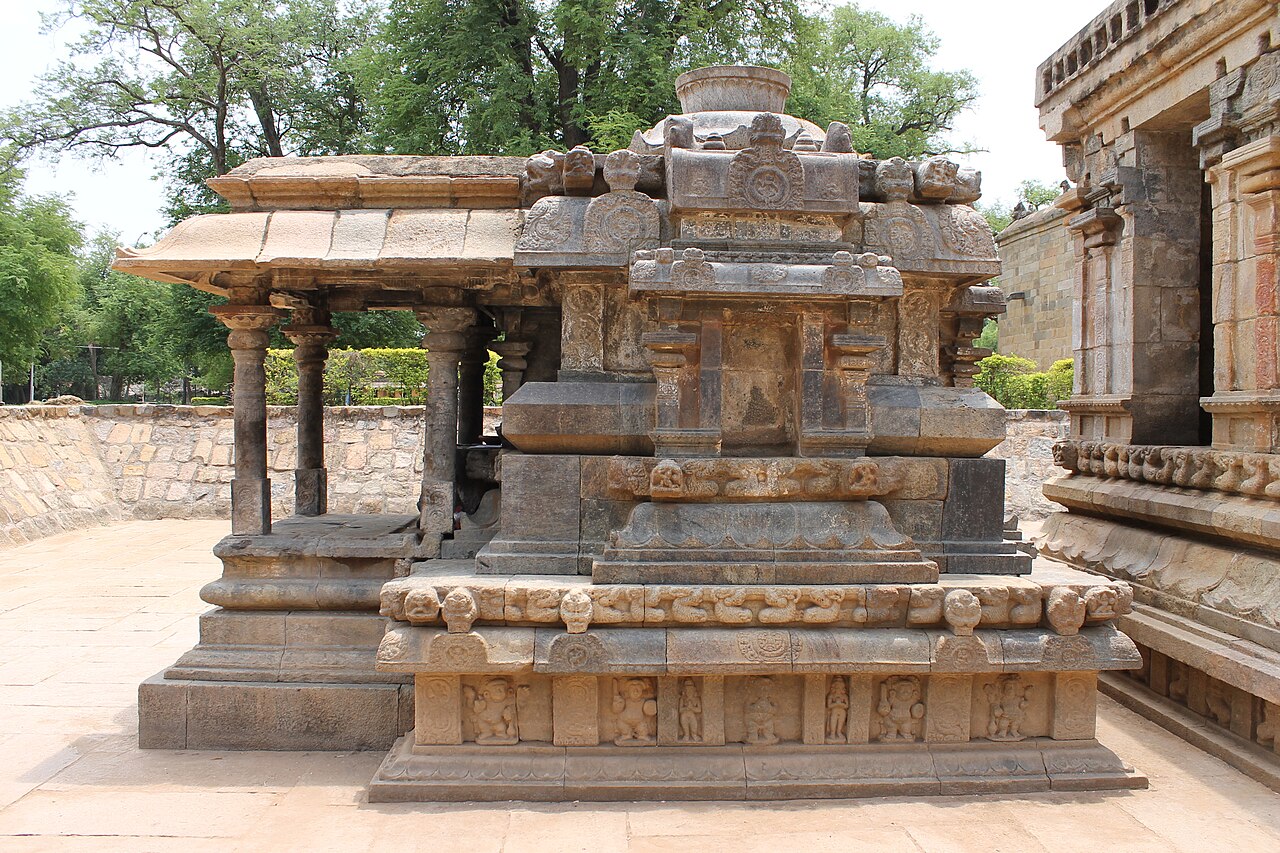
Airavatesvara Temple, Darasuram
Darasuram (Kumbakonam) · India · temple
The third of the Great Living Chola Temples, raised by Rajaraja Chola II around 1166 CE at Darasuram near Kumbakonam: a chariot-form shrine of Lord Shiva as Airavatesvara, famed for its carved stone wheels, its singing steps, and worship that has continued for over eight centuries.
Aisanyesvara Siva Temple
Bhubaneswar · India · temple
A living thirteenth-century Shiva shrine in the Old Town of Bhubaneswar, standing close to the western wall of the great Lingaraj Temple, where a Shivalinga set within a circular yonipitha still receives daily worship in the Kalinga architectural tradition.
 Hinduism
Akhadachandi Temple
Bhubaneswar · India · temple
A tenth-century Kalinga-style shrine on the southwestern bank of Bhubaneswar's sacred Bindusagar tank, Akhadachandi Temple honours Maa Mahishasuramardini, the Goddess in her form as slayer of the buffalo demon, within the dense cluster of ancient shrines that fills the city's Old Town.
 Hinduism
Akshardham
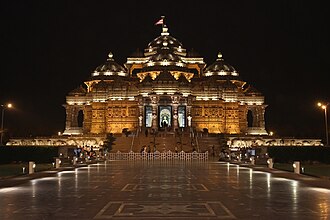
New Delhi · India · temple
A vast contemporary Hindu mandir campus on the Yamuna's west bank in East Delhi, raised without structural steel by 11,000 artisans and volunteers, and recognised by Guinness World Records in 2007 as the world's largest comprehensive Hindu Temple.
 Hinduism
Amarnath Temple
· India · temple
A high Himalayan cave shrine in Jammu and Kashmir where a naturally forming ice lingam is venerated as Lord Śiva, drawing one of India's great seasonal pilgrimages.
 Hinduism
Ambalappuzha Sri Krishna Temple
Ambalappuzha · India · temple
A Vaishnava shrine on the Kerala backwaters consecrated to Sri Krishna in his Parthasarathy form, counted among the seven great Temples of the former kingdom of Travancore and famed across South India for its Ambalapuzha Paal Payasam offering.