
Banashankari Amma Temple
Banashankari Devi Temple · Vanashankari Temple · Shakambhari Temple, Badami
About
Rising from the forested village of Cholachaguḍḍa roughly five kilometres south of the rock-cut caves of Badami, the Banashaṅkarī Amma Temple draws pilgrims from across Karnataka and the neighbouring state of Maharashtra. The presiding deity is known by many names, Banashaṅkarī, Vanashaṅkarī, Shakambharī, Banavva, but in every invocation she is understood as a fierce and compassionate aspect of the goddess Pārvatī, consort of Śiva, who made her presence known through sacred fire and whose power subdued the demon Durgamasura.
The primary sanctum holds a striking black-stone mūrti depicting the goddess enthroned upon a lioness, one foot pressing a vanquished demon beneath it. Eight arms radiate outward carrying a trishūl (trident), ḍamaru (small drum), kapālapātra (skull cup), ghaṇṭā (war-bell), Vedic manuscripts, a sword and shield, and the severed head of a demon, together conveying the completeness of her protective and salvific power. Flanking shrines accommodate Bhīma, Bhramarī, Shataakshi, and Gaṇeśa.
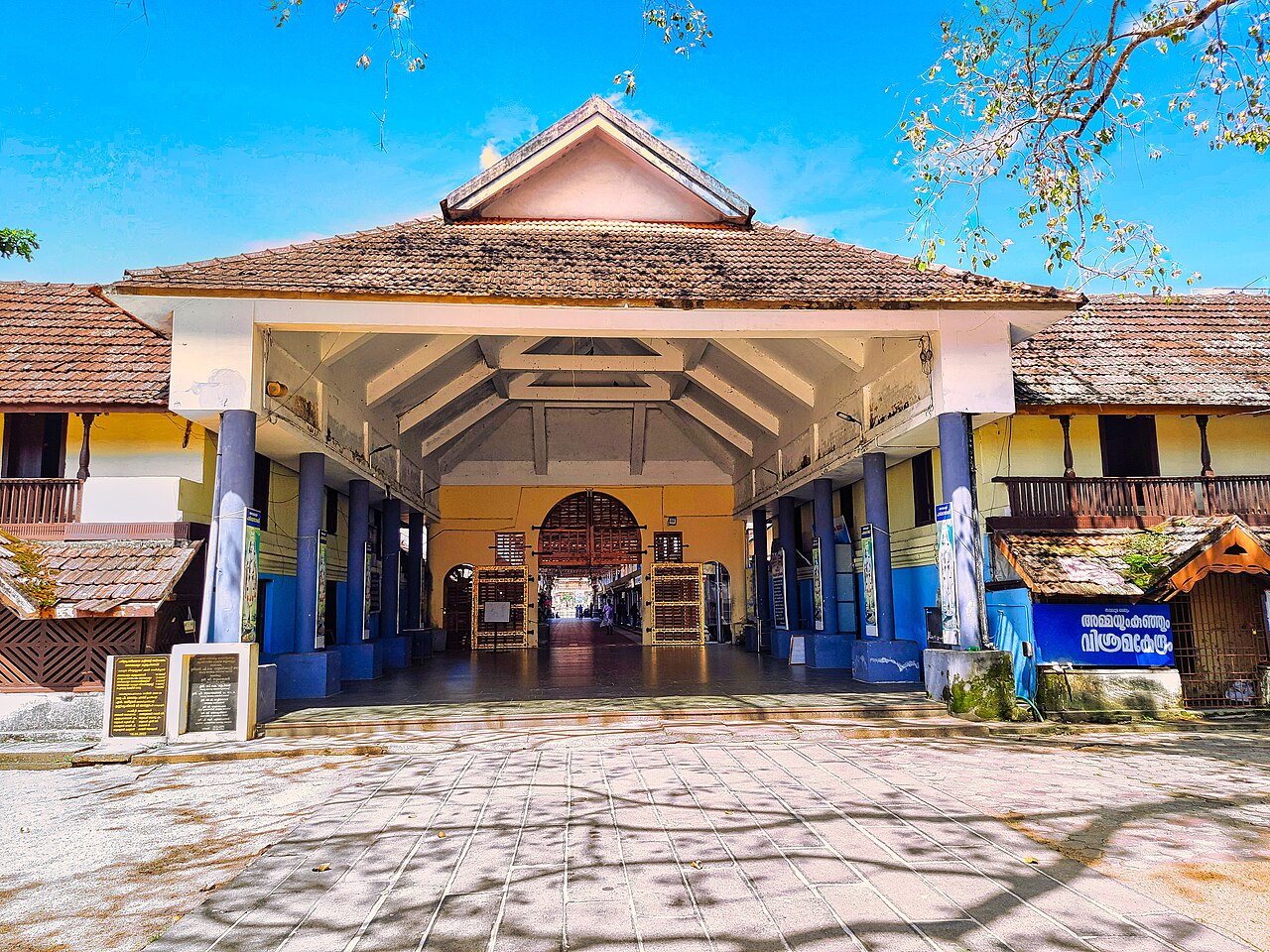
A broad rectangular water tank measuring approximately 360 feet on each side occupies the forecourt of the Temple. Known locally as the Haridra Tīrtha, the tank is bordered on three sides by pillared stone halls, and a circumambulatory path follows its perimeter. Lamp towers, deepa stambhas, stand on the west bank of the tank as well as at the gateway, one of them an unusual guard structure that scholars describe as expressing the Vijayanagara synthesis of Hindu and Islamic architectural forms.
History
Devotees date the original shrine to the seventh century CE, when the Badami Chalukya kings honoured Maa Banashankari as their kuladevi, their lineage's own tutelary goddess. A Kannada inscription on the Temple's northern pillar, dated 1019 CE, records the Rashtrakuta king Bhimadeva's patronage, and further epigraphs describe renovations across the centuries that followed. The Temple standing today is substantially the 1750 rebuilding carried out by Parusharam Agale, a Maratha chieftain, who recast the complex in the Vijayanagara style with a mukha mantapa, an ardha mantapa, and a sanctum crowned by a vimana tower.
Significance
Maa Banashankari is revered as the kuladevi of the Devanga weaver community and of some Deshastha Brahmin families, and her Temple draws pilgrims from Karnataka and Maharashtra alike, of many castes and creeds. The Banashankari Jatre, held over three weeks around the January full moon, culminates in a Rath Yatra when Maa Banashankari is drawn through Cholachagudda in her chariot, and includes the Palleda Habba, in which one hundred and eight vegetable preparations are offered to Maa Shakambhari in memory of the famine she is said to have ended. Muslim traders who set up stalls for the jatre traditionally display her portrait beside their wares, a living sign of the festival's shared, cross community character.
Architecture
Dravidian-origin Chalukya Temple core rebuilt in 1750 in the Vijayanagara style, with a mukha mantapa, ardha mantapa, and vimana tower enclosed within a high compound wall; a carved stone tower at the tank's edge blends Hindu and Islamic decorative forms
Visiting
Daily worship
| Morning darshan | 06:00 to 13:00 | |
| Evening darshan | 15:00 to 21:00 |
Hours
Hours not listed.
Contact
No contact details listed yet.
Engage with Banashankari Amma Temple
Through the four pathways
Seva सेवा — Service
Offer your time and skills here. The following opportunities are open at Banashankari Amma Temple:
No Seva offerings listed yet.
Sādhana साधना — Practice
Learn the worship and practice associated with Banashankari Amma Temple:
No Sādhana offerings listed yet.
Sandhāna सन्धान — Wisdom
Unite with the wisdom of this tradition:
No Sandhāna offerings listed yet.
Sādhya साध्य — Giving
Support this sacred place according to your means:
No Sādhya offerings listed yet.
All giving flows directly to Banashankari Amma Temple. Adisthan does not take a commission.
Festivals & Events
- Jan
Banashankari Jatre
22 January 2027 · annual
A three-week fair beginning on the eighth day of Pausha and centred on a Rath Yatra in which Maa Banashankari is paraded through Cholachagudda village on a wooden chariot, alongside a boat festival on the Temple tank and a cattle fair.
Gallery
Related sacred places
 Hinduism
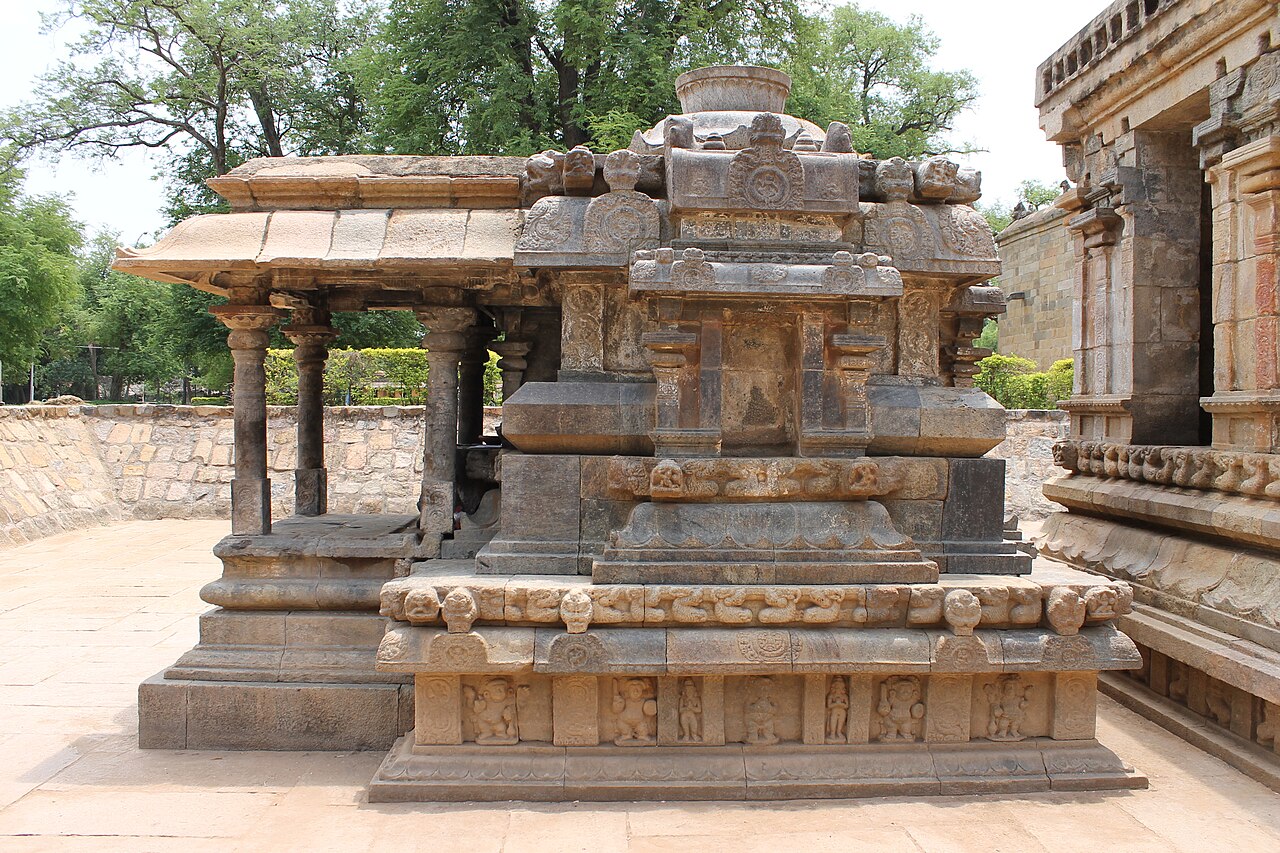
Airavatesvara Temple, Darasuram
Darasuram (Kumbakonam) · India · temple
The third of the Great Living Chola Temples, raised by Rajaraja Chola II around 1166 CE at Darasuram near Kumbakonam: a chariot-form shrine of Lord Shiva as Airavatesvara, famed for its carved stone wheels, its singing steps, and worship that has continued for over eight centuries.
Aisanyesvara Siva Temple
Bhubaneswar · India · temple
A living thirteenth-century Shiva shrine in the Old Town of Bhubaneswar, standing close to the western wall of the great Lingaraj Temple, where a Shivalinga set within a circular yonipitha still receives daily worship in the Kalinga architectural tradition.
 Hinduism
Akhadachandi Temple
Bhubaneswar · India · temple
A tenth-century Kalinga-style shrine on the southwestern bank of Bhubaneswar's sacred Bindusagar tank, Akhadachandi Temple honours Maa Mahishasuramardini, the Goddess in her form as slayer of the buffalo demon, within the dense cluster of ancient shrines that fills the city's Old Town.
 Hinduism
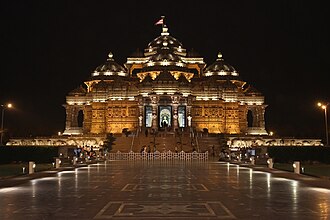
Akshardham
New Delhi · India · temple
A vast contemporary Hindu mandir campus on the Yamuna's west bank in East Delhi, raised without structural steel by 11,000 artisans and volunteers, and recognised by Guinness World Records in 2007 as the world's largest comprehensive Hindu Temple.
 Hinduism
Amarnath Temple
· India · temple
A high Himalayan cave shrine in Jammu and Kashmir where a naturally forming ice lingam is venerated as Lord Śiva, drawing one of India's great seasonal pilgrimages.
 Hinduism
Ambalappuzha Sri Krishna Temple
Ambalappuzha · India · temple
A Vaishnava shrine on the Kerala backwaters consecrated to Sri Krishna in his Parthasarathy form, counted among the seven great Temples of the former kingdom of Travancore and famed across South India for its Ambalapuzha Paal Payasam offering.