
Bharat Mata Mandir
Mother India Temple · Bharat Mata Temple
About
Bharat Mata Mandir stands within the grounds of Mahatma Gandhi Kashi Vidyapith in Varanasi, Uttar Pradesh, occupying a place unlike any conventional place of worship. Where most Temples house mūrtis of gods and goddesses, this one enshrines something altogether different: a finely detailed relief map of Akhand Bharat carved entirely from marble, faithful to the scale of the subcontinent's mountains, river plains, and surrounding oceans.
The presiding deity, so to speak, is Bharat Mata, India personified as a goddess and sacred mother. A marble statue of this figure greets devotees alongside the great map, drawing together the spiritual and the geographic in a single act of veneration. The structure itself is built of stone, its form modest and purposeful, allowing the interior installation to hold undivided attention.
The Temple's atmosphere is quietly contemplative, shaped by the unusual absence of ritual iconography. In its place, the sweeping contours of a whole civilization, its highlands and lowlands, its coasts and interiors, invite a meditation on belonging, on the land as something to be revered rather than merely inhabited. For pilgrims and visitors alike, it offers an encounter with the idea of the sacred nation as a living presence.
History
The Temple was raised between 1918 and 1924 by the freedom fighter Babu Shiv Prasad Gupta, founder of the Mahatma Gandhi Kashi Vidyapith on whose campus it stands. Over the six years that followed, twenty craftsmen carved a relief map of undivided India, Akhand Bharat, from 762 pieces of Makrana marble, rendering its mountains, plains, and coastlines to precise vertical and horizontal scale across a floor nearly ten metres square. Mahatma Gandhi inaugurated the completed Temple in 1936, with Khan Abdul Ghaffar Khan and Vallabhbhai Patel among those present, declaring that it held no statues of gods and goddesses, only a map of India raised on marble, and voicing his hope that it would become a gathering place for people of every religion and caste. At the time it was said to be the only Temple of its kind anywhere in the world.
Significance
Where devotion elsewhere in Varanasi turns toward Kashi Vishwanath or the ghats of the Ganga, this Temple turns it toward the land itself, inviting visitors to walk the gallery above the map and look down on the subcontinent as a single, undivided body. Independent press accounts describe its custodians decorating the map with flowers and filling its seas with water each Republic Day and Independence Day, folding the Temple's nationalist origins into the civic calendar it was built to serve. Nearly a century after Gandhi's words at its opening, it remains less a shrine to a single tradition than a standing argument, made in marble, for the unity he hoped it would represent.
Architecture
A restrained two-storey stone and plaster building in a colonial-era civic style, its balconied upper floor framed by classical pillars in place of a conventional Temple superstructure; the interior is a sunken hall ringed by a pillared gallery from which visitors look down on the floor-level marble relief map.
Visiting
Daily worship
| Open to visitors | 08:00 to 17:30 |
Hours
Hours not listed.
Contact
No contact details listed yet.
Engage with Bharat Mata Mandir
Through the four pathways
Seva सेवा — Service
Offer your time and skills here. The following opportunities are open at Bharat Mata Mandir:
No Seva offerings listed yet.
Sādhana साधना — Practice
Learn the worship and practice associated with Bharat Mata Mandir:
No Sādhana offerings listed yet.
Sandhāna सन्धान — Wisdom
Unite with the wisdom of this tradition:
No Sandhāna offerings listed yet.
Sādhya साध्य — Giving
Support this sacred place according to your means:
No Sādhya offerings listed yet.
All giving flows directly to Bharat Mata Mandir. Adisthan does not take a commission.
Gallery
Related sacred places
 Hinduism
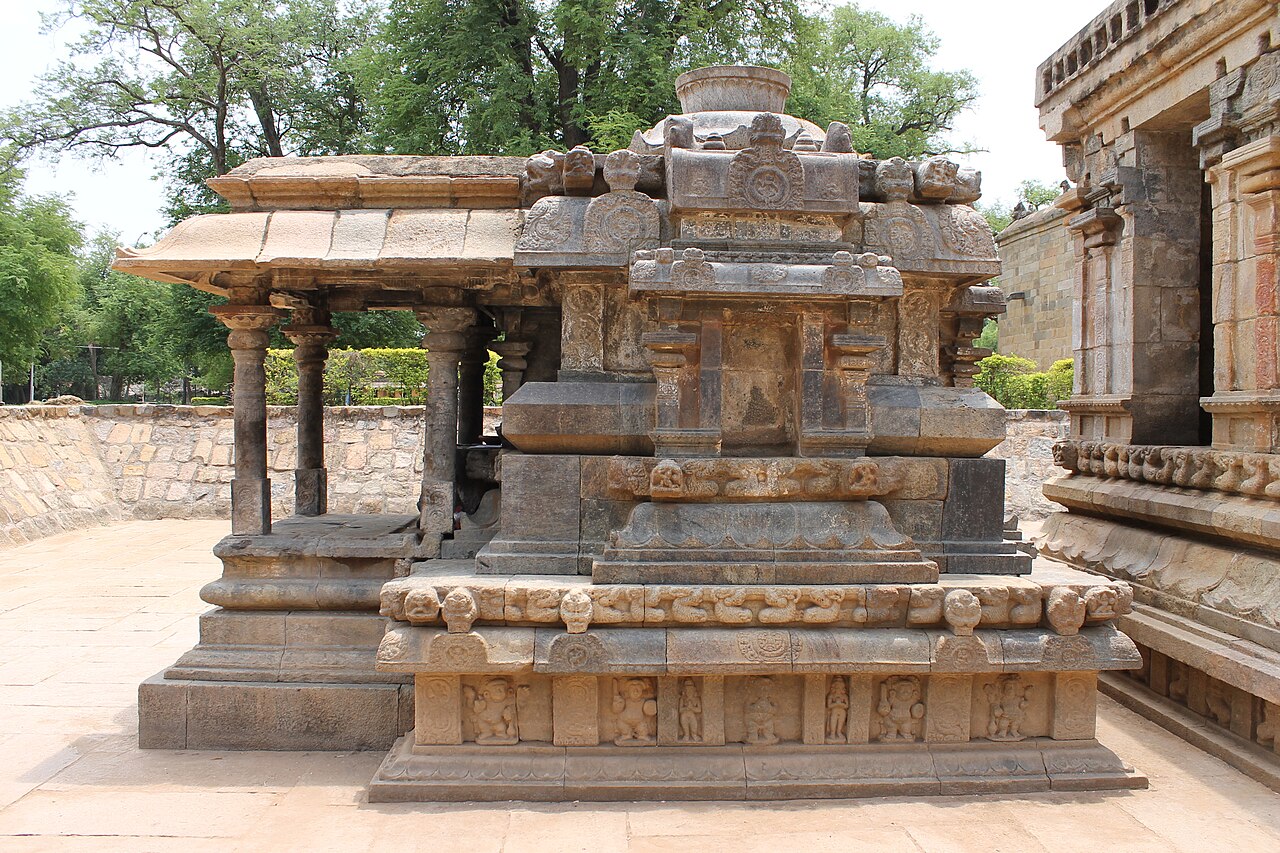
Airavatesvara Temple, Darasuram
Darasuram (Kumbakonam) · India · temple
The third of the Great Living Chola Temples, raised by Rajaraja Chola II around 1166 CE at Darasuram near Kumbakonam: a chariot-form shrine of Lord Shiva as Airavatesvara, famed for its carved stone wheels, its singing steps, and worship that has continued for over eight centuries.
Aisanyesvara Siva Temple
Bhubaneswar · India · temple
A living thirteenth-century Shiva shrine in the Old Town of Bhubaneswar, standing close to the western wall of the great Lingaraj Temple, where a Shivalinga set within a circular yonipitha still receives daily worship in the Kalinga architectural tradition.
 Hinduism
Akhadachandi Temple
Bhubaneswar · India · temple
A tenth-century Kalinga-style shrine on the southwestern bank of Bhubaneswar's sacred Bindusagar tank, Akhadachandi Temple honours Maa Mahishasuramardini, the Goddess in her form as slayer of the buffalo demon, within the dense cluster of ancient shrines that fills the city's Old Town.
 Hinduism
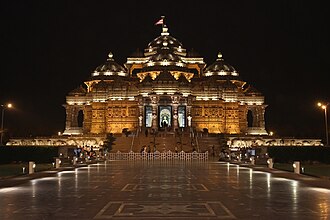
Akshardham
New Delhi · India · temple
A vast contemporary Hindu mandir campus on the Yamuna's west bank in East Delhi, raised without structural steel by 11,000 artisans and volunteers, and recognised by Guinness World Records in 2007 as the world's largest comprehensive Hindu Temple.
 Hinduism
Amarnath Temple
· India · temple
A high Himalayan cave shrine in Jammu and Kashmir where a naturally forming ice lingam is venerated as Lord Śiva, drawing one of India's great seasonal pilgrimages.
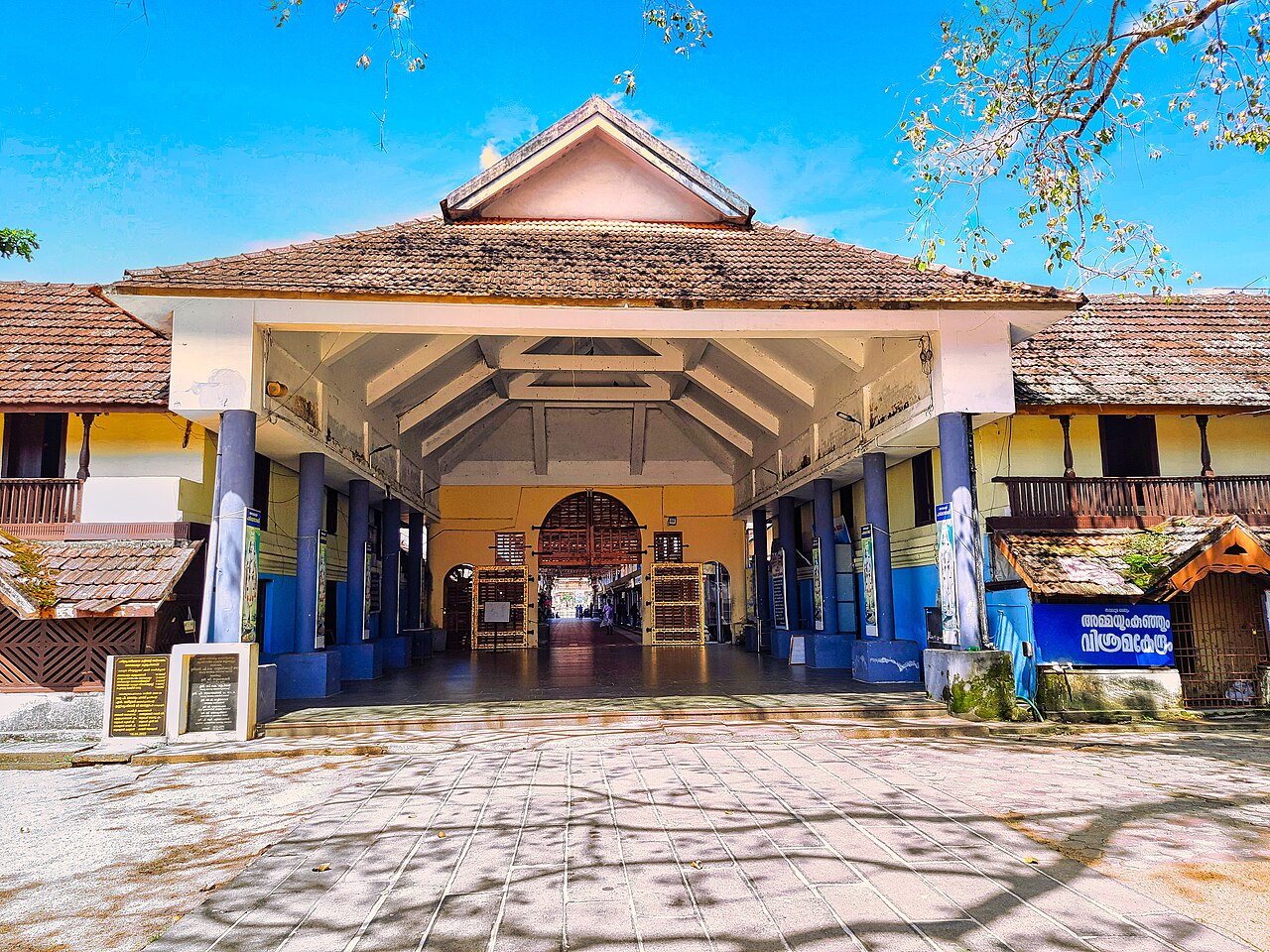 Hinduism
Ambalappuzha Sri Krishna Temple
Ambalappuzha · India · temple
A Vaishnava shrine on the Kerala backwaters consecrated to Sri Krishna in his Parthasarathy form, counted among the seven great Temples of the former kingdom of Travancore and famed across South India for its Ambalapuzha Paal Payasam offering.