Bhojeshwar Temple
Bhojpur Temple · Bhojeshwar Mahadev Temple · Shiva Temple, Bhojpur
About
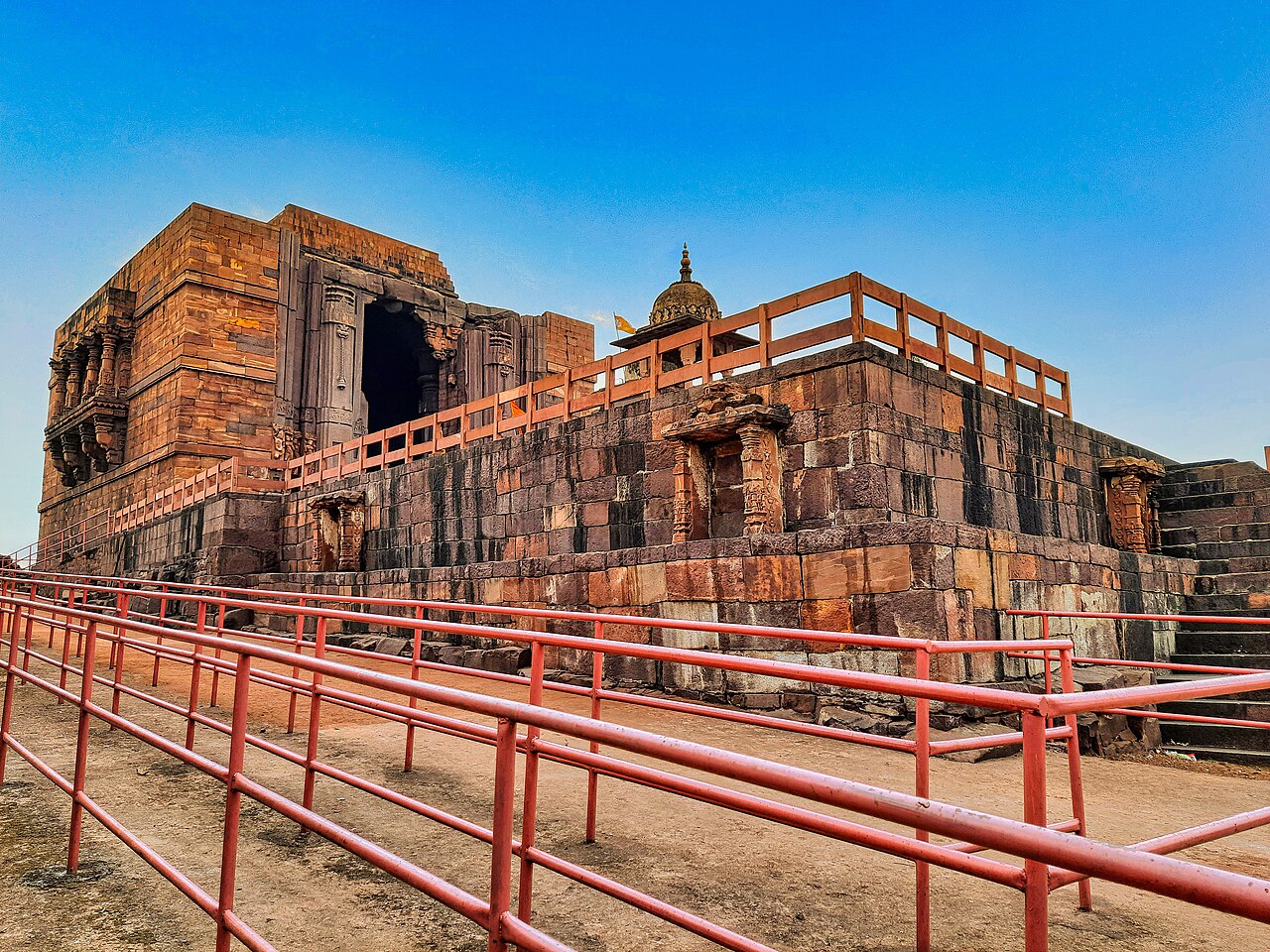
Rising from a broad sandstone platform on the Betwa plain, the Bhojeśvara Temple stands as one of medieval India's most arresting sacred monuments, not despite its incompletion, but partly because of it. Commissioned during the reign of the Paramāra ruler Bhoja in the mid-eleventh century CE, the shrine was conceived on an extraordinary scale: a massive sanctuary housing a three-tiered limestone śivaliṅga that reaches 7.5 feet in height, seated on a square pedestal whose total elevation, base included, surpasses forty feet. The garbhagṛha (inner sanctum) is enclosed within walls of dry-fitted large sandstone blocks, each face measuring roughly 65 feet on the exterior.
The entrance doorway, soaring to 33 feet, is carved with the graceful forms of apsarās, river goddesses, and the gaṇas who attend Lord Śiva. Three ornamental balconies project from the northern, southern, and eastern outer walls, purely sculptural gestures, unreachable from within or without, yet conveying the ambition of what the completed complex might have been. Four octagonal pillars, each nearly 40 feet tall and carved from single stones, support the partially raised superstructure. The shikhara was never finished; scholars debate whether a pyramidal samvarana form or a phamsana rectilinear profile was intended, though the incomplete dome's carved detailing leans toward a bhumija idiom.
What makes the site uniquely valuable to the history of sacred architecture is the evidence the abandonment left behind: quarry sites to the north and east contain architectural fragments at various stages of carving, and the rocks around the complex bear detailed plans for a much grander Temple precinct. Over 1,300 mason marks, symbols, Nāgarī characters, tridents, conch shells, and swastikas, record the organised labour of individual craftsmen, families, and guilds. A small on-site museum, located some 200 metres from the main shrine, presents the Temple's story through posters and drawings, and is open to visitors without charge.
History
Tradition and epigraphic evidence together point to the Paramara king Bhoja: the Modasa copper plates of 1010 to 1011 CE confirm he was already ruling by then, and a neighbouring Jain shrine sharing the same mason's marks carries an inscription dated 1035 CE, leading scholars to place construction in the later, mid-eleventh-century part of his reign. Work stopped before the Temple was finished, for reasons no source records, leaving behind quarry sites, a stone ramp, detailed construction plans engraved on nearby rocks, and the marks of more than 1,300 individual masons. By 1951 water percolation had weakened the structure and the Archaeological Survey of India took over its conservation; a 2006 to 2007 restoration under archaeologist K. K. Muhammed added a missing twelve tonne pillar and closed the open roof with a fibreglass component to stop further water damage.
Significance
Bhojeshwar is among the very few Temples that can be attributed with confidence to King Bhoja, and its unfinished state preserved an unmatched record of how large sacred complexes were actually built in eleventh-century India, evidence a completed monument would have erased. It remains a living site of worship: thousands of devotees gather here on Maha Shivaratri, when the Madhya Pradesh government stages the Bhojpur Utsav cultural festival on the Temple grounds, and the Archaeological Survey of India has named it a Monument of National Importance, now also included on UNESCO's Tentative List of World Heritage Sites.
Architecture
Unfinished 11th-century Paramara-era Shaiva Temple architecture: a monumental sandstone garbhagriha on a stepped platform whose incomplete superstructure mixes curvilinear bhumija and rectilinear phamsana forms, which some architectural historians read as evidence the shrine was designed as a svargarohana (soul's-ascent) memorial Temple
Visiting
Hours
Hours not listed.
Contact
No contact details listed yet.
Engage with Bhojeshwar Temple
Through the four pathways
Seva सेवा — Service
Offer your time and skills here. The following opportunities are open at Bhojeshwar Temple:
No Seva offerings listed yet.
Sādhana साधना — Practice
Learn the worship and practice associated with Bhojeshwar Temple:
No Sādhana offerings listed yet.
Sandhāna सन्धान — Wisdom
Unite with the wisdom of this tradition:
No Sandhāna offerings listed yet.
Sādhya साध्य — Giving
Support this sacred place according to your means:
No Sādhya offerings listed yet.
All giving flows directly to Bhojeshwar Temple. Adisthan does not take a commission.
Festivals & Events
- Mar
Maha Shivaratri
6 March 2027 · annual
The great night of Lord Shiva draws thousands of pilgrims to the unfinished sanctum, and the Madhya Pradesh government stages the Bhojpur Utsav cultural festival of music, dance, and craft on the Temple grounds around this day each year.
Gallery
Related sacred places
 Hinduism
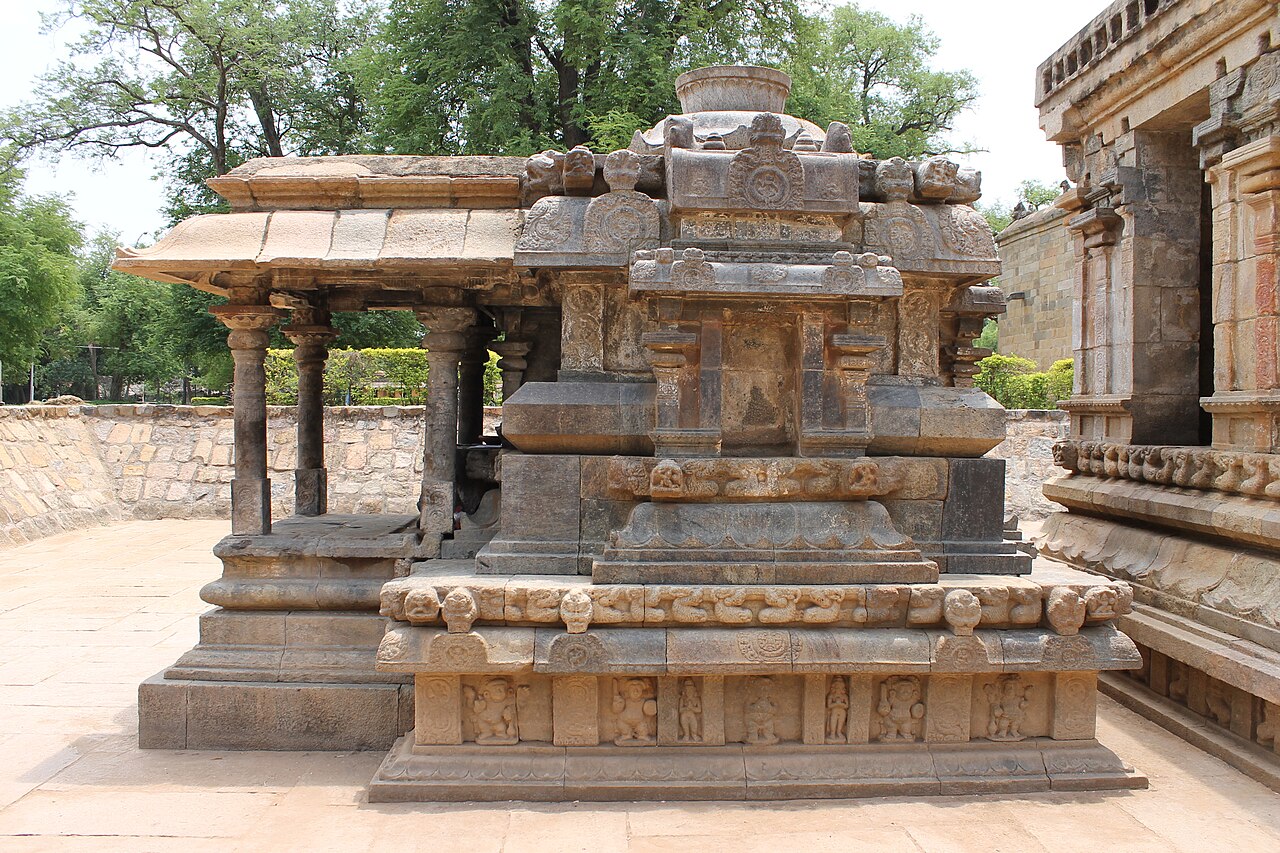
Airavatesvara Temple, Darasuram
Darasuram (Kumbakonam) · India · temple
The third of the Great Living Chola Temples, raised by Rajaraja Chola II around 1166 CE at Darasuram near Kumbakonam: a chariot-form shrine of Lord Shiva as Airavatesvara, famed for its carved stone wheels, its singing steps, and worship that has continued for over eight centuries.
Aisanyesvara Siva Temple
Bhubaneswar · India · temple
A living thirteenth-century Shiva shrine in the Old Town of Bhubaneswar, standing close to the western wall of the great Lingaraj Temple, where a Shivalinga set within a circular yonipitha still receives daily worship in the Kalinga architectural tradition.
 Hinduism
Akhadachandi Temple
Bhubaneswar · India · temple
A tenth-century Kalinga-style shrine on the southwestern bank of Bhubaneswar's sacred Bindusagar tank, Akhadachandi Temple honours Maa Mahishasuramardini, the Goddess in her form as slayer of the buffalo demon, within the dense cluster of ancient shrines that fills the city's Old Town.
 Hinduism
Akshardham
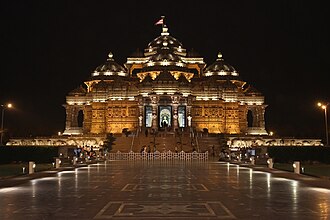
New Delhi · India · temple
A vast contemporary Hindu mandir campus on the Yamuna's west bank in East Delhi, raised without structural steel by 11,000 artisans and volunteers, and recognised by Guinness World Records in 2007 as the world's largest comprehensive Hindu Temple.
 Hinduism
Amarnath Temple
· India · temple
A high Himalayan cave shrine in Jammu and Kashmir where a naturally forming ice lingam is venerated as Lord Śiva, drawing one of India's great seasonal pilgrimages.
 Hinduism
Ambalappuzha Sri Krishna Temple
Ambalappuzha · India · temple
A Vaishnava shrine on the Kerala backwaters consecrated to Sri Krishna in his Parthasarathy form, counted among the seven great Temples of the former kingdom of Travancore and famed across South India for its Ambalapuzha Paal Payasam offering.