Bhoramdeo Temple
Bhoramdev Temple · Khajuraho of Chhattisgarh
About
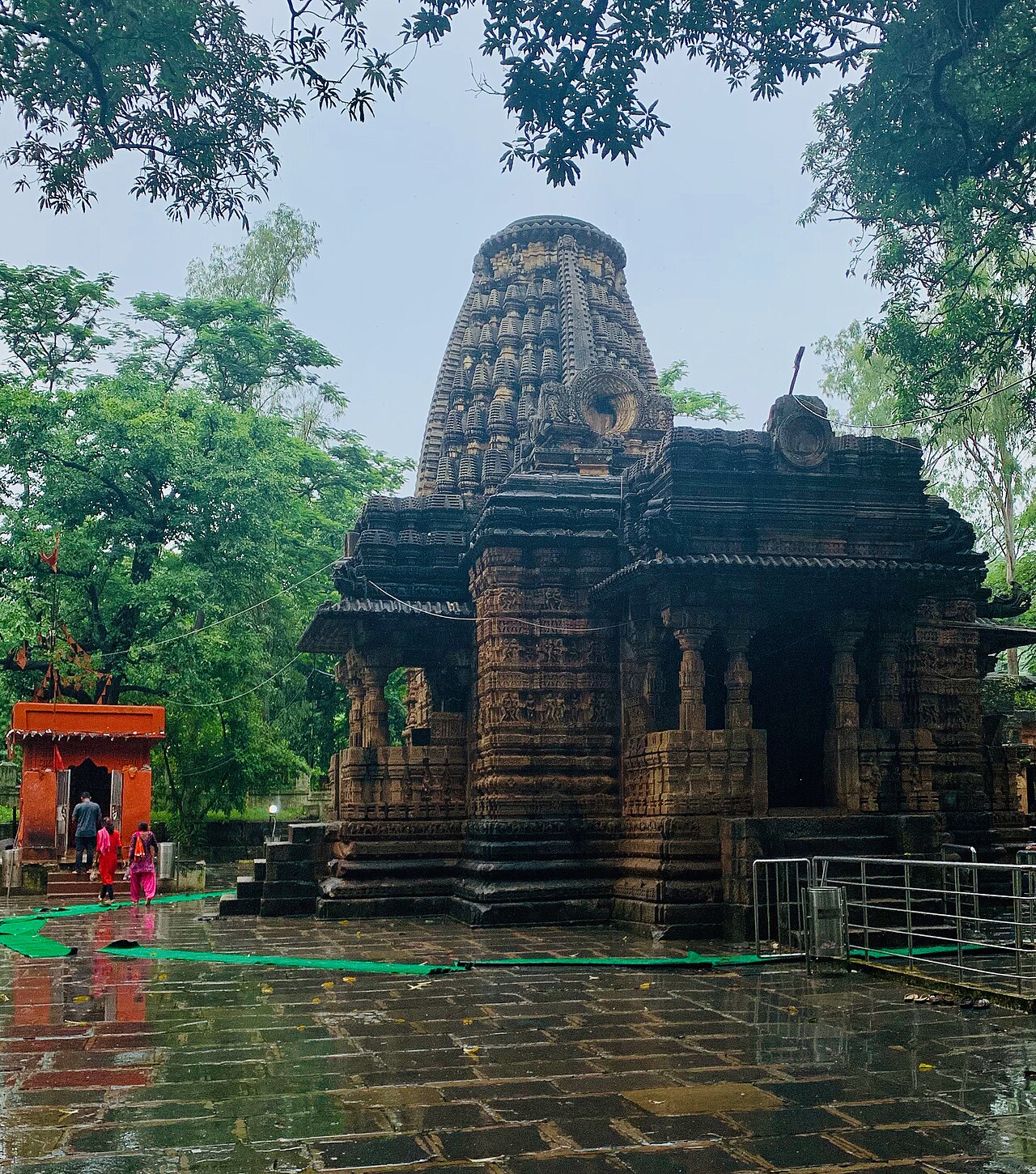
Rising at the edge of a man-made lake with the densely wooded Maikal range as its backdrop, the Bhoramdeo complex in Kabirdham district, Chhattisgarh, centres on a stone Temple consecrated to Lord Śiva, specifically to the Śiva Liṅga worshipped here by the Gond people, who long knew the deity by the name Bhoramdeo. The approach winds through an esplanade shaded by sal, bamboo, and arjuna trees before opening onto the lakeshore where the main sanctuary stands.
The principal shrine, raised on a plinth approximately five feet high, follows a layout of maṇḍapa (pillared hall), antechamber, and garbhagṛha (sanctum). Its tower belongs to the regional Gurur idiom rather than the classic north-Indian Nāgara form, distinguishing itself by successive receding tiers that echo the silhouette of the surrounding hills. The outer surfaces carry three registers of carved imagery in black and ochre stone: divine figures, elephants, lions, celestial beings, and sensuous compositions drawn from the tradition of the Kāma Śāstra, a programme that has invited comparison with Khajuraho and the Koṇārak Sun Temple.
The complex encompasses several other structures: the ancient brick Istaliq Temple, which predates the main shrine; the open-air lapidary museum with artefacts reaching back to roughly the 2nd–3rd centuries; Chherki Mahal, a modest east-facing shrine in early Nāgara style associated in local memory with a Nāga chief; and Madwa Mahal, situated about a kilometre away, built in 1349 to commemorate the wedding of king Rāmacandra Dev of the Nāgavaṃśī line.
History
The main stone shrine belongs to the Kalachuri era, with the Temple's carving dated by scholars to the 11th century CE, older than the Temples of Khajuraho, while the wider Bhoramdeo complex, including an earlier brick shrine now in ruins, spans roughly the 7th to 12th centuries. An inscription on the Temple's outer wall, datable to the late 9th century, records a gift from a family named Paingara to the deity worshipped here, evidence that the shrine was already active generations before that date. The Archaeological Survey of India now protects the complex, and in January 2026 the Chhattisgarh government laid the foundation stone for a heritage and pilgrimage infrastructure corridor at the site under the Swadesh Darshan Scheme 2.0, at an announced cost of 146 crore rupees.
Significance
Bhoramdeo remains a living center of worship for the surrounding region, where the Gond community has long known Lord Shiva by the name Bhoramdeo. Its carved wall panels, arranged in tiers rising toward the tower and including figures drawn from the tradition of the Kama Shastra alongside gods, elephants, and celestial beings, have earned the complex comparison to Khajuraho and the Konark Sun Temple. A nearby boulder carved with four Shaiva relief panels preserves alternative designs for the sanctum tower, an unusually direct record of the architects' own working ideas, and the Temple's setting where sal forest meets a still lake beneath the Maikal range has sustained worship here for close to a thousand years.
Architecture
Gurur-style regional Temple architecture of the Kalachuri era, with a stone shikhara built in receding tiers, distinct from the classical north Indian Nagara form
Visiting
Hours
Hours not listed.
Engage with Bhoramdeo Temple
Through the four pathways
Seva सेवा — Service
Offer your time and skills here. The following opportunities are open at Bhoramdeo Temple:
No Seva offerings listed yet.
Sādhana साधना — Practice
Learn the worship and practice associated with Bhoramdeo Temple:
No Sādhana offerings listed yet.
Sandhāna सन्धान — Wisdom
Unite with the wisdom of this tradition:
No Sandhāna offerings listed yet.
Sādhya साध्य — Giving
Support this sacred place according to your means:
No Sādhya offerings listed yet.
All giving flows directly to Bhoramdeo Temple. Adisthan does not take a commission.
Gallery
Related sacred places
 Hinduism
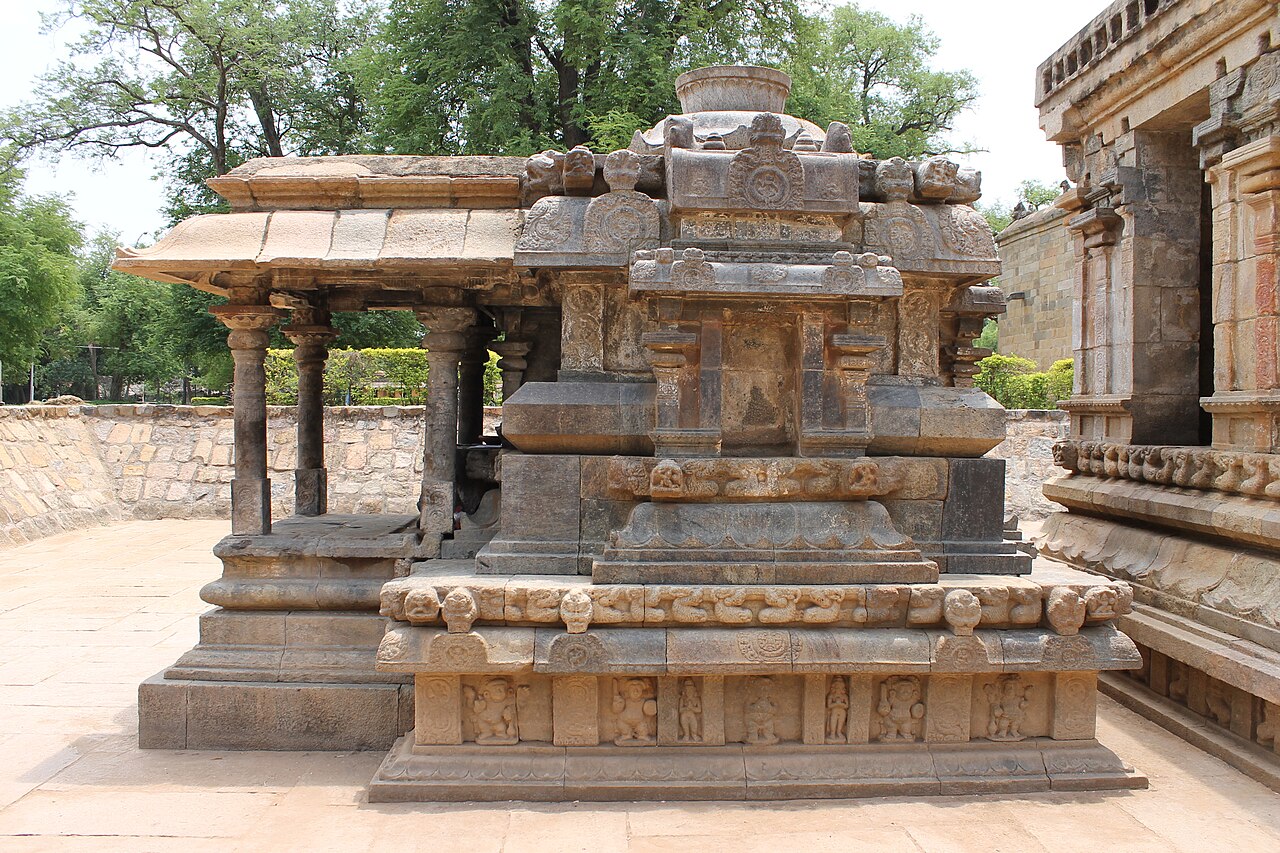
Airavatesvara Temple, Darasuram
Darasuram (Kumbakonam) · India · temple
The third of the Great Living Chola Temples, raised by Rajaraja Chola II around 1166 CE at Darasuram near Kumbakonam: a chariot-form shrine of Lord Shiva as Airavatesvara, famed for its carved stone wheels, its singing steps, and worship that has continued for over eight centuries.
Aisanyesvara Siva Temple
Bhubaneswar · India · temple
A living thirteenth-century Shiva shrine in the Old Town of Bhubaneswar, standing close to the western wall of the great Lingaraj Temple, where a Shivalinga set within a circular yonipitha still receives daily worship in the Kalinga architectural tradition.
 Hinduism
Akhadachandi Temple
Bhubaneswar · India · temple
A tenth-century Kalinga-style shrine on the southwestern bank of Bhubaneswar's sacred Bindusagar tank, Akhadachandi Temple honours Maa Mahishasuramardini, the Goddess in her form as slayer of the buffalo demon, within the dense cluster of ancient shrines that fills the city's Old Town.
 Hinduism
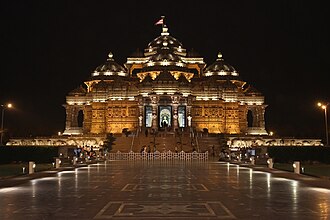
Akshardham
New Delhi · India · temple
A vast contemporary Hindu mandir campus on the Yamuna's west bank in East Delhi, raised without structural steel by 11,000 artisans and volunteers, and recognised by Guinness World Records in 2007 as the world's largest comprehensive Hindu Temple.
 Hinduism
Amarnath Temple
· India · temple
A high Himalayan cave shrine in Jammu and Kashmir where a naturally forming ice lingam is venerated as Lord Śiva, drawing one of India's great seasonal pilgrimages.
 Hinduism
Ambalappuzha Sri Krishna Temple
Ambalappuzha · India · temple
A Vaishnava shrine on the Kerala backwaters consecrated to Sri Krishna in his Parthasarathy form, counted among the seven great Temples of the former kingdom of Travancore and famed across South India for its Ambalapuzha Paal Payasam offering.