Bhutanatha Group of Temples
Bhutanatha Temple · Bhootnatha Temple · Boothanatha Temple · Mallikarjuna Group (North Bhutanatha group)
About
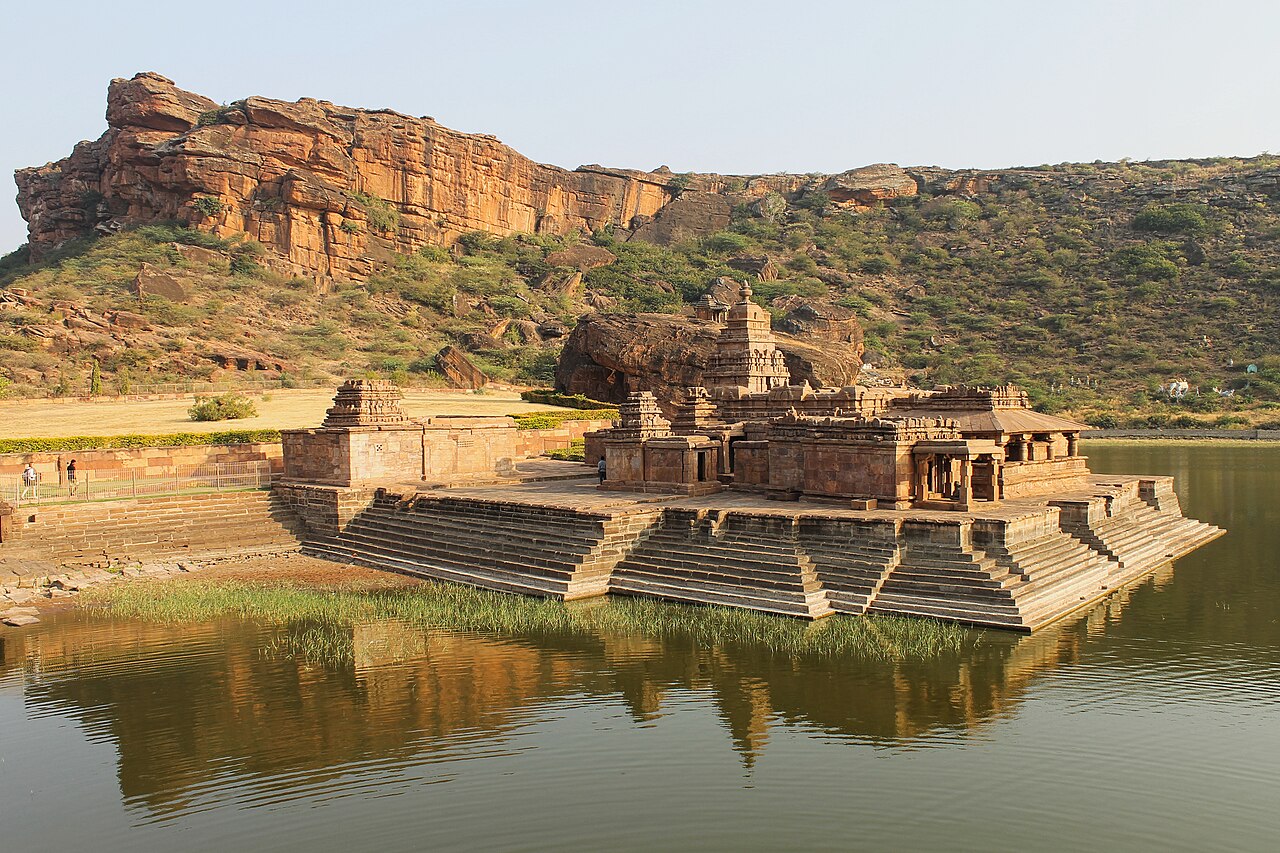
Rising at the edge of the ancient Agastya Tīrtha tank in Badami, the Bhutanatha Temples form two distinct congregations of shrines separated by both geography and centuries. The elder gathering, generally dated to the early 8th century, clusters along the lake's eastern embankment and exemplifies the Drāviḍa idiom as practised by the Badami Chalukya craftsmen. A stepped ghat descends to the water's edge, receiving devotees and pilgrims who arrive by the lakeside path.
The principal shrine of the older group enshrines a Śiva liṅga within a square-plan sanctum, approached through a pillared hall whose massive central columns shift elegantly between cubical, octagonal, and rounded profiles. Above the sanctum, a Drāviḍa tritala superstructure, three diminishing storeys of rhythmic repetition, rises to a square vedi and short śikhara. Carved wall niches, though now largely empty, retain ornamental makharas with sweeping tails, while figures of Gaṅgā riding the makara and Yamunā upon the tortoise guard the shrine's threshold. A nearby boulder bears four Śaiva relief panels depicting alternative superstructure designs, offering an unusually direct glimpse into the design thinking of early medieval architects.
The second congregation, known as the Mallikarjuna group, stands a short distance away along the lake's northern bank. Dating to the 11th and 12th centuries, these shrines reflect the Nāgara sensibility of the Kalyāṇī Chalukyas, their pyramidal phamsana superstructures rising above open maṇḍapas carried on eight pillars. Artwork from both Vaiṣṇava and Śaiva traditions survives within the group, bearing witness to the fluid devotional life that animated these sanctuaries across the centuries.
History
The older, main group of shrines beside the lake's eastern bank was raised around 700 to 725 CE under the Badami Chalukyas, contemporaries of the town's famous rock-cut cave Temples, while the Mallikarjuna group on the lake's northern bank followed some four centuries later under the Kalyani Chalukyas. A wall inscription of about the late 9th century records a gift to the deity 'Sridharbutesvara', showing the main shrine remained in active worship long after its founding. A smaller adjoining shrine, thought originally dedicated to Vishnu, was later taken up by the Lingayat community, who added an outer hall and installed a Nandi and Shiva linga within. Both clusters are today in the care of the Archaeological Survey of India.
Significance
The complex is a rare single-precinct record of two landmark phases of Deccan Temple building: the Dravida refinements of the early Badami Chalukyas and the Nagara experiments of the later Kalyani Chalukyas four centuries on. A boulder at the older group carries four carved Shaiva relief panels sketching alternative temple-tower designs, an unusually direct trace of an architect's own thinking. The Temple remains a living Shaiva shrine, its stepped stone platform rising from the still water of Agastya Tirtha beneath Badami's red sandstone cliffs.
Architecture
Badami Chalukya Dravida architecture with a tritala (three-storey) superstructure in the older lakeside group; Kalyani Chalukya Nagara phamsana-style pyramidal towers in the later Mallikarjuna group
Visiting
Hours
Hours not listed.
Contact
No contact details listed yet.
Engage with Bhutanatha Group of Temples
Through the four pathways
Seva सेवा — Service
Offer your time and skills here. The following opportunities are open at Bhutanatha Group of Temples:
No Seva offerings listed yet.
Sādhana साधना — Practice
Learn the worship and practice associated with Bhutanatha Group of Temples:
No Sādhana offerings listed yet.
Sandhāna सन्धान — Wisdom
Unite with the wisdom of this tradition:
No Sandhāna offerings listed yet.
Sādhya साध्य — Giving
Support this sacred place according to your means:
No Sādhya offerings listed yet.
All giving flows directly to Bhutanatha Group of Temples. Adisthan does not take a commission.
Gallery
Related sacred places
 Hinduism
Airavatesvara Temple, Darasuram
Darasuram (Kumbakonam) · India · temple
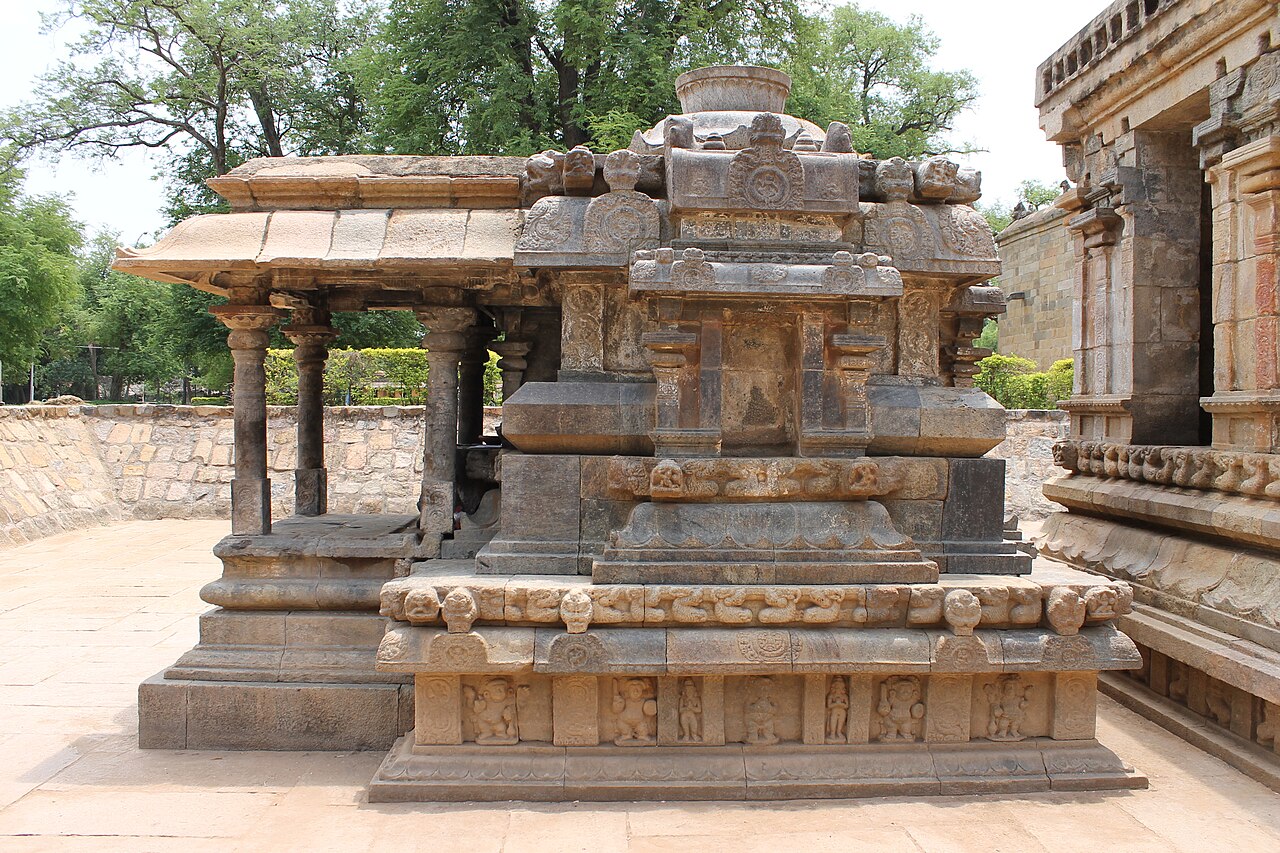
The third of the Great Living Chola Temples, raised by Rajaraja Chola II around 1166 CE at Darasuram near Kumbakonam: a chariot-form shrine of Lord Shiva as Airavatesvara, famed for its carved stone wheels, its singing steps, and worship that has continued for over eight centuries.
Aisanyesvara Siva Temple
Bhubaneswar · India · temple
A living thirteenth-century Shiva shrine in the Old Town of Bhubaneswar, standing close to the western wall of the great Lingaraj Temple, where a Shivalinga set within a circular yonipitha still receives daily worship in the Kalinga architectural tradition.
 Hinduism
Akhadachandi Temple
Bhubaneswar · India · temple
A tenth-century Kalinga-style shrine on the southwestern bank of Bhubaneswar's sacred Bindusagar tank, Akhadachandi Temple honours Maa Mahishasuramardini, the Goddess in her form as slayer of the buffalo demon, within the dense cluster of ancient shrines that fills the city's Old Town.
 Hinduism
Akshardham
New Delhi · India · temple
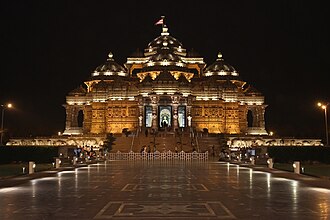
A vast contemporary Hindu mandir campus on the Yamuna's west bank in East Delhi, raised without structural steel by 11,000 artisans and volunteers, and recognised by Guinness World Records in 2007 as the world's largest comprehensive Hindu Temple.
 Hinduism
Amarnath Temple
· India · temple
A high Himalayan cave shrine in Jammu and Kashmir where a naturally forming ice lingam is venerated as Lord Śiva, drawing one of India's great seasonal pilgrimages.
 Hinduism
Ambalappuzha Sri Krishna Temple
Ambalappuzha · India · temple
A Vaishnava shrine on the Kerala backwaters consecrated to Sri Krishna in his Parthasarathy form, counted among the seven great Temples of the former kingdom of Travancore and famed across South India for its Ambalapuzha Paal Payasam offering.