Brahmeswara Temple
Brahmeshwara Temple · Brahmeshvara Temple
About
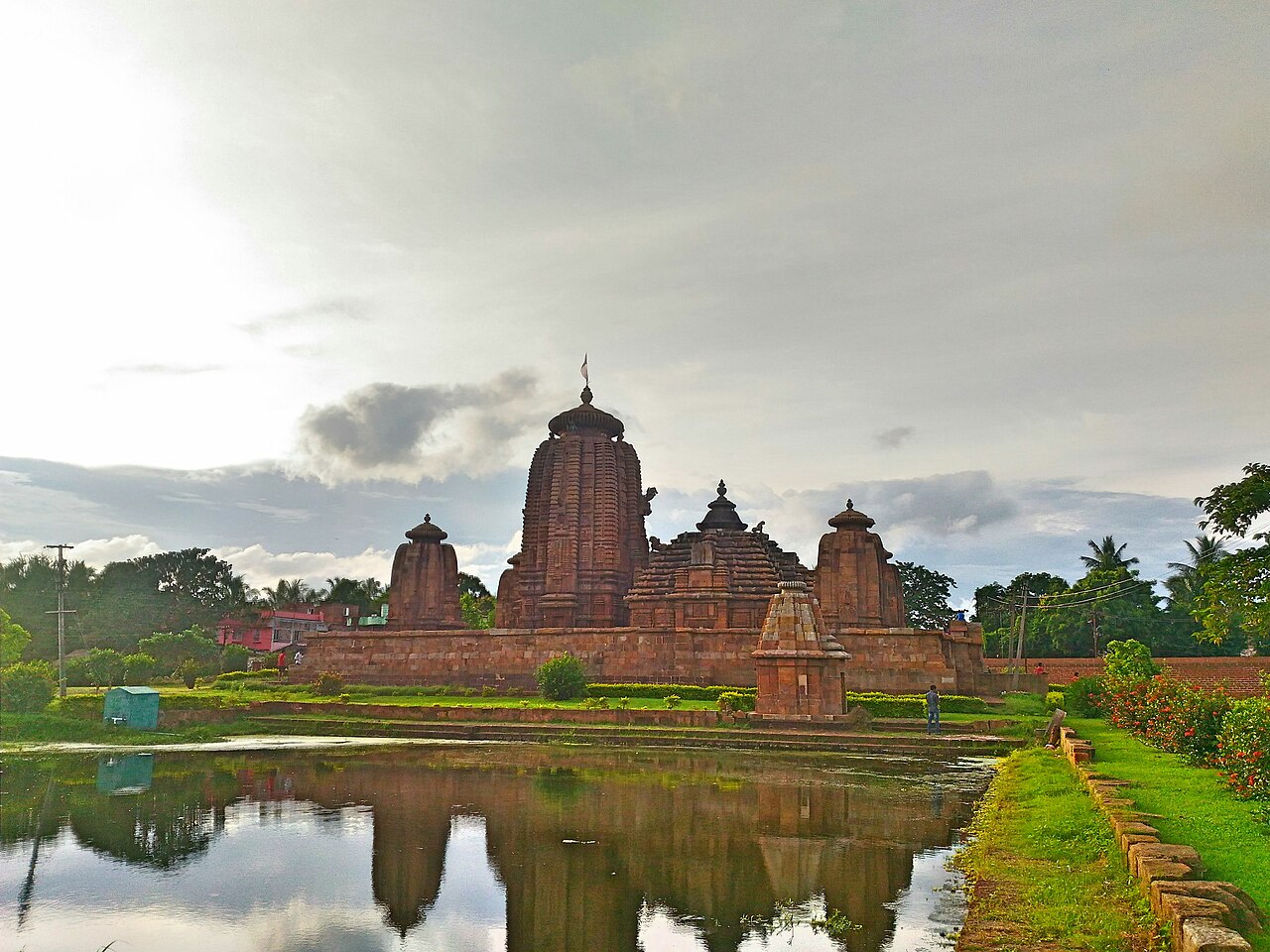
Rising above the sacred precinct of Bhubaneswar, long known as Ekamra, the city of the single mango tree, the Brahmeswara Temple is a devotional monument to Lord Śiva, its every surface animated by the hands of eleventh-century craftsmen. It follows the panchatanaya plan, meaning a central sanctuary attended by four subsidiary shrines at each corner of the compound, producing an ensemble of interlocking spires that reads, from a distance, as a single architectural chorus.
The central vimāna ascends to nearly nineteen metres, its profile shaped by the characteristic curvilinear shikhara of Odia Temple craft. The builders adapted traditional wood-joinery techniques to sandstone, carving the stone as though it were still a living forest material, a method that lends the walls an unusual warmth and intricacy. Notably, iron beams were introduced here for structural support, a technique that appears for the first time in the history of the regional Temple tradition.
The exterior walls carry a procession of deities, guardians, musicians, and dancers, among them figures clutching vīṇās, alongside the eight dikpālas, the guardian deities of the cardinal and intermediate directions. Tantric imagery is woven through the iconography as well: the goddess Chamunda appears on the western facade, trident in hand, standing in her formidable aspect. The carved interior of the Jagamohan (assembly hall) echoes conventions established at the earlier Mukteshvara Temple nearby, yet the Brahmeswara elaborates on them with an exuberance that marks the mature phase of Kalinga artistry.
History
An inscription once kept at the site, now lost but recorded before its disappearance, dates the Temple to the eighteenth regnal year of the Somavamsi king Udyota Kesari, corresponding to around 1058 to 1060 CE, and names his mother Kolavati Devi as the builder. It was raised at a spot then called Siddhatirtha within Ekamra, the sacred precinct that is now the heart of Bhubaneswar. Because the inscription no longer stands in its original place, some historians have weighed whether it once referred to a neighbouring structure, but the Temple's location and architectural details are close enough to the record that the identification is widely accepted.
Significance
Brahmeswara occupies a pivotal place between the earlier Mukteshvara Temple and the full maturity of Kalinga architecture, sharing the Mukteshvara's carved jagamohana interior and lion motifs while adding a profusion of carved musicians and dancers new to the tradition. Its walls carry the eight guardian deities of the directions alongside tantric imagery, including a fierce Chamunda on the western face, and a now-lost inscription recording gifts of devadasis to the Temple has led scholars to see here an early root of the devadasi tradition that later shaped Odia Temple life. Lord Shiva is worshipped within as a Shivalinga, and the Temple's own name is itself understood as an epithet of Shiva.
Architecture
Kalinga Nagara Temple architecture, panchatanaya plan (a main deul with four subsidiary shrines at the corners), sandstone carved in techniques derived from wood joinery, with an early structural use of iron beams
Visiting
Hours
Hours not listed.
Contact
No contact details listed yet.
Engage with Brahmeswara Temple
Through the four pathways
Seva सेवा — Service
Offer your time and skills here. The following opportunities are open at Brahmeswara Temple:
No Seva offerings listed yet.
Sādhana साधना — Practice
Learn the worship and practice associated with Brahmeswara Temple:
No Sādhana offerings listed yet.
Sandhāna सन्धान — Wisdom
Unite with the wisdom of this tradition:
No Sandhāna offerings listed yet.
Sādhya साध्य — Giving
Support this sacred place according to your means:
No Sādhya offerings listed yet.
All giving flows directly to Brahmeswara Temple. Adisthan does not take a commission.
Gallery
Related sacred places
 Hinduism
Airavatesvara Temple, Darasuram
Darasuram (Kumbakonam) · India · temple
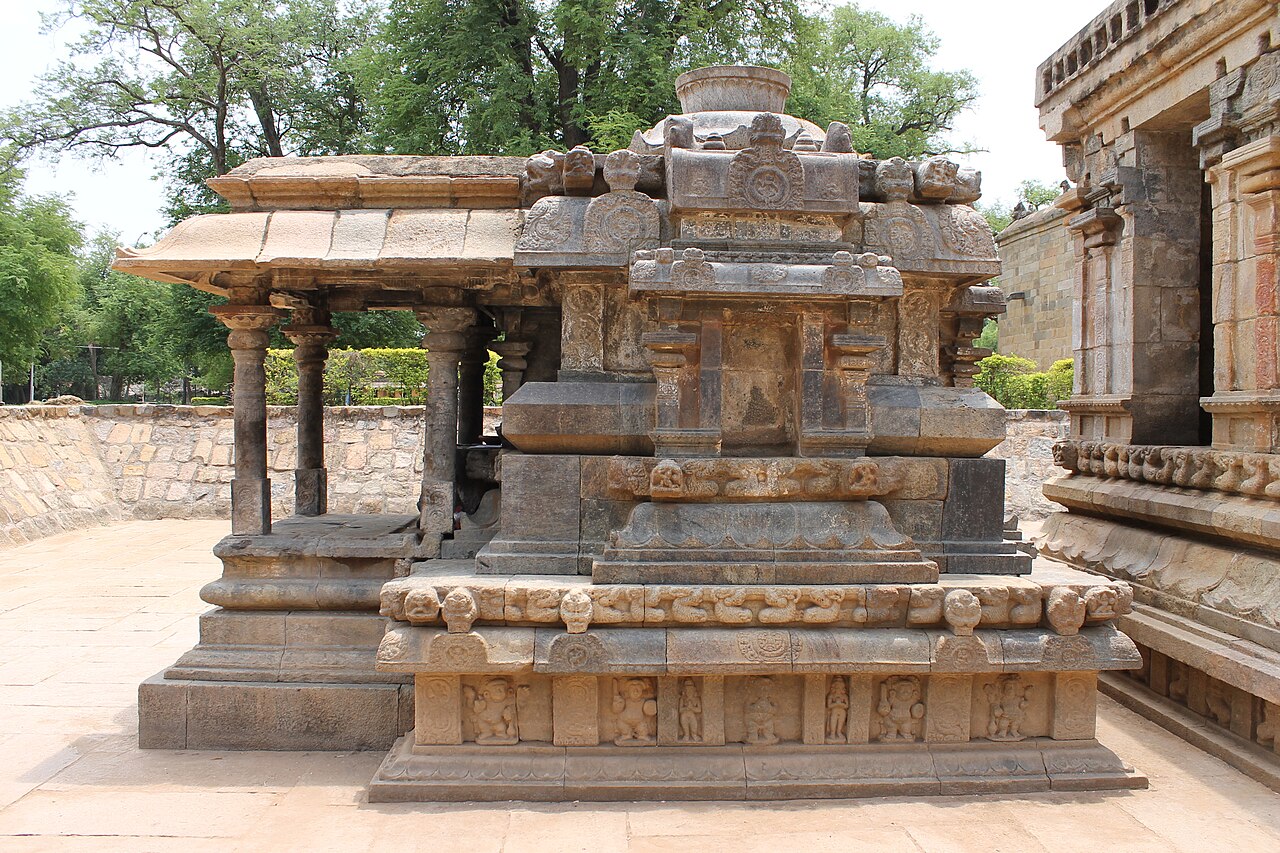
The third of the Great Living Chola Temples, raised by Rajaraja Chola II around 1166 CE at Darasuram near Kumbakonam: a chariot-form shrine of Lord Shiva as Airavatesvara, famed for its carved stone wheels, its singing steps, and worship that has continued for over eight centuries.
Aisanyesvara Siva Temple
Bhubaneswar · India · temple
A living thirteenth-century Shiva shrine in the Old Town of Bhubaneswar, standing close to the western wall of the great Lingaraj Temple, where a Shivalinga set within a circular yonipitha still receives daily worship in the Kalinga architectural tradition.
 Hinduism
Akhadachandi Temple
Bhubaneswar · India · temple
A tenth-century Kalinga-style shrine on the southwestern bank of Bhubaneswar's sacred Bindusagar tank, Akhadachandi Temple honours Maa Mahishasuramardini, the Goddess in her form as slayer of the buffalo demon, within the dense cluster of ancient shrines that fills the city's Old Town.
 Hinduism
Akshardham
New Delhi · India · temple
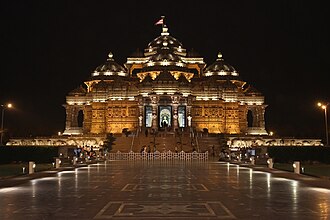
A vast contemporary Hindu mandir campus on the Yamuna's west bank in East Delhi, raised without structural steel by 11,000 artisans and volunteers, and recognised by Guinness World Records in 2007 as the world's largest comprehensive Hindu Temple.
 Hinduism
Amarnath Temple
· India · temple
A high Himalayan cave shrine in Jammu and Kashmir where a naturally forming ice lingam is venerated as Lord Śiva, drawing one of India's great seasonal pilgrimages.
 Hinduism
Ambalappuzha Sri Krishna Temple
Ambalappuzha · India · temple
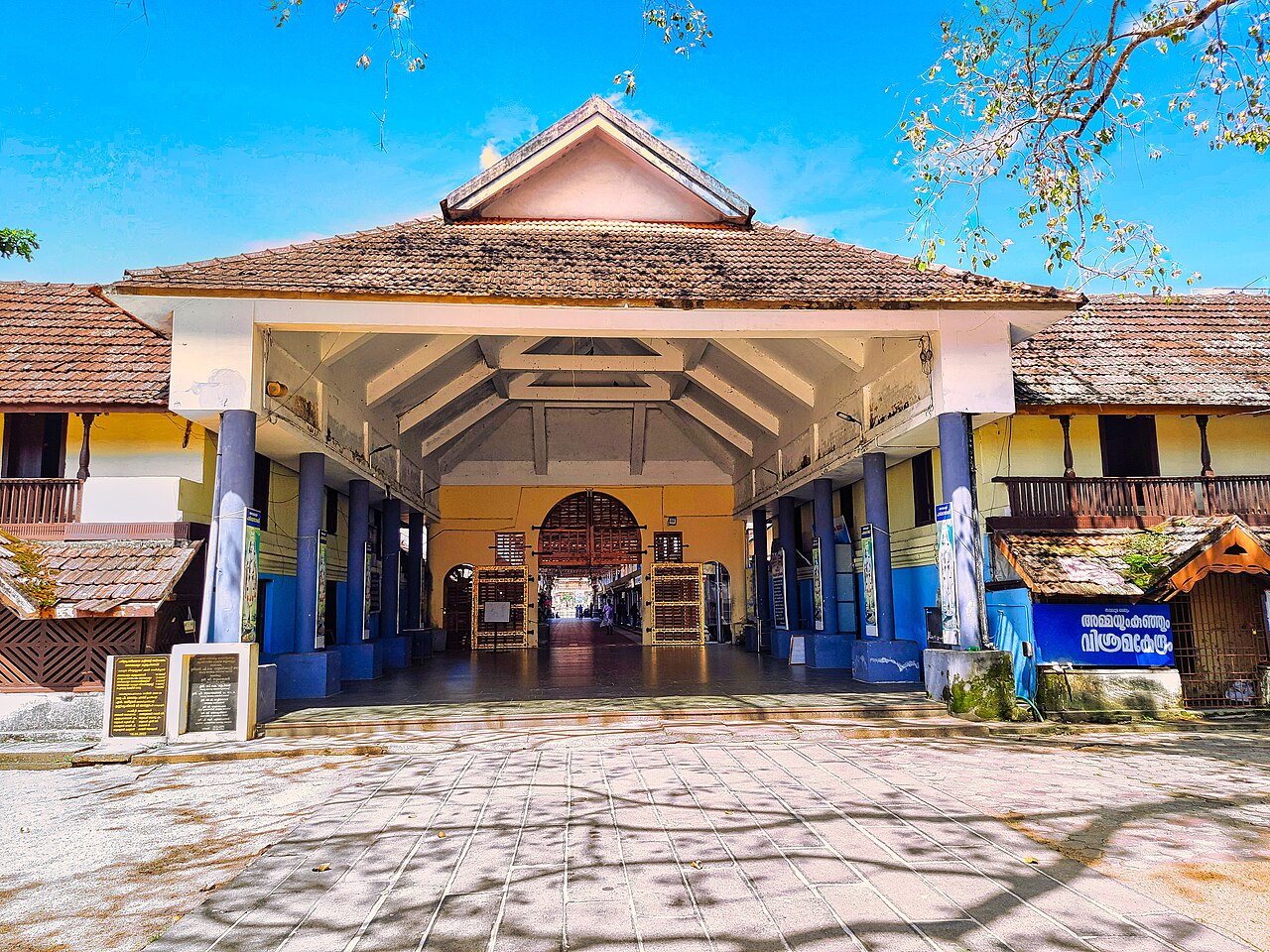
A Vaishnava shrine on the Kerala backwaters consecrated to Sri Krishna in his Parthasarathy form, counted among the seven great Temples of the former kingdom of Travancore and famed across South India for its Ambalapuzha Paal Payasam offering.