Chaturbhuj Temple, Khajuraho
Jatakari Temple · Jatkari Mandir · चतुर्भुज मंदिर
About
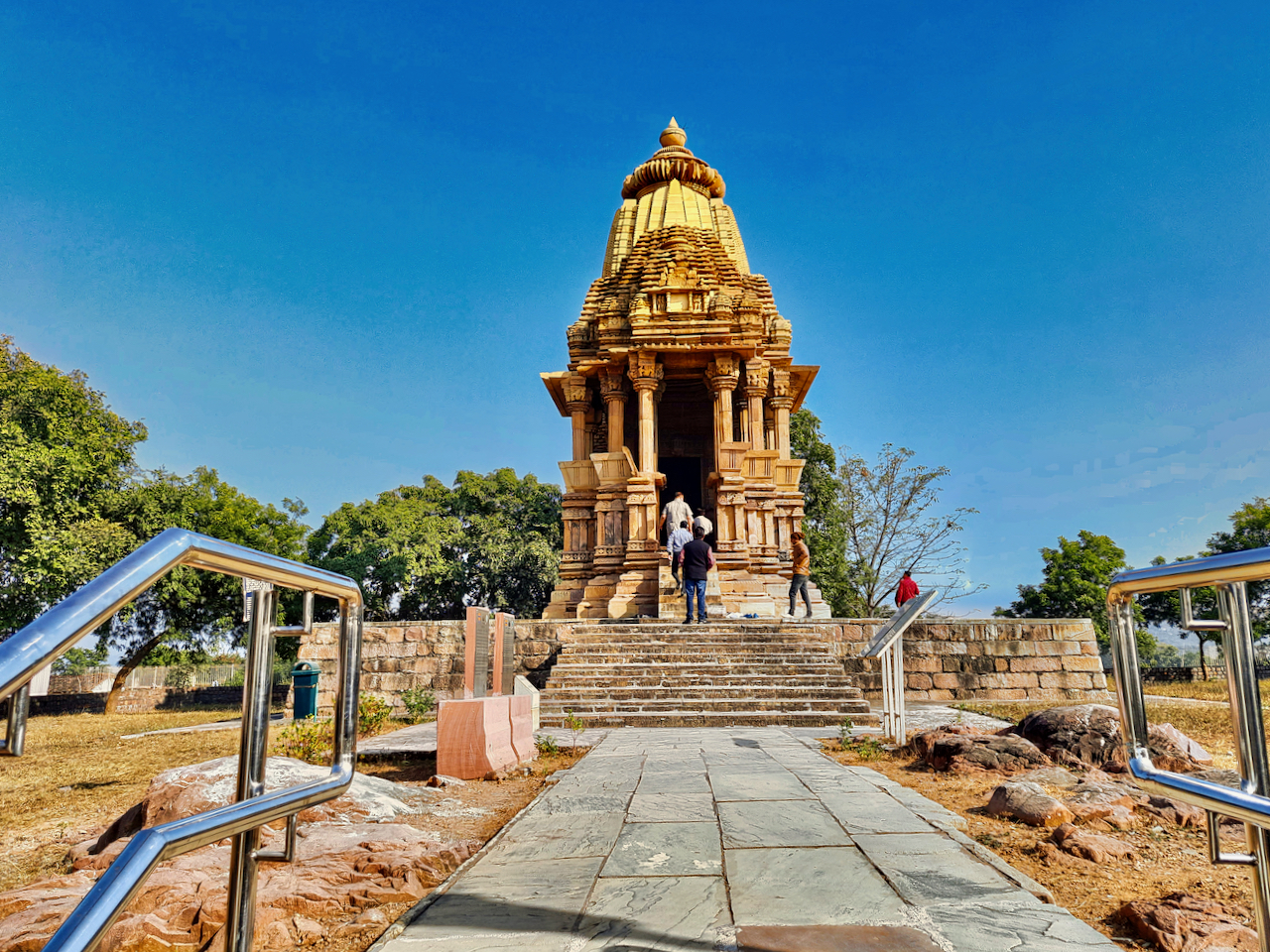
Rising from a modest platform in the quiet village of Jatakari, the Chaturbhuj Temple, also called the Jatakari Temple, is one of the quieter jewels within the Khajuraho Group of Monuments. Its very name carries devotional weight: Chaturbhuja (चतुर्भुज) means "one who bears four arms," a time-honoured epithet of Lord Viṣṇu, and the Temple's entire design is an act of homage to that cosmic form.
Within the inner sanctum stands the presiding image: a four-armed mūrti of Viṣṇu reaching 2.7 metres in height, radiating a quiet authority that fills the space. The architecture enclosing it is classical in its orderliness, a sanctum, vestibule, maṇḍapa, and an entrance porch arranged in clean progression, the whole ensemble resting on a chabutara (raised terrace). Three horizontal registers of sculptural relief encircle the outer walls, offering a different visual language from the famous erotic programmes elsewhere in Khajuraho.
What distinguishes this Temple above all else within the Khajuraho complex is the complete absence of sensuous imagery. Where many of its neighbours celebrate an exuberant mingling of the sacred and the worldly, the Chaturbhuj Temple presents a face of composed devotion, drawing the eye upward and inward rather than outward into narrative. It forms part of the UNESCO World Heritage Site recognised in 1986, valued for its architectural refinement and its witness to the extraordinary creative era of the Chandela dynasty.
History
Chandela king Yasovarman raised the Temple around 1100 CE, one of the later works of a dynasty that filled this stretch of Madhya Pradesh with sandstone shrines across two centuries. Its name, Chaturbhuja, meaning one who bears four arms, is a traditional epithet of Lord Vishnu, and the sanctum was built to hold His four-armed form. The Temple was inscribed within the Khajuraho Group of Monuments on the UNESCO World Heritage List in 1986, and the Archaeological Survey of India cares for the site today.
Significance
Where the Temples of Khajuraho's Western Group are famed for their exuberant sculptural bands, the Chaturbhuj Temple offers something different: walls left largely unadorned, drawing the eye toward the towering image of Lord Vishnu within rather than outward to narrative carving. The four-armed murti, close to nine feet in height, fills the small sanctum with a quiet, commanding presence. For pilgrims who make the walk out to Jatakari, away from the crowds of the Western Group, the Temple offers a rare experience among Khajuraho's monuments: worship without spectacle.
Architecture
Chandela-era Nagara Temple architecture; single-shrine sanctum with vestibule, mandapa, and entrance porch on a raised platform (chabutara), curvilinear sandstone shikhara
Visiting
Hours
Hours not listed.
Contact
No contact details listed yet.
Address
Engage with Chaturbhuj Temple, Khajuraho
Through the four pathways
Seva सेवा — Service
Offer your time and skills here. The following opportunities are open at Chaturbhuj Temple, Khajuraho:
No Seva offerings listed yet.
Sādhana साधना — Practice
Learn the worship and practice associated with Chaturbhuj Temple, Khajuraho:
No Sādhana offerings listed yet.
Sandhāna सन्धान — Wisdom
Unite with the wisdom of this tradition:
No Sandhāna offerings listed yet.
Sādhya साध्य — Giving
Support this sacred place according to your means:
No Sādhya offerings listed yet.
All giving flows directly to Chaturbhuj Temple, Khajuraho. Adisthan does not take a commission.
Gallery
Related sacred places
 Hinduism
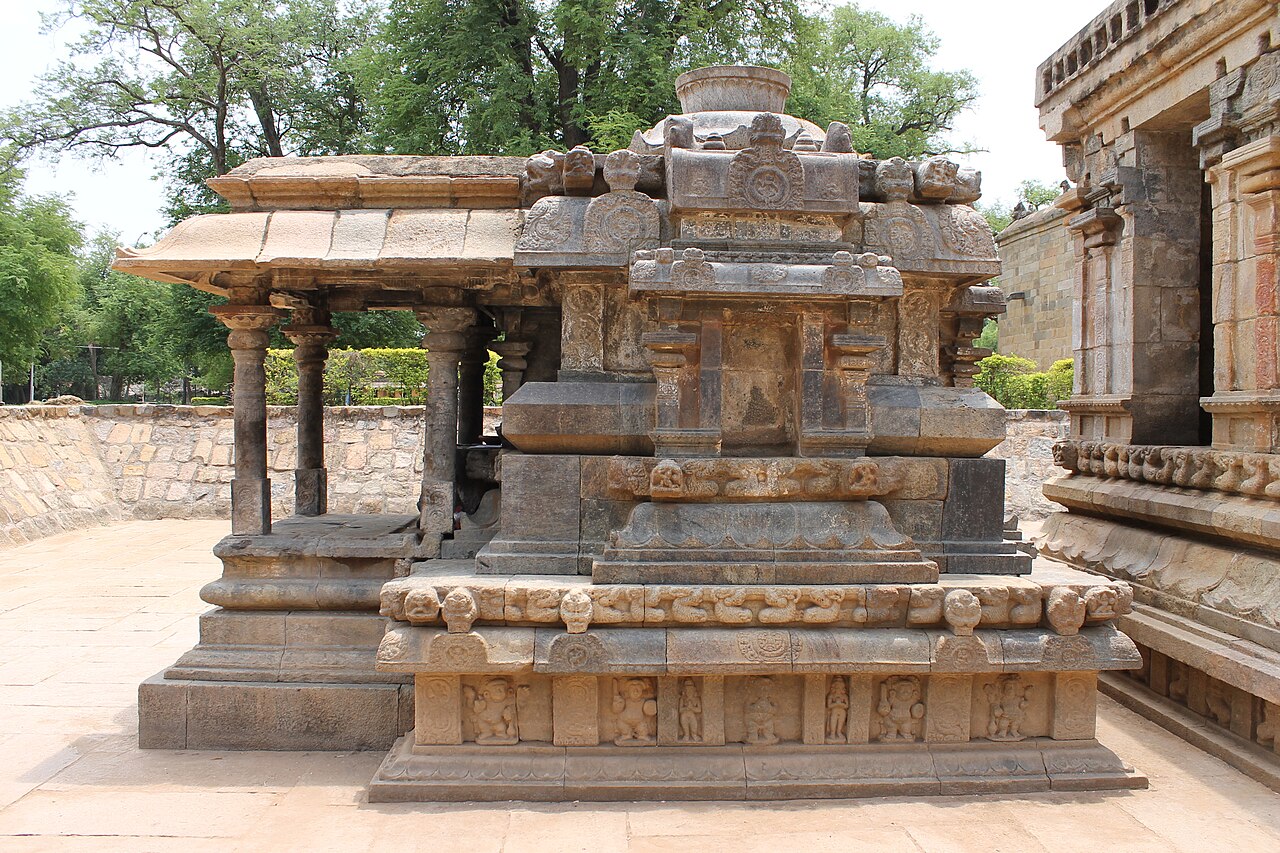
Airavatesvara Temple, Darasuram
Darasuram (Kumbakonam) · India · temple
The third of the Great Living Chola Temples, raised by Rajaraja Chola II around 1166 CE at Darasuram near Kumbakonam: a chariot-form shrine of Lord Shiva as Airavatesvara, famed for its carved stone wheels, its singing steps, and worship that has continued for over eight centuries.
Aisanyesvara Siva Temple
Bhubaneswar · India · temple
A living thirteenth-century Shiva shrine in the Old Town of Bhubaneswar, standing close to the western wall of the great Lingaraj Temple, where a Shivalinga set within a circular yonipitha still receives daily worship in the Kalinga architectural tradition.
 Hinduism
Akhadachandi Temple
Bhubaneswar · India · temple
A tenth-century Kalinga-style shrine on the southwestern bank of Bhubaneswar's sacred Bindusagar tank, Akhadachandi Temple honours Maa Mahishasuramardini, the Goddess in her form as slayer of the buffalo demon, within the dense cluster of ancient shrines that fills the city's Old Town.
 Hinduism
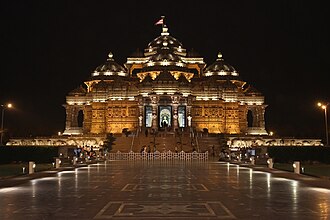
Akshardham
New Delhi · India · temple
A vast contemporary Hindu mandir campus on the Yamuna's west bank in East Delhi, raised without structural steel by 11,000 artisans and volunteers, and recognised by Guinness World Records in 2007 as the world's largest comprehensive Hindu Temple.
 Hinduism
Amarnath Temple
· India · temple
A high Himalayan cave shrine in Jammu and Kashmir where a naturally forming ice lingam is venerated as Lord Śiva, drawing one of India's great seasonal pilgrimages.
 Hinduism
Ambalappuzha Sri Krishna Temple
Ambalappuzha · India · temple
A Vaishnava shrine on the Kerala backwaters consecrated to Sri Krishna in his Parthasarathy form, counted among the seven great Temples of the former kingdom of Travancore and famed across South India for its Ambalapuzha Paal Payasam offering.