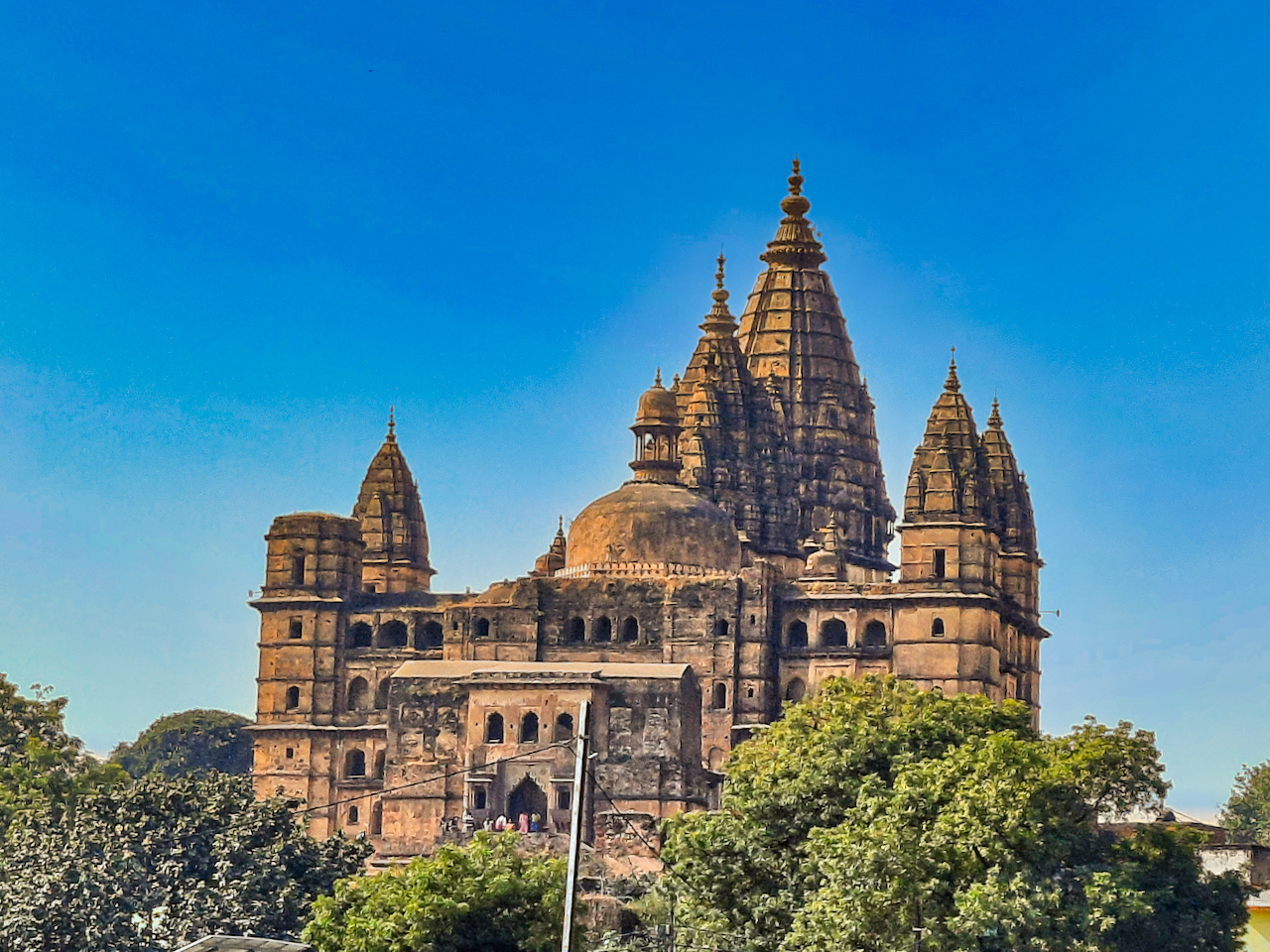
Chaturbhuj Temple, Orchha
Chaturbhuja Temple
About
Rising 105 metres above the island town of Orchha, the Chaturbhuj Temple commands the skyline with an authority that blends sacred aspiration with the martial confidence of Bundela architecture. Its multi-storeyed silhouette, part shrine, part fortress, part palace, reflects a style unique to the Orchha kingdom, where religious and secular grandeur were woven into a single aesthetic language.
The presiding deity for whom the structure was conceived is Rāma, the four-armed avatāra of Viṣṇu, whose name in Sanskrit is rendered as Chaturbhuj: chatur ('four') joined with bhuj ('arms'). Today, however, the innermost chamber enshrines Rādhā-Kṛṣṇa rather than Rāma, owing to an extraordinary sequence of events that redirected the original idol to the nearby Rāma Rāja Temple inside the fort complex.
The Temple sits just beyond the southern boundary of Orchha Fort, on land embraced by the Betwā River, and stands in deliberate axial alignment with the Rāma Rāja Temple to its north. The main hall, or maṇḍapa, is laid out in a cruciform plan and draws on the Māru-Gurjara architectural tradition; its exterior walls are encrusted with lotus motifs, jewelled stone bands, petal-carved mouldings, and corbelled brackets shaped like lotus buds. A flight of sixty-seven steep, winding steps, each roughly a metre in height, ascends to the Temple's upper terrace, from which devotees may look out over the river, the Sāvan Bhādon towers, and the distant silhouette of the Lakṣmī Nārāyaṇa Temple.
History
Queen Rani Ganeshkuwari, a devotee of Lord Rama, is said to have seen Him in a dream and travelled to Ayodhya to bring back an image for a new Temple her husband, the Bundela king Madhukar Shah, had agreed to build. The foundation stone was laid in 1558, and construction continued under Madhukar Shah's son, Vir Singh Deo, into the early seventeenth century. While the Temple was still rising, the queen kept the Rama idol in her own residence, Rani Mahal, and when the shrine was finally ready the image would not be moved, so her palace itself became the Ram Raja Temple, where Rama is worshipped as a reigning king to this day. The Chaturbhuj Temple, left without the deity it was built for, was in time consecrated instead to Radha and Lord Krishna.
Significance
Its soaring pine-cone spires rise from a fortress-like base of arcaded galleries and a central dome, making the Chaturbhuj Temple one of the tallest Temple towers in India and a striking meeting of devotional ambition with Bundela military architecture. The Temple's empty sanctum gave rise to the adjoining Ram Raja Temple, the only shrine in India where Lord Rama is worshipped as a reigning king rather than in his usual form, so the two buildings together tell a single founding story. Pilgrims who climb its sixty-seven winding steps to the open terraces look out over the Betwa River and the spires of Orchha's other sacred places, a vantage the Temple has offered since the days of Vir Singh Deo.
Architecture
Bundela temple-fort-palace architecture with a Māru-Gurjara-influenced cruciform maṇḍapa and pine-cone-shaped shikharas
Visiting
Hours
Hours not listed.
Contact
No contact details listed yet.
Engage with Chaturbhuj Temple, Orchha
Through the four pathways
Seva सेवा — Service
Offer your time and skills here. The following opportunities are open at Chaturbhuj Temple, Orchha:
No Seva offerings listed yet.
Sādhana साधना — Practice
Learn the worship and practice associated with Chaturbhuj Temple, Orchha:
No Sādhana offerings listed yet.
Sandhāna सन्धान — Wisdom
Unite with the wisdom of this tradition:
No Sandhāna offerings listed yet.
Sādhya साध्य — Giving
Support this sacred place according to your means:
No Sādhya offerings listed yet.
All giving flows directly to Chaturbhuj Temple, Orchha. Adisthan does not take a commission.
Festivals & Events
- Sept
Janmashtami
4 September 2026 · annual
The birth of Lord Krishna, drawing devotees to the Temple that today holds His image alongside Radha.
- Nov
Vaikuntha Chaturdashi
23 November 2026 · annual
A day sacred to Lord Vishnu, of whom Lord Krishna is an avatara, observed at the Temple built in devotion to His four-armed form.
Gallery
Related sacred places
 Hinduism
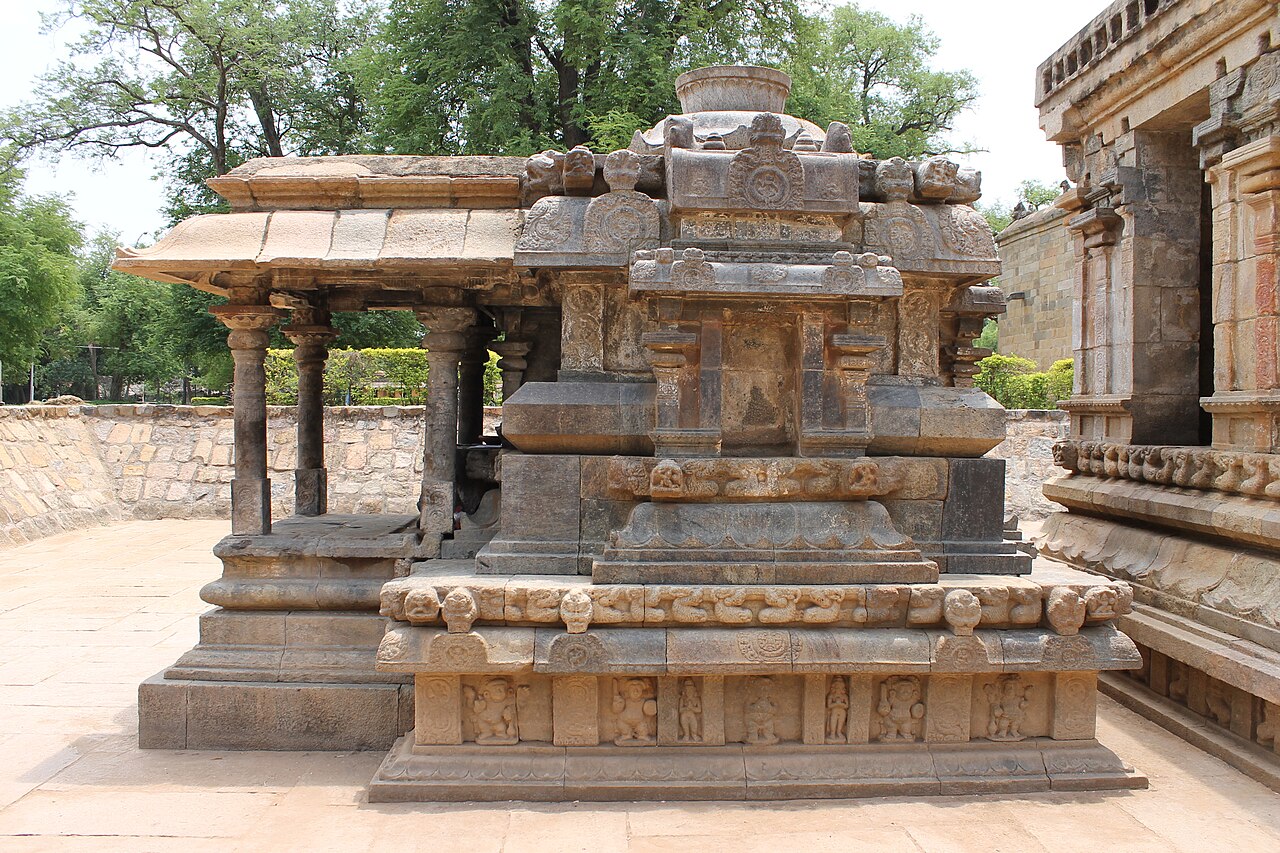
Airavatesvara Temple, Darasuram
Darasuram (Kumbakonam) · India · temple
The third of the Great Living Chola Temples, raised by Rajaraja Chola II around 1166 CE at Darasuram near Kumbakonam: a chariot-form shrine of Lord Shiva as Airavatesvara, famed for its carved stone wheels, its singing steps, and worship that has continued for over eight centuries.
Aisanyesvara Siva Temple
Bhubaneswar · India · temple
A living thirteenth-century Shiva shrine in the Old Town of Bhubaneswar, standing close to the western wall of the great Lingaraj Temple, where a Shivalinga set within a circular yonipitha still receives daily worship in the Kalinga architectural tradition.
 Hinduism
Akhadachandi Temple
Bhubaneswar · India · temple
A tenth-century Kalinga-style shrine on the southwestern bank of Bhubaneswar's sacred Bindusagar tank, Akhadachandi Temple honours Maa Mahishasuramardini, the Goddess in her form as slayer of the buffalo demon, within the dense cluster of ancient shrines that fills the city's Old Town.
 Hinduism
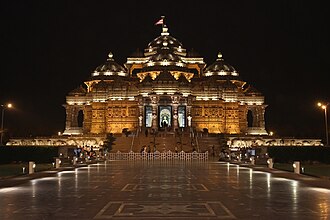
Akshardham
New Delhi · India · temple
A vast contemporary Hindu mandir campus on the Yamuna's west bank in East Delhi, raised without structural steel by 11,000 artisans and volunteers, and recognised by Guinness World Records in 2007 as the world's largest comprehensive Hindu Temple.
 Hinduism
Amarnath Temple
· India · temple
A high Himalayan cave shrine in Jammu and Kashmir where a naturally forming ice lingam is venerated as Lord Śiva, drawing one of India's great seasonal pilgrimages.
 Hinduism
Ambalappuzha Sri Krishna Temple
Ambalappuzha · India · temple
A Vaishnava shrine on the Kerala backwaters consecrated to Sri Krishna in his Parthasarathy form, counted among the seven great Temples of the former kingdom of Travancore and famed across South India for its Ambalapuzha Paal Payasam offering.