
Chau Say Tevoda
Chao Say Tevoda · Prasat Chau Say Tevoda
About
Chau Say Tevoda (Khmer: ប្រាសាទចៅសាយទេវតា) is a small but elegant Hindu Temple within the Angkor complex of Cambodia, set just east of Angkor Thom and directly south of the Thommanon Temple across the Victory Way. Its Khmer name has been read as 'the prolific grandchildren of a deity'.
Built in the mid-twelfth century during the Angkor Wat period, the Temple is consecrated to Śiva and Viṣṇu and is especially admired for its carved devatās, female celestial figures whose graceful forms line the Temple's walls. Most of the principal sculptures depict Viṣṇu and are relatively well preserved, while the central deity is Śiva.
The Temple is built to a cruciform plan with a central tower (prasat) attached to a maṇḍapa via a small antarāla chamber, flanked by two libraries to the north and south. A compound wall pierced by four gopuras encloses the precinct, with a raised causeway leading east toward the Siem Reap River. The carvings along the long connecting hall are particularly fine, with elegant floral ornament.
A later layer of Buddha images was added during the reign of Dharanindravarman, father of Jayavarman VII; these now stand mostly defaced, in a maṇḍapa behind the eastern entrance pediment, set in lotus posture and flanked by devotees.
History
Chau Say Tevoda rose in the mid twelfth century under King Suryavarman II, the same Khmer ruler who raised Angkor Wat, with further additions completed during the reign of Jayavarman VII. Images of the Buddha were added to part of the shrine under Jayavarman VII's father, Dharanindravarman II, layering Buddhist devotion onto the Temple's Hindu foundation as the wider empire's faith shifted in the centuries that followed. By the modern era the structure had collapsed into some four thousand scattered sandstone blocks lying along the riverbank and within the bed of the Siem Reap River. A Chinese conservation team, working under a project of the People's Republic of China between 2000 and 2009, gathered and reassembled these fallen stones, and the restored Temple reopened to pilgrims and visitors in late 2009.
Significance
Chau Say Tevoda's cruciform sanctuary, attached mandapa, and paired libraries follow a plan that echoes Temple architecture from India itself, carried across the sea into the heart of the Khmer empire. Most of its surviving sculpture honours Lord Vishnu, though Lord Shiva remains the shrine's principal deity, a pairing that reflects the layered devotional world of twelfth century Angkor. Restored stone by stone after decades of collapse, the Temple now lets a visitor walk its causeway and stand before carved devata who have watched this threshold for nearly nine hundred years.
Architecture
Angkor Wat-period Khmer Temple architecture: cruciform plan with a central tower (prasat) linked via a small antarala to a mandapa, flanked by two libraries, enclosed by a wall with four gopuras
Visiting
Hours
Hours not listed.
Contact
No contact details listed yet.
Address
Engage with Chau Say Tevoda
Through the four pathways
Seva सेवा — Service
Offer your time and skills here. The following opportunities are open at Chau Say Tevoda:
No Seva offerings listed yet.
Sādhana साधना — Practice
Learn the worship and practice associated with Chau Say Tevoda:
No Sādhana offerings listed yet.
Sandhāna सन्धान — Wisdom
Unite with the wisdom of this tradition:
No Sandhāna offerings listed yet.
Sādhya साध्य — Giving
Support this sacred place according to your means:
No Sādhya offerings listed yet.
All giving flows directly to Chau Say Tevoda. Adisthan does not take a commission.
Gallery
Related sacred places
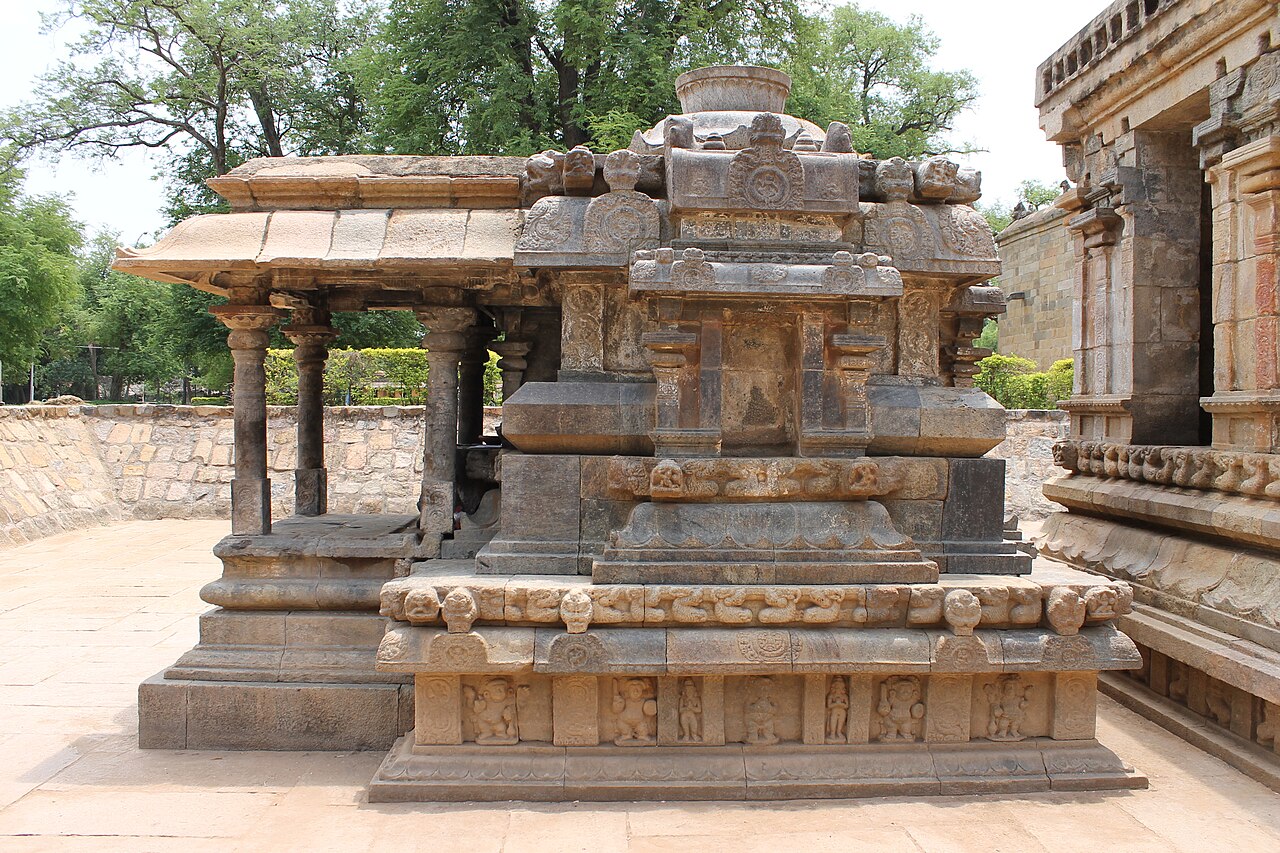 Hinduism
Airavatesvara Temple, Darasuram
Darasuram (Kumbakonam) · India · temple
The third of the Great Living Chola Temples, raised by Rajaraja Chola II around 1166 CE at Darasuram near Kumbakonam: a chariot-form shrine of Lord Shiva as Airavatesvara, famed for its carved stone wheels, its singing steps, and worship that has continued for over eight centuries.
Aisanyesvara Siva Temple
Bhubaneswar · India · temple
A living thirteenth-century Shiva shrine in the Old Town of Bhubaneswar, standing close to the western wall of the great Lingaraj Temple, where a Shivalinga set within a circular yonipitha still receives daily worship in the Kalinga architectural tradition.
 Hinduism
Akhadachandi Temple
Bhubaneswar · India · temple
A tenth-century Kalinga-style shrine on the southwestern bank of Bhubaneswar's sacred Bindusagar tank, Akhadachandi Temple honours Maa Mahishasuramardini, the Goddess in her form as slayer of the buffalo demon, within the dense cluster of ancient shrines that fills the city's Old Town.
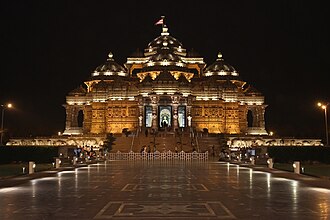 Hinduism
Akshardham
New Delhi · India · temple
A vast contemporary Hindu mandir campus on the Yamuna's west bank in East Delhi, raised without structural steel by 11,000 artisans and volunteers, and recognised by Guinness World Records in 2007 as the world's largest comprehensive Hindu Temple.
 Hinduism
Amarnath Temple
· India · temple
A high Himalayan cave shrine in Jammu and Kashmir where a naturally forming ice lingam is venerated as Lord Śiva, drawing one of India's great seasonal pilgrimages.
 Hinduism
Ambalappuzha Sri Krishna Temple
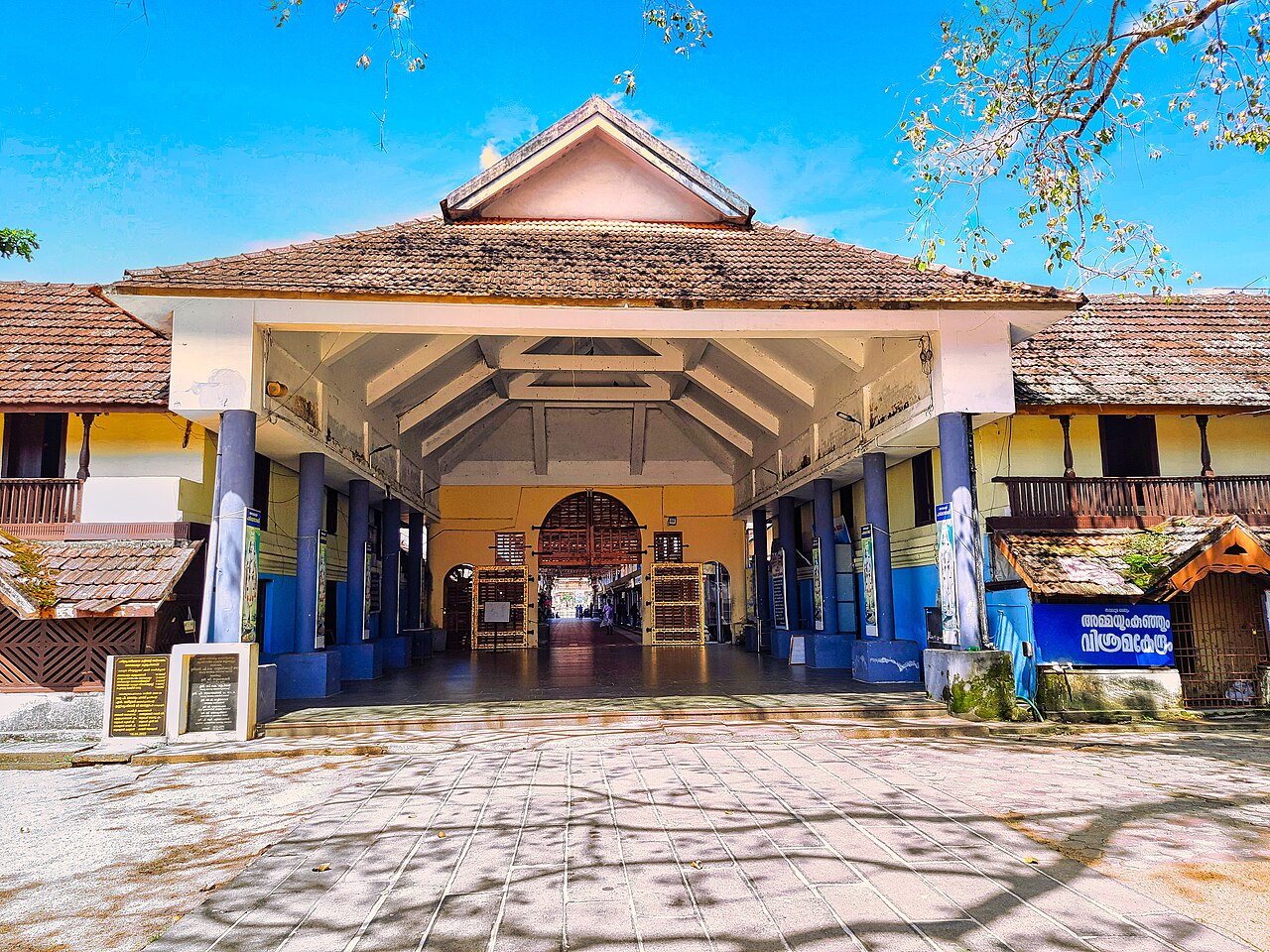
Ambalappuzha · India · temple
A Vaishnava shrine on the Kerala backwaters consecrated to Sri Krishna in his Parthasarathy form, counted among the seven great Temples of the former kingdom of Travancore and famed across South India for its Ambalapuzha Paal Payasam offering.