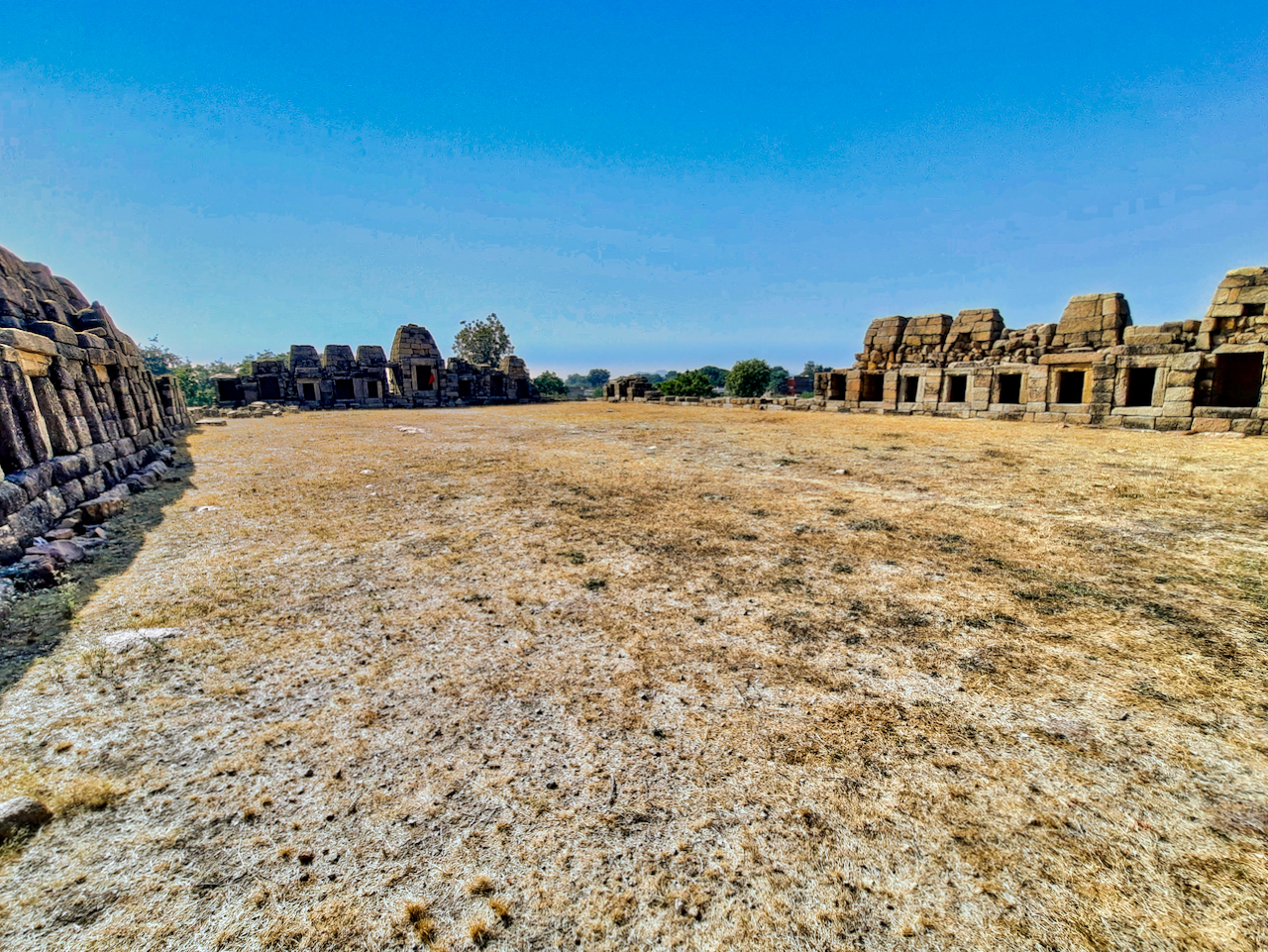
Chausath Yogini Temple, Khajuraho
Chausath Yogini Mandir, Khajuraho · 64 Yogini Temple
About
Rising on a platform some five metres above the surrounding ground, the Chausath Yogini Temple at Khajuraho dates to around 885 CE, making it the earliest extant structure at what was once the Chandela capital. Constructed from large, coarse granite blocks rather than the sandstone favoured by later builders, it follows a rectangular ground plan, approximately 31 metres by 18 metres, setting it apart from the circular layouts common among Yoginī shrines across northern India, though Badoh and Rikhiyan share its rectangular form.
The courtyard at the heart of the Temple is entirely open to the heavens, as Yoginī shrines always are, a quality described as hypaethral, reflecting the tradition's understanding of these fierce goddesses as belonging to the unbounded sky rather than enclosed sanctuaries. Originally sixty-five small shrine cells encircled this courtyard: ten along the northern face, eleven on the rear wall, and twenty-two on each of the long sides. Only thirty-five cells remain intact today. Each is crowned by a curvilinear tower and framed by a simple doorway of two squared granite pillars and a lintel; the best-preserved cells retain a triangular pediment above that lintel. A single larger cell at the centre of the back wall, facing the main entrance, was most likely a shrine of Durgā, with the remaining sixty-four smaller cells having once housed the yoginī statues that give the Temple its name.
No sculpture remains within the ruins today. Three remarkable images of divine mother goddesses, identified as Brāhmaṇī, Māheśvarī, and Hiṅgalajā (also read as Mahiṣhamardinī), were recovered from the site and are now held at the Khajuraho museum. Brāhmaṇī is depicted with three faces, her mount a haṃsa; Māheśvarī carries a trident beside her humped bull; Mahiṣhamardinī places one foot upon the buffalo she has vanquished, wielding sword and shield among her eight arms. These figures rank among the oldest sculptures the Khajuraho tradition has produced.
History
Scholars date the Temple's construction to around 885 CE, at the very start of Chandela patronage at Khajuraho, making it the earliest of the town's surviving shrines by roughly a century. It was raised not from the fine sandstone that later Chandela builders favoured but from massive, rough granite blocks, following a rectangular plan unusual among Yogini shrines, which are more often circular, as at nearby Mitaoli. Ruins of sister Yogini shrines survive across the wider Chandela realm, at Mitaoli, Bhedaghat, Hinglajgarh, Badoh, and Rikhiyan among others, evidence that devotion to the sixty-four Yoginis was once deeply rooted in this region and linked to the Kaula and Kapalika streams of Tantric practice. The Archaeological Survey of India protects the Temple as a Monument of National Importance, and in 1986 UNESCO inscribed it, with the rest of the Khajuraho Group of Monuments, on the World Heritage List.
Significance
No image remains within the ruin today: the three surviving images of the Divine Mother recovered here, identified as Maa Brahmani, Maa Maheshvari, and Maa Mahishamardini, the slayer of the buffalo demon, were moved long ago to the Khajuraho museum, among the oldest sculptures the town has produced. What endures is the form itself, a courtyard open to the sky by design and not by ruin, built for Yoginis who were understood as beings of the air rather than a walled sanctum. Even without its statues, the Temple stands as the clearest surviving trace of Khajuraho's older, wilder Tantric inheritance, predating by two centuries the famed sandstone Temples that made the town renowned.
Architecture
Hypaethral granite Yogini shrine of the early Chandela period, rectangular in plan where most surviving Yogini Temples are circular
Visiting
Hours
Hours not listed.
Contact
No contact details listed yet.
Address
Engage with Chausath Yogini Temple, Khajuraho
Through the four pathways
Seva सेवा — Service
Offer your time and skills here. The following opportunities are open at Chausath Yogini Temple, Khajuraho:
No Seva offerings listed yet.
Sādhana साधना — Practice
Learn the worship and practice associated with Chausath Yogini Temple, Khajuraho:
No Sādhana offerings listed yet.
Sandhāna सन्धान — Wisdom
Unite with the wisdom of this tradition:
No Sandhāna offerings listed yet.
Sādhya साध्य — Giving
Support this sacred place according to your means:
No Sādhya offerings listed yet.
All giving flows directly to Chausath Yogini Temple, Khajuraho. Adisthan does not take a commission.
Gallery
Related sacred places
 Hinduism
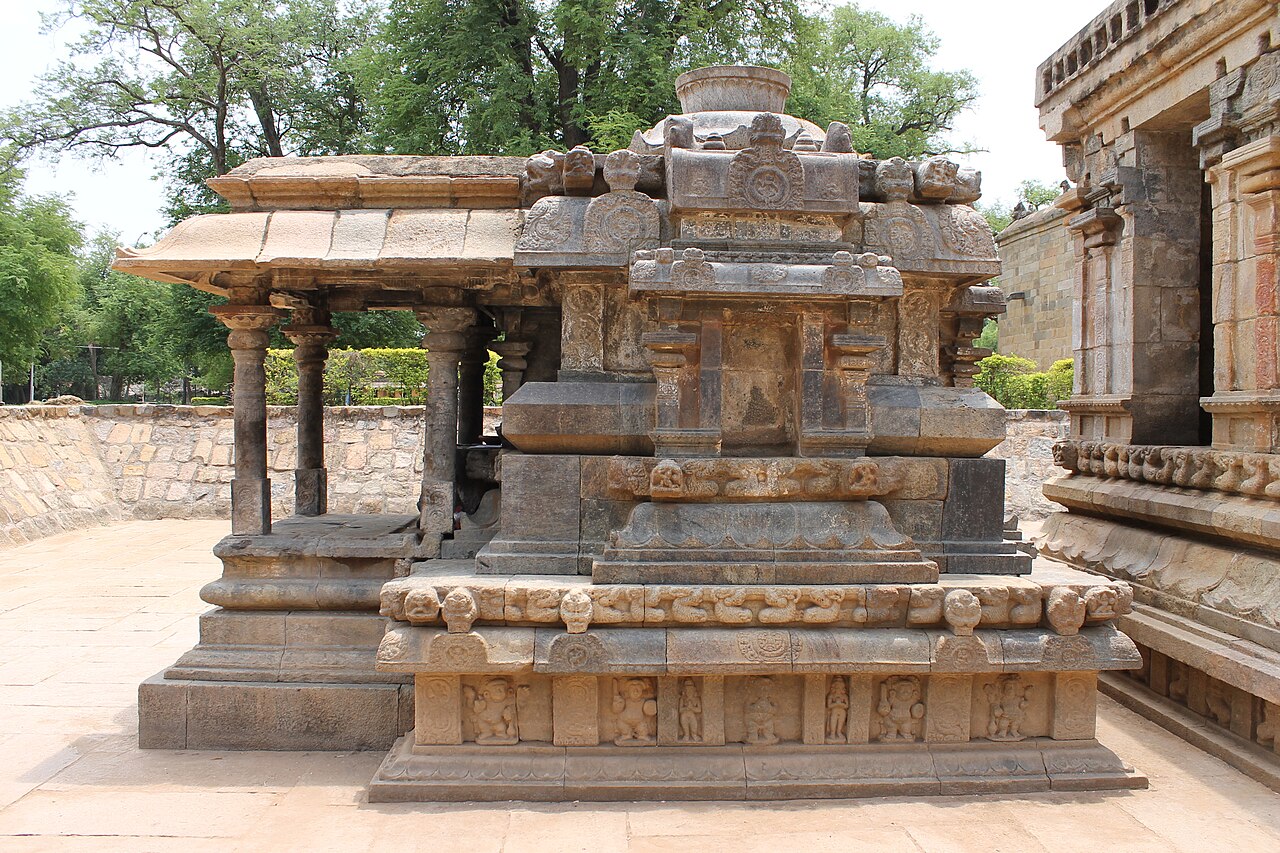
Airavatesvara Temple, Darasuram
Darasuram (Kumbakonam) · India · temple
The third of the Great Living Chola Temples, raised by Rajaraja Chola II around 1166 CE at Darasuram near Kumbakonam: a chariot-form shrine of Lord Shiva as Airavatesvara, famed for its carved stone wheels, its singing steps, and worship that has continued for over eight centuries.
Aisanyesvara Siva Temple
Bhubaneswar · India · temple
A living thirteenth-century Shiva shrine in the Old Town of Bhubaneswar, standing close to the western wall of the great Lingaraj Temple, where a Shivalinga set within a circular yonipitha still receives daily worship in the Kalinga architectural tradition.
 Hinduism
Akhadachandi Temple
Bhubaneswar · India · temple
A tenth-century Kalinga-style shrine on the southwestern bank of Bhubaneswar's sacred Bindusagar tank, Akhadachandi Temple honours Maa Mahishasuramardini, the Goddess in her form as slayer of the buffalo demon, within the dense cluster of ancient shrines that fills the city's Old Town.
 Hinduism
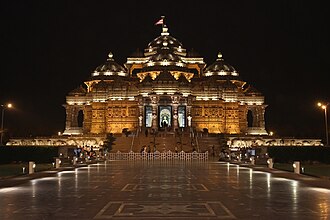
Akshardham
New Delhi · India · temple
A vast contemporary Hindu mandir campus on the Yamuna's west bank in East Delhi, raised without structural steel by 11,000 artisans and volunteers, and recognised by Guinness World Records in 2007 as the world's largest comprehensive Hindu Temple.
 Hinduism
Amarnath Temple
· India · temple
A high Himalayan cave shrine in Jammu and Kashmir where a naturally forming ice lingam is venerated as Lord Śiva, drawing one of India's great seasonal pilgrimages.
 Hinduism
Ambalappuzha Sri Krishna Temple
Ambalappuzha · India · temple
A Vaishnava shrine on the Kerala backwaters consecrated to Sri Krishna in his Parthasarathy form, counted among the seven great Temples of the former kingdom of Travancore and famed across South India for its Ambalapuzha Paal Payasam offering.