Chausath Yogini Temple, Mitaoli
Chausath Yogini Temple, Mitawali · Ekattarso Mahadeva Temple · 64 Yogini Temple, Morena
About
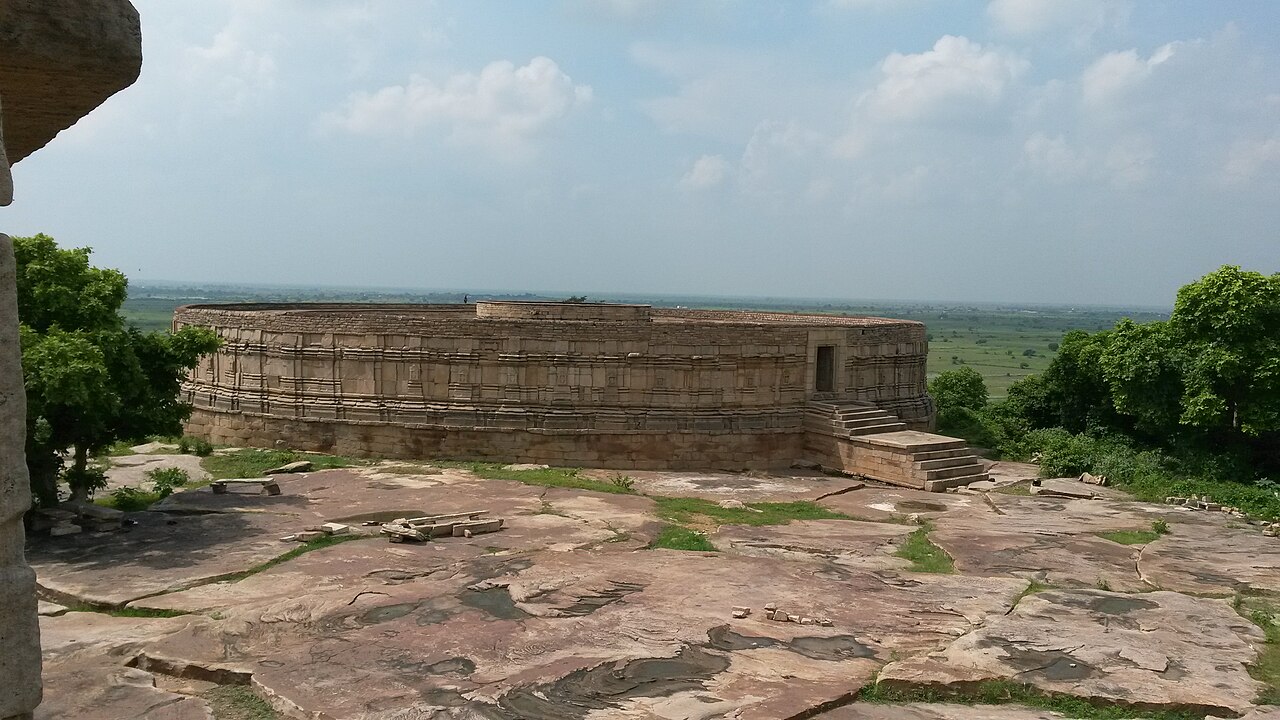
Rising from a hill roughly thirty metres above the Chambal plains, the Chausath Yoginī Temple at Mitaoli, also revered under its alternate name, Ekattarso Mahadeva Temple, commands the surrounding countryside with quiet authority. A broad perimeter wall, curving through a full circle with a radius of approximately fifty-two metres, encloses sixty-five small shrines: sixty-four arranged for the yoginīs and one for the great goddess Devī, with an open maṇḍapa standing at the heart of the roofless, sky-facing courtyard dedicated to Śiva. One hundred steps ascend from the base of the hill to the gateway, and the journey upward is itself a passage from the ordinary world into a space conceived for communion with formidable feminine powers.
The architectural character of Yoginī shrines is deliberately hypaethral, open above to wind and rain and stars, because the yoginīs themselves were understood as beings of the air, capable of flight, not confined by roofs. Each of the sixty-four peripheral chambers holds a small maṇḍapa fronted by pilasters and pillars, and the flat roof over the ring of shrines wraps around the central Śiva shrine whose stone ceiling slabs are pierced with channels that direct rainwater down into a large underground cistern. The outer wall, unusually for this Temple type, once bore sculptural decoration: paired figures accompanied by attendant women, though most of these carvings have since been lost or weathered beyond recognition.
The images now occupying the peripheral niches are forms of Śiva, replacing the original sixty-four Yoginī figures. The name Chausath Yoginī, chausath being the Hindi word for sixty-four, preserves the memory of the shrine's original dedication, as does the enduring presence of Devī at its centre. Oral and scholarly traditions alike hold that the shrine's circular plan was later echoed, consciously or otherwise, in the design of India's Parliament building, and the Temple's demonstrated resilience through successive earthquakes, it sits within a recognized seismic zone, was invoked during parliamentary debates about that building's structural safety.
History
Tradition and a surviving Temple inscription attribute the founding to the Kachchhapaghata king Devapala, who ruled this stretch of the Chambal valley around 1055 to 1075 CE. The inscription itself is dated 1323 CE, more than two centuries after Devapala's reign, and scholars read it as recording a later renovation or endowment that names the original royal patron rather than a fresh founding. Local memory also holds that the Temple once served as a place for teaching astrology and mathematics tracked to the movement of the sun, a role suited to its open, sky-facing courtyard. The Archaeological Survey of India placed the Temple under statutory protection on 28 November 1951, under Act No. LXXI of 1951, and it has withstood the region's earthquakes without serious damage since.
Significance
Yogini Temples are rare, and circular ones rarer still. At Mitaoli sixty-five cells ring an open courtyard on a low platform, originally sixty-four for the Yoginis and one for Maa Devi, with an open mandapa at the centre consecrated to Lord Shiva, today also called the Ekattarso Mahadeva Temple. Tradition holds that the architects of India's circular Parliament building in Delhi drew on this Temple's plan, a claim invoked in Parliament itself when the two buildings' shared resilience to earthquakes was debated, and it lends this quiet hilltop shrine an outsized place in the national imagination.
Architecture
Kachchhapaghata-era circular hypaethral Yogini Temple architecture; a stone drum wall of pilastered cells enclosing an open central mandapa
Visiting
Hours
Hours not listed.
Contact
No contact details listed yet.
Engage with Chausath Yogini Temple, Mitaoli
Through the four pathways
Seva सेवा — Service
Offer your time and skills here. The following opportunities are open at Chausath Yogini Temple, Mitaoli:
No Seva offerings listed yet.
Sādhana साधना — Practice
Learn the worship and practice associated with Chausath Yogini Temple, Mitaoli:
No Sādhana offerings listed yet.
Sandhāna सन्धान — Wisdom
Unite with the wisdom of this tradition:
No Sandhāna offerings listed yet.
Sādhya साध्य — Giving
Support this sacred place according to your means:
No Sādhya offerings listed yet.
All giving flows directly to Chausath Yogini Temple, Mitaoli. Adisthan does not take a commission.
Gallery
Related sacred places
 Hinduism
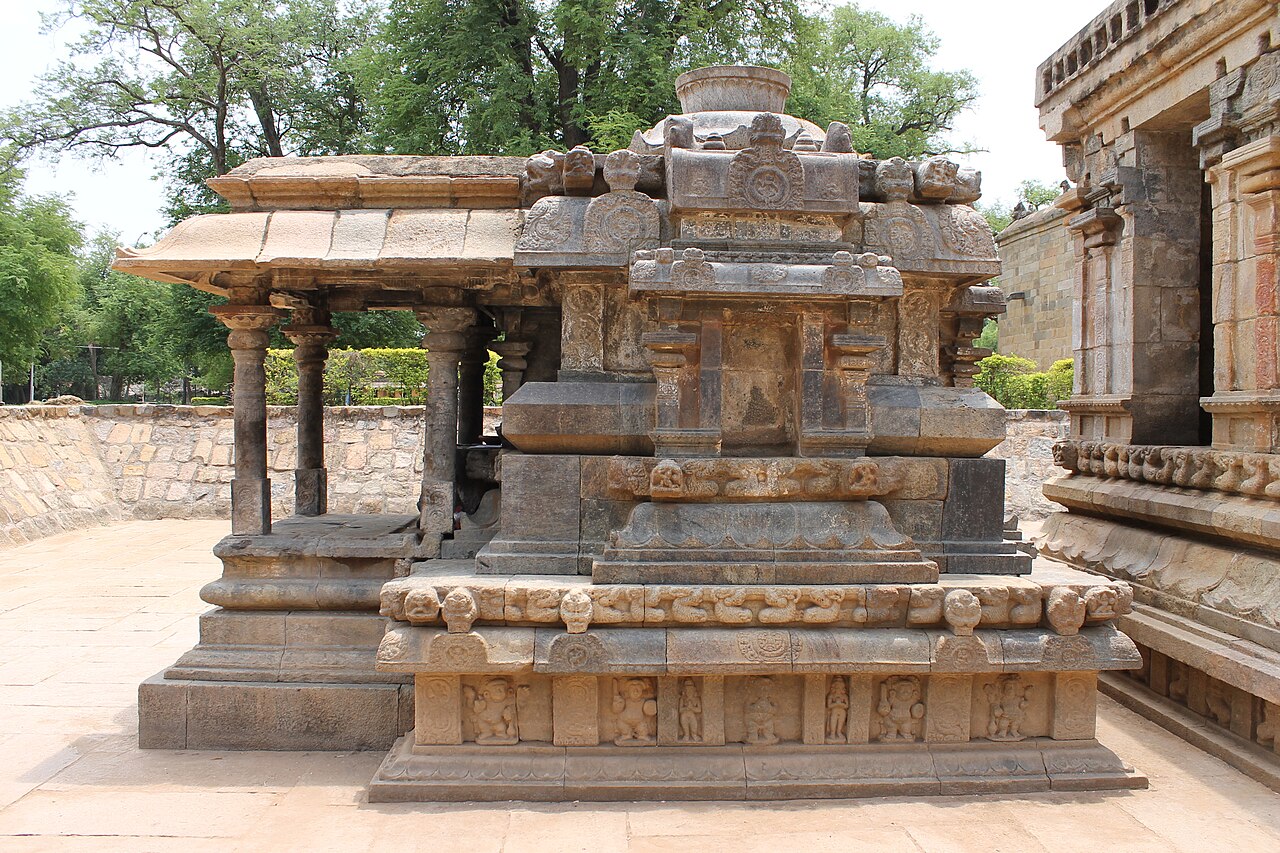
Airavatesvara Temple, Darasuram
Darasuram (Kumbakonam) · India · temple
The third of the Great Living Chola Temples, raised by Rajaraja Chola II around 1166 CE at Darasuram near Kumbakonam: a chariot-form shrine of Lord Shiva as Airavatesvara, famed for its carved stone wheels, its singing steps, and worship that has continued for over eight centuries.
Aisanyesvara Siva Temple
Bhubaneswar · India · temple
A living thirteenth-century Shiva shrine in the Old Town of Bhubaneswar, standing close to the western wall of the great Lingaraj Temple, where a Shivalinga set within a circular yonipitha still receives daily worship in the Kalinga architectural tradition.
 Hinduism
Akhadachandi Temple
Bhubaneswar · India · temple
A tenth-century Kalinga-style shrine on the southwestern bank of Bhubaneswar's sacred Bindusagar tank, Akhadachandi Temple honours Maa Mahishasuramardini, the Goddess in her form as slayer of the buffalo demon, within the dense cluster of ancient shrines that fills the city's Old Town.
 Hinduism
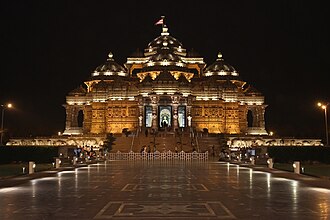
Akshardham
New Delhi · India · temple
A vast contemporary Hindu mandir campus on the Yamuna's west bank in East Delhi, raised without structural steel by 11,000 artisans and volunteers, and recognised by Guinness World Records in 2007 as the world's largest comprehensive Hindu Temple.
 Hinduism
Amarnath Temple
· India · temple
A high Himalayan cave shrine in Jammu and Kashmir where a naturally forming ice lingam is venerated as Lord Śiva, drawing one of India's great seasonal pilgrimages.
 Hinduism
Ambalappuzha Sri Krishna Temple
Ambalappuzha · India · temple
A Vaishnava shrine on the Kerala backwaters consecrated to Sri Krishna in his Parthasarathy form, counted among the seven great Temples of the former kingdom of Travancore and famed across South India for its Ambalapuzha Paal Payasam offering.