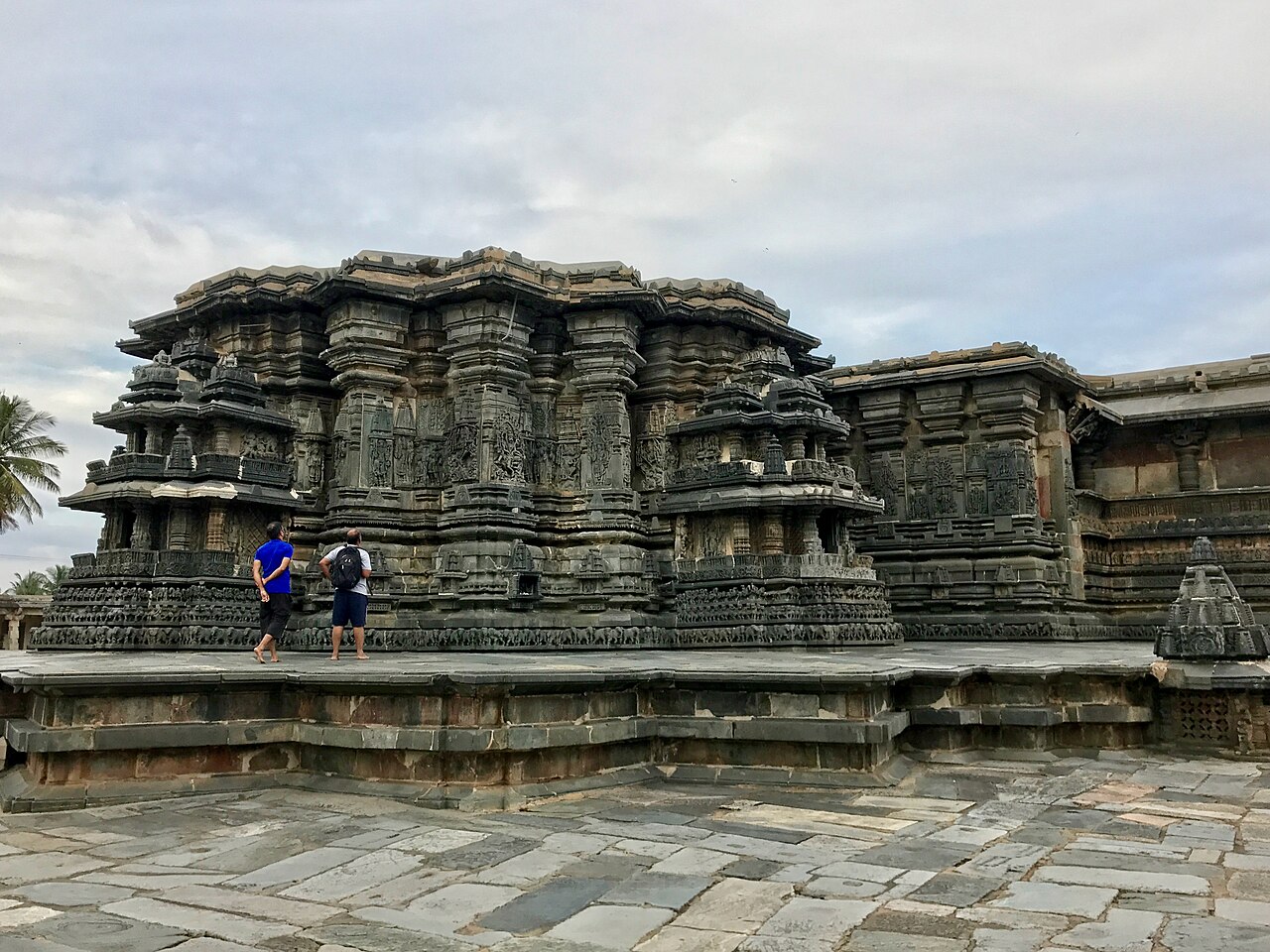
Chennakesava Temple, Belur
Chennakeshava Temple · Channakeshava Temple · Keshava Temple · Belur Temple
About
The Chennakesava Temple at Belur stands as one of the most celebrated expressions of Hoysala sacred architecture in Karnataka, southern India. Dedicated to Lord Viṣṇu, whose name Chennakesava evokes the deity's beauty and grace, the complex was established in 1117 CE, making it a monument of living devotion that has endured for more than nine centuries.
The exterior walls of the main shrine bear an extraordinary density of carved imagery. Pairs of Garuḍa, the divine eagle-mount of Viṣṇu, are depicted at the eastern entrance in attitudes of reverence, flanked by rows of celestial dancers whose postures convey both devotional ardour and artistic mastery. Despite being a Vaishnavism complex, the iconographic programme is remarkably inclusive: panels of Śiva Nāṭarāja appear alongside Vaishnava imagery, reflecting the ecumenical spirit characteristic of Hoysala royal patronage.
Within the walled precinct, subsidiary shrines accompany the principal sanctuary, creating a layered sacred landscape that rewards unhurried contemplation. The overall impression is one of densely populated stone, every surface animated, every cornice alive with figure and form, yet the composition holds a stillness that speaks to the depth of intention behind its making.
History
King Vishnuvardhana of the Hoysala dynasty commissioned the Temple in 1117 CE at Belur, then a Hoysala capital. Raised in dark chloritic schist rather than the sandstone of North Indian Temples, the complex took shape across three generations of patronage, its main shrine and surrounding structures reaching completion only around a century after the first stone was laid. Unlike the neighbouring Hoysalesvara Temple at Halebidu, where worship was long ago discontinued, Chennakesava has been in unbroken use since its founding, its rituals and annual festivals continuing to this day. In September 2023 UNESCO inscribed the Temple, together with its sister complexes at Halebidu and Somanathapura, as the Sacred Ensembles of the Hoysalas.
Significance
Every surface of the shrine carries carving of extraordinary density: pairs of Garuda in namaste pose watch over the eastern entrance, and dozens of madanikas, celestial dancers turned in mid gesture on the supporting pillars, ring the hall. Though built for Lord Vishnu, the Temple keeps panels of Shiva Nataraja among its reliefs, an ecumenism typical of Hoysala patronage. Its annual Divyabrahma Rathotsava carries a rare living witness to that same spirit: the chariot festival opens with the recitation of verses from the Quran by a Maulvi, a tradition observed by Hindus and Muslims together for generations.
Architecture
Hoysala Temple architecture, stellate plan on a raised platform, carved in dark chloritic schist (soapstone)
Visiting
Hours
Hours not listed.
Contact
No contact details listed yet.
Engage with Chennakesava Temple, Belur
Through the four pathways
Seva सेवा — Service
Offer your time and skills here. The following opportunities are open at Chennakesava Temple, Belur:
No Seva offerings listed yet.
Sādhana साधना — Practice
Learn the worship and practice associated with Chennakesava Temple, Belur:
No Sādhana offerings listed yet.
Sandhāna सन्धान — Wisdom
Unite with the wisdom of this tradition:
No Sandhāna offerings listed yet.
Sādhya साध्य — Giving
Support this sacred place according to your means:
No Sādhya offerings listed yet.
All giving flows directly to Chennakesava Temple, Belur. Adisthan does not take a commission.
Gallery
Related sacred places
 Hinduism
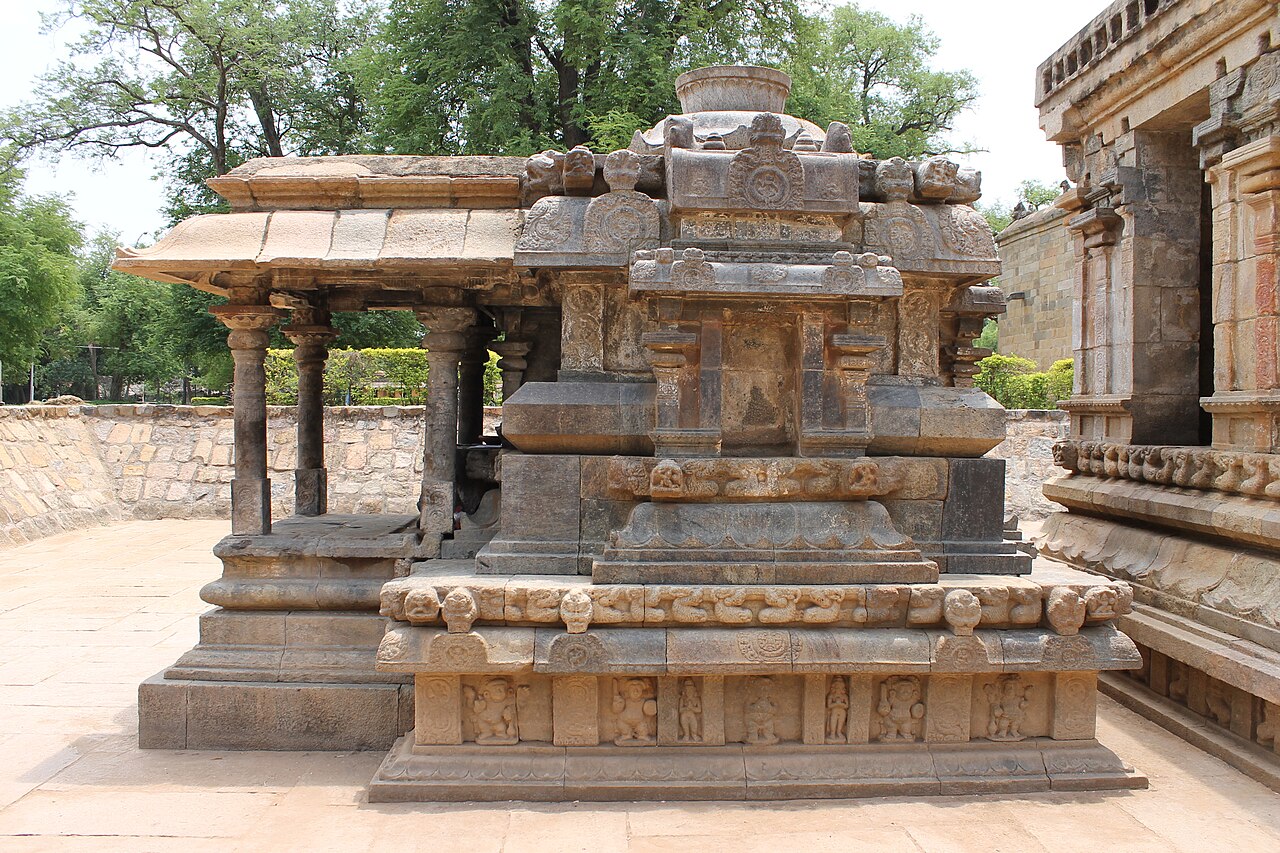
Airavatesvara Temple, Darasuram
Darasuram (Kumbakonam) · India · temple
The third of the Great Living Chola Temples, raised by Rajaraja Chola II around 1166 CE at Darasuram near Kumbakonam: a chariot-form shrine of Lord Shiva as Airavatesvara, famed for its carved stone wheels, its singing steps, and worship that has continued for over eight centuries.
Aisanyesvara Siva Temple
Bhubaneswar · India · temple
A living thirteenth-century Shiva shrine in the Old Town of Bhubaneswar, standing close to the western wall of the great Lingaraj Temple, where a Shivalinga set within a circular yonipitha still receives daily worship in the Kalinga architectural tradition.
 Hinduism
Akhadachandi Temple
Bhubaneswar · India · temple
A tenth-century Kalinga-style shrine on the southwestern bank of Bhubaneswar's sacred Bindusagar tank, Akhadachandi Temple honours Maa Mahishasuramardini, the Goddess in her form as slayer of the buffalo demon, within the dense cluster of ancient shrines that fills the city's Old Town.
 Hinduism
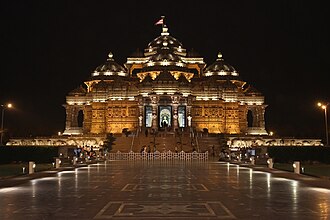
Akshardham
New Delhi · India · temple
A vast contemporary Hindu mandir campus on the Yamuna's west bank in East Delhi, raised without structural steel by 11,000 artisans and volunteers, and recognised by Guinness World Records in 2007 as the world's largest comprehensive Hindu Temple.
 Hinduism
Amarnath Temple
· India · temple
A high Himalayan cave shrine in Jammu and Kashmir where a naturally forming ice lingam is venerated as Lord Śiva, drawing one of India's great seasonal pilgrimages.
 Hinduism
Ambalappuzha Sri Krishna Temple
Ambalappuzha · India · temple
A Vaishnava shrine on the Kerala backwaters consecrated to Sri Krishna in his Parthasarathy form, counted among the seven great Temples of the former kingdom of Travancore and famed across South India for its Ambalapuzha Paal Payasam offering.