Chitragupta Temple
Bharatji Temple · Chitragupta Mandir · Chitragupta Temple, Khajuraho
About
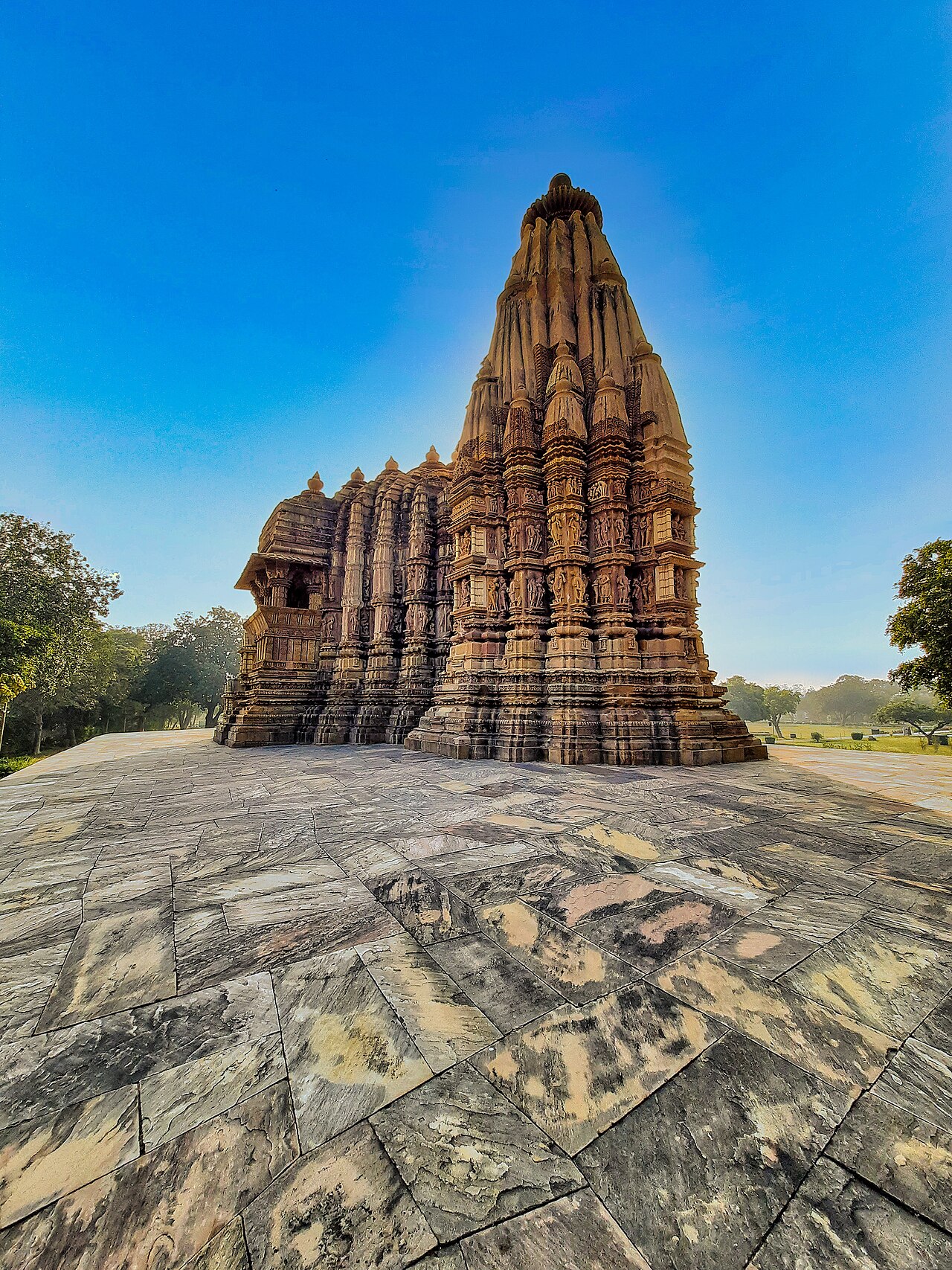
Rising amid the sacred precinct of Khajuraho in Madhya Pradesh, the Chitragupta Temple stands as one of the few places of worship across the subcontinent consecrated to Sūrya, the solar deity of the Hindu tradition. Its plan echoes that of the neighbouring Jagadambī shrine, sanctum, circumambulatory path, vestibule, and a large columned hall flanked by transepts, yet its octagonal ceiling above the maha-maṇḍapa is more elaborately carved, suggesting it was raised a little later.
The outer walls unfold a remarkable programme of stone imagery. At the heart of the sanctum stands a 2.1-metre figure of Sūrya mounted on a chariot drawn by seven horses; the deity is depicted upright, clothed in an armoured coat and boots, and bearing lotus blossoms in each hand. The door lintel echoes this iconography with three smaller renditions of the same form. Across the exterior, panels of erotic couples, celestial nymphs (surasundarī), and divine figures animate every register, including an eleven-headed image of Viṣṇu in his supreme aspect (para rūpa) displaying his ten avatāras, a composition scholars regard as singular, without parallel in either surviving monuments or textual sources.
History
Epigraphic and stylistic evidence place the Temple's construction in the early eleventh century, around 1020 to 1025 CE, when the Chandela dynasty's building programme at Khajuraho was at its height, its carvings falling in sequence after the nearby Vishvanatha Temple and before the Kandariya Mahadeva. One scholarly account holds that it was consecrated on 23 February 1023 CE, the night of Shivaratri, though this precise date rests on a single citation this research could not independently confirm beyond Wikipedia's own reference to it. The Archaeological Survey of India, which protects the Temple as a Monument of National Importance and records it also as Bharatji's Temple, places it about ninety metres north of the closely related Jagadambi Temple, whose plan it echoes, though its more elaborately carved octagonal hall ceiling suggests it was raised slightly later.
Significance
As the only Temple at Khajuraho consecrated to Lord Surya, Chitragupta holds a singular place of devotion to the sun within a complex otherwise given chiefly to Lord Shiva and Lord Vishnu, its sanctum image of the sun god riding his seven-horse chariot unrepeated anywhere else at the site. Its outer walls carry some of Khajuraho's finest sura-sundari and mithuna carving alongside an eleven-headed image of Lord Vishnu in his supreme form bearing his ten incarnations, a composition scholars have found in no other surviving monument or text. Part of the UNESCO-inscribed Khajuraho Group of Monuments, the Temple stands beside the Jagadambi Temple as its architectural sibling, the two together showing how the Chandela masons refined a single plan twice within a few years of each other.
Architecture
Central Indian Nagara Temple architecture of the Chandela era: sanctum, vestibule and pillared mahamandapa with lateral transepts and entrance porch beneath a curvilinear sandstone shikhara, closely paralleling the adjacent Jagadambi Temple
Visiting
Hours
Hours not listed.
Contact
No contact details listed yet.
Engage with Chitragupta Temple
Through the four pathways
Seva सेवा — Service
Offer your time and skills here. The following opportunities are open at Chitragupta Temple:
No Seva offerings listed yet.
Sādhana साधना — Practice
Learn the worship and practice associated with Chitragupta Temple:
No Sādhana offerings listed yet.
Sandhāna सन्धान — Wisdom
Unite with the wisdom of this tradition:
No Sandhāna offerings listed yet.
Sādhya साध्य — Giving
Support this sacred place according to your means:
No Sādhya offerings listed yet.
All giving flows directly to Chitragupta Temple. Adisthan does not take a commission.
Gallery
Related sacred places
 Hinduism
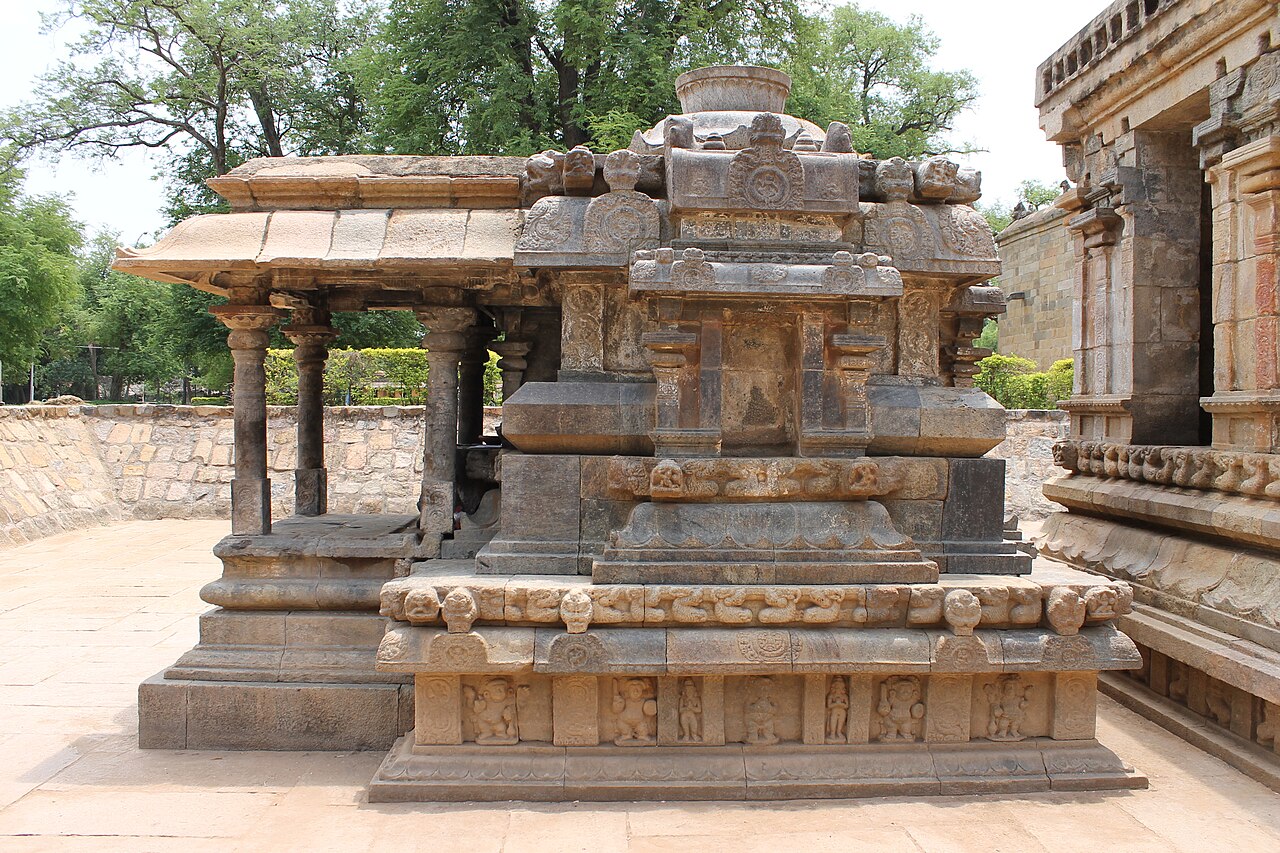
Airavatesvara Temple, Darasuram
Darasuram (Kumbakonam) · India · temple
The third of the Great Living Chola Temples, raised by Rajaraja Chola II around 1166 CE at Darasuram near Kumbakonam: a chariot-form shrine of Lord Shiva as Airavatesvara, famed for its carved stone wheels, its singing steps, and worship that has continued for over eight centuries.
Aisanyesvara Siva Temple
Bhubaneswar · India · temple
A living thirteenth-century Shiva shrine in the Old Town of Bhubaneswar, standing close to the western wall of the great Lingaraj Temple, where a Shivalinga set within a circular yonipitha still receives daily worship in the Kalinga architectural tradition.
 Hinduism
Akhadachandi Temple
Bhubaneswar · India · temple
A tenth-century Kalinga-style shrine on the southwestern bank of Bhubaneswar's sacred Bindusagar tank, Akhadachandi Temple honours Maa Mahishasuramardini, the Goddess in her form as slayer of the buffalo demon, within the dense cluster of ancient shrines that fills the city's Old Town.
 Hinduism
Akshardham
New Delhi · India · temple
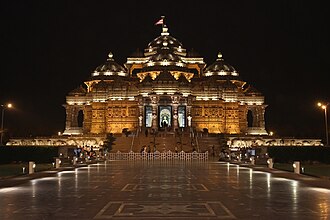
A vast contemporary Hindu mandir campus on the Yamuna's west bank in East Delhi, raised without structural steel by 11,000 artisans and volunteers, and recognised by Guinness World Records in 2007 as the world's largest comprehensive Hindu Temple.
 Hinduism
Amarnath Temple
· India · temple
A high Himalayan cave shrine in Jammu and Kashmir where a naturally forming ice lingam is venerated as Lord Śiva, drawing one of India's great seasonal pilgrimages.
 Hinduism
Ambalappuzha Sri Krishna Temple
Ambalappuzha · India · temple
A Vaishnava shrine on the Kerala backwaters consecrated to Sri Krishna in his Parthasarathy form, counted among the seven great Temples of the former kingdom of Travancore and famed across South India for its Ambalapuzha Paal Payasam offering.