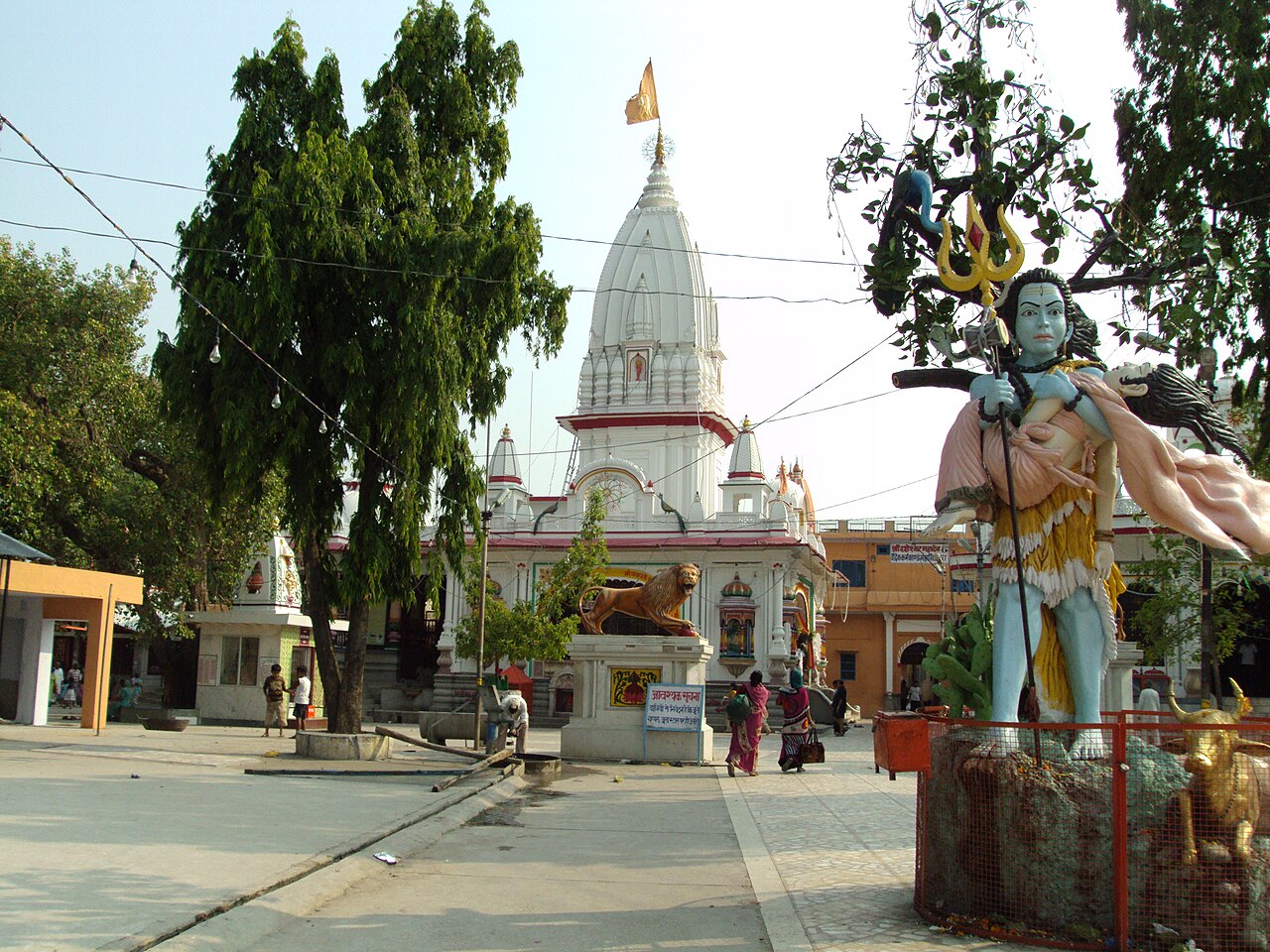
Daksheswara Mahadev Temple
Daksheshwar Mahadev Temple · Daksha Mahadev Temple · दक्षेश्वर महादेव मन्दिर
About
Nestled in the sacred township of Kankhal, roughly four kilometres from Haridwar, the Daksheswara Mahadev Temple stands as one of the Shaiva tradition's deeply venerated pilgrimage sites in the Uttarakhand hills. It honours Lord Shiva under the name that recalls Daksha Prajapati, one of the fourteen Prajapatis, the creator-deities charged in Hindu cosmology with overseeing life's continuation and safeguarding all living beings.
The mythic weight carried by this ground is immense. It was here, according to the Mahābhārata and the Vāyu Purāṇa, that King Daksha conducted a grand yajña from which he excluded Shiva. When his daughter Satī arrived and witnessed her husband being dishonoured, she immolated herself in the sacrificial fire, the yajna kunda itself. Shiva's anguish unleashed his terrifying gaṇas, led by Vīrabhadra and Bhadrakālī, who descended upon Daksha's assembly like a storm, slew the gods and mortals gathered there, and severed Daksha's head. By the grace of Brahma and the assembled devas, Daksha was later restored to life with the head of a goat.
The Temple complex holds more than its principal shrine. A separate sanctuary called the Das Mahāvidyā Temple honours the ten Mahāvidyās and draws Devī devotees especially during Navarātri. A shrine to Gangā also graces the compound, and just outside lie Daksha Ghāt on the river and the nearby Nīleshwar Mahadev Temple, making the immediate environs a continuous sacred landscape for the devotee who walks slowly and with attention.
History
The present Temple was raised in 1810 through the patronage of Queen Dhankaur of the Gurjar ruling house of the Landaura estate, whose lineage is remembered for founding, preserving, and safeguarding this shrine across generations. It was rebuilt in 1962, and today stands in the care of the Shri Panchayati Akhara Mahanirvani of Kankhal, whose name is inscribed above its entrance.
Significance
For Shaiva pilgrims, Daksheswara Mahadev is above all a place of pilgrimage on Maha Shivaratri, when the story of Lord Shiva's grief and the restoration of cosmic order is felt most acutely. Here, tradition holds, Maa Sati offered her life in the yajna kunda rather than bear the insult done to her beloved, and the same ground today holds a separate shrine to the Ten Mahavidyas where devotees of Maa gather during Navaratri. King Daksha, as one of the fourteen Prajapatis charged with the continuance of creation, represents the ordered sacrificial world that Lord Shiva disrupted and, in compassion, ultimately restored.
Architecture
North Indian Temple architecture, with a whitewashed curvilinear shikhara over the sanctum rebuilt in 1962, set within a courtyard complex that also holds the Das Mahavidya and Ganga Temples
Visiting
Daily worship
| Darshan | 6:00 AM to 7:00 PM |
Hours
Hours not listed.
Contact
No contact details listed yet.
Engage with Daksheswara Mahadev Temple
Through the four pathways
Seva सेवा — Service
Offer your time and skills here. The following opportunities are open at Daksheswara Mahadev Temple:
No Seva offerings listed yet.
Sādhana साधना — Practice
Learn the worship and practice associated with Daksheswara Mahadev Temple:
No Sādhana offerings listed yet.
Sandhāna सन्धान — Wisdom
Unite with the wisdom of this tradition:
No Sandhāna offerings listed yet.
Sādhya साध्य — Giving
Support this sacred place according to your means:
No Sādhya offerings listed yet.
All giving flows directly to Daksheswara Mahadev Temple. Adisthan does not take a commission.
Festivals & Events
- Oct
Navaratri
11 October 2026 · annual
Nine nights each autumn when devotees of Maa gather at the complex's Das Mahavidya shrine, standing beside the main Temple, for special pujas to the Ten Mahavidya forms of the Goddess.
- Mar
Maha Shivaratri
6 March 2027 · annual
The Temple's greatest gathering of the year, when Shaiva pilgrims converge on Kankhal to retell how Lord Shiva's grief here reshaped the cosmos, keeping vigil through the Nishita Kaal into the depths of night.
Gallery
Related sacred places
 Hinduism
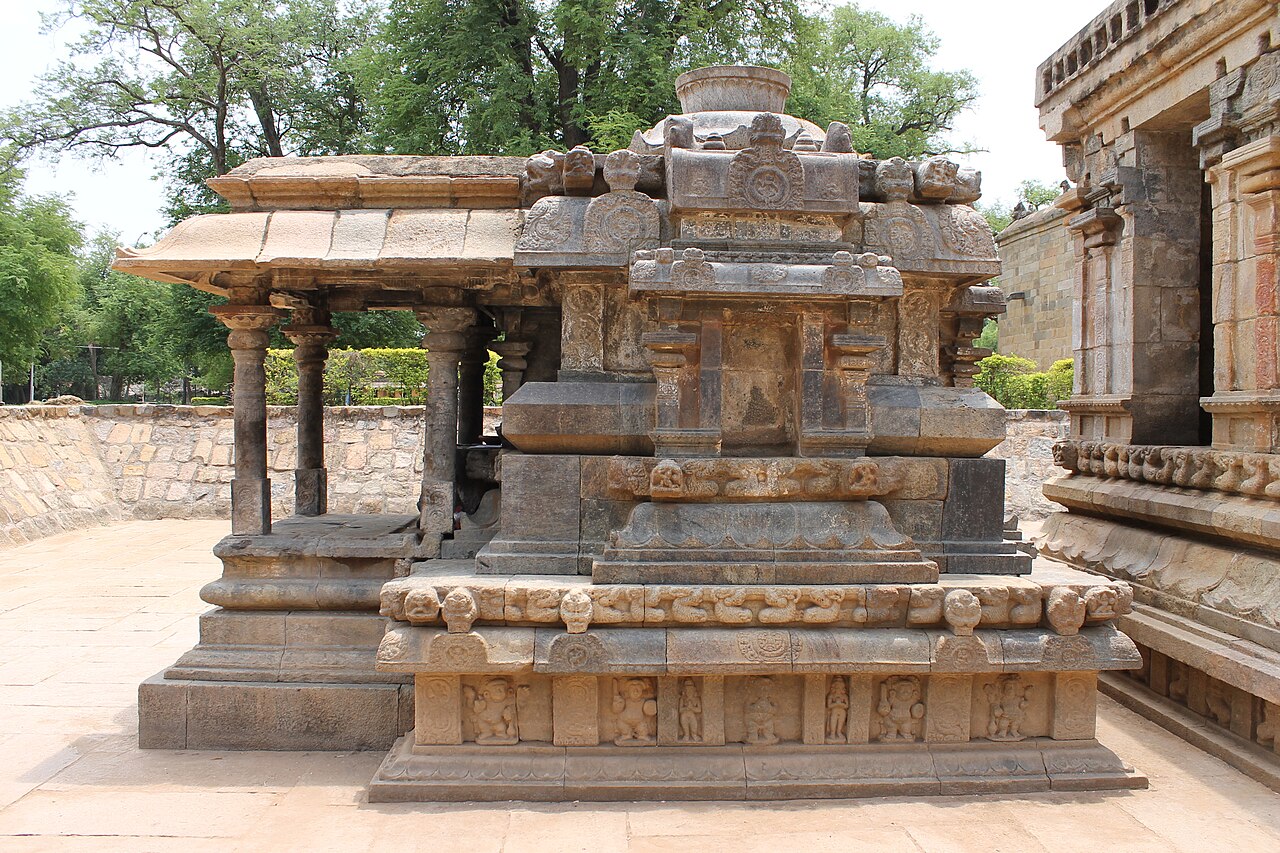
Airavatesvara Temple, Darasuram
Darasuram (Kumbakonam) · India · temple
The third of the Great Living Chola Temples, raised by Rajaraja Chola II around 1166 CE at Darasuram near Kumbakonam: a chariot-form shrine of Lord Shiva as Airavatesvara, famed for its carved stone wheels, its singing steps, and worship that has continued for over eight centuries.
Aisanyesvara Siva Temple
Bhubaneswar · India · temple
A living thirteenth-century Shiva shrine in the Old Town of Bhubaneswar, standing close to the western wall of the great Lingaraj Temple, where a Shivalinga set within a circular yonipitha still receives daily worship in the Kalinga architectural tradition.
 Hinduism
Akhadachandi Temple
Bhubaneswar · India · temple
A tenth-century Kalinga-style shrine on the southwestern bank of Bhubaneswar's sacred Bindusagar tank, Akhadachandi Temple honours Maa Mahishasuramardini, the Goddess in her form as slayer of the buffalo demon, within the dense cluster of ancient shrines that fills the city's Old Town.
 Hinduism
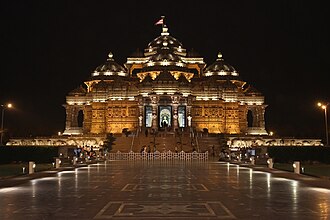
Akshardham
New Delhi · India · temple
A vast contemporary Hindu mandir campus on the Yamuna's west bank in East Delhi, raised without structural steel by 11,000 artisans and volunteers, and recognised by Guinness World Records in 2007 as the world's largest comprehensive Hindu Temple.
 Hinduism
Amarnath Temple
· India · temple
A high Himalayan cave shrine in Jammu and Kashmir where a naturally forming ice lingam is venerated as Lord Śiva, drawing one of India's great seasonal pilgrimages.
 Hinduism
Ambalappuzha Sri Krishna Temple
Ambalappuzha · India · temple
A Vaishnava shrine on the Kerala backwaters consecrated to Sri Krishna in his Parthasarathy form, counted among the seven great Temples of the former kingdom of Travancore and famed across South India for its Ambalapuzha Paal Payasam offering.